Archive for the ‘Activists and Activism’ Category

hands offCi auguriamo che vi unirete a noi nel sostenere questo appello. Se è così, scriveteci il vostro nome così come vorreste che appaia nella versione pubblicata insieme a una frase breve (10 parole o anche meno) che vi identifichi (ad esempio professione, attivista, blogger, ecc), compreso il vostro Paese di residenza. Si prega di utilizzare questo indirizzo e-mail per contattarci: magpie68@outlook.com

“Giù le mani dalla Siria” vale anche per la Russia.
Come persone e gruppi provenienti da molti Paesi, uniti da un comune impegno per la pace, la giustizia ed i diritti umani, condanniamo l’offensiva militare russa in Siria (successiva escalation) iniziata il 30 settembre 2015.
Mentre il governo russo ha dichiarato che queste operazioni sono dirette contro lo Stato Islamico (ISIS), la maggior parte degli attacchi si sono verificati in aree con nessuna presenza dell’ISIS. L’obiettivo dell’offensiva militare russa sembrano essere le comunità civili e militari dell’opposizione nella parte a nord della regione di Homs, centro permanente di resistenza al regime di Assad.

Le vittime dell’aggressione russa il 30 settembre sono state prevalentemente civili, tra cui molti bambini. Le condizioni umanitarie erano già disperate nella zona prima che la Russia lanciasse la sua offensiva aerea, perché la zona era da tempo sotto assedio del regime per la sua resistenza.

Il regime di Assad ha provocato il caos in tutta la Siria. E’ responsabile di avere innescato la guerra civile con la sua politica di sparare contro i manifestanti che chiedevano democrazia. Il regime ha ucciso oltre un quarto di milione di siriani, ha costretto metà della popolazione ad abbandonare le loro case e ha creato milioni di profughi. Nel corso di questa operazione, ha perso il controllo di metà del Paese. Anche se la pace non potrà mai essere ripristinata dal regime che l’ha distrutto, sembrerebbe che la Russia ora utilizzi direttamente la sua potenza militare per puntellare ulteriormente un regime che, senza il sostegno straniero, sarebbe crollato anni fa. Questa operazione dalle forze russe può solo prolungare l’agonia del popolo siriano, aumentare il flusso di rifugiati e rafforzare forze estremiste come ISIS.

Le dichiarazioni russe circa la legalità dell’escalation militare non sono più veritiere di quelle usate dagli Stati Uniti per giustificare la sua guerra contro il Vietnam. Quando il governo che invita un Paese straniero a intervenire è illegittimo, lo è anche l’invito. Anche gli Stati Uniti hanno responsabilità per la catastrofe, come tutti gli attori regionali e internazionali che hanno ignorato le aspirazioni ed i sacrifici del popolo siriano in ogni loro tentativo di risolvere la crisi, sostituendoli con i propri bisogni strategici e ambizioni.

Noi condanniamo in modo inequivocabile sia le brutali azioni repressive del regime di Assad che l’intervento militare russo volto a prolungarne l’esistenza. Se la Russia vuole una transizione politica negoziata in Siria, deve fermare la sua assistenza alla brutalità e agli attacchi indiscriminati del regime siriano contro obiettivi civili e deve smettere di incoraggiare il rifiuto persistente del regime di Assad di impegnarsi in ogni serio processo di pace. Gli attacchi contro le popolazioni civili sono in violazione del diritto internazionale. Ci appelliamo alla comunità internazionale, ai governi nazionali e alle Nazioni Unite affinché assicurino il rispetto della Risoluzione del Consiglio di Sicurezza numero 2139, di cui la Russia è parte, che prevede che “Tutte le parti cessino immediatamente tutti gli attacchi contro i civili, così come l’impiego indiscriminato di armi in aree popolate.” Chiediamo a tutti coloro che si occupano di pace internazionale e di difesa dei diritti umani ad unirsi a noi nel condannare le azioni di ostentata arroganza della Russia con tutti i mezzi a vostra disposizione – lobbying dei vostri rappresentanti, manifestazioni pubbliche, petizioni pubbliche e le altre forme di protesta.

FIRMATO:

Mike Gapes, Labour and Co-operative Member of Parliament for Ilford South, UK

Rt. Hon Sir Gerald Kaufman, MP, UK

Thomas Pierret, (Lecturer, University of Edinburgh, UK)

Rupert Read (Reader in Philosophy, University of East Anglia; Chair of Green House Think Tank, UK)

Peter Tatchell (Director, Peter Tatchell Foundation)

Yassin al Haj Saleh (Syrian Writer Living in Exile, Istanbul)

Abdulaziz Almashi (Syria Solidarity Movement, UK)

Haytham Alhamwi (Managing Director, Rethink Rebuild Society, Manchester Syrian Community, UK)

The Syrian Community of the South West UK

Hussam Ayloush (National Chair, Syrian American Council)

Faisal Alazem, Director, Syrian Canadian Council

Abdulrazzak Tammo (Leadership Consultant, Kurdish Future Movement, Syria/UK)

Planet Syria (Organization, UK)

Laila Alodaat (Lawyer, UK)

Juan Cole (Professor of History, University of Michigan & Blogger, Informed Comment, USA)

Jean-Pierre Filiu (Professor, Sciences Po, Paris School of International Affairs)

Sune Haugbølle (Department of Society and Globalisation, Roskilde University, Denmark)

Nader Hashemi (Director, Center for Middle East Studies, University of Denver, USA)

Steven Heydemann (Professor of Middle East Studies, Smith College, USA)

Rana Issa (University of Oslo, Norway)

Mohja Kahf (Professor of Comparative Literature & Middle Eastern Studies, University of Arkansas & Member of the Syrian Nonviolence Movement)

Vinay Lal (Professor of History, University of California, Los Angeles, USA)

Ziad Majed (Assistant Professor of International and Comparative Politics, The American University of Paris, France)

Danny Postel (Center for Middle East Studies, University of Denver, USA)

Muhammad Idrees Ahmad (University of Stirling, Scotland)

Luke Cooper (Lecturer in Politics, Anglia Ruskin University, UK)

Juliette Harkin (Doctoral Student, University of East Anglia, UK)

Brian Slocock (Senior Lecturer in Political Science, University of Paisley, Retired, UK)

Mary Rizzo (Syria Solidarity Activist, Blogger at wewritewhatwelike.com, Italy)

Peter Clifford (Middle East Blogger, UK)

Saskia Sassen (Committee on Global Thought, Columbia University, USA)

Saleh, Syrian, network engineer, KSA

Qusai Zakarya (Syrian Activist)

Lilia Marsali,. blogger and activist, Member, Algerian Congress for Democratic Change,France

Bill Fletcher, Jr. (Writer/Activist, Former President, TransAfrica Forum)

Gail Daneker (Friends for a NonViolent World, Minnesota, USA)

Clay Claiborne (Linux Beach Productions, Venice, California, USA)

Terry Burke (Minnesota Committee in Solidarity with the People of Syria, USA)

Afra Jalabi (Syrian Writer & Vice-Chair, The Day After Association)

Andrei Codrescu (Poet, Professor Emeritus, Louisiana State University, USA)

Stephen R. Shalom (Editorial Board, New Politics, USA)

James Sadri (The Syria Campaign, UK)

Robin Yassin-Kassab (Writer, Scotland)

Leila Al Shami (Activist and Writer, Jordan)

Rafif Jouejati (Director of FREE-Syria, the Foundation to Restore Equality and Education in Syria & English-language spokeswoman for the Local Coordination Committees in Syria, USA)

Nicolas Hénin (Journalist, Author, ex-ISIS hostage)

Leila Vignal (Fellow, Refugee Studies Centre, Department of International Development, Oxford University, UK)

Paul Woodward (War in Context, USA)

Ella Wind (New York University and MENA Solidarity Network, New York)

Roxanne Abbas (Activist, Minnesota, USA)

Ian Keith (Public School Teacher, Minnesota, USA)

Andrew Berman (Veterans for Peace, USA)

Mujeeb R. Khan (Department of Political Science, University of California Berkeley)

Şener Aktürk (Department of International Relations, Koç University, Turkey)

Omar Qureshi (Teacher, New York)

Michael Karadjis (Teacher, Sydney, Australia)

Fazal Khan (Associate Professor, University of Georgia School of Law, USA)

Kareen El Beyrouty (Economist and Member, Syria Solidarity Movement, UK)

Mark Boothroyd (Syria Solidarity Movement, UK)

Graham Campbell (RISE Glasgow East and Glasgow TUC Unite/ Scottish Trades Union Congress Delegate, UK)

Clara Connolly (Immigration and Human Rights Lawyer, UK)

Soumya Datta (Assistant Professor, South Asian University, New Delhi, India)

Bronwen Griffiths (Activist, UK)

Adina Mutar (Journalist, Romania)

David L. Williams (Peregrine Forum of Wisconsin, USA)

Ed Potts (Socialist, UK)

Nina van Krimpen (Human Rights Activist, The Netherlands)

Alfonso Vázquez (Human Rights Activist, Spain)

Pete Klosterman (Retired Software Engineer, New York, USA)

Therese Rickman Bull (Human Rights Activist, USA)

David Turpin Jr. (Antiwar Committee in Solidarity with the Struggle for Self Determination, Northwest Indiana, USA)

Kelly Grotke (Fellow, Society for the Humanities, Cornell University, USA)

Stephen Hastings-King (Author, Ithaca, New York, USA)

Dr Ahmad Sadiddin, research fellow in development economics, Univ of Florence, Italy

Mazen Halabi (Activist, Minnesota, USA)

Barry Rubin (Independent Scientist, UK)

Subhi Hadidi (Writer, Syria/France)

Farouk Mardam Bey (Publisher, Paris, France)

Wael Khouli (Physician Executive, Member of Syrian American Medical Society, USA)

Mary Lynn Murphy (Grandmothers for Peace Delegate to the Minnesota Alliance of Peacemakers, USA)

Rihab Naheel (Committee in Solidarity with the People of Syria, Minnesota, USA)

Susan Ahmad (Syrian Human Rights Activist and Journalist, UK)

Adnan Almahameed (Syrian Citizen, Community Organizer, Canada)

Pierluigi Blasioli (Student, University of Pescara, Italy)

James Bloodworth (Journalist, Editor of Left Foot Forward, UK)

Samantha Falciatori (Humanitarian Volunteer and Solidarity Activist, Italy)

Terry Glavin (Author/Journalist/Columnist, Canada)

Nancy Lindisfarne (Anthropologist, Author, UK)

Grant Padgham (Solidarity Activist, UK)

Harry Shotton (Student and Campaigner, UK)

Kellie Strom (Artist and Children’s Author, UK)

Jonathan Neale (Writer, UK)

Bill Scheurer (Executive Director, On Earth Peace, New Windsor, Maryland, USA)

Kenan Rahmani (Syrian American Activist, Washington DC)

Harald Etzbach (Translator/Journalist, Germany)

Ken Hiebert (Activist, Ladysmtih, BC, Canada)

Andrew Pollack (MENA Solidarity Network-US, Brooklyn)

Richard Dawson (Concerned Citizen, Los Angeles, California)

Robin ‘Roblimo’ Miler (IT/Science Reporter and Editor, USA)

Louis Proyect (Writer, CounterPunch film co-editor, New York City)

John Wilborn (Veterans for Peace, Chapter 168, Louisville, Kentucky, USA)

Fouad Roueiha (Journalist and co-founder of Solidarity with Syrian People Committee, Rome, Italy)

Gerard Di Trolio (Editor, rankandfile.ca, Toronto, Ontario, Canada)

Thomas F Barton (Military Resistance Newsletter)

Ricardo Salabert (Political Activist, Portugal)

Manuel Barrera (Metropolitan State University, St. Paul, Minnesota, USA)

Jason Schulman (Editorial Board, New Politics, USA)

Edna Bonhomme (Doctoral Candidate, Princeton University, Brooklyn, New York, USA)

Associazione Rose di Damasco (Como, Italy)

Riccardo Bella (Activist for Syria and Palestine, Milano, Italy)

Veronica Bellintani (Student, Activist and Volunteer with Syrian Refugees, Italy)

Karama Napoli (Committee to Support the Arab People, Italy)

Fiore Haneen Sarti (Human Rights Activist, Italy)

Jane Kelly (Activist, UK)

Jamie Milne (Labour Friends of Ukraine, UK)

Lara Bartocci (Freethinker and Graphic Designer, Italy)

Enrico De Angelis (Media Analyst, Free Press Unlimited, Italy)

Comitato Permanente per la Rivoluzione Siriana, Italy

Luke Staunton (Syria Solidarity Movement, UK)

Joshka Wessels (Postdoctoral Researcher on Syria, Centre for Resolution of International Conflicts, University of Copenhagen, Denmark)

Carol Coren (Social Enterprise Entrepreneur, Oregon and Pennsylvania, USA)

Anthony Saidy (Author, Los Angeles, USA)

Ralph Apel (Engineer, Frankfurt am Main, Germany)

Linda Parsons (Supporter of the Syrian People’s Revolution, Salt Lake City, Utah, USA)

Ali Rahabi (Syrian Activist, Local Coordination Committees in Syria, Deir ez-Zor, Syria)

Zaher Sahloul (Physician, President of the Syrian American Medical Society, USA)

Mohamad Khouli (Activist, Minneapolis, Minnesota, USA)

Jennifer Kaiser (Researcher, Turkey)

Polly Kellogg (Retired Associate Professor, St. Cloud State University, Minnesota, USA)

Basel Watfa (Pharmacist & Translator, Syrian refugee camp, Kusel, Germany)

Luna Watfa (Freelance Journalist/Photographer, Syrian refugee camp, Kusel, Germany)

Seyla Benhabib (Professor of Political Science and Philosophy, Yale University, USA)

Annalisa Roveroni (CIVIC Cooperativa Sociale, Italy)

Enzio Zuffo (Istituto Sviluppo Olistico, Italy)

Fred Mecklenburg (News & Letters, Chicago, USA)

Ron Aminzade (Professor of Sociology, University of Minnesota, USA)

MJ Maynes (Department of History, University of Minnesota, USA)

Meredith Tax (Writer & Chair of the Centre for Secular Space, New York, USA)

Deidre A. Kellogg Ketroser (Human Rights Activist, Refugee Advocate/Advisor, Minneapolis, USA)
Originale in inglese: http://www.syriauk.org/p/hands-off-syria-applies-to-russia-tooas.html
ahwaz2Written by Rahim Hamid

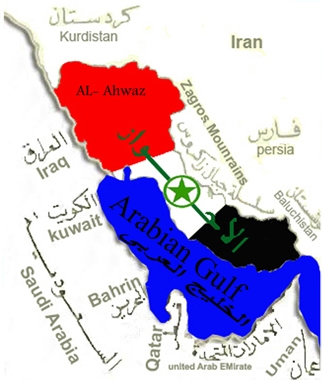
A call by a senior UAE official on Monday for formal recognition of Al-Ahwaz as an occupied Arab country has sparked a rapidly growing pan-Arab media campaign, with over 1,000 prominent Arab figures across the region so far announcing their support of ‘I recognise Al-Ahwaz as an Arab State’.  Despite only being launched a couple of days ago, the campaign is also spreading beyond the Arab world, with the slogan already shared across social media in 16 languages.

Launched in the wake of a statement issued by the influential former Dubai police chief Dahi Khalfan calling on Gulf states to open embassies for Al-Ahwaz and to formally recognise the state, which was renamed ‘Khuzestan province’ in 1936 by Iran following its 1925 annexation, the campaign has continued to gain popularity, winning backing from a wide range of influential Arab figures from all backgrounds across the region.

Among the leading regional figures who have announced their support of the new campaign are Jerry Maher, the founder and director of ‘Radio Swat Beirut International’ and the distinguished and widely respected Kuwaiti academic and analyst Dr. Abdullah Nafisi.  In Egypt, TV show host Hussein Jouli, a moderate and opponent of the Sisi regime, said that he would head an Egyptian campaign for the recognition of Ahwaz as an Arab state. Another leading Kuwaiti figure voicing her support for the campaign was Ayesha Rashid, a liberal writer, journalist and political researcher.

Ahwazi activists hope that the new campaign, which has already been featured on media as diverse as Al Jazeera, CNBC Arabic, Sawa Middle East and even Japanese and Korean news channels, will help to raise awareness of the systemic injustices inflicted on the Ahwazi people by Iran for almost a century in near-complete international silence.

AHW 1Since the initial Iranian occupation in 1925, successive administrations in Tehran, both under the current theocratic regime and the previous rulers, have refused to recognise the most basic rights of the ethnically Arab Ahwazi people numbering around 10 million in total, who are denied not only the right to the same healthcare and education as Persian Iranians, but even the right to wear traditional Arab garments, or to publicly speak or learn their native Arabic  language,  being subjected to what is effectively an apartheid system of rule.

Despite occupied Ahwaz, now a region of south and southeast Iran, being the home to around 95% of Iran’s oil and gas reserves, the vast majority of the Ahwazi population live in medieval poverty and squalor, often without running water, electricity or the most basic sanitation, while the massive wealth from their natural resources is spent on other, non-Arab regions by Tehran.  This openly racist policy means that despite being the most resource-rich region of Iran, Ahwaz – or Khuzestan as Iran insists on calling it – is home to one of the poorest populations per capita on earth.

Anti-Arab racism is endemic in Iran, having been encouraged by successive regimes,  with Ahwazis bearing the brunt of this bigotry, both in formal policies which treat them as second-class citizens,  excluded from property  ownership and all but the most menial jobs,  and denied the most basic rights, as well as through a culture  which glorifies racism and casual violence towards Arabs:  many  of the most celebrated contemporary Iranian poets’ most famous poems are filled with virulently racist anti-Arab imagery and language.  This anti-Arab racism extends to all cultural forms, with   one fairly typical recent hit by a popular Iranian singer entitled ‘Kill An Arab’   issued shortly after a phone app game, ‘Beat An Arab’ in which the object of the game is to force-feed a grotesque caricature of an Arab before beating him unconscious:  both the song and he game were approved  for general release by the Iranian Culture Ministry, which routinely approves such offensive items,  and neither is viewed by  Persian Iranians as being in  any way objectionable.

Al-Ahwaz1Ironically while the theocracy in Tehran is keen to present itself as the champion of Palestinians and arch-foe of Zionist occupation, its own savagely imposed  occupation of Ahwazi Arabs’ land is arguably more brutal and its profound anti-Arab bigotry virtually indistinguishable to that of Zionists.

The similarities can be quite uncanny, with Persian Iranians offered generous incentives to move to the Ahwaz region where they are housed in specially built settlements provided with all the latest amenities, and given well-paid state oil industry jobs not available to Ahwazis or offered further substantial financial inducements by the Tehran administration to set up businesses in these areas. As with the jobs and loans, these settlements are off-limits to Ahwazis who are routinely ethnically cleansed from their homes and lands whenever these are confiscated by the regime, with no compensation or recourse to legal complaint, and are housed in overcrowded shanty towns often located near the region’s oil refineries, where open sewers and atrocious pollution lead to widespread health problems.

There is still no word on the  theocratic regime’s reaction to the new ‘I recognise Ahwaz as an Arab State’ media campaign, although the mullahs, who have long refused to  recognise Ahwazis’ basic humanity, let alone their right to their own lands and sovereignty are, like Queen Victoria, unlikely to be amused.

WRITTEN BY SAMANTHA FALCIATORI
The nearly 1,400 people poisoned to death on Aug. 21, 2013 do not have an official murderer yet, but ballistic analysis leaves little doubt. Here is what we know and what cannot be told of that terrible night.

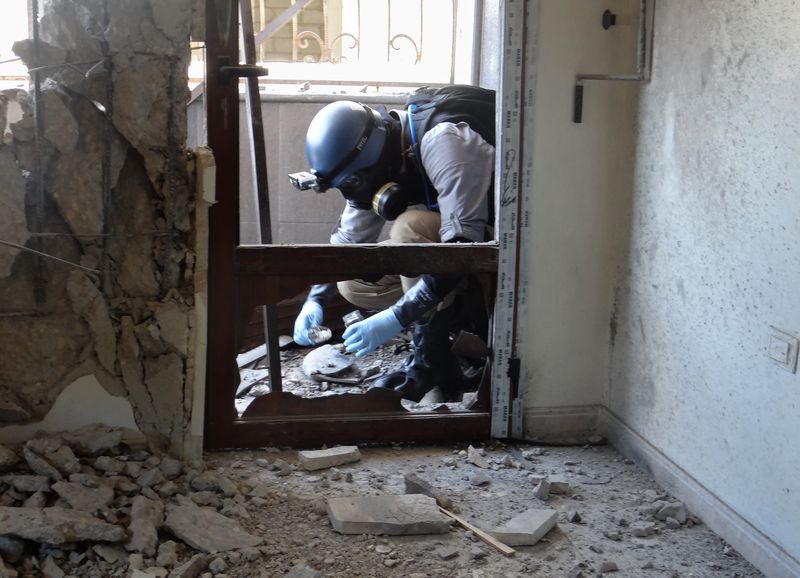
Between 2:00 and 5:00 am on August 21, 2013 in the Damascus suburb of Ghouta nearly 1,400 people, including 400 children, were killed in Syria’s largest chemical attack. According to Doctors Without Borders, in just 3 hours their hospitals received 3,600 people with symptoms of neuro-intoxication.

https://www.youtube.com/watch?v=3hSMr6QzCjA
Victims of the chemical attack.

It was not the first time that toxic gas was used: as early as May 2013 in Jobar (another Damascus suburb in the opposition’s hands) a team of reporters from the French newspaper Le Monde was involved in a chemical attack,  presumably by government forces against the FSA (the moderate forces of the opposition). The team was there to document even more earlier reported cases of chemical attacks in the district. Among them there was Laurent van der Stockt, the most affected of the team: tests conducted in France on his biological samples revealed, as he himself declared, traces of sarin nerve gas. Their reports and testimony describe a terrible reality that was already widespread. In April the use of chemical weapons was also recorded in other areas, but never on a large scale. Until the attack in Ghouta, in the densely populated neighborhoods of Zamalka and Moadamiya. But why Ghouta?

Credit, BBC

Credit, BBC

Because in July 2012 the FSA offensive on Damascus had been successful and the opposition had taken control of some areas surrounding the capital, including Ghouta, threatening the Assad government as never before, who denied responsibility in the chemical attack and accused the rebels. The FSA and the civilians of Ghouta, however, accused the regime of having used chemical weapons to crush the opposition near Damascus.

The UN immediately opened an investigation with a fact-finding mission – which was already in Damascus on August 21 to investigate other cases of chemical weapons use in Khan al Assal and Sheik Maqsood (Aleppo) and Saraqeb (Idlib) – and confirmed the use of chemical weapons in the September 2013 report. The mission interviewed survivors, doctors, nurses and rescue workers, collected many samples (urine, hair, blood, soil, metal, etc …), including fragments of the missiles used, then analyzed them in the laboratories of the Organization for the Prohibition of chemical Weapons (OPCW), which confirmed the use of sarin nerve gas dropped through surface-to-surface missiles.

 A UN chemical weapons inspector in Ghouta (Credit to: Ammar al-Arbini/AFP/Getty)

A UN chemical weapons inspector in Ghouta (Credit to: Ammar al-Arbini/AFP/Getty)

In December 2013, the UN published another report on 16 chemical attacks registered before and after August 21, of which only 7 had been investigated. For none of them the responsible could be assessed. However, in some of these attacks, like the one on April 29 on Saraqeb and on Sheik Maqsood on April 13, 2013 the alleged gas was dropped, according to eyewitnesses, by Syrian army helicopters (which is only force in Syria to have aviation). To this regard, the report says on page 79: “Syrian government officials said they have no information to offer on the alleged incident.” More doubts remain on the case of Khan al Assal, the only case that also Russia looked into, producing a 100-page report, which was never published but delivered to UN Secretary General Ban Ki-Moon, in which Russia accused the rebels.

Assigning blame is not easy for a political body such as the UN, considering that at the Security Council sit both allies of the Syrian government and of the opposition. This is why the report does not determine who has used chemical weapons even in the case of Ghouta: the purpose of the mission was to ascertain the use, not those who used them, as explained by Ban Ki-Moon. If on the one hand not determining who is responsible may be politically convenient, on the other hand it is a double-edged sword: it means that the report can be interpreted in favor of the 2 opposite thesis. In fact, Russia has blamed the rebels, going as far as to accuse the UN inspectors of having conducted a “prejudicial and biased” work, while the US, France and Britain have blamed the Assad government.

Let’s start with what is certain: the details that emerge from the report and from the ballistic missile trajectories makes it possible to trace the launch site. Among the most accurate independent works are those by Human Rights Watch and the New York Times. In the report on pag. 26 it is stated that of the 5 missiles launched on August 21 only 2 allow one to calculate the trajectory: the 1st and 4th, respectively launched on Moadamiyah and Ein Tarma. The 1st has an angle of 35° and an azimuth of 215°, while the 4th has an angle of 285° and an azimuth of 105°, which means that tracking back the launch site, the only result is the 104th Brigade of the Republican Guard.

Credit to: Human Rights Watch

Credit to: Human Rights Watch

It is one of the Syrian government bastions, on Mount Qasioun, a place overlooking the Presidential Palace where the Republican Guard and the infamous 4th Army Division (led by Assad’s brother, Maher) are located, which would mean that the order came directly from Maher Assad, as some UN officials believe. The issue is complicated: according to some frantic phone calls between high-ranking Syrian officials intercepted by the BND, the German intelligence service, by Israeli and American intelligence, it would seem that Bashar Assad is not personally involved in the chemical attack. Indeed, the intercepted calls reveal that 4th Division commanders had been asking the Presidential Palace for the authorization to use chemical weapons for 4 and a half months and that Bashar had always denied. It is likely that Maher Assad made the decision alone. In any case, there is broad agreement that it was the Syrian government who used chemical weapons.

In fact, Mount Qasioun is one of the strongholds more firmly in the hands of the regime, where government troops launch their attacks on rebel areas. The argument put forward by the Syrian government and its ally Russia is that, as Putin himself wrote for the New York Times: “No one doubts that poison gas was used in Syria. But there is every reason to believe it was used not by the Syrian Army, but by opposition forces, to provoke [military] intervention”. Which in fact, after the attack seemed to be imminent, when Obama found himself in the uncomfortable position of having to act on the threat made to Assad the previous year to use force in the event of a chemical attack, which was a red line.

But if so, it should at least be explained not only how the rebels would have been able to steal nerve gas from the regime, but also how they managed to penetrate the stronghold of government troops and self-launch sarin. To this regard, it is useful the statement of prof. Ake Sellstrom, head of the UN mission, who in this interesting interview (page 10) admits: “If you try the theory that it was the opposition that did it, it is difficult to see how it was weaponised. Several times I asked the government: can you explain – if this was the opposition – how did they get hold of the chemical weapons? They have quite poor theories: they talk about smuggling through Turkey, labs in Iraq and I asked them, pointedly, what about your own stores, have your own stores being stripped of anything, have you dropped a bomb that has been claimed, bombs that can be recovered by the opposition? They denied that. To me it is strange. If they really want to blame the opposition they should have a good story as to how they got hold of the munitions, and they didn’t take the chance to deliver that story”.

_69784568_chemical_weapon_624_v4

In September 2013 a military intervention in Syria to eliminate the chemical threat, opposed by most of global public opinion, seemed imminent, although the US themselves were not excited at the idea. In fact, they seized the Russian proposal to dismantle the chemical arsenal of Damascus with the regime’s consensus.

The Syrian government had denied for years that it possessed any chemical weapons, but, when pressed, not only had it to admit possessing them (revealing, to the surprise of the inspectors, also production plants artfully disguised, such as labs on mobile trucks with 18 wheels), but it also had to access the Chemical Weapons Convention to dismantle them and to allow OPWC inspectors  into the sites. On paper the mission was successful; in reality, not quite. In May 2015, when the mission was virtually over, OPCW inspectors found other  undeclared sites where the Syrian government was working on Sarin and VX nerve gas. This shows that the Syrian government has lied regarding its arsenal and therefore could still possess chemical weapons. All this seems to confirm many claims, spread by several parties from 2013, that the Syrian government was moving chemical weapons into friendly countries, such as Lebanon and Iraq, so that more than once (as in January and May 2013) Israeli jets bombed Syrian convoys bound for these countries to prevent arms transfers.

More detailed are statements from Syrian army deserters who warned several times of chemical weapons transfers across borders and of their use. But perhaps the most important testimony comes from Brigadier General Zaher Saket, former commander and chemical weapons officer in the 5th Division of the Syrian army, who defected in March 2013 and who now works with the OPWC mission. He revealed the chain of command behind the use of chemical weapons and that the orders are to use them in those areas in opposition hands where the army is unable to eradicate the enemy. Saket also revealed that he was ordered to use chemical weapons three times, the first time in October 2012. The order to release poison gas on Sheikh Maskeen, Herak and Busra (in the province of Deraa) came from Brigadier General Ali Hassan Ammar, but Saket did not execute the orders and replaced the mixture of phosgene and chlorine gas that he was supposed to use with a harmless water-based mixture. The third time was in January 2013, but his supervisor became suspicious about the lack of victims after the attacks, so Saket was forced to flee to Jordan. As of September 2013, according to Saket, chemical attacks by the regime had been 34.

One of the weekly Kafranbel protests marking the first chemical attack anniversary. Credit to: Occupied Kafranbel

One of the weekly Kafranbel protests marking the first chemical attack anniversary. Credit to: Occupied Kafranbel

On August 7, 2015 the UNSC unanimously approved resolution S/RES/2235 that should create for the first time an investigation mechanism to determine who is responsible for the chemical attacks in Syria. Perhaps one day truth will be ascertained and those responsible will be judged. For now, we have the terrible testimonies of survivors.

kafranbelwritten by Ruth Riegler     What foreign policy values does Obama actually believe in? From his speeches, each one a lovingly crafted oratorical masterpiece, one would imagine him to be a hybrid of Gandhi and Martin Luther King Jnr, an impassioned idealist working tirelessly for a world of brotherhood, peace, love, justice, freedom, respect for human rights and other exceedingly laudable and desirable objectives.

In the real, non-rhetorical world, he’s been the best thing for totalitarian expansionism since the Molotov–Ribbentrop Pact, with the world’s most repressive regimes joyously taking advantage of this new US détente with brutal authoritarianism.

Having ordered the bombing of seven Muslim nations in six years to date, and collected half the world’s dictators on speed-dial, Obama’s expanded the endless global war of terror beyond GW Bush’s wildest dreams, now making its Middle East front fully sectarian in a partnership with Tehran’s theocratic regime, to whom he’s graciously delivering control of most of the Mashreq as a means of ensuring “regional stability” of the totalitarian variety, while the rest of the region remains under the control of other US-friendly dictators.

The Syrian and other Arab peoples’ feelings about yet another Western-backed regional takeover and their concerns about the resulting ever-worsening regional meltdown, meanwhile, are ignored or treated with a condescension more commonly seen from a kindergarten teacher addressing four-year-olds, in the traditional Western policymakers’ style. All of which rather jars with the Age of Aquarius foreign policy visions outlined in the POTUS’ aforementioned lovely speeches.

This isn’t just the customary understandable gap between unattainable lofty ideals and messy reality; this is an intergalactic-sized Grand Canyon. How is it that a president who came to power on a platform of progressive yearning for a fairer, better world ended up being the BFF and helpmeet of totalitarianism worldwide? How did the president of peace become the warmonger supreme?

Much of the answer lies precisely in that ‘progressive’ worldview. Obama is the archetype and patron saint of contemporary Western progressive values, primary among which is a boundless Orientalist arrogance and condescension for non-Western peoples. For the West’s ‘progressives’, the timeless leftist ideals of universalism and solidarity with the oppressed, liberté, égalité, fraternité – are passé. At heart, though unlikely to admit it, progressives fundamentally share the far left’s and far right’s belief that freedom, equality and brotherhood are far too important to be shared with the non-Western masses, reserving their solidarity instead for the leaders of modishly despotic regimes.

The one partial exception to this adulation of oppression overseas amongst Western progressives is Palestine – although even this laudable support for freedom, justice and human rights extends only to those Palestinians in occupied Palestine itself, while those in Syria dying for the same basic rights are dismissed, like Syrians, as expendable “collateral damage” or of course – in true Zionist style – as “extremists” and “terrorists”.

Indeed, the Western ‘progressive’ politicians and media deploy exactly the same lexicon of dehumanisation to support exactly the same apparently endless ‘war on terror’ as the conservatives and neocons who are their supposed arch-nemeses, with the only perceptible difference being that the progressives have outsourced more of the grunt work and added more touchy-feely patently ludicrous speeches about supporting human rights.

While neocons preferred to abuse the words ‘freedom’ and ‘democracy’ to justify carpet-bombing and backing for totalitarianism, progressives prefer to radically reinterpret the ideas of ‘peace’ and stability’ for the same purpose.

As with Bush’s preferred version of ‘freedom’ and ‘democracy’ via bombs and occupation, progressives’ preferred version of ‘peace’ and ‘stability’ in the region is of the maximum security prison variety – those are, after all, peaceful and stable places by their nature and woe betide the tens of millions of inmates demanding freedom and human rights.

In both cases Washington’s objective takes precedence over the wishes of the subject peoples, for whom subjugation, despotism and rule of terror remain the only constants, whether the glossy rhetoric from the faraway backers of that oppression is neoconservative or ‘progressive’ in nature. Meaning that Washington is doomed to be treated with the same disregard by the Arab people in turn.

from Radio Free Syria: https://www.facebook.com/RadioFreeSyria