Archive for the ‘Resistance’ Category

Commemorating 60+ Years of the Systematic Murder of Palestinian Land. The first part of a three part series for Land Day

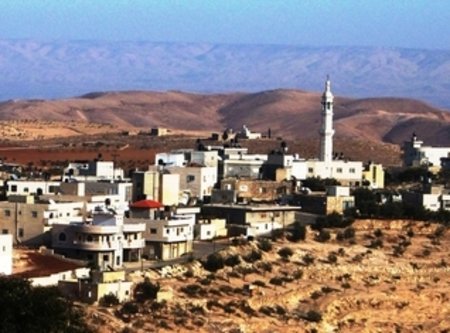
As I stood on the roof and watched Jerusalem stretch in front of me, with the sun reflecting on the golden Dome, I felt angry and felt how unfair the world is. I was born in Jerusalem, went to school there and practically grew up there knowing almost every corner, every street and every alley in it. I have more memories in Jerusalem than any other place in the world, all cherished ones. But now, I am not allowed into the city anymore because I am Palestinian. As I stood there, with tears in my eyes, I envied every Palestinian with an American or European passport, because they can come and visit Jerusalem. I envied every foreigner who can visit the city whenever they choose. I even envied the birds singing on the cypresses before me, because they could fly over Jerusalem and fill their eyes with its beauty and their lungs with its air. In my childhood, Jerusalem was the only major Palestinian city I knew well and loved. In the eyes and mind of a child, to me Ramallah was a cold city, Bethlehem was the “village” nearby, Nablus and Hebron were the places “to visit my uncles in Israeli prisons” and Jericho was too hot. Only Jerusalem was perfect: with its bustling Old City, the old bus station, Salah Al-Deen Street, Al Musrarah, the walk to the Notre Dame, the walk down Wadi Al-Joz and up to Al-Tur and the walk up to Ras El Amoud. I walked on the roof and saw the mountains on the Jordanian side, clearly visible during mild weather. Late afternoons, coming back home from school, one would witness a breathtaking sight going down the steep street in Sawahreh: a marvellous mixture of simple houses, some with old traditional domed roofs, barley fields or olive groves spreading against a curtain of mountains. Between the mountains and the last of the houses a strip of blue was visible. We always thought it to be the Dead Sea. Well, I personally still like to think of it as the Dead Sea. It was a combination of colours that rarely showed itself, but when it did, it was truly breathtaking.


To the south I could see Mount Herod in the distance. I have watched this artificial mountain since my childhood and always wondered at its shape. It always looked far away to be reached, but at the same time so close, an integral part of the view surrounding my home. I used to think about the impossibility of climbing that mountain, because it had steep sides, one would keep slipping and would never reach the top. I did “climb” that mountain years later, during the work on a TV documentary on Bethlehem. During the 2002 IOF invasion of the West Bank, my parents told me that Israeli fighter jets used to pass over Sawahreh on their way to Bethlehem. After a few minutes, the sound of explosions would rock the sky, as the IOF bombarded Bethlehem and the surrounding towns, villages and refugee camps. Since hearing this, every time I see Mount Herod I can’t help thinking of Israeli jets on their way to destroying yet another part of Palestine and kill innocent unarmed civilians. In Sawahreh, Israeli jets roaring in the sky were always a common thing. Some of Sawahreh’s vast lands had been confiscated for so-called “security reasons” and were used as a training area for the IOF. We would often hear sounds of explosions and the house would shake, or hear Israeli jets coming and going. One time, my sister, my brother and I thought that they were preparing for war, and since we had no army of our own, had no jets or tanks or bombs to protect ourselves, we held a meeting to decide on the best way to protect the family. The only solution we could think of was to build an underground shelter. I don’t know where we got the idea of a shelter from, since Palestinians have no shelters, but most probably from one of those WWII films the Israeli TV kept showing. We did start digging, using our hands and small pointy stones, but realized after a while what a lengthy and hard process that was, and instead decided that in case a war does break out we would use the water well as a shelter, i.e., after removing all the water.


One would think what a beautiful view, Jerusalem on one side, Bethlehem on the other with mountains and an imaginary sea in the background. Unfortunately, this scenery is interrupted by the Jewish illegal settlements Maale Adumim and Kidar, spreading themselves on Palestinian hills. Many Palestinian villages and town are surrounded by illegal Jewish settlements. Some are surrounded by settlements from one, two or three sides. Others are surrounded by illegal settlements and the Apartheid Wall. Sawahreh is surrounded by the illegal settlements of Maale Adumim from the northeast and Kidar from the east and by the Apartheid Wall from the west. Kidar settlement is the closest to us. Before the first intifada, Kidar settlers used to come and walk through our main street, among Palestinian houses. So sure they were of themselves, acting as if the land belonged to them. I remember once we were playing in the land, when a group of settlers walked up the street. We stopped playing and just watched them. I didn’t understand settlers and settlements much at the time, but I remember knowing that these people had no right to walk on our streets. We used to spend our holidays in Dheisheh refugee camp, where the IOF would shoot to kill little children, and then we would come back to Sawahreh, where settlers were walking our street. Those close to Kidar used to sell home-made white cheese and yoghurt to the settlers, who thought us too quiet and peaceful, so they called us “Kiryat Shalom” or the village of peace. It was something I always felt ashamed of, knowing that the settlers thought us too peaceful to bother with, while their army and their fellow fanatic settlers were attacking Dheisheh and killing people there. If the illegal settlers of Kidar were so very interested in peace with us, why did they steal our lands to expand their settlement, knowing that our livelihood depended on these lands? You can’t have peace with your occupier, because the only peace they will offer you is a masquerade, not a real and just peace. In Palestine, power cuts are a regular thing, and whenever we had no electricity and had to study using candle light, which often hurt our eyes, I used to look through the window and watch Sawahreh, Abu Dees and Ezariyyeh drown in complete darkness, while Kidar and Maale Adumim would be lighted like a Christmas tree. Even as a child this made me think of how unfair the situation was and that these settlers and these settlements don’t belong here.


I remember as a child how “far away” Maale Adumim seemed. But as I grew up, so did the illegal settlement. The danger of this expansion never really registered in my mind until one night I dreamt that I opened the window of my bedroom to find myself looking into the courtyard of a Jewish house. The settlement had eaten the land all the way from where it stood till our house, and our house and the land surrounding it was next. I woke up sweating and my heart beating fast. So real was the threat, I realized at the time, that I knew it was not a mere nightmare. The next day I went at the back of the house to the spot where one could get a direct view of Maale Adumim and tried to calculate how much time we had before my nightmare became reality. I thought we still had time to act, but I was mistaken. Since the 1990’s the settlements have been expanding and are eating more Palestinian land at an unprecedented pace. In this area there are several illegal Jewish settlements such as Maale Adumim, Alon, Almon, Kidar, Kefar Adumim and Mishor Adumim, with a combined population of some 40,000 settlers. The largest, Maale Adumim was established in 1975 on confiscated Palestinian land and lies 14 km to the east of Jerusalem. It has a population of 35,000 illegal Jewish settlers and a jurisdictional area of 50 km². Road networks have been also established to connect Maale Adumim and neighboring settlements with Jerusalem and with the Jordan Valley. Palestinian land would be confiscated, declared a “closed military zone” and later used for illegal settlement expansions.


On the day of my arrival to Palestine for a short visit, I watched in shock as I passed Maale Adumim at how huge it has become. Within the space of two years, since my last visit, it had doubled in size, to say the least. Standing there on the mountain top, with a wall surrounding parts of it, it reminded me of a fortress from the middle ages. Although I am a fan of fortresses, this one brought only anger and disgust. The lands opposite it, which I distinctly remember were planted with olive trees, had become bare land, the trees uprooted and the land destroyed to make way for more illegal settler houses and roads. At the entrance to Maale Adumim stood a single olive tree, as huge as life and older than any illegal settler on this land. It was clear that this tree had been uprooted from some Palestinian field, maybe even from our confiscated land, and replanted here. Macabre, I thought and could only shake my head at the sad view of that lonely olive tree. Olive trees are like Palestinians, they grow in groups, surrounded by family and friends. That tree stood there alone, a reminder to every Palestinian that this is what the so-called peace process had done to us, and that if this process is allowed to go on, every single Palestinian will end up like that tree, alone and uprooted.


The plan to expand Maale Adumim, known as the “E-1” Plan, which was initiated by Rabin in 1994 and approved in 1999, led to the confiscation of yet more Palestinian land. This Plan is an important part of the “Greater Jerusalem” scheme, which includes Maale Adumim, Beitar, H´Givat Ze’ev, Gush Etzion, the Ariel bloc, the Hashmonain bloc and the Jordan Rift, and aims at annexing large areas of the West Bank to Jerusalem. This plan expands the jurisdictional boundaries of Maale Adumim and its satellite settlements to the Israeli Jerusalem municipal boundaries, linking Jerusalem with surrounding settlement blocs and linking the Maale Adumim bloc with with other settlement blocs such as Pisgat Ze’ev, Pisgat Omer, Neve Ya’acov and the French Hill. Also, a wall is being built around Maale Adumim and its satellite settlements, which will completely encircle East Jerusalem and 61 km² of Palestinian land. The “E-1” Plan aims to completely cut off Jerusalem from the rest of the Palestinian Territories, disconnecting the geographic contiguity of Palestinian Territories by dividing the West Bank into two parts, thus ensuring that no viable Palestinian state would ever come to existence. Last year, roads were paved and a bridge, main junctions, public squares, police stations, checkpoints and side walls were built in the “E-1” area. This area will cover some 13,000 dunums confiscated from Palestinian villages around Jerusalem and is to house an additional 15,000 illegal settlers. Two Israeli-only roads will connect settler roads southeast of Bethlehem with roads to the northeast, including connecting Maale Adumim and other Jerusalem settlements with the Ramot Ashkol settlement. For the construction of these roads, tens of houses in Sawahreh, Abu Dees and Al Tour are to be demolished. To prevent Palestinians from entering Jerusalem or using Road Nr. 1 that passes through the E-1 and Road Nr. 60 that passes through East Jerusalem, an “alternative” road is being constructed for Palestinian use and is to connect the Southern West Bank with its Northern part. For the construction of this road, the IOF issued a military order in 2007 confiscating 1,128 dunums of Palestinian land from villages between Jerusalem and Maale Adumim, i.e. Sawahreh, Abu Dees, Nebi Musa and Al Khan Al Ahmar.


Blocking the southern entrance of Sawahreh is the “Container” checkpoint, which is now being expanded to become a permanent border-like crossing. Passing the checkpoint, one would not imagine what beautiful landscape lies behind the Israeli stone blocks and control tower. Locally, we call it “Barriyeh”, the wilderness or the prairies. Green meadows decorated with red poppies wherever one looks. My favourite spot there is a low area, surrounded by hills and naturally-formed stone structures. Here, running was not possible because of the tall vegetation that covered the place. We would imagine ourselves swimming and race each other or play hide and seek. Then, when we would feel hungry, we would have something to eat under the olive trees. Relics of family history decorate caves in that area and cherished memories of childhood lie behind the checkpoint, making them off-limit to us. The last time I went there was just before leaving for Germany and I had not set foot again. Our lands there, including the olive fields, which were a source of income for my family, were confiscated in 2003. Today, only those few who originally had their houses behind the checkpoint are allowed in, but no one knows how long before their houses will be demolished for some reason or other so as to close the area completely.


The “Container” checkpoint is a passage between the north and the south of the West Bank. It is one of more than 630 Israeli checkpoints and road barriers all over the West Bank, aiming to restrict Palestinian movement on Palestinian land. Travelling to the south, one would have to take the “Wadi Al-Nar” road. Wadi Al-Nar, the Valley of Fire, is most probably called so because of its steepness and the danger of driving there. It was a dirt road connecting Sawahreh with Ubediyyeh, rarely used except maybe by villagers travelling on donkeys. With the signing of the so-called peace process, Jerusalem was closed to most Palestinians and this road was used instead as a link left between the south and the north. If one is stuck behind a truck on that road, the meaning of “Valley of Fire” becomes clear, for when driving up the road, one has the continuous feeling that the truck will turn over any minute and everything behind that truck would be squeezed underneath it. As children we would follow the shepherds with their herds whenever we could. We would eat figs, search for snake nests in caves and play at the old ottoman stone circles. Every time we were there on the hills, we would go exploring a bit further. It was mostly steep hills, where we learned to slide slowly down a hill, using our left foot as a break. Here, there were no illegal settlements and no IOF soldiers, or at least they were not visible. When it was time to go home, instead of taking the direct way, we would go all around the hills, passing the “sacred river” to the old Sawahreh houses and further back home. The “sacred river” as we called it, was a small “river” running through the Wadi Al-Nar. Greenery was along both sides of this river, giving it a genuine river look, like those we used to see in cartoons. The vegetables growing around the riverbanks were double the size of the ordinary vegetables we would buy from the supermarket. Later, and to our great disappoint, we found out that the reason for the extraordinary growth of these vegetables was the waste water. This “sacred river” was actually the flow of waste water from Maale Adumim and other settlements in the area. Not only was their waste water contaminating our lands, their solid waste was being dumped and burned on our lands as well. Several studies have shown that illegal Settlements comprise a major environmental threat. Waste water and industrial waste from settlements is dumped on Palestinian lands, contaminating the soil and the water supply. Palestinian plans to treat waste water are usually rejected by Israel, and in one incident Israel insisted that a treatment facility for Tulkarem be built on the other side of the Green line, for no other reason than to use the treated water for its own interest.


During my last visit to Palestine, I wanted to see these hills again and enjoy the beauty of a Palestine that was free of illegal settlements and IOF checkpoints. It was late afternoon and as I looked around me I saw Mount Herod in the distance, with Palestinian villages decorating the hills all the way from there to Jerusalem. And opposite them, Palestinian hills extended all the way to meet the Jordanian mountains in the horizon. There was no Apartheid Wall, no IOF checkpoints and no settlements. Although I knew they were there, breaking the natural bond between Jerusalem and the rest of the West Bank, they were not visible from where I stood. I saw the old stone houses with the traditional domed roof, a herd of sheep with a shepherd who was playing the flute, the sunset adding a magical touch to the whole landscape, and there, at that moment I felt what it would feel to live in a truly free Palestine. I started taking photos and wondering how long before the Israelis would wipe out this landscape and all traces of Palestinian existence here. I went home, thinking that the Palestine I grew up in is not the Palestine of today. The Palestine of today is the rest of the so-called peace process with its illegal settlements, the Apartheid Wall, the IOF checkpoints and “Herrenstraßen” that are eating Palestine from inside, like a cancer, destroying the land piece by piece. I remembered that lonely olive tree in front of Maale Adumim and hoped that those still disillusioned by the “peace process” would wake up and act before it was too late.


Sources:

http://www.arij.org

http://www.peacenow.org

http://www.poica.org

http://www.btselem.org

http://www.imemc.org


Without a shadow of a doubt, Marcy Newman is one of the best bloggers on Palestine. It’s hard to top her sensitivity, observant eye, humour, culture and humanity. I wanted to write again about One Voice, but she did a much better job than I ever could, so please read this incredibly informative article about this “grassroots movement” (sic) that is really just the cover for Zionist exclusion of Palestinians from their homeland and continued denial of their rights. http://bodyontheline.wordpress.com/ Marcy is da girl!

how about no voice!

here is a group i would love to silence. it is called “one voice.” i say: how about no voice! apparently it is old, but someone tweeted it today so i just learned about it. this group is quite skilled in masking who they really are about (this is the first clue that it is a hardcore zionist organization dedicated to preserving the racist, zionist, colonist, terrorist state). to start with the term “one voice” is a sort of euphemism, i think, for some sort of unified solution and masks their goal of continuing the zionist colonization of palestinian land. you can get some idea of who they are from their faq page:

How is OneVoice different from other ‘peace’ groups?

We are dedicated to conflict resolution. Israelis and Palestinians at a grassroots level want to find a resolution to this conflict and agree in broad terms on the parameters for that resolution. They do not necessarily like or love each other, but they recognize that to guarantee their own freedom, security, and viability, they have to assure the same for the other side. We are committed to mobilizing people behind this belief to effect real change. We are a grassroots, non-partisan, joint Israeli-Palestinian organization – not imposing ideas from above, but helping people on the ground to find and frame their own answers.

Why do you believe in a two-state solution?

OneVoice does not have its own views on how a peace agreement should look – we are simply codifying the views of the masses, and building off of the groundwork laid by past agreements and proposals, which are accepted by the majority of Israelis & Palestinians as the basis for negotiating a two-state solution. The vast majority of Israelis and Palestinians, according to all major polls, agree that a two-state solution is the only way to end this conflict.

Is it really a parallel movement? Are both sides really represented?

This is the most commonly asked question by people on both sides. Each side perceives that the other lacks a contingent of moderates willing to lead their people to compromise. Exactly the same amount of money goes into programming in Israel as it does in Palestine.

What many people are unable to see, which we uniquely can, is that whether on the left or on the right, Israeli or Palestinian, the overwhelming majority on each side would choose co-existence and mutual respect over co-extermination and mutual ruination. In spite of any apprehension or skepticism they share, they ultimately express a commitment and desire to participate with us.

Is this an attempt to impose a Western solution on a uniquely Middle Eastern problem?

The OneVoice solution is coming from the Middle East; it is not being imposed on anyone. Hundreds of Palestinians and Israelis were involved in its inception and now more than 600,000 are members. OneVoice is shaped according to what people who live in the region believe will work. In this regard, we provide a neutral gateway towards consensus that is not linked to any existing entrenched power. OneVoice is a non-biased, grassroots platform that derives its legitimacy from popular participation.

first of all, the notion that this is some sort of grassroots movement that palestinians support is 100% hooey. sure, maybe they have a few collaborators on board (read: those who support american-zionist colonialism here), but that does not mean that the majority of palestinians support this initiative. i can tell you point blank: they do not. there is no clear position on the most important issues, like the right of return, for instance, and they treat palestinians here as if these are only people who live in the west bank–not in 1948 palestine, not in refugee camps in lebanon, jordan, syria, not in the diaspora. of course they cannot because if they were to do so they would have to deal with the right of return. and they do not.

but what is most telling, i think, is the page that lists the board members. the “honorary board” lists palestinians who normalize and who are completely discredited and disrespected among palestinians like saeb erakat. he is as bad as his cohorts on this list like zionnazis martin indyk and dennis ross. it also lists jim zogby who, like ziad asali who sits on the trustees advisory council, do a great job promoting the zionist agenda in the u.s. the rest of the names, one can safely assume, are there to do the zionists’ bidding to ensure that palestinian refugees never have the right of return and that their bantustan situation will continue to increase. make no mistake about it: if indyk and ross are on board we can expect a disastrous outcome for palestinians. period.

then you look at their “parners” page you will notice that they have all sorts of organizations that masquerade as “neutral,” but are really fronts for zionist propaganda–organizations like middle east web as well as arab american organizations that are complicit with the zionist agenda in the u.s. like american task force on palestine. and, perhaps, the real clue is in the organizations that promote normalization (read: force palestinians to be as submissive as possible in their own oppression so zionists can steal more land and murder more palestinians); these groups include: the geneva initiative and ipcri.

how these groups got on the website is another question–whether they support its work or not, for instance. apparently, when the organization began they just put various groups on the website without asking for permission first. they did this with the middle east children’s alliance (meca), and as soon as people at meca found out and requested that they remove their name and logo. apparently, they did not understand that meant meca was not interested in their so-called “peace” initiative and someone at this “one voice” group asked them to send out some email to meca’s list. when they said no, meca got this email, which i quote with permission:

Dear XXXX,

Thank you for your elaborated answer. I find it hard to understand why would you choose not to support an organization that calls for a non violent solution based on 2 states and rapid negotiations, but I guess it is your choice.

PS. Children not living under occupation are also bedwetting and have nightmares, whether it is because of missiles flying over their heads and on their houses for the last 7 years or because of suicide bombers and terrorism. Life and the reality in the Middle east is not as one sided as you portray. The apartheid analogy is nothing more then a propaganda tool, that has nothing to do with reality, and is used to take advantage of peace-seeking people, with historical guilt, by demonizing Israel and the Israelis. What you see in the media is only the bloody stories that sell. They are not always true, and more importantly they are far from being all the story or even a big part of it.

Yours,
Sefi Kedmi

typical zionist answer: the think that the bias is against the them. yet another way of deflecting attention from the reality of their daily thieving and murderous colonial project. ben white had an excellent critique of this pseudo-”peace” initiative in the guardian two years ago, which is worth reading:

We’ve had Live 8 and Live Earth, and this week, albeit on a smaller scale, we almost had One Million Voices. Organised by the OneVoice group, the declared aim was to bring together Palestinians and Israelis in simultaneous events in Tel Aviv, Jericho, London, Washington and Ottawa to voice support for the “moderates” and call for a negotiated two-state solution.

The plans fell through, amid bitter claim and counter-claim, as artists lined up for the Jericho event cancelled, and the Tel Aviv concert followed suit. This followed grassroots pressure by Palestinians who objected to what they see as yet another attempt to promote a false peace that fails to address the structural injustices driving the conflict.

Indeed, despite the peace rhetoric – and the claim that they represent a unique popular call – OneVoice’s approach suffers from the same flaws that have bedevilled official “peace” efforts from Oslo to the Quartet. Such errors were amply demonstrated in Seth Freedman’s column, which implied that the main obstacle to peace is the “extremism” that exists on both sides.

This interpretation of the situation in Palestine/Israel is only possible through a heavy airbrushing of history and a fundamental misreading of the present. Strikingly, the Tel Aviv concert was scheduled to take place in Hayarkon Park – the same location where, almost 60 years ago, the Palestinian village of Jarisha was wiped off the map by Jewish armed forces.

Its residents shared the same fate as almost 800,000 other Palestinians, expelled from what became Israel and prevented to this day from returning home, their land confiscated. Yet official OneVoice material gives the impression that the conflict only began 40 years ago, when Israel occupied the rest of Palestine (the West Bank, Gaza Strip and East Jerusalem).

Condemning the “extremist minority” of both sides sounds laudable. Of course, “both sides” use violence, and of course, there is hatred and religious extremism among both Palestinians and Israelis. The crucial point, however, is that Israel has all the power. Israel is occupying and colonising Palestinian land, not the other way round. Palestinian cities are besieged by a modern, hi-tech Israeli army and subjected to closure, raids and bombardment – not the other way round.

Zionist colonisation is not the preserve of a fanatical fringe in Israel – it is fundamental to the state’s identity and practice. As Martin Luther King said: “Freedom is never voluntarily given by the oppressor; it must be demanded by the oppressed.” Since Israel continues to show no intention of relinquishing its role as colonial overlord, it’s no good to condemn “both sides”, as if there is equality between occupier and occupied.

Unsurprisingly, those with intimate firsthand experience of this apartheid are under no illusions about the usefulness of toothless “peace processes”. Earlier this week, the UN human rights envoy for the Occupied Palestinian Territories, John Dugard, condemned the Quartet for failing to safeguard Palestinian rights. The BBC’s Tim Franks noted that many diplomats and officials based in the region “would agree with Mr Dugard’s political analysis” yet refrain from agreeing publicly.

The language of moderation is all the rage, from OneVoice to Condoleezza Rice, from the aborted peace concerts to the forthcoming November peace conference. It’s a seductive dichotomy; on the one side are those who light the flame of peace, who strive for a “mass awakening” to the “forces of light and friendship and love”. On the other side are the extremists who threaten, smear and mislead; they are wickedly intransigent – they stifle, snuff out hope and burn flags.

But what is a “moderate”? In recent times, “moderate” has been applied to some rather unlikely characters in the Middle East. For the US, UK and Israeli governments, these include states like Saudi Arabia, Egypt and Jordan. None of these permit much genuine freedom of expression; all of them oppress opposition movements. In fact, Saudi Arabia is one of the world’s most repressive regimes.

It seems “moderation” has nothing to do with whether you refrain from the torture of political activists or the flogging of “deviants”, and everything to do with your obedience to US policies and Israeli interests. That is what unites the Saudi royals, the Egyptian president and the Jordanian king.

Meanwhile, groups like ISM, and Another Voice are condemned by Freedman and OneVoice as “extremists” out to “eradicate the other side”, and accused of making unnamed and unspecified threats. Yet these groups are committed to the defence of human rights and international law, and are made up of tireless Israelis, Palestinians and internationals. Their categorisation as “extremists” then, is actually a reflection of their refusal to accept sugar-coated apartheid or well-meaning platitudes that serve the status quo.

It may be an uncomfortable truth, but peace for both peoples comes no closer if the fundamental power disparity between Israel and the stateless, occupied and dispossessed Palestinians is obscured. Confronting the vested interests that perpetuate Palestine’s conquest may not win you awards from Jordanian monarchs or praise from the US state department; but it ultimately brings you a lot closer to peace.

as for kedmi thinking that apartheid does not apply, i think we would do well to look at omar barghouti’s recent article on the subject, which i quote from, in part, below:

Israel’s repressive and racist policies in the 1967-occupied Palestinian territory have been recognized as constituting apartheid by a host of opinion leaders such as Archbishop Desmond Tutu, former US president, Jimmy Carter, and former UN Special Rapporteur for human rights, Prof. John Dugard, among others. In the same vein, former Israeli Attorney General, Michael Ben-Yair, wrote in a 2002 article in Ha’aretz describing Israel’s regime in the OPT, “We enthusiastically chose to become a colonial society, ignoring international treaties, expropriating lands, transferring settlers from Israel to the occupied territories, engaging in theft and finding justification for all these activities. … In effect, we established an apartheid regime in the occupied territories….” [36]

However, the applicability of the crime of apartheid as defined in UN conventions to Israel itself has, for the most part, been either inadvertently glossed over or intentionally ignored as an explosive subject that has every potential to invite the vengeful wrath of powerful pro-Israel lobbies. Regardless, one cannot but examine the facts and analyze Israel’s system of governance accordingly.

The strongest argument given by — sometimes well-meaning — experts who dismiss the apartheid label for Israel is that the analogy between Israel and South Africa is not exact and, in many respects, Israel’s oppression is even more severe, demanding a different designation altogether. The problem with this argument is that it assumes, quite incorrectly, that apartheid is a South African trademark and, therefore, that every regime accused of practicing apartheid must be shown to be identical to South Africa’s apartheid regime of yesteryear. Apartheid, however, although brought to world attention and given its name by the racist regime in South Africa, has been recognized by the UN for decades as a generalized crime with a universal definition.

The Convention on the Suppression and Punishment of the Crime of Apartheid of 1976 defines apartheid [37] as “similar policies and practices of racial segregation and discrimination as practised in southern Africa” which have “the purpose of establishing and maintaining domination by one racial group of persons over any other racial group of persons and systematically oppressing them, in particular by means such as segregation, expropriation of land, and denial of the right to leave and return to their country, the right to a nationality and the right to freedom of movement and residence” (Article II). The similarity to South Africa is cited not as a condition but in recognition of its status as a historic precedent.

As a recent in-depth strategic position paper [38] published by the Palestinian BDS National Committee states, Israel’s origins, laws and policies against the Palestinian people fit to a large extent the definition of apartheid. The conceptual origins of Israel’s unique form of apartheid are found in Zionism, a racist European ideology that was adopted by the dominant stream of the Zionist movement (World Zionist Organization, Jewish Agency, Jewish National Fund, among others) in order to justify and recruit political support for its colonial project of establishing an exclusive Jewish state in historic Palestine. Political Zionists dismissed the indigenous population of Palestine as non-existent in the famous Zionist slogan of “a land without a people;” making this a self-fulfilling prophecy, Zionist forces forcibly displaced 750,000-900,000 Palestinians from their homeland and destroyed hundreds of the depopulated Palestinian villages in an operation termed “cleaning the landscape” that lasted until 1960. [39]

Israel’s regime over the Palestinian people amounts to apartheid precisely because it displays many of the main features of the crime as defined by international law:

1. Racial discrimination against the indigenous Palestinian people who became citizens of the State of Israel was formalized and institutionalized through the creation by law of a “Jewish nationality”, which is distinct from Israeli citizenship. No “Israeli” nationality exists in Israel, and the Supreme Court has persistently refused to recognize one as it would end the system of Jewish supremacy in Israel. The 1950 Law of Return entitles all Jews — and only Jews — to the rights of nationals, namely the right to enter “Eretz Yisrael” (Israel and the OPT) and immediately enjoy full legal and political rights. “Jewish nationality” under the Law of Return is extraterritorial in contravention of international public law norms pertaining to nationality. It includes Jewish citizens of other countries, irrespective of whether they wish to be part of the collective of “Jewish nationals,” and excludes “non-Jews” (i.e., Palestinians) from nationality rights in Israel.

2. The 1952 Citizenship Law [40] has created a discriminatory two-tier legal system whereby Jews hold nationality and citizenship, while the remaining indigenous Palestinian citizens hold only citizenship. [41] Under Israeli law the status of Jewish nationality is accompanied with first-class rights and benefits which are not granted to Palestinian citizens.

3. The Israeli Status Law of 1952 authorizes the World Zionist Organization/Jewish Agency and its subsidiaries, including the Jewish National Fund, to control most of the land in Israel, for the exclusive benefit of Jews. In 1998, the Committee on Economic, Social and Cultural Rights, CESCR, expressed [42] grave concern about this law and stated that large-scale and systematic confiscation of Palestinian land and property by the State and the transfer of that property to these agencies constitute an institutionalized form of discrimination, because these agencies by definition would deny the use of these properties to non-Jewish citizens of the State.

4. Return of Palestinian refugees and Internally-Displaced Persons (IDPs), as required by international law, has been prevented by means of force and legislation on racist grounds. Simply because they are not Jews, Palestinian refugees were excluded from entitlement to citizenship in the State of Israel under the 1952 Citizenship Law. They were “denationalized” and turned into stateless refugees in violation of the law of state succession. Their land and other property were confiscated by the State. The approximately 150,000 Palestinians who remained in Israel after the 1948 Nakba were placed under a military regime (1948 – 1966) similar to the regime currently in place in the OPT.

For decades, racial discrimination against Palestinian citizens of Israel in every vital aspect of life has been the norm. From land ownership to education to health to jobs to housing, the indigenous Palestinians have been denied equality by the State’s laws and policies. For instance, they are not allowed, to buy or rent land in about 93% of the state lands of Israel. [43] To this date, polls consistently show overwhelming majorities of Israeli Jews standing in opposition to full equality with the indigenous Palestinians in the state. [44] So the fact those Palestinians can vote, unlike their black African counterpart under South African apartheid, becomes almost a formality, a tokenism of sorts, clearly designed to project a deceptive image of democracy and fend off well-justified accusations of apartheid. [45]

Even in cancer research [46], Israeli apartheid is strongly present. In June 2001, the Health Ministry published a map of the geographical distribution of malignant diseases in Israel during the years 1984-1999. The report did not include a single Palestinian community in Israel, with the exception of Rahat, ostensibly due to “budgetary problems.” This research is particularly important because, in Israel, only when a correlation is shown between the presence of polluting sites and the incidence of malignant disease is it possible to prevent installation of new hazards, or demand tighter environmental standards. By intentionally omitting Palestinian towns in its extensive cancer mapping, the Health Ministry has indirectly given a green light to polluters to relocate to Palestinian towns inside Israel — not to mention in the OPT. The results of such health apartheid are ominous. In the past three decades the rate of malignant diseases in the Palestinian population in Israel has risen 3 to 4 times higher than among the Jewish population. A spokesperson for the Israeli Center against Racism commented, “The report has produced two different groups. One, an overprivileged group, whose lives are dear to the state and to the Health Ministry; a second, whose lives are of no importance to the state.”

This discrimination must be seen in the wider context of Israel’s perception of Palestinians by leading Israeli politicians, intellectuals, academics and mass media outlets as a “demographic threat” that needs to be dealt with resolutely; thus the rise of openly fascist parties in the recent parliamentary elections. Echoing a popular view in Israel, a ranking academic, Major General (reserve) Shlomo Gazit from the Jaffee Center for Strategic Studies, preaches: “Democracy has to be subordinated to demography.”[47] And now, the fanatic right Israeli leader, Avigdor Lieberman, and his supporters are saying democracy has to be subordinated to loyalty to Jewish supremacy.

The complicity of Western governments in all this horrific violation of international law and basic human rights has led many analysts to view the role of the West as profoundly flawed, both morally and legally. The comprehensive impunity enjoyed by Israel has allowed it to project itself and to act as an uncontrollable “mad dog” — an image advocated by Moshe Dayan decades ago and endorsed most recently by Israeli military historian, Martin Van Creveld [48] — in an attempt to make the Palestinians submit to its colonial will, to accept slavery as fate.

This criminal impunity and categorical denial of rights, more than anything else, were the main motivation behind the Palestinian BDS campaign.

Since 9 July 2005, Boycott, Divestment and Sanctions have been advocated by virtually the entire Palestinian civil society everywhere as an effective form of solidarity that has a real potential to bring about an end to Western complicity with Israel and, therefore, to Israel’s occupation, colonization and apartheid. During and ever since Israel’s criminal war on Gaza, Palestinian civil society has stood more united than ever in urging people of conscience all over the world to hold Israel accountable for its crimes by treating it as South Africa was under apartheid rule. In response, unions, academic groups, faith-based organizations, political parties, social movements and others have adopted creative, context-sensitive and sustainable BDS campaigns, from South Africa to Norway, from Australia to Canada, from Britain to Venezuela, and even from the podium of the President of the UN General Assembly. [49]

Israel’s state terrorism in Gaza, enabled by virtually unlimited support from the US and Western governments in general, was a key catalyst in spreading and deepening BDS around the world, prompting advocates of Palestinian rights to feel that our South Africa moment has finally arrived. Israel is now widely perceived, at a grassroots level, as an international pariah that commits war crimes with impunity and that needs to be held accountable to international law and basic principles of human rights.

for readers who are too racist to take the word of a palestinian, how about a jewish south african man who lived through apartheid in south africa and who has witnessed it in palestine as well? ronnie kasrils also published a piece this week comparing the two regimes:

It is by no means difficult to recognize from afar, as Verwoerd had been able to do, that Israel is indeed an apartheid state. Verwoerd’s successor, Balthazar John Vorster visited Israel after the 1973 October War, when Egypt in a rare victory regained the Suez Canal and Sinai from Israel. After that Israel and South Africa were virtually twinned as military allies for Pretoria helped supply Israel militarily in the immediacy of its 1973 setback and Israel came to support apartheid South Africa at the height of sanctions with weaponry and technology – from naval ships and the conversion of supersonic fighter planes to assistance in building six nuclear bombs and the creation of an arms industry.

For the liberation movements of southern Africa, Israel and apartheid South Africa represented a racist, colonial axis. It was noted that people like Vorster had been Nazi sympathizers, interned during World War II – yet feted as heroes in Israel and incidentally never again referred to by South African Zionists as an anti-Semite!. This did not surprise those that came to understand the true racist nature and character of Zionist Israel.

Time and space does not allow further elaboration, but it is instructive to add that in its conduct and methods of repression, Israel came to resemble more and more apartheid South Africa at its zenith – even surpassing its brutality, house demolitions, removal of communities, targeted assassinations, massacres, imprisonment and torture of its opponents, collective punishment and the aggression against neighboring states.

Certainly we South Africans can identify the pathological cause, fuelling the hate, of Israel’s political-military elite and public in general. Neither is this difficult for anyone acquainted with colonial history to understand the way in which deliberately cultivated race hate inculcates a justification for the most atrocious and inhumane actions against even defenseless civilians – women, children, the elderly amongst them. In fact was this not the pathological racist ideology that fuelled Hitler’s war lust and implementation of the Holocaust?

I will state clearly, without exaggeration, that any South African, whether involved in the freedom struggle, or motivated by basic human decency, who visits the Occupied Palestinian Territories are shocked to the core at the situation they encounter and agree with Archbishop Tutu’s comment that what the Palestinians are experiencing is far worse than what happened in South Africa, where the Sharpeville massacre of 69 civilians in 1960 became international symbol of apartheid cruelty.

for those of you who want to know what palestinians want and what serves their interests you can check out these websites:

one state democratic group

and

global boycott, divestment, and sanctions movement

PS: i meant to post this last night but it slipped my mind. the reason this old organization is on my mind now is because it is in the news:

Sir Paul McCartney officially joined the International Board of Advisors of the OneVoice movement, a grassroots organization aiming at broadcasting the views of what it calls the “overwhelming majority” of moderates in both Israel and Palestine.

The Board of Directors already includes actors Danny DeVito and Jason Alexander, as well as international dignitaries and political figures like Dennis Ross.

McCartney met with OneVoice Israel Chairwoman Irit Admoni Perlman during his visit to the region in September and was later asked to join the board, according to the statement.

“They told me that the vast majority of people in both societies are moderates and simply want a better life for their families and themselves,” a statement from the organization quoted McCartney as saying, “This gave me great hope that, one day, people like them will help to bring about a peaceful resolution to the troubles in the area. I am, therefore, happy to lend my support in this way to the cause of peace.”

notice that not only did mccartney ignore the boycott and come to the israeli terrorist state, but he also ONLY met with an israeli terrorist, not any palestinians. but his group represents both sides–as if there can be two sides when you have the colonizer and the colonized.

In its increasingly rabid efforts to consolidate control of traditionally Arab-East Jerusalem, Israel this week moved to suppress Palestinian cultural activities associated with the city being declared the capital of Arab culture for 2009.

On 19 March heavily armed paramilitary police violently dispersed a meeting at the Ambassador Hotel in East Jerusalem, confiscating posters, leaflets, placards and computers.

Israeli police also raided schools, social clubs and community centres to foil activities celebrating Arab culture in the occupied city which Israel considers its “united and undivided capital”.

Several organisers, including East Jerusalem lawmaker Hatem Abdel-Qader, were arrested on charges of disturbing peace.

Israeli security forces cordoned off East Jerusalem by deploying soldiers at all entrances to the city. They turned back visitors, including several delegations from Arabian Gulf states, including Kuwait and the United Arab Emirates.

Frustrated by the draconian Israeli measures the Palestinian Authority, the main organiser of the festivities, decided to transfer the main event to Bethlehem, a few kilometres south of Jerusalem. Hundreds of PA officials, foreign dignitaries, religious leaders and diplomats arrived on 21 March to listen to a speech by PA President Mahmoud Abbas.

Abbas reasserted his commitment to establishing a viable Palestinian state, with Jerusalem as its capital, on all Palestinian land Israel occupied in 1967.

“We will continue to reject the Israeli policy of Judaising Al-Quds Al-Sharif [Jerusalem]. And we will not hold peace talks with any Israeli government that rejects the two-state solution,” said Abbas, alluding to Israeli designate-Prime Minister Benyamin Netanyahu.

The Palestinian leader, who recited a few verses of the Quran pertaining to the status of Jerusalem in Islam, pointed out that Jerusalem was the key to peace in the region and the world, saying that peace will not prevail unless and until the Israeli occupation ends completely.

Addressing the Arab-Muslim world, Abbas said: “I urge our Arab and Muslim brothers to come to the rescue of Jerusalem, protect Jerusalem from the act of rape to which the city is being subjected… Jerusalem is being Judaised by force, its Arab identity is being obliterated, its history is being falsified, its people are being oppressed and tormented. Its homes are being demolished. Jerusalem is the beginning and the end, it is the ultimate address of peace. Jerusalem is the capital of Palestine.”

Addressing Israel, Abbas said: “Peace can’t be made through the building and expansion of settlements, brute force and military insolence. What happened in Gaza recently reflects the Israeli mindset, and with such a mindset, it is clear there can be no peace.”

Abbas’s desperate but defiant words epitomised the situation across the occupied Palestinian territories but especially in Jerusalem, where Israel is planning to destroy hundreds of Palestinian homes.

The planned destruction of the Silwan neighbourhood in the heart of the city has been described by PA officials as “demographic decapitation”.

“They are indulging in ethnic cleansing in broad daylight. They are chasing Palestinians out of their homes. They are trying to decapitate Arab existence in East Jerusalem, step by step, home by home, neighbourhood by neighbourhood, while they continue to lie about their desire for peace,” said Rafiq Al-Husseini, a senior aide to Abbas.

Asked by Al-Ahram Weekly what the PA was going to do to prevent Israel from carrying out the wholesale destruction of the Silwan neighbourhood [the goal is to build a park and recreational facilities for Jewish settlers in the surrounding areas], Al-Husseini said the PA would try to mobilise the international community to stop Israeli crimes.

During her recent visit to the occupied territories US Secretary of State Hillary Clinton described the planned demolitions as “unhelpful” and “incompatible with Israeli commitments under the roadmap”.

Israeli officials were unimpressed by Clinton’s warnings. Jerusalem’s Jewish mayor, Nir Barkat, described her words as “a lot of air”, claiming she had been misled by the Palestinians.

Barkat, an extreme right-winger, vowed to destroy Arab homes en masse, saying that “what we do in our capital is none of America’s business”.

Israeli efforts to obliterate the Arab-Islamic-Christian identity of Jerusalem began immediately after 1967. Four days after seizing the city Israeli army bulldozers razed the Maghariba and Sharaf neighbourhoods. The Palestinian inhabitants of the two neighbourhoods were expelled at gunpoint. Two mosques, two religious schools or Zawiyas and 135 houses were destroyed.

Several months later Israel seized the Harat Al-Maghariba for “public use” and built a large plaza in front of the Buraq — the Wailing or Western — Wall. The heart of Al-Maghariba and the adjacent, smaller Harat Al-Sharaf were both Islamic Waqf (religious endowment) properties dating back to the time of Salaheddin Al-Ayoubi (Saladin).

According to Palestinian sources Israel has demolished as many as 700 homes in the old town alone, forcing many inhabitants to seek shelter outside the boundaries of the city, e.g. in the West Bank.

Since 1967 Israel has confiscated 34 per cent of East Jerusalem for “public benefit” and designated 44 per cent of the occupied Arab town as “green space”. Nine per cent of the city was confiscated for the purpose of building settlements, leaving only 13 per cent of the original, built up Arab area, for the Palestinians.

In addition Israel has adopted a number of aggressive measures aimed at forcing the town’s Arab inhabitants to leave. These include imposing excessive taxes on real estate, including homes, withholding vital municipal services from Jerusalem’s Arabs in order to force them to relocate and denying residency rights to as many as 20,000 Arabs living in the city.

The Israeli authorities have continued to deny Arabs building licences, exacerbating a housing crisis in the Old Town and surrounding Arab neighbourhoods.

The systematic destruction by Israeli municipal authority of “illegally-built” homes pushed thousands of Jerusalemites to the brink of despair.

Adnan Al-Husseini, the nominal Palestinian governor of Jerusalem, described Israeli measures in Jerusalem as a “full fledged demographic war”.

“The Israeli goal is very clear. It is to force as many Palestinians as possible to leave the city and sell their property to Jewish interests.”

Al-Husseini said Israel was following a variety of tactics to achieve its strategy, including psychological and economic pressure, heavy taxation, physical coercion and harassment and financial incentives to force Arabs to sell their properties. Jerusalemite Arabs were clinging to their city, he said, despite Israeli efforts to curtail Arab demographic growth.

The Palestinian population of Jerusalem has grown extensively since the beginning of the occupation in 1967. Today, the total population of Jerusalem (East and West) is estimated at 720,000, including 475,000 Jews (66 per cent) and 245,000 Arabs (34 per cent).

As many as 260,000 of the Jewish population of the city (54.7 per cent) are living in 34 colonies established in and around East Jerusalem since 1967.

Maali Adomim, Pisgat Zeev, Har Homa and Gush Itzion are among the largest of these settlements.

Israeli demographic experts predict the Palestinian population will make up 40 per cent of the town’s total population by the 2020. It is to forestall this possibility that Israel has been making frantic efforts to confiscate more Arab land in order to build Jewish settler units.

According Israeli sources tenders for building more than 25,000 settler units have been issued since the Annapolis conference in 2007.

Earlier this month the Israeli group Peace Now revealed that the Israeli government was planning to build more than 73,000 units in the occupied West Bank, most of them in existing settlements surrounding East Jerusalem.

The group, which monitors settlement expansion in the West Bank, said the new plans would lead to the doubling of the Israeli settler population and scuttle any prospects for the creation of a viable and contiguous Palestinian state.

Among the most dangerous and explosive aspects of Israel’s efforts to Judaise East Jerusalem is the ongoing excavation and digging beneath the Al-Aqsa Mosque, Islam’s third holiest shrine.

According to Waqf officials, digging beneath the Al-Aqsa Mosque is seriously undermining the foundations of Islamic shrine and the nearby Dome of the Rock.

Sheikh Mohamed Hussein, head of the Supreme Muslim Council in Jerusalem, warned that it was only a matter of time before a “major disaster” occurred as a result of Israeli diggings in the vicinity of the Haram Al-Sharif (Al-Aqsa Mosque) esplanade. He accused the Israeli authorities of constructing subterranean tunnels beneath Islamic holy places without any consideration for the safety of Islamic shrines. “I can say without the slightest exaggeration that the Al-Aqsa Mosque is facing the danger of collapse as a result of these excavations.”

Islamic Palestinian leader Raed Salah was even more dramatic in voicing his concerns. “The Al-Aqsa Mosque is facing urgent danger. A medium earthquake could cause the collapse of the mosque.”

Salah was arrested by Israeli police on Monday, 23 March, charged with “disturbing the peace” and “inciting against Israel”.

In recent years the Israeli security authorities have allowed extremist Jews to enter the Haram esplanade and perform Jewish prayers and other rituals.

In 1967 the Israeli army chief rabbi, General Shlomo Goren, tried to convince a commander of the conquering forces, Uzi Narkis, to blow up the mosque “once and for all”.

The story was told by Narkis shortly before his death in 1997 and quoted by Avi Shlaim, an Israeli historian, in The Iron Wall: Israel and the Arab World.

“There was an atmosphere of spiritual elation. Paratroopers were milling around in a daze. Narkis was standing for a moment on his own, deep in thought, when Goren went up to him and said ‘Uzi, this is the time to put a hundred kilograms of explosives in the Mosque of Omar and that’s it, we’ll get rid of it once and for all.’ Narkis said ‘Rabbi, stop it.” Goren then said to him, ‘Uzi, you’ll enter the history books by virtue of this deed.’ Narkis replied, ‘I have already recorded my name in the pages of the history of Jerusalem.’ Goren walked away without saying another word.”

Two weeks later the Israeli occupation army seized the key to one of the gates of Al-Aqsa Mosque (the Moroccan Gate).

Numerous efforts by Jewish extremists to destroy the Islamic shrine have been reported over the years.

Azmi Bishara analyses the direction of Washington’s diplomatic offensive across the region

We had thought that the train of events from the Israeli invasion of Lebanon to its invasion of Gaza, the impression these events created in people’s minds and the growing disillusionment with forces favouring the current settlement process offered sufficient inspiration and impetus to revise official Arab approaches to that process. However, one remains compelled to wonder just how prepared the forces opposed to this approach are to seize the historic opportunity to put an end to that process, rather than to succumb to the current drive to contain them. After all, the US and its allies in the East and West are haunted by this very spectre — the fear of losing the settlement legacy — for which reason they have been waging a sustained diplomatic assault on the region since the Sharm El-Sheikh conference on the reconstruction of Gaza.

The previous US administration had come to the conclusion that the Palestinian leadership, alone, was incapable of reaching a permanent deal with Israel on Israeli conditions, or of keeping the internal Palestinian situation under control. It therefore encouraged its Arab allies to play a more active and determined role in supporting the current negotiating process, strengthening the PA security agencies and countering the resistance in Palestine and elsewhere. Although the allies did as asked, in Annapolis and later, Washington did not take their interests into account. Instead it drove them into a state of permanent self-defence in the face of their own public opinion. Take, for example, their stance during the war on Lebanon in 2006, their incomprehensible boycott of the Damascus summit in March 2008, their complicity in the siege on Gaza, and their position during the summit on Gaza in Doha. To every season its men and its governments: in these regimes there emerged politicians, intellectuals and media figures of the sort that are ready to take part in the “struggle” to resist the resistance, alongside Israel and the US. Of course, the structure and culture of these regimes and their adherents is totally at odds with the concept of resistance and its corollaries of self-sacrifice and risk. They are not constructed to struggle, whether for themselves or for the US and Israel. This is borne out by the failure of the coup against the national unity government and the elected legislative majority in Gaza and in Beirut in March 2008. It is this difference that distinguishes them, for example, from rightwing Lebanese forces of the past. These were fascist forces engaged in a “struggle” against the Palestinian resistance, sectarian militias prepared not only to fight and commit massacres, like the current anti-resistance forces, but also to die for the sake of a sectarian cause, as did fascist forces in Italy, and in Spain during the Spanish civil war in the 1930s. Such dedication is no more. It has been replaced by a type of commitment that has no compunction when it comes to committing crimes but speaks the language of rent and deference to money and material gain. In the latest phase of dialogue and containment on which the Obama administration has embarked these forces, too, find themselves in crisis.

***

The new US administration has stated repeatedly that it views the region from a perspective of Israeli security when it comes to Iran and uranium enrichment, as well as to resistance against Israeli occupation. It believes that Israel’s right to security is not connected with ending the occupation, that it has the right to be an occupying power and at the same time be safe and that it is the Arabs’ duty to sit quietly in their camps, under the conditions of the occupation and the economic boycott, watch the news bulletins on negotiations and rejoice at the Mitchell appointment.

The new administration has also decided that the PA proved itself by keeping the security situation in the West Bank under control during the Gaza crisis. Israel thinks likewise, regarding this as its first real harvest from the Oslo process, a vindication of its earlier claims that Arafat was never serious about security coordination. The nature of the Palestinian leadership has, indeed, changed since the assassination of Arafat. The nature and creed of the PA and the level of coordination of its agencies has changed since Israel stopped being the enemy and became a true partner. In US and Israeli eyes, this type of PA merits support. However, such support stops way short of meeting the demands of the Palestinian people and remains confined to financial and security support, which is what is meant by the term “capacity building”.

The new administration in Washington maintains that support for the PA leadership goes hand in hand with weakening the resistance axis. This has conditions:

– Taking the interests of subordinate Arab states into account.

– Holding talks with Iran to convince it to halt uranium refinement activities while seriously hinting at sanctions before resorting to the military option. This requires building an Arab-Israeli front against Iran which, in turn, requires talking with those Arab countries that “fall under Iranian influence” and, perhaps, taking these countries’ interests into account to a level worked out beforehand.

– In order to identify the interests of these countries within the framework of a cooperative arrangement against Iran for the sake of Israel and to resolve the Palestinian problem comprehensively a new regional roadmap must be drawn up.

– This regional roadmap would support and fortify the already existing Palestinian “roadmap” but it would be much broader and comprehensive, taking into account the interests of countries such as Egypt, Saudi Arabia and Syria in exchange, obviously, for abandoning Iran, and the resistance movements in Palestine, Lebanon and Iraq (with special consideration paid to the existing reality in Lebanon).

The region can thus expect a new “roadmap” for years to come, whether or not it appears in text form or under this title. This is where Washington’s actions are meant to lead us, not to a settlement, permanent or otherwise, or to a withdrawal from the Golan Heights. This is what will keep us occupied for a long time unless something momentous intervenes, such as a resurgence of the resistance or another war.

***

In order to flesh out the hypothesis outlined above I will turn to a critical discussion of the lecture delivered by Senate Foreign Relations Committee Chair John Kerry at the Saban Centre of the Brookings Institute on 4 March 2009. Senator Kerry is a former presidential candidate and a leading Democratic Party figure who came out early in favour of Barack Obama. His lecture followed a recent visit to the region, covering Egypt, Jordan, Syria, Lebanon, Israel, the West Bank and Gaza. By way of introduction, I will say that the new administration in Washington has taken on board the conclusions of the Baker-Hamilton committee, supported by the Defense Secretary Bill Gates, which is precisely why the Obama administration kept him on in this capacity. The US establishment has absorbed everything that needed to be deduced from the failure of the war policy that the Bush-Cheney administration pursued throughout Bush’s two terms, which is why that establishment backed Obama. Let us turn now to Kerry’s conclusions following his visit to the region.

In his opening remarks Kerry welcomed the election of Obama as an extraordinary chance to signal a new approach to the region because of his pragmatism and “willingness to listen and lead”. He pauses to recount the “emotional” impact of the visit, which effects are presented with carefully calculated selectivity. He felt compassion for the suffering of the settlement village of Sderot over the past eight years and also “deeply moved” by the sight of “little Palestinian girls playing in the rubble” where once an American school stood. (I must admit I have a problem with liberals who want to show how fair and even-handed they are. They make the victims look nice when they want to support some of them and a little girl playing in the ruins of a bombarded American school serves the purpose admirably. As for the occupying power, it is taken for granted in their camp that it is the real victim for perpetuity.). He then proceeds to enumerate four causes for hope, in spite of the election of Netanyahu and all the wars. As we shall see, he does not hope for a solution but he is very optimistic about reaching a new “roadmap”.

The first cause is a “tectonic shift in Middle East geopolitics”.

“The rise of Iran has created an unprecedented willingness among the moderate Arab nations to work with Israel. This re-alignment can help lay the groundwork for progress towards peace.”

Otherwise read, strategic cooperation between the Arabs and Israel precedes peace, which begs the question as to why Israel would need to work towards a solution with the Arabs when it is already cooperating strategically with them against a common enemy.

Second, he says, “the Arab Peace Initiative has emerged as the basis on which to build a Regional Road Map that enlists moderate Arab nations to play a more active role in peacemaking”.

Third, reiterating what every mid-level Israeli Labour Party activist has said and Olmert himself stated in his farewell interview with Yediot Aharanot of 13 October 2008, Kerry holds that “the outlines of a final status agreement are in fact clearer than ever”. In his opinion, the challenge is how to get there and his answer is “to move simultaneously on capacity-building in the West Bank and final status talks”. One can fail but notice that as clear as the outlines of a final status agreement are said to be, Kerry does not venture to spell them out. This is largely because to him the road to get there is what counts. Back to the process is everything, the goal nothing. Life is one never ending negotiation.

The fourth cause was the election of Obama. His administration presents an opportunity for “charting a new path that will empower moderates on all sides who have been lacking political cover and losing political ground”. This was intended as a criticism of the Bush administration which showed no appreciation for the particular circumstances and interests of the Arab “moderates” and failed to provide them sufficient support, thereby keeping them under constant pressure and in perpetual conflict with their political environment.

Somehow the Arab position has done a 360 degree turn. There was a time when the Arab nationalist position held that to separate the Palestinian cause from its Arab hinterland was to collude with designs against the cause. The cause was, in fact, severed from its greater Arab nationalist dimension in Camp David, and even more so in Oslo; however, the Palestinian leadership was incapable of reaching a solution with Israel. Then suddenly it was realised that the cause would have to be restored to its regional dimensions, not because of pressures from Arab nationalism but because Arab nationalism no longer presented a threat, and also because the official Arab order had long since abandoned any Arab nationalist dimension to the Palestinian cause. Now that is a complete reversal. This is why Kerry can be so confident in his assertion that the Palestinian cause was a regional problem that needed to be handled in a plan that covered other regional influential issues, contrary to the customary tactic of dealing with these issues separately. The approach is possible in Kerry’s view because, “Whereas once the Arab world voted unanimously for the three no’s — no dialogue with Israel, no recognition of Israel, and no peace with Israel — there are now three very different no’s which dominate many discussions in the region: no Iranian nukes, no Iranian meddling, and no Iranian hegemony”. Then he adds, quite explicitly, that because of this perceived common threat, the moderate Arab states and Israel “are now cooperating in ways that were unimaginable just a couple of years ago”.

Kerry goes on to say that the Bush administration drew many red lines that it could not enforce (he was referring to that administration’s prohibitions against talking with Iran and Syria, among others). The Obama administration would change that. It would focus on what can be done and leave side issues alone. The regional aim is to prevent Iran from obtaining nuclear arms. Therefore, without foregoing the military option, we must move beyond the old red lines. According to the senator this entails talking with Iran about mutual interests in Afghanistan and elsewhere, and bringing Iran back into the international fold with recognition of its regional role in exchange for halting uranium refinement activities. There would also be talks with Syria, with the purpose of isolating and weakening Iran and its instruments such as Hezbollah. China and Russia would naturally be asked to help, though Kerry does not spell out how and what the US would have to pay in return. Russia has demands and interests extending from the Baltic in the north to Serbia in the south, and around the Caspian and Black Seas. China has an equally vast scope of interests. Would the US alienate and sacrifice the interests of its other allies in the world in order to please Russia and China, and all this in order to isolate and bring Iran to heel for the sake of Israel? Kerry did not bother following through on the questions his proposals beg.

***

Kerry supports dialogue with Syria and believes its goals realistic. Syria has negotiated with Israel before, in the face of Tehran’s objections, he observes. Of course Syria will try to “play both sides of the fence for as long as it can” but ultimately “I think that President Assad understands that, as a secular Arab country with a Sunni majority population, Syria’s long-term interests lie not with Iran but with its Sunni neighbours and the West”.

But if this is where Syrian interests lay what has been keeping it from this realisation for so long? Could it be that Kerry had not made it as plain to Damascus as his lesson to it on the Syrian demographic composition? Or could it be that there is a meeting between Syrian national security and the concept of Arab national security that the policies of the US, Israel and their Arab allies helped enhance? That question too is left unanswered. But this is why the US has not opposed the attempt on the part of its Arab allies to embrace Syria and avoid angering it.

However, this is not enough. There are Syrian and Arab demands and interests that the US and Israel lack the flexibility to meet. But Syria apparently will be glad just to talk. It will play the game because it has a political and economic interest in breaking the blockade against it. Of course, there might be some among Syria’s ruling elite, though not yet in the highest decision making echelons, who have more to gain from dialogue. Kerry is aware of this, which is why he stressed linking Syria to the Western economy.

“How do we begin?” Kerry asks midway through his speech. The starting point is to encourage the Arabs to adhere to the Arab Peace Initiative which “bold step never received the focus it deserved when the Saudi King Abdallah proposed it in 2002”.

He sums up this initiative as essentially based on the formula of land in exchange for Arab recognition and normalisation with Israel. However, like Israel he still gives normalisation precedence over peace. For example, although there is the already existing Quartet “roadmap” for the Palestinian track, there is a need for a “regional roadmap” that will “require a sustained multilateral effort like the one that followed the first Madrid Conference in 1991”.

It is odd how everyone likes to recall that burst of activity, even though it brought the Arabs no closer to the solution of their demands. The “moderates” will also, according to Kerry’s vision, be expected to pressure Hamas into halting missile fire from Gaza and agreeing to a national unity government that conforms to the Quartet’s set conditions. In addition, Egypt has the task of stopping arms smuggling across its borders while Jordan will continue to train PA security agencies.

The only measure that Kerry offers the Arab allies in exchange for everything they are expected to do is to demonstrate “with actions rather than words, that we are serious about Israel freezing settlement activity in the West Bank”. At least, for once, there is some recognition that to all previous US administrations the position that settlement activity is an obstacle to peace was, indeed, mere words.

Perhaps the Kerry vision, as presented in his Saban Centre lecture, offers some insight into the current American diplomatic offensive in the region and some of the current Arab reconciliation movements. However, this leads us back to the question we asked at the beginning of this article. What are the supporters of a reconsideration of the entire settlement process doing at this moment? Do they have a strategy to counter the US diplomatic offensive? Until very recently conditions were favourable to them rather than to the pro-settlement process forces.

When the women came and told her to leave what she was doing and come and sit in front of the house with them, my grandmother knew what was to come. They sat outside and didn’t talk much. My uncle had been shot in the chest by the IOF that afternoon, and was at that moment being operated. He was in a critical condition, the doctors had told the men who had brought him to the hospital. Some were sent back home to prepare the family for the news and to prepare the refugee camp to welcome the hero, in case the worst happened. Although hope dies last, it was a necessity to prepare everything for a quick funeral and a quick burial. The Israeli army had been known to take bodies of Palestinian martyrs and steal their organs without the Palestinian family’s consent. The organs would then be given to Israelis who needed them. So a Palestinian killed by the IOF, mostly for no reason at all or for defending his country, would be labelled as terrorist by Israel and the biased media, while his organs would be used to save Israeli lives. In other countries, stealing the organs of dead people is considered a crime, but as usual, it doesn’t apply to Israel.


My grandmother sat quiet the whole time, no tears and no words. It was her youngest son, they said. His elder brothers had one time after another been imprisoned for everything that Israel considered “terror”, that she decided at least to spare the youngest the inside of an Israeli prison. Every day she would tell him to go to school and come back directly. “don’t go here or there”. I heard my mother say one time “she thought this way she was keeping him safe from the Israelis; everyday coming back from school after classes were over, and keeping him at her side most of the time.” Till one day, the boys came and told my grandmother that her son had been arrested. ”Arrested for what?” “he was throwing stones.” He hadn’t even bothered to go to school that day.” One of my other uncles said laughingly when the story was brought up once: but we had prepared him for this. And everyone laughed. I laughed too, because I have been though this process as well. Actually, to us kids, it was just another game. One of those bizarre refugee camp games, like the “UNRWA restaurant” game, where we would play little refugee kids standing in line and waiting for our daily portion of a slice of bread and small slice of tomato with salt, and being shouted at by the “UNRWA employee”. The other game, which was to prepare us for future imprisonment by the IOF was the “confession game”. Each one of us would be “tortured” to strengthen our resistance and prevent us from confessing anything in case we are interrogated by the IOF. There was really no “torture” in this game, because there was no real beating. We would be shouted at in a funny way, and the one among us to act the “IOF soldier” would be mimicking Israeli soldiers trying to be brave, but who are in fact afraid of us, little children. We would laugh while being “tortured”, for it was mostly fun for us. Although the game would not really prepare anyone for the barbaric Israeli interrogation and torture, in some way, the game was educational. It gave us the feeling that we are stronger than the IOF and that despite all their weapons, they feared us. So, we would just play being beaten by the IOF, and the one playing the IOF soldier would ask us continuously to confess and we would refuse. He would slash us, though not harshly, on the soles, and demand we confess. We would refuse, laughingly, because for us it was a game, a game that would prove useful one day.


That day, no funeral took place, for my uncle had made it. He had a strong will to live. But every time I think of that moment, I think about my grandmother. The 60 year old woman, who used to divide her week according to visiting days in Israeli prisons. Before one of them was released, another would be arrested, so that they rarely gathered at a dinner table. We were all used to it, not seeing all my uncles at the same time. I rarely heard my grandmother complain, but it was clear to everyone how much she loved her family and how sad she was that they weren’t all around her. She didn’t have to tell her children to go and demonstrate. It was a natural reaction to what these children themselves saw and went through, and it was the love of the land planted in their heart by my grandmother. She would often talk about Jrash, the village from which she and her family and all the residents were ethnically cleansed by the Zionist terror organizations. They were forced to move from one place to another, until they finally reached what is now Dheisheh refugee camp. There she tried to reconstruct her original home by planting some trees in the small piece of land near the UNRWA rooms they were to live in.


The life of my grandmother is typical of the lives of many Palestinian mothers. She was born in a small picturesque village in Palestine, where she grew up, got married and started a family. She would take care of her home, and help the family with the fields. She would care for her small garden and the apple trees which she loved most and would make marmalade for the winter. When the Zionist terror organizations started implementing their plan of ethnically cleansing the Palestinian population, Palestinian villages were attacked one after the other, and horrific massacres took place. The residents of Jrash were finally forced to leave, but not before they fought heroically. My grandparents often talked about these days. During my last visit to Palestine a couple of months ago, I listened to my grandfather as he talked about the fight with the Zionist groups. With sharp memory, he mentioned such details, that for a few seconds I could feel myself there, with them, 60 years ago.


A number of times my grandmother was beaten by the IOF soldiers, some of whom were younger than her own sons and who didn’t care that she was an elderly woman. When IOF soldiers would attempt to arrest someone in the refugee camp, she would hurry with the other women and try and stop them. When Zionist settlers would attack the refugee camp, she would carry the tree stem she hides behind the couch and go protect the camp alongside the men and women. And in the early mornings of the day, when everyone is still fast asleep, after finishing the morning prayer I would hear her asking God to protect her family, her relatives, her neighbours, the refugee camp, the Palestinians and the whole world. I heard her day after day asking forgiveness for the whole world.


In Palestine mothers are sacred. Every one of us has several mothers: the mother that gave birth to us, the olive tree, the land and the mother of all: Palestine. And a Palestinian mother isn’t just a mother to the children she gives birth to, she is mother to all Palestinians. When a Palestinian is being arrested by the IOF, women of all ages will be surrounding the soldiers within seconds, trying to free the prisoner. And for that, sometimes they pay a heavy price, like the 60 year old Mariam Ayyad from Abu Dees. On the night of 20th of September 2008, IOF soldiers broke into her house. After arguing with her, the old woman was repeatedly hit and thrown on the ground by the soldiers until she died in front of her children and grandchildren. During curfews, it is mostly women who would move carefully from one house corner to another and from one street to the other and distribute wheat and milk. When young masked men wanted to go from one place to another, they would be assisted by these mothers, who would check that the roads were clear of IOF soldiers. And when one of their millions of children gets killed by the IOF, they all gather and mourn as one single mother, that it becomes difficult to figure out which one of these mothers is the martyr’s mother. They are the protectors, the helpers and the witnesses of Israeli brutality, for many of them not only carry the pain of losing their children, they carry the scars of more than 60 years of Zionist terror and destruction.


During the Nakba of 1948, Zionist terrorists massacred Palestinians indiscriminately. Even women and children, who are protected during wars under all human laws, were killed in a brutal way. Accounts of the Deir Yassin massacre mention that among the 254 Palestinians victims were 25 pregnant women who were bayoneted in the abdomen while still alive. Another 52 children were maimed in front of their mothers before having their heads cut off by the Zionist terrorists. After the village of Beit Darras had been surrounded by Zionist terror groups and further Zionist mobilization was on the way to occupy the village, the Zionist terror groups called on the Palestinian residents to leave the village safely from the south side. The villagers decided that it was safer for the women and children to leave, since it was the village the Zionists wanted. Upon leaving the village, all the women and children were massacred by the Zionist terrorists. Kafr Qasim, Qibya and many other massacres carry the same pattern of killing unarmed mothers and their children. Other mothers lost their children, and many their lives, after being forced out of their homes to wander the hills of Palestine in search of a safe spot.


The suffering and pain of Palestinian mothers continues till today. Palestinian mothers, including the elderly and the sick among them, are often humiliated at checkpoints in front of their children, and pregnant women are delayed, causing many to give birth at these checkpoint. Women are not only delayed at checkpoints, they are often prevented from reaching hospitals, causing miscarriages and even the death of some of women and infants. Many unnamed children are stillborn at Israeli checkpoints after unnecessary delays or after their mothers were forced to deliver on the dirt road or inside cars at the checkpoint. A report of the Palestinian Ministry of Health published in October 2006 states that since the beginning of the second Intifada in September 2000 some 68 pregnant women gave birth at Israeli checkpoints, leading to 34 miscarriages and the death of four women. In 2002, in two consecutive days two pregnant women on their way to hospital were shot and injured by the IOF soldiers at a checkpoint in the Nablus area. One of the women lost her husband who was shot on the neck and the chest. Others are forced to give birth at home, despite fear of complications because they fear they will be stopped at checkpoints and won’t make it in time to the hospital. In Azzun Atma near Qalqilya pregnant women are even forced to take up residence outside the village until they deliver out of fear that they might not be able to get the necessary medical treatment. The village, encircled by the apartheid wall, is separated by a gate from the rest of the West Bank. This gate is not manned at night, making the village a prison to its residents. According to a B’Tselem report, alone during 2006 some 20 out of 30 pregnant women from Azzun Atma were forced to relocate outside of the village because of their pregnancy.


IOF soldiers don’t hesitate in arresting Palestinian mothers to be used as hostages to pressure wanted Palestinians to give themselves up. In its report “Behind the Bars: Palestinian Women in Israeli Prisons” published in June 2008, Addammeer, Mandela Institute and the Palestinian Counselling Centre state that “As of May 2008, over 9.080 Palestinian political prisoners remain in Israeli prisons, detention facilities and camps; of those 73 Palestinian women (including 2 girls aged 16 and 17 of a total of 327 minors, and 24 mothers with a total number of 68 children.” Many of the prisoners are held without any charges, and are subjected to torture, humiliation and intimidation. There were four cases of women giving birth inside Israeli prisons under difficult conditions. These women had their hands and feet shackled to their beds. They remain so until they enter the delivery room and are chained again after they deliver.


Palestinian mothers are not only to suffer the loss of their children, husbands and other family members, they themselves are also targeted by the IOF. According to Miftah 7141 Palestinians had been killed by the IOF during the period from 28th September 2000 till 28th February 2009, 1138 of whom were children and 581 were women. A recent report of the Palestine Centre for Human Rights on Israel’s war on Gaza confirms that “Over the course of the 22 day Israeli assault on the Gaza Strip, a total of 1,434 Palestinians were killed. Of these, 235 were combatants. The vast majority of the dead, however, were civilians and non-combatants: protected persons according to the principles of IHL. PCHR investigations confirm that, in total, 960 civilians lost their lives, including 288 children and 121 women. 239 police officers were also killed; the majority (235) in air strikes carried out on the first day of the attacks. The Ministry of Health has also confirmed that a total of 5,303 Palestinians were injured in the assault, including 1,606 children and 828 women.” Every single child killed had a mother. Human rights organization talked in their reports about mothers being killed together with their children, others witnessing the killing of their children and not able to prevent it, while others died in front of their children. Some of these mothers lost not only one child, but several. Of the many war crimes committed by Israel in Gaza, one horrific story tells the fate of a Palestinian mother of 10. While sitting with her children, the IOF soldiers entered her house and demanded she choose five of her children to “give as a gift to Israel”. After the woman screamed in horror, the IOF soldiers told her they would choose themselves and then killed five of her children in front of her.


Palestinian mothers have been actively participating in resisting the occupation. They are the first to organize sit-ins in front of international organizations and hold marches demanding the release of their children from Israeli prisons or protesting the brutality of the Israeli military occupation. They visit their sons in hospitals and in jails, despite the long wait and the humiliation they endure on the hands of the Israelis jailers. Also, many of these mothers are the supporters of their families. When the father or son is arrested or killed by the IOF, it is the mothers who take on the burden of providing for their families. Those among them who have a piece of land would plant it with vegetables and herbs, to be later sold to neighbours or at the local market. Others use their embroidery skills to stitch Palestinian tradition dresses “thob”, scarves, shawls and pillow covers. They hold their families together, particularly in difficult times.


Biased media, serving only Zionist propaganda, ignores the suffering of Palestinian  mothers under Israeli occupation and instead often portrays them as heartless women, who send these children to the streets and encourage them to throw stones so be killed and then celebrate their death. Palestinian parents encourage their children to study and get a good education and build a better future for themselves. Some parents even lock their children inside the house to prevent them from participating in demonstration or any other kind of activity against the IOF because they know the brutality of the IOF and out of fear they might be killed by Israeli soldiers or settlers. Parents work hard to spare their children the suffering they themselves endured under the Israeli occupation. But as long as the Zionists occupy Palestine, Palestinian suffering will continue, and generation after generation will seek to get themselves rid of this brutal occupation, no matter how hard the parents try to keep their children away from it. Living in Palestine, and being confronted with Zionist terror every day, one is not in need of parents or teachers to form an idea about this Zionist state and decide to demonstrate for a better future. That is why many join demonstrations or get politically active without telling their parents. In many cases it is when the children get arrested or are killed that the parents first know of their children’s involvement in resisting the occupation. Palestinian mothers who lose their children often appear composed on TV and in the news, and if asked, most of them talk about their martyred children in pride and calm and without shedding a tear. It is behind the camera that they show their sorrow and anger at the loss of their beloved ones. Palestinians know that these mothers want to send a message to Israel: despite the suffering and the pain, you won’t break us, ever. Few journalists bother to visit these mothers days after their children have been killed. Many of them visit the grave of their killed child daily, and others keep their room as it was when they still lived there. Few reporters bother asking these mothers what memoires they have kept of their children. If they did, they would be shown clothes, hair brushes, notebooks and pictures, all soaked in tears. These mothers would have freely sacrificed their lives to save their children from death on the hands of the IOF and give them a future empty of Zionist occupation.


Mothers are sacred in Palestine because they are the personification of Palestine: the homeland and the mother of all Palestinians. It is the love of this land that is handed over from one generation to the next. Whenever in Dheisheh, we often sat with grandmother as children, listening to her talking about Palestine, the Nakba, the Naksa and the life in a refugee camp. She would talk about her mother and her grandmother, about her brothers and sisters, about my grandfather, and about her children. She was strong and was always there for her family, even at times when she herself was very weak. She was the safe island everyone seeks and the cave that sheltered us from the storm. Even long after her death, I still often think of her and ask for her guidance. She passed down her strength, steadfastness and kindness to her children. My mother continued the tradition of connecting us to the Palestinian landscape. As children, she and my father used to sit with us and tell us stories about Palestine, the history that one would not find in book, the history of the real people who lived on this land and appreciated it. For me, the personal experiences of my grandmother and mother are priceless. I am thankful to my grandmother and my mother for introducing me to a Palestine that was unknown to me, to parts of our history that others work hard to delete, to a heritage that is mine forever. Through our mothers Palestine is celebrated every single day.


In his poem “My Mother”, late Palestinian poet Mahmoud Darwish said:

I must be worth my life

At the hour of my death

Worth the tears of my mother


Sources:

www.pchrgaza.org/h

www.miftah.org

www.imemc.org

http://mecaforpeace.blogspot.com/2009/01/in-gaza.html

On the 21st of March the Arab world celebrates Mother’s Day. On this day also the length of the day becomes equal to the length of the night. Nature is sending us a hint of optimism that everything is possible and as much as we feel despair, there is an equal chance of hope.

I thought of researching some photos from Google to celebrate women and their children. I started with the terms “Mother and child” in a research in Arabic and I found all kinds of mother and child pictures available from every country and animals as well, including chimps and monkeys, but not one of an Arab woman or a Palestinian woman with a child.

I thought of shifting to the English search in Google engine, again the Arab woman was not there at all. Is it possible that thousands of screaming mothers in Gaza next to their children’s corpses have been dropped from the memory of Google? Was this an intentional attempt not to include us as mothers from a general search? Mothers and children of remote areas I have never heard of were there in hundreds of pictures, but not one Arab woman with her child… not even one mother from Lebanon crying over her children during the attacks on South Lebanon, not one woman crying over her killed children in Iraq, not one photo of any Arab woman with a child in Darfur or Iraq.

Have we been condemned sterile? Are we denied the honour of being mothers by Google?

I would like to remind Google on Mother’s Day that Mary the Mother of Christ, who happens to be the most important icon of motherhood in history, is a Palestinian Mother. How come none of almost 2000 pictures of Palestinian Mothers and their killed children on the Net could not manage to find their way to Google’s engine?

Talking about conspiracy, I guess this one example shows how common it must be to manipulate the media. Imagine if every researcher of women and their children stumbled upon photos of thousands of Palestinian Mothers hugging their killed children – what that would that lead to? Yes, it will offer people an extra eye and a great chance to know that there are people oppressed and crying for help, this will move the hearts of people who have a clean conscious that they might spend some time to know why all Palestinian Mothers are stained with blood, and investigate why their children are laying there wounded or killed. People will start to wonder why there is no picture of children playing, drawing, flying a kite, enjoying a meal, smiling or studying. People might wonder why women’s pictures show mothers without homes, mothers cooking on open fires in the wild, mothers inside prisons, mothers who do harvest flowers in black so that another mother from the FIRST world can enjoy mother’s Day and get a beautiful bouquet of flowers gathered by another Mother in Palestine who could not afford to take a day off on Mother’s Day, because she is the sole supporter and provider of her family because men are either dead or in prisoners by Israeli authorities.

Happy Mother’s Day to all Mothers around the world, and a special Happy Mother’s Day for my heroines, the Palestinian and Arab Mothers.

With Israel there will never be peace

by Gianni Perrelli

Exclusive: The leader of Hamas in exile speaks. He announces an imminent conflict. That is because he says Tel Aviv is not interested in listening to Palestinians. And from America, the opening with Damascus was nothing but words. Conversation with Khaled Meshaal From the Italian news magazine L’Espresso. Translated by Mary Rizzo.


“In the name of God, the clement, the merciful, I would like to ask the first question. Is it possible that after the war against Gaza and our heroic resistance, Israel still does not understand that the peace process cannot be done without Hamas…?”

Khaled Meshaal, leader of Hamas, in exile for more than 40 years, reels off this question with the attitude of a challenge. Despite the severe losses (more than 1,400 Palestinians killed) he claims victory for the withdrawal of the Israeli troops decided by Israel. But he does not demonstrate that he harbours any illusions in the short-term. With the new government guided by Benjamin Netanyahu about to take oath, he awaits only more hostilities from Israel. And neither does he hold out great expectations on the first steps taken by Barack Obama, as he announced the will to follow along the road of force, “the only language that Israel fears and which bring about results.”

This exclusive interview to L’Espresso, obtained following complicated negotiations between Beirut and the Syrian capital, is the first one that Meshaal has given to the print media in the aftermath of the war. We have met him in a highly secured place in the outskirts of Damascus, arriving in a car with smoked windows. Before the entrance, armed militants bear Kalashnikovs. Yet, these security measures are necessary following the high number (45) of leaders of the movement that have been eliminated by Israel. The leader, in a grey suit and without a tie, appears cordial and relaxed. His calm demeanour never wavers in a conversation that takes off from the assignment of the task of forming a government given to Netanyahu, the Prime Minister who in ’97 sent a squad from the Mossad to poison him. “Netanyahu was the instigator of the thwarted attempt to assassinate me, but he, like all the Israeli Prime Ministers, is especially responsible for the assassination attempts against the entire Palestinian population. There are only slight nuances, but no substantial differences between the positions of the Likud, Kadima or Labour. For 60 years there has not been a single Israeli government that has not committed crimes against us. And it is better to face off with a conservative leadership that clearly follows its stated goals rather than the hypocrisy of the Labourists who only pretend to be committed to a peace process and while under their governments the greatest parts of the settlements have been built.”

But with Netanyahu, if Hamas does not open itself to dialogue, aren’t you risking catapulting into another war?

“We are not worried about a new war. Our people will never be defeated and it will never surrender. The defiance we face reinforces us because they are afraid of death and we are not. Peace is possible only if an international voice rises up to push for the recognition of our rights. The objective remains the constitution of a Palestinian State with East Jerusalem as its capital, the return of the Israelis to the pre-67 borders and the right of return of our refugees. We can accept nothing less than this. Has there ever been an Israeli government that has considered it right to address our aspirations? They say no to everything and they only act as if they are interested in a solution. Then what is left to negotiate upon?”


With the PA and Fatah the Jewish State is involved in dialogue. How can Hamas hope to gain their understanding if it continues to shoot rockets into Israel?
 

“That is a good question that gives me the opportunity to explain why the six month truce that expired in December was not extended. Israel made a commitment to put an end to the siege on Gaza and to open the checkpoints. None of this happened. They want to suffocate us, to cage us in a ‘Bantustan’. How can one talk about a truce when under siege? To guarantee its own security, Israel persists in the error of betting on the military defeat of our people. I have studied physics and I am convinced that in political relations Newton’s Law applies: every action corresponds to an equal and opposite reaction. When they will cease their aggression our resistance will come to its end as well. But if the gates remain sealed shut, the only outlet, I repeat, remains the struggle.”


They have put you in a sort of isolation.

“Sooner or later the world will open its eyes. The international community continues to see only our rockets but they ignore their F16s, the use of white phosphorus bombs. Israel takes advantage of its aprioristic support of the Americans, of the scarce credibility of the UN, weakened by the pressure from Washington and of the absolute vagueness of Europe which proves to be inert or withdrawn. How can so many European leaders remain unmoved when basic values are being trampled on? Things like freedom, human rights, democracy even? How can they not understand that they must come to an agreement with Hamas, which is a movement of the people?”

But things are changing with Obama, aren’t they?


“We all hope so. But a major change has to happen. Obama speaks a new language, but I don’t know if that is enough. We need new politics.”

If you could meet Obama, what would you say?

“Meet him? But if he has not even delisted me from the terrorist blacklist… But it is a fact that without Hamas, not even Obama will be able to make much headway. However I would invite him to consider the opportunity of a change. It’s not possible to make exceptions for Israel, ignoring the rights of other people. This change of approach would be in the interests not only of Palestine, but of the entire Middle East and the United States itself. America is involved and it will be the first to lose if the prospects of peace disappear. The first signals, however, are not very encouraging. Senator John Kerry, upon visiting Gaza was shaken by the destruction, but he nevertheless repeated that Israel has a right to defend itself.”

Well how can you deny that? For years Israel has been paying an extremely high price in innocent blood. First with the suicide bombers, now with the rockets even if in the last war there was enormous disproportion between your losses and theirs.

“We are not the bloodthirsty people they paint us as. We do not want innocent victims, from our side or theirs. But the Palestinian question has become a severe pathology. And whoever honestly tries to diagnose the cause can only individuate the occupation as the prime factor. Nothing is left to us but to resist.”

The international community would be more attentive to your issues if you recognised Israel.

“Do you think it’s the right moment after the barbarity of the recent war? Israel has already too much recognition. And it is the Palestinian people who need to be recognised.”

There are those who insist that after the war the people of Gaza are turning their backs on Hamas.

“I can assure you that our consensus in Gaza, in the West Bank and in the entire Arab world has grown exponentially. We do not feel isolated. And we are not closing ourselves off in a ghetto either. The United States wants to stick the label on us that we are a creature of Iran or Syria. We know these instruments of denigration. But we don’t think that America is an impartial judge. We open our doors to anyone who wishes to help us. And we ask whoever is against us to say with whom they intend to negotiate peace, seeing as how they do not want to give legitimacy to Hamas, which went to power by means of a democratic election.”

In the Territories there are some who admonish that you have lost contact with Palestine. That the leaders of Hamas have lived too many years in exile.

“Yes, there are some who insinuate that. But it is pure conjecture. We are all sons of Palestine. I cannot return due to the occupation. And like me, the same is true of all of the PLO leaders who lived for many years in exile, not because they wanted to, but because they were forced to.”

In Gaza uncertainty remains. Olmert subordinates the truce to the liberation of the soldier Shalit.

“The request already irritated the Egyptian mediators and it was duly rejected. Olmert is a hypocrite. Only today he remembers his soldier. We won’t be blackmailed. We are in favour of the liberation, but only through an exchange with the Palestinian prisoners, 12 thousand, among them children, old people and the sick.”

If Marwan Barghouti were liberated, would the road to reconciliation be easier?

“We hope he will be liberated. But no one can personify in himself an entire cause.”

Within the Palestinian political sphere there is need for détente. Is it possible to bring back a kind of reconciliation between Hamas and the more moderate Al Fatah?

“Differences can be overcome only if some rules are respected. It is necessary that the brothers in Al Fatah respect the outcome of the election. And then they need to consolidate the basis of democracy within the Palestinian Authority. The inalienable principle that all of us defend in the first place the interests of the Palestinians. It must be established that our law and order forces are at the service of the security of Palestine and not – under the direction of the American general Keith Dayton – at the service of Israel.” 

(26 February 2009)

http://espresso.repubblica.it/dettaglio/con-israele-non-sara-mai-pace/2069306/11/1

translated from Italian by Mary Rizzo for www.tlaxcala.es and www.palestinethinktank.com

By the Qawem Coalition: In a recent interview in the Zionist newspaper Haaretz, Marc Garlasco, an American military analyst for Human Rights Watch (and former intelligence analyst for the Pentagon), could not hide his excitement regarding “Israel’s” possible use of a new weapon called TAR-21. “It is an incredible weapon,” he says, and proceeds to describe in great detail the military capabilities of the Zionist army. An interview with a human rights organization that was expected to condemn Zionist use of chemical
and test weapons like white phosphorus and DIME (dense inert metal explosives) turns into praise for the aggressors’ military might. At the same time, Garlasco condemns the Palestinian resistance for its use of “illegal weapons,” which include conventional Qassam and Grad rockets because, according to him, they are “useless” and “not accurate enough.”
The interview with Human Rights Watch sums up the role of human rights organizations in the Zionist colonization of Palestine and exposes their racism towards the colonized. The role is always to protect the colonizer’s image of military superiority, while at the same time discouraging the colonized population from joining a meaningful resistance movement aimed at liberating the people from lifetime imprisonment.
**The population of Gaza: We are not looking for handouts
The “US” has offered 0.9 billion dollars in “aid” to Gaza, while subsidizing “Israel’s” military and economic assault to the tune of 3 billion dollars a year. Our people in Gaza overwhelmingly rejected the idea of meaningless western “aid” and described it as handouts not fit for a proud population that withstood the most aggressive military campaign in modern times. The population of Gaza stands with the resistance’s only realistic and natural demand: an end to the siege and the opening of all border crossings. This would enable the population to engage in normal trade and would certainly support any serious rebuilding effort. No society can function on handouts that do not respect the right of people to live freely, work and contribute to human society.
**Rebuilding according to the population’s strategic needs
In early March, a conference at Sharm el-Sheikh raised 4.5 billion dollars for the reconstruction of Gaza. Not surprisingly, the conference insisted that most aid would be channeled through the Palestinian Authority under the leadership of Abbas, which currently acts as the administrator of the Zionist occupation. The primary representative of the Palestinian people, Hamas, was not invited to the conference to participate in the discussion. “US” Secretary of State Hillary Clinton was in attendance and pledged 900 million dollars of “US aid”– about $600 million dollars of which was in developmental aid to the Palestinian Authority. She made clear that none of this aid would go to Hamas, which currently controls Gaza and enjoys popular support among Gaza’s population.
The aim is clear. The invasion of Gaza failed to achieve any of its stated objectives. The Zionist army could not destroy the military capacity of the Palestinian resistance or undermine support for it through collective punishment. Quoting Haaretz, once again, “only when the IDF left [Gaza] could the results of the war be seen as limited, with almost daily [resistance] attacks near the fence, a continuing ‘drizzle’ of rockets and information on renewed arms smuggling.” “Humanitarian aid” now takes up where military action left off: it is offered on the condition that Palestinians in Gaza renounce the resistance and accept a leadership that does not represent their interests.
This comes as no surprise, as the rebuilding effort is seen by these organizations and countries as an opportunity to continue the war on the Palestinian resistance. Past experience in the Jenin refugee camp teaches us that though rebuilding needs to address the strategic needs of the  population, it was the aggressors’ future plans for colonization that guided the rebuilding of Jenin: the Jenin refugee camp was rebuilt according to Zionist specifications by donor countries. The specifications addressed the Zionist army’s future war plans and operational needs.
The rebuilding effort in Gaza must be done by the people of Gaza and for the people of Gaza.
**Gaza’s Call to Action
Gaza and Palestinian resistance groups have called upon all free people across the globe to contribute to Gaza’s rebuilding efforts and continue with their campaigns of solidarity. Ramadan Shallah, a Palestinian professor who has taught in the U.S. and is the leader of Islamic Jihad, said: “Every free person that voiced support for the resistance is part of the world’s collective victory in Gaza.”
Gaza is in immediate need for honest aid that is meant to alleviate its current wounds without a political price-tag — aid that does not ask the population to drop their weapons for a handout of food.
The Qawem Coalition
On March 3rd something that is (to my knowledge) unprecedented happened in the Rayburn House Office Building on Capitol Hill. A standing room only crowd of over 130 persons heard actual Congressmen (not just outsiders given a platform by Congressmen) objectively discuss the devastation recently visited upon Gaza by the Israeli Defense Forces.

It began with an excerpt from a video about the Congressmen’s visit to Gaza that showed what was left of a day-care center. Although not much more than rubble, the center was host to an art exhibit that the staff insisted on mounting after its destruction because it was a center of life. There were also interviews with the staff of a hospital who, although their homes are only an 18-minute drive away, must go through an at least 90-minute (each way) check point every working day.

There was also a grocery store in Jaballia camp in which there were items on shelves thanks to the infamous tunnels. Congressman Keith Ellison (D-MN) argued that it would be better to open the crossings where freight would be checked.

One must understand that none of the speakers blamed Israel for what happened. Indeed, all who spoke strongly emphasized that they were not taking sides and mentioned the anxieties that militants in Gaza have imposed on Israel with their rocket attacks. Nonetheless, when most in Congress and the mainstream media are in a state of denial about the humanitarian crisis, the fact that these few stood up to show pictures of bombed schools and displaced civilians indicates that there is change in the air and that the time for the Palestinian narrative to complement the other one that has monopolized the discourse in America is timely.

Ellison insisted that his call for opening the crossings, which he said was the only message he had to offer, would enhance Israeli security as well as alleviate the humanitarian crisis. He said that at no time did they hear any anti-American talk, nor anti-Israeli or pro-Hamas comments (although that may have been due to the fact that their visit was for only one day). Ellison noted that without a dedicated constituency, Gazans can expect no action. He noted that there is well-organized Israeli lobby and a somewhat less well-organized Palestinian lobby, but no peace lobby.

Brian Baird (D-WA) said that the original intention of the Congressional visit was for him and Ellison to speak on Islam in the West. Now, he said, the challenge is to be honest about what they have seen without being accused of taking sides. He felt that what has been done in the last couple of months gives people there hope, but that money is not sufficient. Neither the rockets nor the invasion has moved things forward; neither has advanced the prosperity or security of the people there.

Congressman Rush Holt (D-NJ) says he never feared for his safety and he never met anyone looking for a fight. He said he found only friendly children and people who wanted to get on with their lives. He expressed the view that letting aid go only through tunnels has not stopped the rockets and not advanced communication between the parties to the conflict, but only enriched outlaws. Holt mentioned seeing a science book at an American school there shredded by the bombings and Baird recalled a book about baseball that mentioned Jackie Robinson’s successful struggle against racism.

The respondent was Daniel Levy, Director of the Middle East Task Force of the New America Foundation. He remarked that the Congressmen had done a service for America’s public diplomacy by restoring hope. He thanked them for resisting playing the blame game and noted that the arbitrary definition of “basic food and medicine” that is now allowed at the Rafah crossing excludes toothpaste, building materials and item arbitrarily labeled ‘luxuries.’ Banknotes are not allowed in. Even when credit is deposited to a bank it can’t be withdrawn because there is no physical currency. He said these are collective sanctions rather than targeted sanctions. He concluded that to resolve the issue there needs to be a deal on Gilad Shalit, the crossings must be opened, and a cease fire accepted. What must not happen, he said, is to continue to hold the entire population hostage. The theory that deprivation of Gaza will cause them to overthrow Hamas has been disproven.

Levy explained that in 2005 there was an agreement that the Rafah crossing would not be used for commerce, and all commerce would go through the five Israeli crossings, but those crossings are now closed. Although 200 trucks now pass through Rafah, the minimal aid requirement is 500 trucks. Baird added that the crossing best equipped to screen trucks for contraband is not open.

In response to reporter Sally Quinn’s allegations of fears by “Arab and Muslim leaders” that Hamas will steal any aid and her inquiry as to whether Gazans are angry at or supportive of Hamas, Ellison replied that Gazans are focused on their survival. Baird added that there was a lot of discussion of long-term psychological effects on children and that they had heard at the Islamic Conference that if we don’t proactively reward moderates extremism will flourish. Because of the frequency of allegations of a “hate filled curriculum,” he asked the children about their attitudes toward the U.S. and got typical kid answers. Levy added that we shouldn’t lose sight of the fact the Fatah position was that by working with the U.S. and Israel they would deliver a Palestinian state; all these years after the handshake on the White House lawn that has become a tough promise to sell. There is a recognition now that Hamas is part of the landscape like it or not.

In response to a question from a reporter from Al Jazeera as to whether the trip and program signaled a real shift in American policy, Baird replied that “you can criticize a friend and still be a friend.” He feels that many in Congress would like resolutions to be more measured and nuanced. Ellison noted that in Israel it is okay to talk about these things; it is only in Washington that politicians fear derision for stating the obvious.

Imad-ad-Dean Ahmad, Ph.D.
Minaret of Freedom Institute
http://www.minaret.org

source: http://www.theamericanmuslim.org/tam.php/features/articles/thinking_through_a_us_strategy_toward_gaza_a_congressional_view/0017209

(thanks to Richard for the forward!) The Tesco 2 are Dee Murphy and Greg Wilkinson who kicked off a campaign to boycott Israeli goods by going into their local Tesco store, filling a trolley with dates produced on illegal Zionist settlements on the West Bank, taking them out without paying, tipping the dates on the ground and spraying them with red dye, then waiting for the police to arrest them. Dee is in court in early April. The police did not, for some unknown reason arrest Greg, but things have taken a turn for the worse as the following message I received from Greg last night shows…..

WASTING POLICE TIME
Police raided three houses yesterday and arrested two people – including me – on suspicion of ‘conspiring to commit racially aggravated criminal damage.’ They seized three computers and a lot of papers relating to Palestine/Israel affairs. They’ve kept my computer, which may mean they pick up some email addresses. Luckily the papers with addresses and phone numbers were out of the house by the time they searched it.

So what was all that about? It took us some time to realise that the police, in several vans and cars, were from Bridgend, not Swansea. Apparently there was a minor incursion at the Bridgend Sainsburys, during which a couple of boxes of Israeli peppers were sprayed with red paint and a ‘Boycott Israel’ slogan spray-stencilled on the floor. The police, or whoever set them up, took the word ‘Israel’ as racist, and it was assumed that the Bridgend and Swansea actions were co-ordinated, or conspired, by some sort of organisation or command.

I’m angry, as is my wife, at the racist slurs, because about ten policemen and women spent a couple of hours going through every nook and cranny of our house, and because I was arrested and whisked away to a police cell in Bridgend – as was a woman who was with me leafletting outside the Swansea Sainsburys last Saturday. D Murphy, already charged over an earlier acton at Swansea Tescos, had her house raided, but happened to be out. The police sent to her house then came on to ours – nowhere else to go in Swansea and nothing else to do – which was why we had about ten of them bustling through our rooms and, protected by their little disposable blue rubber gloves, through our drawers,bookcases, filing cabinets etc. They took away Ada’s craftknives and cutting boards, in case they might have been used in cutting stencils and seemed very interested in red paint – though the only red paint we had was emulsion, not much good for spraying. They also asked me about what they described as a ‘list of chants’ which they assumed I had composed. At first I couldn’t think what they were talking about, but later remembered that I’d jotted down some of the rhymes being shouted by a little group of Muslim schoolgirls at a Gaza protest demonstration in Swansea: ‘Stop the killing, stop the crime, free, free Palestine…. From the river to the sea, Palestine will be free.’

Other things that annoyed us: a policewoman running into the house without so much as a knock or introduction and asking ‘Can I use your toilet,’ but seeming quite put out when I answered ‘Yes, if you get my computer back.’ Now we have no list of what has been taken away, and will only find out as we come to look for this or that. And the police at Bridgend who offered me a phone call to my wife, to say where I was and when I might be back, but then refused to let me ring her, because they were too busy. They also failed to tell me that my solicitor had rung, so when it came to my recorded interview, and they asked if I wanted a solicitor, I said not unless I was charged: I was anxious to save time and not bring the man all the way from Cardiff. When I was asked about medical complaints and drugs, I mentioned a muscular condition, and a detective sergeant I’d talked to earlier said ‘muscular stiffness’. ‘Viagra, is it then?’ quipped the desk sergeant. All I said at the time was ‘Nothing that localised, I’m afraid.’ But now it seems to me that sort of crack might have been uncalled for from a position of power.

Most of all I’m angry because I’ve lost my computer and everything on it for what could be months – we’re bailed until June 4th – and because all that waste of time and energy could have been saved if one or two CID people had come to the house and asked the obvious questions. We could have established in a few minutes

1. That the use of the words ‘Israel’ and ‘Israeli’ is no more racist than the use of, say, British, in relaton to invasion of Iraq or Aghanistant;
2. that no conspiracy exists or is needed to explain the use of red paint in boycott gestures here and there in South Wales – especially since the Swansea action was so widely publicised in local press and online;
3. That raids and searches, involving at least 20 police and guards on that one day alone, were a gross waste of police time and public money, not to mention infringement on civil liberties.
On the other hand, most of the police and Group4 guards were friendly enough, and the house was left more or less tidy – not like the trashed interiors of Palestinian homes after raids by the IDF.
Still, question remains who authorised this disproportionate use of police power and numbers – thousands of pound worth of public money to get to the bottom of a box of Israeli peppers and some graffiti on a Bridgend floor?
This development shows two things:
1. the campaign to boycott is beginning to bite and the Zionists have been panicked into a hasty and counterproductive response.
2. Things are going to get much rougher from now on.
Now is the time to re-double our efforts.
and, see what Richard’s written on his wonderful site.
2008 marked the 60th anniversary of the establishment of the state of Israel and the simultaneous destruction of Palestinian civil and political society. The two events are as intimately connected as two sides of a coin, yet each side offers a distinct narrative that remains at odds with the accounts of the other. Feelings of belonging and claims of ownership irrevocably separate, yet permanently connect Arabs and Jews in their struggle for a land that is called Palestine by one group and Israel by the other.  Each of the two cultures wants to hold on to every inch of land claimed by its opponent. The Palestinians strongly feel that they belong to the land, while the Israelis insist that the land belongs to them.

The narrative of displacement and experiences in exile of the modern Palestinians remains relatively unfamiliar to most Westerners and especially to the majority of Americans. By contrast, Israel’s narrative of rebuilding a homeland for the Jews has been deeply imbedded in the Western psyche and continues to dominate the political discourse regarding the Palestinian / Israeli conflict. The documentary films we create at SittingCrow Productions explore the personal narratives and artistic expressions of Palestinians. 

Some of the films that we have completed, as well as others that are currently in progress, present the memories of a small group of men and women selected from an aging and rapidly dying generation of Palestinians who directly experienced the catastrophic ethnic cleansing of their homeland in 1948. They are referred to as the generation of the Nakba (the Arabic term for the Great Catastrophe that began in 1948) and are the men and women who directly experienced the destruction of Palestinian civil and political society as well as the ethnic cleansing of 85% of the Palestinian population from the land that became Israel in 1948. The survivors of that generation are now in their 60’s, 70’s, 80’s and 90’s. Many still live in refugee camps in the West Bank, the Gaza Strip and neighboring Arab countries, while those who were not expelled in 1948, or managed to return to their homeland, live in Israel as Arab citizens of the Jewish State. Their stories have seldom been recorded, and their experiences and memories of life before, during and since 1948 are rapidly disappearing as that generation ages and dies.

Other films that we are producing at SittingCrow look at Palestinian men and women who use art, poetry and dance as a way to rejuvenate the traditions of a shattered culture and to revive a history that has long been suppressed and denied. Their art bridges the shattered past of Palestinian society with the tragic present of life under occupation and reaches for a desired future of peaceful existence. 

During periods of extended political conflict, art can often be the best way for a society under the stress of cultural annihilation to sustain itself, critique its attackers and project its historical identity to the world. This is very much the case in Palestine today, where art is seen and used as a tool of cultural survival. Driven by a desire to persevere as a historical culture in the face of an extended military occupation, the visual, literary and performing arts are flourishing in complex ways in Palestine. 

The recent and current projects at SittingCrow Productions are a continuation of the focus on displacement, exile and identity construction that have been at the core of my artwork over the past two and a half decades. During the past two years, those topics have been developed and presented in the form of documentary films. Prior to that, these issues were explored and continue to be presented in the form of paintings and drawings. My name is John Halaka, I am a Visual Artist and the founder, creative director and producer of the work that comes out of SittingCrow Productions. I am also a Professor of Visual Arts at the University of San Diego. As an activist artist, my creative work serves as a vehicle for meditation on personal, cultural and political concerns. I present personal narratives in my films and create allegorical images in my paintings in order to raise questions, for myself as well as for the viewer, about some of the pressing issues of our time. Our goal at SittingCrow is to present the viewer with complex and seldom heard narratives that compel her/him to reflect on their relationship to the cultural, political, historical and emotional issues presented.

Our films are designed and intended to be screened at community forums, universities, schools and religious centers, where they can provoke discussion and reflection regarding the Palestinian/Israeli conflict. If you would like to screen one of our films and invite me lead a discussion regarding the past, present and future of the Palestinian/Israeli conflict as well as our relationship to that conflict, you can e-mail me at sittingcrowproductions@gmail.com or call me at 619.260.4107. I welcome your comments and feedback regarding the films and this website. Please feel free to email me with your comments and questions.

Our projects at SittingCrow Productions have been funded through small grants and community contributions. We greatly welcome and need financial support from the community. If you would lilke to contribute to one of our current productions please contact me at sittingcrowproductions@gmail.com or call me at 619.260.4107.

For additional information about my painting and drawing projects please visit my other web site at www.johnhalaka.com.

Thank you for your interest and your support.

John Halaka
SittingCrow Productions


Filmed account of how Palestinians attempt to harvest their olives in the face of every sort of vexation and obstacle. Very telling in this video by Amos Zuckerman are the comments that were broadcast on Israeli TV from settlers and soldiers. See it on PTT TV https://wewritewhatwelike.com/wp-content/uploads/2009/03/destroyed-trees-thumb1.jpgptt-tv/

Zionist influx into Palestine started in 1882.  There were 6 waves of Jewish immigration between 1882 and 1948.  As a result of these waves, the number of Jews living in Palestine increased to about 650,000.


During the Paris Peace Conference in 1919, the Zionists asked for the creation of a state in the territory that includes all of Mandate Palestine, Southern Lebanon up to the Litani River, the Golan Heights and part of Western Jordan along a line parallel to the Hijaz railway and ends in Aqaba.  From there, the line goes northwest to Al Arish in Egypt.  (David McDowall, Palestine and Israel: The uprising and Beyond, Berkeley, Los Angeles: University of California Press, 1989, p. 20.  See also: Simha Flappan, The Birth of Israel: Myths and Realities, New York: 1987, p. 17) 


In 1948, Ben-Gurion considered acceptance of a Jewish state in part of Palestine as a bridgehead for future expansion whenever the time was right.  His vision was spelled out in a letter to his son, Amos, stating that “A partial Jewish State is not the end, but only the beginning… We shall bring into the state all the Jews it is possible to bring… We shall organize a modern defense force, a select army…and then I am certain that we will not be prevented from settling in the other parts of the country, either by mutual agreement with our Arab neighbors or by some other means.  Our ability to penetrate the country will increase if there is a state…”  (Michael Bar-Zohar, Ben-Gurion: A Biography.  New York: Delacorte Press, 1977, pp. 91 – 92)


In a round table meeting with the French at the Sévres Conference, Ben-Gurion proposed a plan for settling all the issues in the Middle East.  The plan included eliminating Nasser in Egypt and partition of Jordan, with the West Bank going to Israel and the East Bank to Iraq.  In exchange, Iraq would sign a peace treaty with Israel and undertake to absorb the Palestinian refugees.  Moreover, Ben-Gurion requested that Israel would annex southern Lebanon up to the Litani , with a Christian state established in the rest of the country.  Ben-Gurion added that the Suez Canal would enjoy international status, that the Straits of Tiran would be under Israeli control, and that Syria should be placed under a pro-Western ruler in order to stabilize the Syrian regime.  Official confirmation of the Sévres protocol was received by Ben-Gurion on 26 October and was warmly congratulated by Menachem Begin.  (Ibid, pp. 236-244)


Golda Meir even denied the mere existence of the Palestinians by stating that there is no such thing as the Palestinians.


Within 5 decades, the Zionist dream began to evaporate.


In spite of all the Zionist atrocities aimed at Ethnic Cleansing, Palestinian Arabs living within the borders of Mandate Palestine are approximately 4.5 million.  Within ten to fifteen years, Arabs living in Palestine would become the majority even if the Palestinian Refugees living outside Palestine were not allowed to return to the homes and lands that were usurped from them. 


In spite of having a large army equipped with all the high-tech weaponry provided by the U.S., Israel failed to deter or stop Arab resistance.


In March, 1968, Israel attacked the village of Karama on the East Bank of the Jordan and faced a bloody and heroic stand by the Palestinians.  This battle gave the Palestine Liberation Organization (PLO) a psychological boost and increased its influence.


On 24 May 2000, Israel was obliged to withdraw from Southern Lebanon, which was occupied since 1978.


On 12 July 2006, Israel started an ‘open war’ against Lebanon.  The war stopped on 14 August 2006.  During this war, another massacre was committed in Kana, about 54 innocent civilians, including about 37 children, were killed in an air raid, and there was a lot of damage and destruction.  However, Israel failed in achieving its goal of ending Hizbullah.   


On 27 December 2008, Israel launched ‘Operation Cast Lead’ against the Gaza Strip and committed a massacre killing more than 1300 men, women and children and injuring more that 5500.  The war was ended on 18 January 2009 without achieving Israel’s goal of ending Hamas.

The game is over.  The Zionist lie of a ‘land without a people for a people without a land’ did not fool any one.  What we are witnessing these days is the end of the beginning and the beginning of the end, which will not take long: 5 – 20 years…

Poster courtesy Badil.


Not only have the whites been guilty of being on the offensive, but by some skilful manoeuvres, they have managed to control the responses of the blacks to the provocation. Not only have they kicked the black, but they have also told him how to react to the kick. For a long time the black has been listening with patience to the advice he has been receiving on how best to respond to the kick. With painful slowness he is now beginning to show signs that it is his right and duty to respond to the kick in the way he sees fit.   – Steve Biko


One of the most important outcomes of the Gaza massacre (2009) has been the unprecedented tremendous outpouring of popular support for the Palestinian cause; something the signatories of the Oslo accords (1993) must have not been happy with. The return of the pre-Oslo slogans of liberation, as opposed to independence, have, undoubtedly, created a new dilemma, not only for Oslo political elites, but also for the NGOized, Stalinist Left.


The process of “Osloization”, i.e, a combination of corruption, Negotization, and a selling-out of revolutionary principles and sloganeering, fused with the fiction of the two-prison solution, has been dealt a heavy blow in the 2006 elections. Judging from statements made, not only by PA officials, but also by the Left, and even the Hamas government, the ultimate goal of the current river of blood has become the establishment of a Palestinian state in any dimension, i.e. the two-state solution. The contradiction between the tremendous international support, the revival of the BDS campaign, the outpouring of demos against Apartheid Israel and its war crimes against the Palestinians of Gaza, and the reiteration, by most political orgs, of the two state mantra is a strong indication of the need for an alternative program that makes the De-Osloization of Palestine its first priority.


In order to understand the Oslo Accords and the extreme damage they have caused to the Palestinian cause, one needs a historical contextualization of the so called “peace process”, or rather what many critical thinkers have called the peace industry. This understanding is a necessary step towards a process of De-Osloization, a term I will get back to at a later stage.


The Oslo accord was claimed to be the first step towards self-determination and an independent state. But it is clear now, 16 years after the famous handshake on the White House lawn, that no state in the short run will be established because of the mere fact that Oslo simply ignored the existence of the Palestinian people as a people. In other words, these accords have offered Zionism what it has always been striving for. Golda Meir’s infamous statement that there are no Palestinians is a case in point here.


And yet, to claim that ‘Oslo’ and ‘Camp David’ were great missed opportunities and ‘breakthrough’, and that the so-called ‘peace process’ was in track until the Palestinians (i.e. colonized victims) blew it is a deliberate ideological distortion of reality claimed in order to prepare Palestinians for more concessions. Real comprehensive peace was not created in Oslo and Washington; rather what was created is an American/Israeli plan to resolve the conflict after the destruction of Iraq and the collapse of the Soviet Union and their attempt to construct a “new Middle East”—to use Condoleezza Rice’s words–a Middle East characterized by imperialist-Zionist hegemony and supported by despotic regimes. The Oslo accord was born dead because it did not guarantee the minimum national and political rights of 10 million Palestinian. As long as there are refugees, cantons, detainees, blockade, settlements, ‘legal torture’ of prisoners, dispossession, assassinations and occupation, comprehensive peace cannot be achieved. It is an illusion in the minds of those who signed the Oslo accords.


These accords have led to the creation of a limited “administrative autonomy” in the Gaza Strip and some parts of the West Bank. The local population was given “the right” to form an authority that they could call “national.” Now the question is what makes the PNA (Palestinian National Authority) beyond questioning? What is the ‘legitimate’ ground upon which it was established? Very simple: The Oslo Accords. It has now become very obvious that despite the famous hand shakes on the White house lawn and in Annapolis, and the optimistic talk of the ‘New Middle East,’ these accords, in contradistinction with UN and Security Council resolutions, have not guaranteed the establishment of a sovereign, independent Palestinian state, or the return of the refugees, nor even the demolishment of the Jewish settlements, and compensation for those Palestinians who have lost—and still losing—their homes, lands and properties; nor the release of all political prisoners, or the opening of all checkpoints, which have become daily nightmares for residents of the WB and GS; …etc. In spite of all the hand shakes, kisses, and friendly press conferences, Israel launched one of the bloodiest wars in the history of the conflict against the civilian population of Gaza, killing in 22 days more than 1400 people, including 438 children, 120 women, 95 old people, 16 medics, 5 journalists, 5 foreign women, and in which it destroyed more than 40.000 institutions and houses, leaving many families homeless. That, of course, was not mentioned as an objective of the Oslo Accords, but nothing either was mentioned in them that would prevent such bloodletting from taking place.


This is the political reality that Palestinian officials who signed the agreement do not like to be reminded of. In fact, what has been created in parts of Gaza and the West Bank is a very strange entity—an apartheid-type Bantustan endorsed by the international community. Gaza 2009, therefore, is the mirror-image of Oslo. When we bear in mind that 75-80% of Gazans are refugees, the results of 2006 elections become more comprehensible not only in its anti-colonial context, but also in socio-political terms. What Oslo has created in Gaza, and the West Bank for that matter, is literally two different worlds, both of which have been led by undemocratic institutions, many security apparatuses, a Third Worldish military court (commended by the Clinton administration), corruption, mismanagement, inefficiency and nepotism—to mention but few (neo)colonial qualities.


By winning the 1948, 1956 and 1967 wars, and by getting international, Arab and Palestinian recognition, Israel–as an Apartheid settler-colonial state—has hoped to move into a new stage; a stage  that requires the formation of ‘new consciousness’ amongst colonized Palestinians. Herein lies the danger of Oslo; Osloization, within this neo-Zionist context, means the creation of a new paradigm through which you wash out the consciousness of your supposed enemy-the ‘Other’-and replace it with a one-dimensional mentality, through the construction of a fiction (two states for two peoples) whose end is unattainable. Even the fascist Lieberman has started singing the same song.


Put differently, to aim at creating the two-state Palestinian is to aim at creating false consciousness led by assimilated intelligentsia, some of whom have a revolutionary past record. Singing the slogans of “the two state solution,” “two states for two peoples,” “return to the 1967 borders,”–or even “a long-term Hudna” (as proposed by Hamas) — is intended to guarantee the subordination and conformity of the Palestinians, especially those with revolutionary ideas. Gone are the right of return of 6 million refugees and their compensation, and the national and cultural rights of the indigenous population of Palestine 1948.


This goal, however, never sees the antithesis it creates as a result of displacement, exploitation, and oppression; it ignores the revolutionary consciousness that has been formulated throughout the different phases of the Palestinian struggle. Nor does it take into account the legacy of civil and political resistance that has become a trademark of the Palestinian struggle. Hence the necessity of the formulation of Palestinian alternative politics. To be conscious of the corruption of the Palestinian Authority, and of the huge class gape that the Oslo Accords have created has definitely been the beginning of De-Osloization represented in the Al-Aqsa uprising and the outcome of the 2006 elections. This is an oppositional consciousness that the signatories of Oslo did not take into account. Both events represent an outright rejection of the Oslo Accords and their consequences.


The Gaza Strip, however, is seen by the PA as one of three building blocks of an independent state, although it is geographically separated from the second block, i.e. the West Bank. The third block is, Jerusalem, is under total Israeli control. None of the Palestinians in the occupied territories believe that the ‘semi-autonomous’ zones in the GS and the WB -that is, the ones that fall under category A—can lay the foundation for an independent state. What Oslo has led to is, in fact, a South Africa. When black South Africans needed to move from their townships to big ‘white’ cities, they needed to get a ‘pass’. During ‘peace time,’ Palestinians, not only those who work in Israel, but also those who wanted to visit the WB form Gaza, or vice versa, needed to apply for a ‘permit’. Beside the permit, Palestinians needed a so-called ‘magnetic card,’ which is a computer card that has a password to its holder’s security file. No one could work in Israel, or visit the WB, or even go to a hospital inside the ‘green line’ without a ‘permit’ and a ‘magnetic card’. If one was granted such invaluable cards, one was still not allowed to visit any other area except the one s/he was entitled to visit. If one was ‘caught’ at another area, one’s permit and card were confiscated immediately, not to mention the torture one was exposed to. Nowadays, no one is even given such luxurious ‘permits’ and cards.  How was apartheid South Africa different?


The tribal chiefs of the South African Bantustans used to believe that they were the heads of independent states. Luckily, the ANC, despite its many compromises with the National Party, had never accepted the idea of separation and Bantustans. The official Palestinian leadership on the other hand, at the end of the millennium, boasts of having laid the foundation for a Bantustan, claiming it to be an independent state in the make. Undoubtedly, this is the ultimate prize Zionism can offer to its ‘Other’ after having denied her/his existence for a century, and after that same ‘Other’ has proved that she is human. For Zionism’s continued presence in Palestine, the ‘Other’ must be assimilated and enslaved without her/ him being conscious of her/his enslavement. Hence the granting of ‘semi-autonomous’ rule over the most crowded Palestinian cities, and hence the logic driving the Oslo Accords.


Oslo, then, brought an unprecedented level of corruption into Palestine; and security coordination with Israel, under the supervision of—irony of ironies—an American general, has become the norm. Repeating the two-state mantra, carrying the Palestinian flag, singing the national anthem and— more importantly—recognizing Israel, regardless of the rights of two thirds of the Palestinian people, are what Oslo is all about.


The lesson we learn from Gaza 2009 is to harness all effort to fight the outcome of the Oslo Accords, and to form a United Front on a platform of resistance and reforms. This cannot be achieved without dismantling the PA and realizing that ministries, premierships, and presidencies in Gaza and Ramallah are a façade not unlike the South African Independent Homelands with their tribal chiefs. The classical national program, created and adopted by the Palestinian bourgeoisie has reached its end unsuccessfully. Most political forces, including the governing party in Gaza, fail to explain how 6 million Palestinian refugees will return to the Israeli State of the Jews and an independent Palestinian state will be created at the same time.


Hence the necessity for an alternative paradigm that divorces itself from the fiction of the two-prison solution, a paradigm that takes the sacrifices of the people of Gaza as a turning point in the struggle for liberation, one that builds on the growing global anti-apartheid movement that has been given an impetus by Gaza 2009. De-Osloizing Palestine is, therefore, a precondition for the creation of peace with justice.


Associate Professor in the Department of English Literature, Al-Aqsa University, Gaza Strip, and a member of the One Democratic State Group. – haidareid@yahoo.com


Source:

http://www.amin.org/articles.php?t=ENews&id=2845

Many countries are set to participate in the Conference against Racism, scheduled to be held in Geneva, April 20-25. But the highly touted international meet is already marred with disagreement after Israel, the United States and other countries decided not to participate. Although the abstention of four or more countries is immaterial to the proceedings, the US decision in particular was meant to render the conference ‘controversial’, at best.


The US government’s provoking stance is not new, but a repetition of another fiasco which took place in Durban, South Africa in 2001.


Israeli and US representatives stormed out in protest of the “anti-Israeli” and the “anti-Semitic” sentiments that supposedly pervaded the World Conference against Racism (WCAR), held in Durban in 2001. The decision was an ominous sign, for the Bush Administration was yet to be tested on foreign policy in any definite terms, as the conference concluded on September 8, three days before the 911 terrorist attacks.


The US justified its denunciation of the international forum, then on the very same, unsubstantiated grounds cited by Israel, that the forum was transformed to a stage for anti-Israeli and anti-Semitic rhetoric.


But was “the World Conference against Racism, Racial Discrimination, Xenophobia and related intolerance” indeed transformed into a stage for racism and bigotry, as Israel’s friends, lead amongst them the Bush Administration, charged?


What indeed took place at the conference was democracy in its best manifestations, where no country could defy international consensus with the use of a veto power, or could flex its economic muscles to bend the will of the international community. The result was, of course, disturbing from the view point of those who refuse to treat all United Nations member states with equity and impartiality. An African demand for a separate apology from every country that benefited from slavery, to every African nation that suffered from slavery was considered excessive, and eventually discounted.


But the main “controversial” issue that led to the US representative’s departure from the conference was the criticism by many countries of Israel’s racism against the Palestinians. A majority of countries called for reinstituting UN General Assembly resolution 3379 which in 1975 equated Zionism with racism.


The conference, then, was not meant to only address the issue of Palestine and Israel. However, the strong American resistance to any criticism of the racially motivated practices of the Israeli state – the extreme violence, the land theft, the Wall, the settlements, the protracted military occupation, etc – pushed the issue to center stage.


The Palestinian struggle is not meant to overshadow the struggles of oppressed nations around the world, but it rather compliments the calls for rights, freedom and liberation that continue to echo around the globe. However, the fact that the illegal and violent mass oppression of Palestinians, as practiced openly by the Israeli state continue unabated – and is rather defended and justified by the United States and other European powers – highlights the historical legacy championed by former colonial powers throughout the so-called third world for so many years.


There are hardly many international forums that are held and governed by principals of equality and fairness amongst nations. The World Conference against Racism is one of very few, indeed. It was not a surprise, therefore, to witness the international solidarity with the Palestinian and world-wide repulsion of the racist and Apartheid policies carried out daily by Israel.


But the mere censure of Israel’s unfair, undemocratic and racist policies – let alone taking any action to bring them to a halt – is mechanically considered anti-Semitic from an Israeli standpoint and US administrations.


The US conditioned its participation of the April conference in Geneva (Durban II) by removing any specific censure of Israel, and ensuring that Israel is not ‘singled out’ for criticism. Although US sensibilities constantly expect, but demand the singling out of any country, leader or group it deems rouge, war criminal, or terrorist, Israel is treated based on different standards. “A bad document became worse, and the US decided not to participate in the conference”, Israeli daily, Haaretz, reported in reference to the draft documents being finalized before the conference.


The original “bad” document apparently dubs Israel “an occupying state that carries out racist policies”, a description which is consistent with international law, UN resolutions and the views of leading world human rights defenders – Archbishop Desmond Tutu,  John Dugard, the former UN Special Rapporteur for the Palestinian Territories, Richard Falk,the current UN’s envoy, among many others.


The ‘bad document’ might have ‘became worse’ with new references to the Gaza bloodbath, which killed and wounded nearly 7,000 Palestinians in 22-days.


From an American – and unfortunately, Canadian and Italian, so far – viewpoint, such inhumane practices don’t warrant a pause or mere words of condemnation. The same, of course, doesn’t apply to Sudan, Zimbabwe, Iran, Cuba and other ‘unfriendly’ nations. The US decision must be particularity disheartening to African nations who saw in the advent of Barack Obama some vindication. The US first black president, however, saw it fit to boycott a conference that intended to discuss the issue of slavery and repatriation, to once again prove that race alone is hardly sufficient in explaining US internal and external policies.


A day after rebuffing the conference, US Secretary of State, Hilary Clinton arrived on her first visit to the Middle East, where she admonished Iran, Hamas and Hizbollah – for largely posing threats to Israel – and praised the Jewish state and its ‘moderate’ allies.


She remarked in a joint statement with Israeli president Shimon Peres, on March 3: “It is important that the United States always underscore our unshakeable, durable, fundamental relationship and support for the State of Israel. I will be going from here to Yad VaShem to pay respects to the lost souls, to remember those who the Holocaust took, to lay a wreath, and to say a prayer.” 


Needless to say, Mrs. Clinton refused to visit Gaza, where 1.5 million people are trapped in one large concentration camp, denied access to food, medicine, political and human rights. 


– Ramzy Baroud (www.ramzybaroud.net) is an author and editor of www.PalestineChronicle.com. His work has been published in many newspapers, journals and anthologies around the world. His latest book is, The Second Palestinian Intifada: A Chronicle of a People’s Struggle (Pluto Press, London). 


SEE ALSO: Cynthia McKinney’s article on Black Agenda Report on Obama and Durban II and https://wewritewhatwelike.com/wp-content/uploads/2009/03/durban-2-feat1.jpgptt-tv/ for a short video on Middle Eastern Stereotypes

The Palestinian Campaign for the Academic and Cultural Boycott of Israel has this to say about Mira Awad, the Palestinian-Israeli artist performing with Noa at the Eurovision Song Contest:

PACBI — Ramallah, Occupied Palestine, March 8, 2009

Palestinian artists and intellectuals in the occupied West Bank and Gaza Strip are disappointed by the news of your intention to represent Israel in the Eurovision Song Contest. The Palestinian Campaign for the Academic and Cultural Boycott of Israel (PACBI) is writing to urge you not to participate on behalf of Israel in this contest.

To represent Israel in the Eurovision Song Contest will serve to polish the international image of an aggressive occupying state that has long been engaged in ethnic cleansing and crimes against humanity. It will communicate to the rest of the world that Israel’s war crimes and violations of international law are acceptable to us as Palestinians! May we remind you of some of the actions of the state you will be representing: the ethnic cleansing of more than 750,000 Palestinians in 1948; the subjugation of 3.6 million Palestinians to a system of occupation and apartheid in the West Bank and Gaza Strip since 1967; the long history of extra-judicial killing of Palestinian leaders and activists; the imprisonment of tens of thousands of Palestinians since 1948; the building of the apartheid wall; the recent vicious attack on occupied Gaza and the murder of more than 1,440 people (of whom at least 400 were children).

Your performance in this contest will be telling Palestinians that their suffering – the product of colonialism and racism – doesn‘t matter. You will be giving a slap in the face to each and every Palestinian singer, musician, artist, filmmaker, writer, poet, as well as regular Palestinians, who have to struggle to overcome Israel’s deliberate efforts to silence their voice.

You may feel that it is important for you to represent Israel to demonstrate the full spectrum of Israeli society, which includes Palestinians living in Israel. This is utterly misguided. Until Palestinians living within Israel have full rights and do not suffer systemic discrimination and violation of their human and political rights, Israel has no right to portray itself as a healthy, multicultural society. And until it ends its occupation of Palestinian lands and complies with international law, it should be boycotted by all artists. You must realise that if you participate in such a high-profile event you will be seen not only as an individual singer, but as the representative of other Palestinian artists as well as Palestinians at large. Can you not see that by representing both occupier and occupied you will shatter the Palestinian message to the rest of the world?

It is also particularly appalling to us that you plan to perform alongside the singer Achinoam Nini, who has issued a letter blaming Israel’s brutal attack on the Gaza Strip on Hamas. She wrote: “I can only wish for you that Israel will do the job we all know needs to be done, and finally RID YOU of this cancer, this virus, this monster called fanaticism, today, called Hamas.” These words demonstrate that Nini expresses the colonial attitude of the occupier; she blames the victims for trying to defend themselves and she thinks she knows what is better for the victims than they do themselves – even if this means killing 1,440 and injuring more than 5,300 people.

The small Israeli minority who truly understands the colonial nature of Israel and its actions could not remain silent. Udi Aloni, Israeli film director replied to her: “You use your loving words in the service of your conquering people and call upon the Palestinians to surrender in a tender voice. You bestow upon Israel the role of liberator. Upon Israel – that for over 60 years has been occupying and humiliating them.”

Your singing partner has justified the indiscriminate killing of Palestinians, actions which led the UN agencies and human rights organizations to call for war crimes investigations. What is worse, now you will be a partner in this justification, in front of the entire world. Whether you like it or not, your performance will be used to help Israel whitewash its atrocities in the Gaza Strip.

As you may know, virtually all Palestinian filmmakers, artists and cultural figures have called on their colleagues worldwide to boycott Israeli cultural and arts institutions due to their complicity in perpetuating Israel‘s occupation and other forms of oppression against the Palestinian people. In response, in the past months, throughout the world, groups of artists, singers, film-makers, students and academics, have consolidated their efforts to show solidarity with the occupied Palestinians, to condemn Israel‘s war crimes and its apartheid regime, and to call for effective political action such as boycotts, divestment drives, and sanctions (BDS).
We call upon you, as a Palestinian, to at least emulate the actions of artists, including Bono, Snoop Dogg, Bjork and Jean-Luc Godard, who have taken action to ensure they are not perceived to support Israel’s actions until it fulfils its obligations under international law and fully recognizes Palestinian rights.

Palestinian artists have also written to you urging you not to participate in this event. They note: ‘Israel‘s image as a ‘democratic‘, ‘enlightened‘ and ‘peace loving‘ state is what allows the international community to support it. Your participation in the Eurovision is participation in the Israeli propaganda machine. Every brick in the wall of this phony image allows the Israeli army to throw 10 more tons of explosives and more phosphorus bombs. We are sure that you also see these images and cry…. Please Mira, for the children of Gaza and for the future of every child in this land – Arabs and Jews – don‘t be an accomplice to the killing machine.”

We add our voice to theirs and are hopeful that you will decide not to take part in this contest. We trust you are able to understand that your contribution will be used to endorse and justify the actions of the colonial Israeli government and army in the Gaza Strip. We hope that a decision based on principles will override professional advancement and career considerations.

Yours truly,

PACBI
http://www.pacbi.org/etemplate.php?id=966
info@boycottisrael.ps
www.pacbi.org


Posted on 08-03-2009

Thanks to Artists Against Apartheid http://www.artistsagainstapartheid.org/?p=53

Lebanon: the “reconstruction” of the Nahr al-Bared refugee camp, destroyed a year and a half ago by the Lebanese army


The stone base that initiates the process of rebuilding the camp of Nahr al-Bared was laid on Monday, March 9 at a ceremony organized by the Lebanese Government and the UN Agency for Palestinian Refugees, UNRWA, 18 months after that the camp was completely destroyed by the Lebanese army during fighting against militants of the group Fatah al Islam.


Invited to the event were persons in charge of the agencies involved in the process of reconstruction, journalists, diplomats, as well as a selected and limited Palestinian representation.


In a improvised tent, and under the direct supervision of the army and the intelligence service of the government of Lebanon, Tarek Mitri, Lebanese Minister of Information, Abbas Zaki, the Palestinian Authority Ambassador in Lebanon, Khalid Makkawi, chairman of the Committee for Dialogue Palestinian-Lebanese and Karen Abu Zayed, General Commissioner of UNRWA in Lebanon, expressed their thanks to all those involved in the process of rebuilding the camp and the efforts that they have been making to assist more than 40 thousand refugees whose homes were razed after they were forced to flee from them, ultimately taking refuge in the neighboring Beddawi camp. Only 17,000 of them were able to return and resettle in fragile emergency shelters built by UNRWA.


The exponents, in turn, agreed that the start of reconstruction of the camp is a clear indication that terrorism had failed and that joining efforts should be taken to prevent that acts of vandalism, like the ones that occurred in 2007, would not repeat again in any other Palestinian camp on Lebanese soil.


It is expected, therefore, that after the reconstruction of Nahr el Bared this becomes the only Palestinian refugee camp which is under direct control of the Lebanese state, which is thought to be a model for the other 11 Palestinian refugee camps in Lebanon.


What was not mentioned in any of the speeches was the absence of the refugees themselves, the ones who were constantly mentioned, the same that Zaki and Makkawi thank for their patience and dignity faced during the huge military offensive that lasted 3 months, in which they lost all their belongings, including their homes – those which were built with sweat and effort 60 years ago after being expelled from their homeland by the Zionist terrorist gangs that occupied Palestine in 1948 – and the shortage of humanitarian aid that they have had to live with during these past 18 months.


It was not mentioned either that many refugees still are not allowed to return to what has been called the “new camp” since access to the camp requires permission from the army and the Lebanese security services. Many have been unable to obtain the necessary permits that would allow them to pass through the many checkpoints where the Lebanese forces control movement, both within and outside the camp.


The camp has been completely leveled, leaving no trace of any houses, an important and necessary step for the Lebanese government to begin the reconstruction process. But no vestige either was left of any atrocities committed by the Lebanese army there, who, like birds of prey, raided the homes, destroying everything in their paths, and that not being enough, spraying the walls with flammable liquids, but not before recording their presence with offensive graffiti against the Palestinians. Nothing of that is there anymore, it has been erased, as well as part of the collective memory of a people, the memory of a people who created in this narrow square kilometer a home for 60 years while struggling to return to their own.


A few meters from where the event was taking place, hundreds of Palestinian residents of Nahr el Bared, were crowded into areas cleared for them by the Lebanese army, surrounded by barbed wire and under strict control of soldiers with guns in hand. Not only they were denied access, but they were required to be in rows, on each side of the street, watching the passing of foreign delegations, authorities and curious, who, since they were not Palestinians, were allowed to enter. They looked like they were on a nice weekend tour in the countryside, while the refugees were prevented from seeing its ruins, sitting on them and crying. These refugees whose dignity and courage was praised within the tent by representatives of various government authorities were being beaten after trying repeatedly and unsuccessfully to enter the square kilometer that had been their home for 60 years. 


Without journalists with lenses that could capture what was happening, the soldiers took the opportunity to once again abuse a civilian population that does not require anything other than their right to be treated as human beings, does not demand more that their right to see with their own eyes what happened, to save something if there was still something to save, to be able to return there, return to their second homes.


Women and children, old and young, all crowded on the other side of the fence, and separated from the special guests by a barrier of soldiers, shouting slogans against the president of the Palestinian Authority Mahmoud Abbas and inviting him to come and witness with his own eyes what his people is passing through, the same people that he repeatedly mentioned in his speeches, but according to many Palestinian refugees in Lebanon, he has completely forgotten.


“My parents came here in 1948 after they were expelled from Palestine by the Zionists. I was born, a few months later, in a tent provided by UNRWA, I have lived here all my life, but always dream of returning to my homeland Palestine. I’ve seen Lebanese forces massacre my brothers and sisters in Tel Zaatar Refugee Camp, then they did it in Sabra and Shatila, as they did it again with all our houses razed here in Nahr el-Bared, but here I am, standing in front of them, shouting at his face without fear, that they may take away our lives, they may bulldoze our homes, but they will never break our spirit of resistance,” said Um Mohammad, who along with her 3 daughters and 2 grandchildren joined the crowd in protest.


The Lebanese and Arab media have broadcast the ceremony, ignoring what was happening on the edge of the enclosed space, as if the Palestinians did not exist, as if what happened to them was not what really matters. Not even those media related to the resistance, the ones that every day and every second launch their attacks against the Zionists and become part by their words, in public and abroad, of the Palestinian cause, fighting side by side with the Palestinians against the Zionist occupation, but when things happen at home, when an opinion is expressed that may cause them loss of votes in an election, or even worse, when they cause political trouble that makes them lose some seats in positions of power, they prefer to remain silent and look the other way.


What is clear after this opening ceremony is the patent intention of the Lebanese government of trying to cover with a media blanket rumors about the future of the camp, the possible construction of a military base in the area, the deployment of permanent military forces inside the refugee camps in Lebanon, and therefore the future of over 450 thousand Palestinian refugees who have once again been silenced at gunpoint.


Editor’s note: prior to publishing it, the author and I had a brief email exchange on it, and I would like to share with you her views.


“I have to say that after reading the article one more time, I found it not fair enough for what happened and I witnessed yesterday, not fair enough with the Palestinian refugees who were standing just at the edge of their enclosed camp looking at foreigners and VIP people passing through a military checkpoint that forbid them to cross. They were not able to put a foot over their destroyed houses and cry over them, but at the same time, people like me and 200 hundred more were there looking at them as if we were tourists with nothing better to do for the weekend.
My article was not fair enough with the thousands on Palestinians standing at the other side of the barbed wire with the guns of the soldiers pointing at their heads just in case they dare to move an inch, not allowed to be present in a ceremony where Lebanese and Palestinian authorities were celebrating the beginning of the process of the reconstruction of the camp, a process that everyone here knows will never ever come to reality, but they were there. The Palestinians were shouting at them and making it clear clear that they will never forget what happened there, even if the entire whole doesn’t give a shit.
The guns and tanks of the Lebanese army were not powerful enough to shout down these people, it will never be enough.
I have to say that I saw many “direct actions” from the army (Zionist one) against the Palestinians before, but nothing compared with what I saw yesterday.
I wish I could be a better writer, believe me I wish, for once to be fair with those people who yesterday grabbed my arms, shouting at me to do something, to take pictures, to let people know what is happening to them. I was the only one there, no journalists, no media, no curious people, all of them were busy listening the empty speeches of the authorities.
It was a painful experience, but also a real privilege for me to be there yesterday, sharing with them an angry moment, that no matter how ignorant the world it is regarding their daily suffering, they still shout, without fear, no matter how many tanks point at them, they still resist. Yesterday it was a pure act of resistance.

The surge in the “Pro-Palestinian” activities in the United States after the Zionist massacre in the Gaza Strip is at least suspicious if not alarming. I am not saying this because I do not want the support for our people to be the norm in this country, but because I see who is riding this wave, and understand that those elements and what they represent are still dangerous and their agenda will not die unless we reach liberation and return.

The fundamentals of the Palestinian struggle are clear and not complicated:
– Palestine is not that section that was occupied in 1967, or Gaza or Jericho. Palestine is from the River to the Sea and from the Lebanese border to Egypt.
– Palestine is Arab, it’s the heart of the Arab World, and thus are the Palestinian people.
– The Palestinian struggle is not about religion. We have nothing against the Jewish faith or the Jews.
– No just and acceptable solution to our cause will have in it anything less than a complete liberation of Palestine and the return of the Palestinian people to their homes and villages and towns that they or their parents or grandparents were forced to leave in the early part of the last century.

Any activity that will not consider these fundamentals, safeguard them and uphold them will not help our cause. People who are putting on activities that take away any of these fundamentals are not helping our cause. We cannot and we do not have the legal or ethical right to trade any of the Palestinian rights, so the “American people” can stand with us or even understand our cause. Anyone or group that attempts to do this should and will be discredit and exposed, and all of us should be vigilant and calling them on it when they do this.

Many, who were for years, trying to work against our rights, and were defeated in every step they took, even though they had the financing and support from the establishment, are resurfacing again after the massacre. Many were given the opportunity to go to Gaza and actually get into the Strip, when thousands of doctors and many other needed professionals were not allowed in. They were allowed in the Strip so they can get some sort of new blood desperately needed so they can continue their work against the rights of the Palestinian people. They are now out and about putting on teachings and resurfacing old “Foundations”, and trying again, to make murky the picture, after it became clear (after the massacre) that the divide between the resistance and the collaborators is wide open, and the same between the supporters of the struggle and those who claim to support, but work on making sure that Palestine is only the West Bank and Gaza or what’s left of it, and the Palestinian people are those who live under the Zionist occupation, and the majority of our people, the Refugees, have to fend for themselves and just accept their fate.

Others, who claim they are anti-Zionist Jews, are also getting very active. They are putting on activities, in most cases while completely ignoring the Palestinian movement here, so they can get to shape our struggle and narrative. These are the same that we had to fight for years so we can put Palestine in the center stage of the so-called anti-War and Peace and Justice movement. We defeated them and put Palestine up there and now they’re coming back to with new hope that they can go back to their old politics.

We do not view people according to their religious affiliations, and our struggle is not a religious one. They keep calling themselves Jews, and for some reason that they feel they have to put this out and that we have to accommodate it. If they feel, just because they are Jews, that they are part of the struggle, as if they are “Israelis”, then holding a teaching is not good enough. If they are true anti-Zionists and feel they are on the side of the struggle because of their religion then they should go to Palestine and join the Palestinian resistance and take up arms against the Zionist invaders.

I have known Rhoda Shapiro for many years, and just a few days ago I learned that she is of the Jewish faith. When I met this comrade, she was in the forefront of the movement defending Palestinians and their struggle for liberation and return, never once she proclaimed her Jewish(ness), like I never proclaimed my Christianity and others their Islam. Last week, Rhoda had a stroke while in a public forum in Canada doing what she spent her live doing, defending and supporting Palestinians and attacking the Zionist invaders for all they have done to the Palestinians from before 1948 until now.

This is what a true anti-War, Peace and Justice Community member should do whether they are Arabs or not, Jews or not.

SEE ALSO https://wewritewhatwelike.com/wp-content/uploads/2009/03/map-feat1.jpg2009/03/07/a-commitment-for-activists-palestinians-are-the-priority/

This petition for commitment was published a few years ago. It is as relevant today as ever.

Palestinians are the Priority

an open statement of commitment to the Palestinian Solidarity Cause
There are individuals within the Palestinian solidarity movement seeking to create divisions by:

* deliberately shifting focus away from Israel’s war crimes and its supremacist Zionist ideology;

* imposing unilateral agendas by presenting both sides as victims;

* sabotaging service to the just cause of the Palestinian people;

* ignoring the issue of right of return for the Palestinians;

* utilising the platform of the Palestinian discourse to argue about anti-Semitism, which is not a Palestinian problem and not created by Arabs.

Our primary and single concern is solidarity with the Palestinian people.

As ethical human beings we consider it our obligation to:

* do all we can to allow the information to be diffused as widely and as quickly as possible;

* ensure the argument of the oppression and disenfranchisement of the Palestinian people stays in the forefront;

* present as clear and honest a picture as possible of the meaning of Zionism and the Jewish State;

* to cross the divide and to unite in our war against the Zionist crime.

We accept and believe in equality of all persons, regardless of their race, religion, political or other orientation. We believe that full and unconditional support of the Palestinian people is a condition sine qua non for activists to adopt, and we recognise that their attachment to their homeland is a fundamental and unalterable condition. To that end we advocate for one unified State with equal rights for all its citizens.

Any attempts at censoring reasoned critique of Israel and Zionism must be refused a priori, as it is in conflict with the goal of seeking to protect and support the Palestinian people – as their empowerment is the only way to peaceful coexistence for all the populations of the Middle East. Any attempts at dictating what the Palestinians should do will be looked upon with great circumspection and suspicion. Palestinians themselves wish to construct their own future and are not pawns to be shifted on the chessboard.

We demand free speech for sincere critics of Zionism and call for an end to campaigns created in order to ostracise its most vocal critics. Smear campaigns will not be tolerated, as we recognise that they are the instrument of choice of Zionists, and detract energy from our work. We will not hesitate to expose the instrumental usage of them, no matter the claimed principles of those who are engaged in creating such campaigns. On the other hand, open dialogue and reasoned argumentation is welcome and greatly encouraged as a tool to understanding and collaboration.

The indigenous people of Palestine are facing extermination by the hands of the Jewish State, and the world keeps silent. The sooner we draw public attention to Israel’s needless wanton destruction, the sooner we can do away with this horrifying, insufferable situation.

If you agree with this statement, please sign the petition.

http://www.petitiononline.com/grosveno/petition.html

On 2 February 2009, The Lancet Medical Journal’s Global Health Network online published Dr Swee Ang and Dr Ghassan Abu Sitta’s `The Wounds of Gaza’, first published here at PULSE. It introduced the article by stating:

Two Surgeons from the UK, Dr Ghassan Abu Sittah and Dr Swee Ang, managed to get into Gaza during the Israeli invasion. Here they describe their experiences, share their views, and conclude that the people of Gaza are extremely vulnerable and defenseless in the event of another attack.

On 2 March 09 the Journal removed the article (though The Lancet Student still has it), stating: “We have taken down the blog post The Wounds of Gaza because of factual inaccuracies.”

No specific faults or amendments to the alleged inaccuracies are suggested. The reader comments, overwhelmingly in support, remain posted. A letter penned by four israelis (surprise, surprise!) that objects to the article was published on February 18. Our friend Dr Swee responds to this development and elaborates on the figures.

Dr Swee Ang on reporting from Palestine and Lebanon

Many of us are afraid to put numbers down because the pro-Israel Lobby will inundate us with emails and complaints. This has gone to the extent that only figures sanctioned by the Israelis are credible. Everything else is viewed as suspect!

Over the last twenty-six and a half years, I have taken many blows over this kind of issue. The only question I ask myself when writing is – when is the version according to the victims going to be articulated? The people of Gaza knew that 5,000 were killed in the Khan Younis massacre in 1956; 100,000 gone missing in 1967 of which 35,000 were murdered – just because they cannot go to the Sinai and take pictures, or dig up the mass graves, does not mean we refuse to let them state their case.

I looked at Northern Gaza – how often have I driven down Sala -Uddin Road in 1988 and 1989. I remember every turn and corner- I know the citrus orchards, the farms and the homes. Often I would stop my ambulance to give a ride to the farm workers and they in return would give me freshly picked lemons and oranges. I now see it completely laid waste by Israeli explosives like the nuclear holocaust of Hiroshima, and yet we were called liars when we put forward the figure of one and a half million tons of explosives. We have seen apartment blocks not only reduced to rubble but incinerated – how many kilotons of explosives are responsible for this kind of damage?

The Lancet Global Health Network withdrawing `The Wounds of Gaza’ is not a problem at all. The wonder is how it even got to be published in the first instance.

My book From Beirut to Jerusalem, when first published in 1989, was reprinted hard back and then paperback within 2 months, as it was sold out on publication, and again sold out as soon as reprinted. Then Tom Friedman came out with a book with exactly the same title half a year later and by the same publisher. My book was withdrawn from the shelves. It went out of print for many years.

But the truth has to come out. Most times at great inconvenience to some of us as we well know.

I just want you to know that I am not afraid to believe the Palestinians. It is a scandal that the extent of the Khan Younis massacre had not come to light for all these years. It is a scandal that what happened in the Six Day War was not published. The intimidation to silence witnesses has to stop. We cannot allow the case to be stated only by the perpetrators of the killings.

Like the Palestinians in Gaza – I am also not afraid. My witness of Gaza counts. So does your witness. We should not be afraid of saying what the Palestinians told us. They are the ones whose families were killed, who bear the wounds of violence, who are dispossessed and persecuted. Their voices must be heard.

Dr. Swee Ang on the explosives used in Gaza

The actual tonnage of the explosives dropped on Gaza can only be accurately known to the IDF themselves. So other figures can only be estimates. However some of us have many years of experience looking at bombed out countries.

Over the 22 days, Gaza was intensely bombed from land, air and sea. The bombs dropped from the air are large, and most of them are more than a ton on average. In the south the bombs used to destroy the tunnels and structures around them are large heavy bombs.

Of the 21,000 buildings destroyed, 4000 of them are completely demolished. Some believe that these are by small nuclear fission bombs. However there is no proof and it is impossible to tell, though the effect of all structures, especially concrete, being incinerated, would suggest that the size of these bombs are of the order of kilotons­whether they are conventional explosives or otherwise. If you were to look at the effect of the atom bomb on Hiroshima (about 15 – 20 kilotons), you would see the incineration of concrete similar to that of that seen in these 4,000 buildings. These 4,000 buildings would have been destroyed by 4,000 kilotons of explosives. The other 17,000 destroyed buildings are the result of bombs of single figure tonnage judging from the kind of destruction. Apart from bombs being dropped on buildings reducing them to rubble, bombs were also dropped on fields, orchards, farms and roads.

We do not know enough of the explosive values of DIME to comment and hence have not speculated on it. They have been used in Gaza. But from what is commonly known about them, they are very heavy bombs, more so than conventional.

As to the person who queried the “million and a half tons of explosives dropped in 22 days” as such an amount would have obliterated Gaza [a question put forward to http://www.womenforpalestine.org, a site which carried Dr Ang’s article]­ we can safely answer him that the whole of Northern Gaza has indeed been obliterated – he or she is most welcome to see for themselves! The whole stretch of Northern Gaza has been converted to a complete wasteland. In the South again vast stretches of agricultural areas have also been demolished.

The figure of one and a half million tons of explosives in our view is a conservative estimate. Those who are sceptical about it need to see it for themselves.

Dr Swee Ang on the figure of 35,000 political prisoners being executed during the 1967 Six Day war

The number 35,000 was from the International Co-operation Department (ICD) of Gaza. Within the first 2 hours of the attack on Egypt, 11,000 Egyptian soldiers were killed. But we are not talking about them, as they would be those killed in action.

After the first 2 hours till the end of the 6-Day War, about 100,000 Egyptian and Palestinian combatants were missing and never found. These included many young men in Gaza who had joined the Egyptians and the early PLA (of Nasser) to fight the Israelis. There are at least 2 mass graves in El-Arish on the edge of the Sinai desert, and the Israelis themselves had admitted to killing those captured, but had not admitted to killing so many. The Gaza information had stated 35,000 executed, but we had not asked them the whereabouts of the remaining 65,000. Many of the missing still have surviving relatives living in Gaza. The names of those executed could be traced from the ICD in Gaza. 1967 is a long time ago, and I do not see what advantage it is to the ICD in Gaza to make up these figures.

As many of you will be aware, a similar situation occurred with the Sabra and Shatilla massacre, where Palestinian sources believed that 3,000 were killed and IDF only admitted to over 300. Bayan Al-Hout had compiled at least one and a half thousand names to date, and the list is still increasing. We still do not know the whereabouts of the men murdered in the Stadium, now that some soldiers of the Phalange have admitted to executing people there. The bodies buried in Martyr’s Square were from within the camp itself, and not those abducted to the Stadium.

ORIGINAL ARTICLE, NOW REMOVED from Lancet, but always on PTT
https://wewritewhatwelike.com/wp-content/uploads/2009/03/swee-ang-thumb1.jpg2009/02/04/the-wounds-of-gaza/

from http://pulsemedia.org/2009/03/04/lancet-withdraws-gaza-article/ email: meca@mecaforpeace.org web: http://www.mecaforpeace.org

FOR A TALK AND PRESENTATION SEE ALSO URL: http://www.inminds.com/from-beirut-to-jerusalem.html