Archive for the ‘Middle East Issues’ Category

scritto da Maysaloon, tradotto da Mary Rizzo
orignale Berating the Arab Resistance Crowd  

to many pundits, it's all about Western Imperialism

Dovrebbe essere condotta un’indagine seria sul comportamento di alcuni individui riguardo alla rivoluzione siriana. Nonostante il fatto che siano in prima linea per la causa palestinese, e siano stati tra i primi a denunciare ogni volta che un’ingiustizia veniva compiuta, hanno dimostrato, a dispetto dei loro migliori tentativi di mantenere un’apparenza di imparzialità, di essere tra i peggiori sostenitori del regime siriano.

Che esista una cospirazione contro il regime siriano oppure no, voi state sostenendo l’uccisione di siriani innocenti quando non solo vi rifiutate di condannare il regime siriano, ma abbandonate il popolo siriano ai capricci e alle stragi dei servizi di sicurezza di Assad con il proposito d’essere “imparziali” rispetto a entrambi le parti. Ma esiste una sola parte da sostenere, siccome esiste una parte che fa stragi di gente e l’altra che subisce le stragi.

Io trovo una vera assenza di coerenza tra quelli i quali, per esempio, pretendono i più alti livelli di integrità giornalistica quando si parla della Siria, ma al tempo stesso si sentono in dovere di disseminare YouTube di video del Bahrain oppure delle proteste di Qatif in Arabia Saudita dell’Est, senza pretendere dagli attivisti di quei luoghi lo stesso livello di esame minuzioso. Inoltre, gli errori commessi dagli attivisti siriani non possono essere perdonati, ma gli errori degli attivisti in Paesi governati dai regimi “venduti”, sono ignorati ed a volte addirittura giustificati. La storia delle incubatrici per neonati ora viene citata come un esempio imperdonabile per cui non si deve fare affidamento sugli attivisti siriani, ma le migliaia di video che documentano la brutalità di Assad sono opportunamente ignorati. Se quegli stessi video fossero usciti invece dal Bahrain, dallo Yemen oppure dall’ Egitto, questi stessi attivisti “pro-resistenza” sarebbe sul piede di guerra.

Poi ci dicono che la rivoluzione siriana è guidata dalla Fratellanza Musulmana, e che sono schifosi, e non ci si deve fidare di loro; ma la Fratellanza Musulmana era attiva anche in Egitto, però la rivoluzione egiziana è posta sull’altare della santità con retweets sul Twitter, oppure con citazioni su Facebook, che sono coerentemente contro lo SCAF attualmente al potere, e completamente dalla parte delle manifestazioni – anche se i movimenti di protesta in Egitto sono una moltitudine di persone, compresi quelli dalla sinistra, laici, salafiti e membri della Fratellanza Musulmana. Però, il fatto che in Siria ci siano anche i salafiti che sono esplicitamente contro la repressione del regime significa che è una condanna de facto, che la rivoluzione siriana è stato dirottata, oppure che è guidato dai “Wahhabi Sauditi”. Questa gente non ha capito – oppure ignora – il punto che non esiste una rivoluzione nella storia che fosse portata avanti da una massa monolitica con una sola ideologia, e che non c’è mai stata una rivoluzione totalmente libera dall’interferenza straniera e dai progetti eversivi. Ma, per loro, la rivoluzione siriana deve essere uccisa prima ancora d’essere nata, e quando è già stata partorita, deve essere abbandonata e lasciata a morire perché non è il giusto tipo di rivoluzione e non è all’altezza dei loro ideali.

Alcuni scherniscono i canti della rivoluzione siriana, e fanno commenti molto sprezzanti riguarda alla mancanza di “valore” culturale e linguistico dei canti in confronto a quelli delle altre rivoluzioni – come se questo fosse una specie di concorso creativo (i canti siriani, infatti, sono ampiamente ammirati come alcuni dei più creativi e orecchiabili di tutti i canti nel mondo arabo). Quelle stesse persone poi mettono sullo stesso piano l’ opposizione siriana – politicamente frammentata e lungamente repressa – con i rappresentanti della rivoluzione siriana, e vogliono raddoppiare il peso del popolo siriano insistendo che la rivoluzione deve rimanere “pura” e che il popolo deve combattere non solo il regime, ma anche le figure politiche dell’opposizione, compresa la Fratellanza Musulmana. Io insisto che questo è crudele ed anche stupido. C’e gente che è costretta a confrontarsi con una brutalità schiacciante, mentre voi insegnate le finezze di principi rivoluzionari dall’altra parte del mondo o al di là del mare? E’ come dire ai manifestanti in Bahrain che, mentre un poliziotto ti sta spezzando la tua gamba, devi insistere nella denuncia contro Iran e l’Arabia Saudita, altrimenti la vostra rivoluzione non è abbastanza pura e non è degna del loro sostegno.

Ci sono molte parole che io potrei dire a persone del genere, ma non userò quel tipo di linguaggio. La rivoluzione siriana non ha bisogno di voi; il popolo siriano non ha bisogno di voi; e la causa palestinese che voi così dogmaticamente e passionatamente difendete – per qualsiasi motivo – certamente non ha bisogno di voi.

Posted by Maysaloonat 11:02 AM Tradotto in italiano da mary rizzo

Shady Hamadi

“Just like a poet, I will try to escape, to make a breakout from prison, to make the road on which I take flight become your road and to take you with me to safety” (Voices from the Spirit – S.H.). Shady Hamadi was born on 23 May 1988 in Milan, of a Syrian father and Italian mother. A very young writer, he is the son of a political dissident who had been tortured and sent into exile.

by Angela Zurzolo, translated by Mary Rizzo

“For a certain period we even tried to go back to Syria. Then, in 1997 we received amnesty from President Assad. Despite that, my father was always stopped at the airport and he was only able to enter Syria twice in his 35 – almost 40 – years of exile.”

Shady Hamadi instead has seen Syria three times, in 2001, in 2006 and then in 2009, “the first time that I can say I had really been there.”

He recounts: “Syria enchants you, it is for this reason that many Italians who have been there are unable to accept and to understand that behind the ‘beautiful’ Damascus, there is a population who for 40 years has been downtrodden and oppressed. If one said anything at all against the President, he would be intercepted by the omnipresent Syrian Secret Services and then they would drag him away in the dead of the night.”

This is one Damascus. Then there is another, the one hidden behind the poetry clubs, the one that is found under Hotel Fardus, where the intellectuals of the “Damascus Declaration” met in 2001: “Directors, actors and poets who wrote verses against the regime. Kurds and Syrians together.”

Since the start of the protests in Syria, Shady Hamadi has stepped forward to encourage the Syrians who live in Italy to publicly air their dissent. A ‘moral obligation2, inherited, he says, even from history and from the example of his father, who had been arrested and tortured various times during the 1960s.

“This revolution is the moment for those whose fathers had been tortured and forced into exile to put themselves on the line, as I have been trying to do since this May.”

Of his father he mentions that “he was a young leader of the Arab Nationalist Party that was ‘thrown’ in prison numerous times, as well as tortured with electrical wires and beaten with clubs. They would kill people right before his eyes in order to try to get him to talk.”

Concerning the Syrian situation, Hamadi insists that Hezbollah are controlling the border between Syria and Lebanon, while the Iranians are alongside Assad’s army at the checkpoints. “Some NGO reports denounce cases of persons kidnapped in Lebanon and then brought to Syria.”

Regarding Turkey, the other key player in the Syrian events, he stresses: “Now they are playing an important role for our people, but we must not forget that Ankara is responsible for the kidnapping of Colonel Harmoush who came from the city of Deraa – one of the first to have founded the ‘free officials’, and who ended up in Syrian hands thanks precisely to the help of Turkish intelligence. The colonel was then executed before dozens of officials. His sacrifice has awakened the conscience of many in the army.”

On the shabbiha, commonly defined as “armed forces that get their orders directly from Assad”, Shady explains that “they are not actually armed forces in the normal sense of the term,” but instead “mafia bands that belong to some important families who deeply believe in the ideology of the regime.”

“The shabbiha are dressed in plainclothes, they ride in pickups, armed with Kalashnikovs, and they are the reason why in Aleppo and Damascus there have not yet been the large protests as we see in all the rest of Syria.”

The regime, Shady affirms, resists because the armed forces number “almost 400 thousand men, 100 thousand of them are loyalists to Maher al Assad.”

And regarding the Arab League proposal, Hamadi comments: “It has been an excellent move, I only hope that the League will keep the same consistency in the future as well, with the other countries that are violating human rights and personal dignity. Because the revolutions of this Arab Spring have been done in the name of dignity.” Indeed, “Assad should have been able to easily have saved himself right from the start, if he had granted freedom of thought, dignity and free elections.”

Then, when asked about the French proposal to open a humanitarian corridor, he observes: “We need to see what clauses this is going to bring with it. The Syrian people have already expressed their will to not want military intervention from the French or from the Americans. No one should be entering into our country. We can save ourselves by ourselves. But we need consistency in foreign diplomacy, which has never happened. Just think about this: Bashar was decorated on the 11th of March of 2010 with honours from the Italian Republic. Is that not scandalous?”

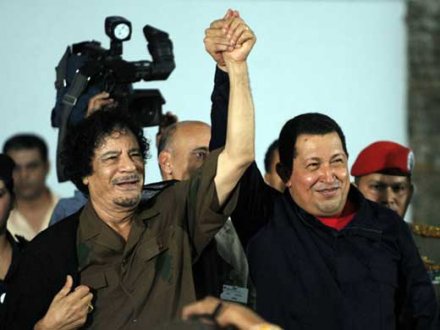
For Shady, consistency has never been a strong point of the Italian government: “Look at the optimal relationship between Berlusconi and Gaddafi or the fact that after having granted honours to Assad, the Italian parliamentary and ministerial authorities welcomed Burhan Ghaioun, leader of the SNC, to Rome.”

“The meeting with the Vatican was instead organised to clarify that there will not be a Christian diaspora from Syria as well, as has happened in Iraq and how it is presumed will happen in Egypt.”

It is precisely the fear of sectarian clashes that dominates, while Hamadi stresses that among the revolutionaries there are both Sunnis and Alawis, many of whom are renowned intellectuals.

“The solution that we are hoping for,” he concludes, “is that of the no fly zone, a buffer zone. Then the defections of the army will reach 85%.”

10 December 2011

http://www.osservatorioiraq.it/siria-intervista-allo-scrittore-siriano-shady-hamadi Italian original

The lifeless body of 14 year old Mohmmed Abdul Salam Al Mlaessa

The 14 year old shot dead by a soldier in front of his classmates

He was a model student, just like the rest of his classmates. Mohammed was a student at one of the institutes for gifted youth in Eastern Syria, near the Iraqi border. The other morning, together with his classmates, Mohammed was taken from his classroom: brought to the street, he was forced to join in a pro-regime march in the city of Deir ez Zor, a hotbed of dissent. Mohammed dared to give voice to those who like him did not want to go and protest against the decision of the Arab League to suspend Syria for the brutality of Assad’s repression of dissenters. He dared to ask to simply go home. The response was a bullet in his chest, in front of his classmates as they witnessed in
shock.

The teen had fallen to the ground, but Assad’s military security forces continued to shoot: first they kicked him and clubbed him with sticks and then they ended by firing one more shot into his side. “Make sure he is dead,” was the order given by the commander of the Military Security Forces, in the account given of the incident before the Syrian Observatory for Human Rights, an NGO with a London base that has access to a large number of voluntary informers who life in Syria.

Mohammed Abdul Salam Al Mlaessa was only 14 years old. How he was beaten and brought to such pitiful condition at the end of this brutal execution can be seen in the videos on You Tube (it is not possible to verify the authenticity, Western journalists are forbidden to report by the regime): a bullet hole in the left side, his face plummeted and in a pool of blood. An “exemplary” lesson for the other youth present.

That Damascus is afraid of students was something that was clear from the start:  at the beginning of the protests, last March, repression against a group of youth that had made anti-Assad graffiti on the walls of their school. “From primary school to high school, the youth of Syria are in the front line in the protests,” Mousab Azzawi, from the Syrian Observatory for Human Rights states. “No regime can resist when students protest and for this reason, they fear them, they kill them, they take them as hostages. And they make their families hear their voice over the phone as they are torturing them.”

The funeral of Mohammed was attended by at least 45 thousand people, according to estimates. “To disperse the crowd, agents used electrical sticks that provoked temporary paralysis,” Azzawi states. At the ceremony there was an evening sit-in with 8 thousand youths in what has been renamed “Liberty Square”. The gathering was dispersed by firing from the security forces: here there were two of the day’s thirty victims, the majority of which in the city of Homs, the capital of the protesters, where the deserters have taken refuge. But also in the streets of Hama, Deraa, Idleb, people continue to be killed. The activists report that yesterday forty protesters had been killed by soldiers near the Jordan border.

The repression has not stopped, despite the agreement made by Damascus on 2 November to follow the Arab League’s peace plan which calls for the end of the violence and the withdrawal of the tanks from the cities. And after the assaults on the Embassies of the Arab countries that had announced the suspension of Syria from the pan-Arab organisation, the regime has used the iron fist to fill the squares with pro-Assad marches and demonstrations. The case of Mohammed is not an isolated one. Similar incidents have been reported in other parts of the country. Azzawi states: “This same Sunday at Hama, the security forces shot against a group of students who had refused to participate in a loyalist march: five of them never again opened their eyes.”

Alessandra Muglia for Corriere della Sera (translated by Mary Rizzo)

http://www.corriere.it/esteri/11_novembre_15/20111115NAZ19_22_97cf31c6-0f59-11e1-a19b-d568c0d63dd6.shtmlv


 STATEMENT FROM THE SYRIAN OBSERVATORY FOR HUMAN RIGHTS, Sunday, 13 November 2011 19:41
On November the
13th , 2011, 09.15 local time in Dir Zour, the elements of military security took out the students of the pioneer students school in the city by force to the street and compelled them to participate in a march organized by Syrian security forces to condemn the decisions of Arab League concerning the  suspending of Syrian membership in the League.When first-graders of high school refused to participate in the march, and asked to be allowed to go back homes, security forces arrested the student Mohamed Abdul Salam Al-Mlaessa (14 years) who spoke on behalf of his classmates who do not want to participate in the march supporting Syrian Regime, and shot him directly in his chest just under the right wishbone in front of his friends. Then, they started beating him with batons while he bleeds in front of all students crowded for few minutes. When they were not sure about his Death, several minutes after the first shot in his chest, and the awful beating he was subjected to, the commander of the present elements of military security recommended the elements to shoot him again to ensure that he dies (this is literally what the commander said), and this is exactly what happened through the second shot in the flank of the child Mohamed Abdul Salam Al-Mlaessa, which led to his death.Syrian Observatory for Human Rights calls on all Arab and International organizations concerned with protecting civilians and child rights, to urgently intervene to protect civilians in Syria and refer all those responsible for committing such crimes against civilians in Syria to International Criminal Court to consider what might be a typical example of the crimes against humanity that are taking place daily in Syria.To see the documenting videos, you can click on the links below:

www.youtube.com/watch?v=68_uLBMKs0o

www.youtube.com/watch?v=5-QdqGQ5Auc

www.youtube.com/watch?v=zT6nrDpSrVQ

Syrian Observatory for Human Rights

London, November
13th , 2011

Israeli drilling plans

As a little flotilla passes overhead, the Leviathan Reservoir slumbers deep below. A vast oil and gas deposit, little has been said about it in the American press since its existence was confirmed in 2010. But Israel is ecstatic, Lebanon is vigilant and Gaza is getting screwed.

Job 3:8 “Let them curse it …who are ready to raise up a leviathan,” i.e. necromancers who rouse and control wild beasts at will… In Isaiah 27:1; “leviathan  the piercing serpent, even leviathan that crooked (wriggling) serpent,” (Gleaned from Bible-history.com.)

“In Israel’s deep waters, in virgin territory, a monster natural gas discovery has been made.” Noble Energy CEO Charles Davidson.

“With Israel suddenly awash in gas… the discoveries put Israel on the global energy map long dominated by oil-rich nations in the Middle East.” Houston Chronicle  Jan. 5, 2010.

According to Press TV (June 18,) Noble Energy was granted permission by Israeli officials to begin developing a natural gas field off the Gaza Strip coastline. Israel’s Ministry of National Infrastructure is claiming the shortage/disruption of natural gas from Egypt is the reason it granted approval.

That Israel has any right to Palestine’s resources is negated by UN Resolution 3005 states clearly that the natural wealth and resources of the Gaza Strip are to be controlled by the citizens of Gaza.

Kanan Pbeid, a Gaza Energy expert was quoted in the Press TV article saying: “This is nothing but theft of Palestinian’s natural resources. Palestinians are the only ones who should benefit from natural gas reserves.”

But the Gaza deposits are only part of a huge gas and oil reservoir that Israel is trying to claim as its own.

The Leviathan Reservoir lies within the Levant Basin Province (LBP), which itself lies under the continental shelf off the eastern Mediterranean coast. Estimates of the gas deposits within the LBP run to 16 trillion cubic feet and are worth an approximately $95 billion. It’s the largest natural gas discovery anywhere in the last ten years.

The Israelis already have, among others, an active drill site located 129 kilometers (80 miles) off Haifa. It dwarfs the discovery of the Tamar 1 drill site 47 kilometers (29 miles) to the southeast. That reserve is estimated to be worth US $15 billion.

These realities may also explain why Israel is attempting to keep prying eyes away from the deep-water sites. Is that one reason why the IDF boarded the Free Gaza flotilla in international waters, waters it’s trying to claim according to its interpretation of International Maritime Law? Does a closer inspection show that Israel is also disregarding International Maritime borders on top of those it’s ignoring in Palestine?

there's gas in them thar waters....

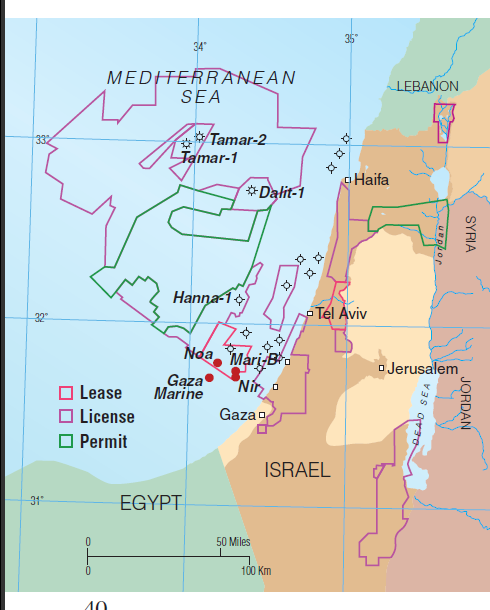
The accompanying United States Geological Survey (USGS) map shows the Levant Basin Province layout published Dec. 29, 2010. To access the full report look for “Assessment of Undiscovered Oil and Gas Resources of the Levant Basin Province, Eastern Mediterranean” at the USGS site. A rough triangle, LBP is divided into three groups of subterranean rock and encompasses 83,000 square kilometers or 51,573 square miles.

The USGS actually discovered the untapped field before 2008, but it was the publication of the above Assessment and the “simultaneous discovery” of productive drill sites that caused the excitement in 2010. Because the drill sites are off the Israeli coast, Israel and the funding consortium are acting on the assumption that Israel has pretty much exclusive access to the shelf’s resources. They point to Israeli-issued extraction licenses granted to the Matan and Dalit /Michal drill sites as their legal basis to develop and drill. Israel and Cyprus are also in talks about development rights.

The Leviathan consortium is a joint venture between the Houston based Noble Energy Inc. and the Israeli companies Delek Group Ltd. Isramco, Dor Oil, Avner Oil and Ratio Oil Exploration. With certain stipulations, this consortium already accounts for approximately half of Israel’s oil and gas recovery activity. Other Israeli companies, such as Zion Oil, are also players with drill sites near the Dead Sea among others.

Some of the CEOs of these companies have strong fundamentalist Christians and Hassidic views. Devoutly religious, they readily admit applying their religious views to their work, viewing the discoveries as Yahweh’s “Blessing on Israel” to allow it to be energy independent. Others are more business oriented and plan on exporting to Europe and/or Asian.

What the Leviathan reserve will eventually yield in benefits to Israeli is being furiously debated. The Tamar gas site alone could generate annual revenues of NIS 2-3 billion in the next 30 years. The Israeli government commissioned Sheshinski Committee recommended the income be used to retire Israel’s external debt.

However! Despite the jubilation in Israeli financial markets over the country’s future prosperity, there are a couple flies in the ointment.

Within a week of the announcement in 2010, Lebanon’s Foreign Minister Aki al-Shami asked U.N. Secretary-General Ban Ki-Moon to “exert every possible effort to prevent Israel exploiting Lebanon’s maritime hydrocarbon resources, which fall within its exclusive economic zone.”

The United Nations rejected this appeal not on lack of merit but because the UNIFIL’s mandate under resolution 1701: “does not include the demarcation of maritime borders. National conflicts and maritime conflicts are two separate things.”

That means the case passes to the appropriate commission, perhaps the International Maritime Organization, which is mandated by the UN to handle legal matters pertaining to international shipping or perhaps under a wing of the courts in The Hague. There are legal avenues.

The Levant Basin Province situated on the Eurasian-Arabian-African continental plate intersection is 51,573 square miles, hardly within the internationally recognized maritime borders of 12 miles from the shore of any country. There was an effort in the late 20th century to extent this maritime border to 400 miles but was never adopted due to problems related to contiguous national borders in Europe and the like.

According the United States Geological Survey (USGS) and using its map as a visualization tool, the Levant Basin Province starts in a sharp point under the Egyptian Sinai Peninsula close to the Israeli border and runs up the Levant Transform Zone through Israel, Lebanon and Syria as it bumps against the Jordan Rift Valley on the east. It ends inland from the Turkish coast then juts out in a triangle reaching into the Mediterranean and into Cyprus’ territorial island waters. The last leg of the triangle shoots south in a wide curve under the Mediterranean until it rejoins the Sinai point. It’s divided into three sub-strata reserves.

The Levant Margin Reservoirs western edge runs north/south a mile or so off the shores of Israel, Lebanon and Syria. Its land mass is pushed upward causing the ripples that form the hills of Jerusalem and the Lebanon Mountains until they bump into the Jordan Valley It contains mostly natural gas and some oil.

The Levant Sub-salt Reservoirs are under deep water and abuts the Levant Margin Reservoir off the Lebanese, Syrian and Turkish shores then fans west to Cyprus. It holds the best oil and much of the natural gas of the entire Levant Reservoirs.

Adjoining it and formed by the rising seabed and shallower waters, the Plio-Pleistocene Reservoir begins at the Lebanon/Israeli border, reaches west to the Eratosthemes Seamount south of Cyprus then turns southeast to travel the Nile Delta Cone to the Sinai Peninsula. In shallow waters, it contains mostly gas and some oil. The Levant Margin Reservoirs contains oil and gas fields. The Plio-Pleistocene Reservoirs includes eight gas fields, and the Levant Sub-Salt Reservoirs have two discoveries (Tamar, Datil). This accounting does not include development sites at the proposed Leviathan drill site or elsewhere.

Israel claims the Tamar and Leviathan drill sites are within Israel’s coastal territory and therefore theirs to exploit. However a look at the USGS map shows a roughly even split at the Lebanon/Israeli border of the Plio-Pleistocene and Levant Sub-Salt Reservoir vast amount of coastal territory belongs to Lebanon.

Then there’s Palestine. For years Israel has tapped into the oil/gas reserves off the northeast tip of Gaza and which were once part of the Palestinian territories. British Gas drilled two wells: the Gaza Marine-1 and Gaza Marine-2. These fields are estimated to be worth at $4 billion.

“I think,” Haidar Eid, a political analyst said in the Press TV article, “this comes in line with Israel’s consistent policy of stealing Palestinian’s land,
stealing natural resources and I think that Israel knows very well that it can get away with murder due to an international conspiracy of silence.”

The truth is, according to epalestine.com, Gaza is sitting on a major gas field contain an estimated 1.4 trillion cubic feet of gas. In addition Palestine has an oil reserve 22 miles off the Gaza Strip. There is no reason, except for Israeli greed, that Palestine couldn’t achieve self-sufficiency when it is recognized as an independent state.

www.presstv.ir/detail/184762.html

USGS/ Assessment of Undiscovered
Oil/Levant Basin Province

World Petroleum
Resources Project

Jubliant Americans

News during the last couple of weeks has rumbled in to shake an already rickety balance of world order. Perhaps one of the most disturbing images accompanying those headlines, though, was not that of more bruised and bulleted bodies. Rather, the image was of what the Associated Press termed a ‘jubilant crowd’. As though they had just won the World Cup Final, Americans waved flags as they sang and chanted their patriotic celebration.

Osama Bin Laden, they had just been told, had been shot dead. After nearly a decade-long manhunt, he had finally been pounced upon in Pakistan. The crowd cheered. And when President Obama made the official announcement, he coaxed the nation to cheer the same; he concluded by quoting the American pledge of allegiance:

‘Let us remember that we can do these things not just because of wealth or power, but because of who we are: one nation, under God, indivisible, with liberty and justice for all’.

‘Indivisible’. In this one word lies the notion that has fed American policy for many, many years: united we stand-divided they fall.

This is the disturbing aspect about the spectacle that accompanied a political assassination. The power that drives the ruin of lives has been reduced to a sports-style competition. The longstanding game strategy has become brazen: (1) unite ourselves to challenge a common enemy-of-the-day, (2) keep all designated enemies splintered with hostilities, and then (3) exploit the resulting instability. A 2005 report called ‘Dividing Our Enemies’, a report produced by the US Special Operations Command, admits frankly: ‘exploiting the rivalries or animosities among the insurgent bands clearly meets our goals’.

By way of example, just last month President Obama gave a speech stressing the importance of strengthening the nation by all working together. Meanwhile, American leaders were bristling at the renewed rumours of an impending reconciliation between the Fatah and Hamas parties of Palestine. They then promptly issued threats to cut off American support to the Palestinians should the Palestinians choose to work together themselves.

Within days, twenty-seven US Senators formerly demanded that President Obama ‘stand by its refusal to work with any Palestinian government that includes Hamas’. The Senators declared:

‘It is imperative for you [President Obama] to make clear to President Abbas that Palestinian Authority participation in a unity government with an unreformed Hamas will jeopardize its relationship with the United States, including its receipt of U.S. aid’.

Why had political support and financial aid been offered in the first place? Clearly not to facilitate a stable government of national unity. Repeatedly over the years, whenever the Palestinians have expressed their own unity, they have been rebuked for seeking their own terms of agreement. Only those Palestinians who were willing to abide by the terms of the Western “Israeli” Alliance were welcome.

This American pattern of provoking and prolonging internal hostilities amongst strategically targeted populations has been played out time and again in the Middle East. With protecting its “Israeli” project in the forefront, successive American governments have spared no effort to tame the Palestinians and Lebanese. Being unprocurable, Lebanon was played. From the 1950’s onward, relentless political manipulation and violent interference ensued.

Just as they had with the Palestinians, American governments offered political support and financial aid to select Lebanese-but only as a means of leverage. In the run-up to the Lebanese national election of 2009, for example, US Vice President Biden warned that his government would assess its willingness to continue aid to Lebanon ‘based on the composition of the new [Lebanese] government and the policies it advocates’. Years of open hostility toward Lebanese parties supportive of the Resistance clarified beyond any doubt what he meant.

Yet again in January 2011, the US cautioned that it ‘would have great concerns about a government within which Hizbullah plays a leading role’ and warned once again it could cut off aid, that tantalising carrot dangled in the faces of those pursued as strategic allies. A game played by house rules. But when the so-called assistance is bartered not for peace and stability, but solely for the political gain of the lender, then the role of the international community has gone terribly wrong.

Eleven years ago this month, the Lebanese thwarted the strategy of the Western “Israeli” Alliance to divide and conquer. The Lebanese Resistance rejected the presence of American-paid mercenaries and liberated its land from military occupation. The Resistance liberated its people from the dictum of imposed division. In so doing, the Resistance confirmed that the right to a durable national unity is not the prerogative of the Western world.

In similar fashion, the various calls for reform we are witnessing today in the Arab world are calls for integrity. They are resistance to a state divided from its people, resistance to a people divided from each other, and resistance to foreign states imposing their own agendas. In particular, the eagerness of the Palestinian and Lebanese peoples to achieve national unity is a key element of this developing global balance. Yet their eagerness has not been cheered; instead, it has been routinely met with stern disapproval from America-the self-proclaimed champion of united patriotism.

The concept of national unity, whether Arab or Western, should guide and grow with its people. It should be built on what is right about its own people-and not on what it perceives to be wrong about another. If we are ever to establish peaceful relations, the role of the international community is to be an honest broker in the pursuit of mutual benefit. When lives are at stake, it is simply not a game.

Brenda Heard is Founder of Friends of Lebanon, London. Details of the Lebanese Resistance & Liberation Day event in London, 25 May, ‘Reform as Resistance: emerging independence within the Arab world’ can be found here.

http://www.english.moqawama.org/essaydetails.php?eid=14083&cid=269

Écrit par Pasquale Navarra pour Forum Palestina (traduit en français par Wassyla-Heyett). 

Les causes et la dynamique de l’enlèvement et l’assassinat de Vittorio Arrigoni, activiste et correspondant du Mouvement international de solidarité avec la Palestine dans la bande de Gaza, sont pour le moment en cours de reconstitution. Certaines informations et  évaluations peuvent néanmoins être données, même maintenant.

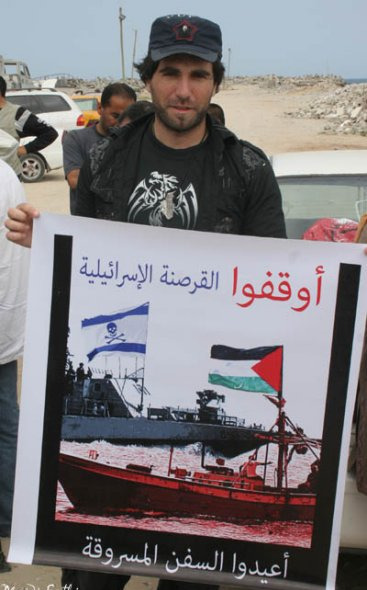
Vittorio était sur le point de retourner en Italie pour collaborer avec la mission de la flottille de la liberté qui avait décidé de briser en mai le blocus contre les Palestiniens de Gaza, que Vittorio avait systématiquement dénoncé en fournissant une documentation depuis des années.

Vittorio a été découvert déjà mort quand la police palestinienne, aidé par la population locale, a été en mesure de trouver l’endroit où il avait été retenu en otage. L’ultimatum 30 heures n’a été rien de plus qu’un prétexte. Les ravisseurs étaient très jeunes, y compris au moins l’un d’entre eux qui était un citoyen jordanien (et non palestinien). 

Le groupe qui a enlevé et tué Vittorio appartient à cette pléiade de groupes islamistes salafistes, très différents de l’actuel Islam politique que le mouvement Hamas, qui gouverne la bande de Gaza, a comme référence. Ces groupes sont beaucoup plus actifs contre les autres courants islamiques corrompus et les régimes arabes – accusés d’apostasie – qu’ils ne sont opposés à l’occupation israélienne de la Palestine ou de la présence des États-Unis au Moyen-Orient. 

Certains de ces groupes appartiennent au réseau de l’Islam politique qui a comme référence l’Arabie saoudite, est financé et armé par elle. Certains de ces groupes ont déjà provoqué des affrontements et des problèmes très graves dans les camps de réfugiés palestiniens au Liban. 

En ces semaines où les alliances au Moyen-Orient sont brusquement bousculées par les révoltes des peuples et les tensions qui sont présentes dans toute la région, la monarchie saoudienne a établi une alliance avec Israël pour marquer l’ennemi commun représenté par l’Iran et son influence dans la région du Golfe et du Moyen-Orient. Cette alliance a été renforcée par un récent sommet à Moscou auquel participaient à la fois Netanyahu et les dirigeants des services services saoudiens. 

Ces dernières semaines, les autorités israéliennes ont lancé une campagne d’intimidation contre les militants et les campagnes internationales de solidarité avec la Palestine, en particulier contre la flottille de la liberté qui appareillera en mai pour se diriger vers la bande de Gaza, et contre le mouvement de boycott, de désinvestissement et de sanctions contre Israël. Les autorités israéliennes ont demandé aux gouvernements des pays qui ont des navires en partance de leurs côtes ou dans lesquels les campagnes BDS sont importantes, d’intervenir contre les activistes. Le Premier ministre italien Silvio Berlusconi a déjà accepté la demande du gouvernement israélien. Les services secrets israéliens ont été activés pour utiliser tous les moyens nécessaires afin de maintenir les militants internationaux loin de Gaza et de Palestine.

Nous n’avons pas tous les éléments de preuve, mais nous considérons que l’enlèvement et l’assassinat de Vittorio correspond peut-être au sale boulot effectué par les groupes islamistes liés au réseau d’Arabie Saoudite aujourd’hui alliée avec Israël. Le message aux militants internationaux est fort, claire et déconcertant: “Tenez vous loin de Gaza, tenez vous loin de  Palestine”, “Aucune internationalisation de la question palestinienne ne sera tolérée par les autorités de Tel-Aviv et ses alliés”. 

Nous tenons à adresser un message fort et clair à tous ceux qui en Israël ou dans le monde arabe, en Europe ou aux États-Unis entendent ​​resserrer l’étau de l’isolement et de la liquidation autour du droit à l’autodétermination des Palestiniens. Nous le devons à cette population qui se bat pour sa liberté depuis plus de soixante ans et maintenant nous le devons aussi à Vittorio. 

Forum Palestina 

freedom fighters in BenghaziThe author of the article I post below, Robert Grenier, rightly asked: “Where are the Arabs?” but in our opinion, we Arab Nationalists, also believe that he had also rightly volunteered to reply to his own question which is in his own words:

“…the primary motivating principles of the rebels have been clear: A desire for personal liberty, dignity and collective social empowerment.” 

Once an Egyptian Arab intellectual lady, Huda Hanum Shaarawi, replied after the 1948 Palestinian Arab Nakbah to the question: “How is it possible that seven Arab states and their armies were defeated by one state “Israel”? Her reply was simple and clear: “Because they were seven states with seven armies and seven ‘leaderships’ each quarrelling with the rest, while the enemy was one with one leadership, one army for one state.”, which the author has described below:

Robert Grenier was the CIA’s chief of station in Islamabad, Pakistan, from 1999 to 2002. He was also the director of the CIA’s counter-terrorism centre.” As a high CIA officer he should have known why did the British  Mr. Sykes and the French M. Picot come together to plan to divide the east Mediterranean Arab territories even before the defeat and  expulsion of the Ottoman Turks from it. They met and agreed to conclude on what is known as “The Sykes Picot Agreement”, that is, to  apply the principle of “divide and rule”, of course to create small weak Arab states that cannot defend themselves in the face of the colonialist powers and their colonialist ambitions, who were at the time in the first place Great Britain and France.

And lately why the old Zionist fox Shimon Peres to be joined at a later time by Condoleezza Rice, U.S Secretary of State under George W. Bush, further try to divide the present Arab states into a smaller states based on religious and ethnic minorities, which Zionists and other colonialist powers shall try to create between them feuds and enmities so as to resort to these colonialist powers for protection against their other Arab brothers… then Zionists and other colonialists shall be able to control them all, but fortunately enough what is known as the New Middle East colonialist conspiracy did not see the light, and with the domino theory of Arab revolutions presently taking place shall never be realized, and hopefully an Arab unity shall instead be realized to counteract these Zionist and western colonialist conspiracies.

Now the aim of young Arab revolutionaries is to get rid of these rulers who want to keep their control on what they consider as their subjects in collaboration with their colonialist protectors, but the young Arab citizens who want to be no more subjects of their corrupt ruers, but real citizens and be able to decide their own fate are struggling to overthrow all these rotten, corrupt and isolationist rulers. That is why those particular rulers shall not volunteer to come to give assistance to Libyan Arabs or any revolutionary Arabs citizens revolting against their rotten rulers… because as we said and saw that by the domino theory, revolutions shall pass from one Arab state to another. They, Arab rulers, want to keep their chairs under the seat of their pants and keep on riding on the backs of what they consider their obedient subjects. The young revolutionaries want their freedom and liberty from their internal and external rulers.

In a big and rich Arab state, an official and a member of the ruling family commented on the simple and rightful demands of their young citizens whom they consider “subjects” who gathered peacefully. As is the case with all Arab rulers, the official said after denying that there were gatherings and demands: “The cooperation of citizens with security men to confront those who call for anarchy was a good proof and spontaneous response against those calling for evil in a peaceful country.” He added that, “driving people to overstep matters to what doesn’t achieve demands or reform, calls for dialogue,and that is exactly what those in command in the state call for”!!!!

Another highly posted official said: “Some of those calling for evil gathered in front of the ministry of internal affairs,” he claimed that, “they want to make of the state a place of chaos, they are organizing purposeless demonstrations that have no high aims, but they proved that they don’t know the people of their state”!!!

From Libya, correspondent Ogharit Dandaash wrote the story of the engineer Almahdi Zeo:

“Before February 14th there was not a single exceptional matter or incident that makes it to informational mass media, nor was there a political stance, be it pro or con, regarding the regime that was in the activities of this Benghazi engineer who was in his forties. Engineer Almahdi Zeo was living a quiet life in Benghazi, his financial status was as described by those who knew him well as “better than good (kwaiseh)”. Zeo was the head of a family, and the father of two daughters studying at university, who never heard or noticed him fidgeting when Gaddafi and his men ruling from their stronghold of terror in Benghazi were mentioned.

On February 15th 2011 the young people of Benghazi didn’t expect the official birth for the February 17th revolution, to mount the winds of change that blew from their neighborhood. They demonstrated and were confronted from the Benghazi battalion of terror with fire in front of the court house… many of the revolutionary fell down martyrs…

While the young revolutionaries were marching in the funeral of their martyred comrades, Zeo was passing an ordinary day during his monotonous life. He passed in front of the headquarters of the battalion on his way to practice his ordinary daily routine work, it was inevitable that some incident should happen to attract his attention. Young people returning from the funeral of their beloved comrades, were, without notice, confronted with live fire, the source of which was from the battalion of Al-Fadel Omar, the headquarters of the soldiers of the regime, where any activists with political opposition to the regime, or with any ideas that contradict those of the Gaddafi Green holy Book. Zeo stopped to see the young people confronting the heavily armed soldiers with their naked chests, He returned home to tell his two daughters about 18 years olds fighting without help.

The following morning he returned to practice his ordinary work, believing that the zeal of the young couldn’t but be aborted with the regime’s brutality, but just in front of the same battalion tens of young people returned for another sit down with other supporters… Zeo realized after a long life of submission and looking aside shall not end with the feeling at ease required by other human beings, those youngsters realized, before it was too late, that there is a difference between living as ordinary human beings and a life full with a humanitarian meaning.

That night he hugged his beloved ones like he had never done before, he talked to them about small heroic incidents that history books didn’t mention, and about which no poems were written, but they leave their effect in people’s souls that had submitted to accepting life at ease, and as an ordinary matter… and left his house.

The place is the headquarters of the Benghazi battalion, date before the new Libyan history, attendants, the young persons seated on the ground, the occasion: drawing a new road map for the revolution.

The engineer said: “Success depends on the element of surprise: Clearly, we need to act quickly.

One of youth there understood: the moment the road opens, we attack.

Another youth pointed out to another group of young people, the brothers coming here are from Baida, they came to help us.

The engineer said, “I am going ahead”.

The engineer mounts his car that was loaded with gas containers for home use, and drives towards the wall of the two storey building housing the battalion’s headquarters, which is impossible to enter to or to break into. He steps on the accelerator to maximum speed, hits the wall, the car explodes, the wall crumbles creating an opening, the youngsters rush into the headquarters.

The element of surprise dispersed the soldiers who ran away, the revolutionaries took control and they obtained their first quantity of arms, they took control of the helm of the battle and thus the battle turned in their favor. After some confrontations, the Abu Al-Fadel Omar battalion fell and its leader fled to Tripoli along with Assaadi Al-Gaddafi (One of Muamar Gaddafi’s sons) who took refuge at the battalion’s headquarters after the outbreak of revolution. Then the weapons and ammunitions stores are now in the service of the revolution born on February 17th.

The fall of the battalion contributed to the liberation of Benghazi, and the revolutionaries gave credit in that to Engineer Almahdi Zeo for the morale and military help he gave to them, and encouraging many officers and soldiers to defect from Gaddafi’s forces and join the revolutionaries, and opening the door wide open for victories, which made the east of Libya fall from the hands of Gaddafi into the hands of the revolution within four days.

Martyr Al-Mahdi Zeo did not live to reap the fruits of the trees he planted, but those Libyan young men and women who had never heard of Engineer Zeo know now that the engineer of the realized revolution shall be the name who they shall tell to their children and grandchildren when their hair shall turn grey about a revolution executed by dreamers who didn’t wait enjoy its fruits.

So we should not expect from these decaying, rotten and dictatorial regimes to step in to help other revolutions against their equally decaying, rotten and dictatorial Arab regimes… they are equally bad and should be overthrown by young Arab revolutionaries.

“Where are the Arabs?” The other Arabs, are the young revolutionary Arabs, who are each cleaning the dirt the old Arab dictatorial and rotten Arab regimes left over by colonialism behind. Good things are coming with Arab liberty and unity. 

So we cannot but agree with Robert Grenier saying: A new day is dawning in the Arab world. The revolutions underway have only just begun, and there is much to be sorted out in the countries where the democratic wave has taken hold. The response of other regional regimes, under less acute and immediate pressure, but still grappling with the challenge of socio-political changes now set perhaps inexorably in motion, remains very much to be seen. For all that its common outlook is rapidly evolving, the Arab world has a long way to go in coming to a firm consensus about what forms of rule will meet its minimum standards of acceptability.”

 ORIGINAL PIECE

Opinion
‘Where are the Arabs?’ By: Robert Grenier 

If Arab states are serious about ending Gaddafi’s menace to his people, they must take the lead in helping the rebels.

Robert Grenier Last Modified: 13 Mar 2011 08:35 GMT
If Arab states do not act now, when the last Libyan rebel lies bleeding in the desert, his final words
may well be: ‘Where are the Arabs?’

It was August of 1982. For seven weeks, Beirut had been sealed off, under attack by Israel from land, sea and air. Water and electricity supplies were cut. The Israelis had secured the airport and much of the southern suburbs. The Syrians had been defeated, their air force wiped from the Lebanese skies. Chairman Arafat and the PLO were seemingly at the mercy of their enemies, utterly dependent upon the international community to arrange an evacuation of their fighters which would bring an end to the carnage. Isolated and alone, all the leader of the Palestinian movement could do was look into the cameras and plead: “Where are the Arabs?”

In January of 1991, a nominally extensive international coalition of armed forces, led by the US but including many of the Arab countries, stood poised in northern Saudi Arabia to drive Saddam Hussein from Kuwait. It might have seemed that much of the Arab world was unified, and had engaged the United States and the international community in their cause to liberate a brutally occupied Arab country.

But in many of the Arab capitals, and to a seeming majority in the Arab street, the armies massed in the Saudi desert were anything but a sign of Arab strength and unity. For in point of fact, the Arab countries had had comparatively little to do with organizing this un-authorized, largely Western coalition. Many Arab nationalists from across the region asserted strenuously that the Arabs should not rely upon the Americans to sort out their difficulties, arguing in favor of an “Arab solution” to the crisis. In fact, however, this was mere posturing: An Arab solution to the crisis would have amounted to meek acquiescence in Saddam Hussein’s intra-Arab aggression. Those Arab countries most threatened by Saddam were not about to entrust their fate to regional Arab councils. They did not wish one day to be left, alone, to make the entreaty: “Where are the Arabs?”

Today, in the deserts along the coast of Libya, patriots are fighting to liberate themselves and their country from over 40 years of brutal, arbitrary misrule. Although tribal and other social divisions are no doubt playing a role in determining the fault lines of the civil war progressively settling over Libya, the primary motivating principles of the rebels have been clear: A desire for personal liberty, dignity and collective social empowerment. In this they have been transparently inspired by the courage of their brothers and sisters in Tunisia, in Egypt, and in many other parts of the Arab world. But as they attempt to withstand the onslaught of Muammar Gaddafi’s better-armed loyalists, and as those rebels most hard-pressed repeatedly plead for at least limited outside assistance, well they might ask: “Where are the Arabs?”

Passivity and diffidence

A new day is dawning in the Arab world. The revolutions underway have only just begun, and there is much to be sorted out in the countries where the democratic wave has taken hold. The response of other regional regimes, under less acute and immediate pressure, but still grappling with the challenge of socio-political changes now set perhaps inexorably in motion, remains very much to be seen. For all that its common outlook is rapidly evolving, the Arab world has a long way to go in coming to a firm consensus about what forms of rule will meet its minimum standards of acceptability.

Nonetheless, the latest indications of Arab intent in the context of Libya are positive, if as yet insufficient. A clear message has been sent by both the GCC and the Arab League that Gaddafi’s brutality toward his people is not acceptable, and has effectively delegitimised his government. The Arab nations have taken a clear stand in favour of a UN Security Council-imposed no-fly zone, and for urgent outreach to the National Transitional Council in Benghazi.

So far, perhaps, so good. Still, troubling signs of traditional passivity and diffidence remain. The Arabs are deferring action to the international community without suggestions as to how that action should be implemented, and with no firm commitment for their own direct involvement. The Arab League ministers aver that a no-fly zone should only be for the purpose of protecting Libyan civilians, and should end as quickly as possible. They continue to express concern over foreign intervention, while requesting precisely that. Their ambivalence is palpable.

At the same time, evidence is mounting that the international fixation on a no-fly zone may be a distraction from more urgently-needed action, and may in fact be counter-productive. First of all, it is not at all clear how great a threat is posed by Gaddafi’s air strikes, per se. While the military situation remains confused, it seems more likely that Gaddafi’s armour and artillery pose the more lethal danger to both rebel and civilian targets.

Moreover, imposition of a no-fly zone would be no simple task. Security Council agreement is far from assured: The Council is divided, and the Chinese, in particular, will do what they can to avoid approving international interference in internal Libyan affairs, out of fear of the negative precedent it might set for themselves. While others might well participate, the US, clearly, would have to take the lead. (As far we Arabs are concerned, we have no trust with the United States and other western powers, their policies are equally colonialist, and we suffered enough on their hands and their rogue adopted and nursed our Zionist entity- A.S.K.)

Following its doctrine, the US would need to attack Libyan air defences first; the potential for significant collateral damage is considerable. The Americans would also require a helicopter-borne “combat search and rescue (CSAR)” capability to be in place for downed pilots before they would willingly act. And there are not nearly enough aircraft in theatre, yet, for an effective no-fly effort. Finally, it may simply be too much to suppose that the Americans, already engaged militarily in two Muslim countries, should now intervene in a third, when the risk to their already weak regional standing from those who may advocate international action now, but will no doubt quickly criticise any missteps, is so great.

Taking the lead
If the Arab League is serious about ending Gaddafi’s menace to his people, they should focus on providing the National Transitional Council with the means to defeat him and his loyalist forces. The US, the EU and NATO have all made clear that they will only act with a clear legal mandate and with regional support. Therefore, it is up to the Arab nations to take the initiative.

It is very likely that the softness in the Arab League stance is a reflection of the divisions between those members on either side of the “democratic revolutionary” divide. Hobbled by the need for consensus, the League as a whole has gone about as far as it is capable; it is unlikely to take the tough decisions and hard actions necessary to counter Gaddafi’s resurgence. Those whose commitment to support of the rebellion is notably strong – Egypt and the GCC countries in particular – must be prepared to take the lead from here.

First, they should move quickly to recognise the Council in Benghazi as the legitimate government of Libya, and immediately request modification of the current UN arms embargo to exclude its forces. Meanwhile, a rapid assessment of the rebels’ military requirements is needed; these would likely include ammunition, anti-armour weapons, and perhaps rockets or artillery. It is clearly within the capabilities of at least some of the Arab countries to provide these rapidly by air, most likely with logistical assistance from the US or NATO. In this context, it would become far easier, and more palatable, for the US and NATO to provide overhead intelligence, perhaps off-shore jamming of Libyan military communications, and other forms of assistance to the transitional government.

We can begin to imagine that such an Arab-led initiative on behalf of the Libyans could help to build a new, cooperative relationship with America and the West – one which flows from Arab empowerment and collective resolve, and not, as in the past, from Arab weakness.

The time has come, in short, for the Arab regimes to demonstrate regionally and internationally the will and courage to act demonstrated by many of their own citizens domestically. Otherwise, they run the risk, in what is supposed to be a transforming Middle East, that when the last Libyan rebel lies bleeding in the desert, the boot of a pro-Gaddafi thug upon his neck, his last gasp will be: “Where are the Arabs?”

Robert Grenier was the CIA’s chief of station in Islamabad, Pakistan, from 1999 to 2002. He was also the director of the CIA’s counter-terrorism centre.

The views expressed in this article are the author’s own and do not necessarily reflect Al Jazeera’s editorial policy.Source:

Al Jazeera

Don Quixote and Sancho PanzaHero or madman? Four hundred years ago Don Quixote, Cervantes’s cavalier clod, set out from La Mancha on a decrepit horse, Sancho Panza by his side, to win the heart of Dulcinea. Quixote was a dreamer with good intentions and his legend has endured, but for all the wrong reasons. We remember him for his misadventures, albeit chivalrous, but at the end of the day Quixote saved no one and made no difference except perhaps in the hearts of those he encountered. In truth, his righteous intentions and noble acts often led to grave consequences.

In a strange sort of way, it feels like we’re seeing these misadventures played out before our eyes, and as in Cervantes’s brilliant parody, with equally tragic results.

The quixotic endeavour known as the Freedom Flotilla is about to embark on its second act at the end of May 2011. The first flotilla, which reached its dramatic end on 31 May 2010, saw a tiny fleet of boats carrying peace activists – and according to Israel, a group of Turkish militants – face off against one of the most powerful armed forces in the world. Well, at least no one can accuse them of battling windmills but one must question the sanity and cynicism of organizers who deliberately sought acclaim through known adversity. Perhaps like Quixote, they truly believed they were “born to be an example of misfortune, and a target at which the arrows of adversary are aimed.”

So they got their headlines, but at such a cost. The incident, planned as a publicity-raising exercise more than anything else, set off a series of protests and diplomatic wrist-slaps around the world. Europeans very much want to see a negotiated end to Israel’s occupation of the West Bank. But significantly, the flotilla disaster has failed to hurt Israel’s international standing. Indeed, within a few weeks of the raid, Israel’s proponents were lining up to affirm their support. “Israel’s basic right to self-defense should not be questioned,” wrote one group that included Jose Maria Aznar, a former prime minister of Spain, David Trimble, a former first minister of Northern Ireland, Alejandro Toledo, a former president of Peru, and Marcello Pera, a former president of the Italian Senate.

Since the demise of Israel’s relations with Turkey (which, admittedly, began before the flotilla incident), Israel’s Mediterranean neighbours have been practically tripping over themselves to improve ties to Israel. Last November Italy’s air force conducted a joint training exercise with the IAF. In February, Israeli President Shimon Peres visited Spain where he met with Spanish PM Jose Luis Zapatero and the King of Spain, Juan Carlos I who hosted Peres at a royal reception. Last week, Cyprus President Dimitris Christofias arrived in Israel for the first visit by a Cypriot head of state in over 10 years. While in Jerusalem Christofias, Cyprus’ first Communist president, became the first European leader to publicly denounce the flotilla project. “Terror activities in Gaza are unacceptable,” stated Christofias, “and therefore we have prevented the flotillas from leaving.” http://www.israelnationalnews.com/News/News.aspx/142898

No state is benefiting from Israel’s estrangement from Turkey more than Greece. Israel’s ties to Greece have been strengthening on an almost daily basis. It should be remembered that Greece initially withdrew from joint military exercises with Israel in protest at the raid. But within a few months, Greece was hosting senior members of the IDF, including navy head Eli Marom (who ordered the Mavi Marmara attack), and Israel’s PM and his wife.
http://multimedia.jta.org/images/multimedia/bibius_0/F100817GPO05_m.jpg

“We see the (European) market expanding to the Mediterranean and certainly we would like to integrate Israel into this European market,” said Prime Minister George Papandreou. “I think this is vital for Israel’s economy but also for its strategic security. “Last month, Greek’s PM promised visiting Jewish American leaders that Athens would help Israel forge even CLOSER ties with the European Union, particularly through gaining access to European markets. Not a word about Israel’s treatment of the Palestinians or even the detention of 30 Greek activists on board Mavi Marmara. A non-issue!

Other European states have been equally nonchalant toward the tiny protest movement. Just a few weeks before the raid, on 10 May 2010, Israel had been invited by the Organisation for Economic Co-operation and Development (OECD) countries to become a member. One might have expected the deadly assault to affect the discussions. One would be wrong. The formal agreement was signed in Paris on 28 June 2010.

The love-fest has continued throughout the EU. Last month, the Dutch parliament passed a pro-Israel bill affirming Israel’s existence as a Jewish, democratic state and urging the EU not to recognize a unilaterally declared Palestinian state. The bill declared that the unilateral declaration of a Palestinian state would not bring closer a lasting peace, and therefore the Dutch government will advance a European (EU) policy that rejects the unilateral declaration of a Palestinian state and means a European call to the Palestinian leaders to resume direct negotiations with Israel. In other words, a complete dismissal of Palestinian rejection of Jewish self-determination and agreement with Israel’s position that it has been the PA and its refusal to negotiate that is the stumbling block, not Israeli actions. It’s also impossible not to notice tightening relations between Israel and Poland which includes several recent military deals. In Jerusalem last month for the first ever Polish-Israeli governmental forum, Polish Prime Minister Donald Tusk declared, “You have a real friend in Europe and it is important that both countries will strengthen each other’s image.” (And again, not a mention of Israel’s treatment of Gaza’s population.) http://electronicintifada.net/v2/article11858.shtml

If that doesn’t seem significant consider this: in July 2011, Poland will assume the rotating presidency of the EU.

There’s more. Last month, a computer scientist at Jerusalem’s Hebrew University was appointed by the European Commission to its Scientific Council, the governing body of the European Research Council (ERC). A few days later, Israel was selected to host the 2011/13 Union of European Football Associations (UEFA) European Under-21 final tournament. Yes, international organizations are still planning events in Israel, business is up (4.1% in 2010) and tourists are flocking to the country in droves.

Other than some public admonishment from known critics of Israel, such as Catherine Ashton, the British government has all but forgotten last year’s raid. Prime Minister David Cameron, who last year condemned the attack, has now reversed his position saying that Israel was “within its rights to search vessels bringing cargo into Gaza.” And last week, George Galloway’s Viva Palestina announced that it can no longer fund-raise in behalf of any future flotilla as a result of suspected ties to Hamas. Although no links have been proven, Viva Palestina obviously believes the investigation is ongoing. Was this inquiry ordered from above? The timing is certainly suspicious.

The incident definitely didn’t affect Israel’s relationship with the US. In August 2010, the two countries signed a formal co-operation pact between NASA and the Israel Space Agency (ISA). The US has continued to shield Israel from legal action and has endorsed Israel’s Turkel Report, an examination of the details of the raid, as a “credible and impartial and transparent investigation.”

The issue at hand is not the cause, which is worthwhile and laudable, but the methods and motivation of some so-called peace-activists who, like Quixote, are “spurred on by the conviction that the world [needs their] immediate presence.”

If, then, the Freedom Flotilla’s hope was to embarrass Israel into lifting its blockade of the Gaza strip, it was a dismal failure. A second flotilla planned for May 2011, will also likely end in disaster, the boats stopped by force, activists detained and possibly killed. The movement will succeed at getting more headlines for a cause that’s barely been out of the news for 40 years. Will international condemnation follow? Probably. Will it make a difference? It hasn’t yet.

That’s not to say the plan is meaningless: it empowers and validates human rights activists trying to make a difference; more importantly, the global movement gives hope to Gaza’s entrapped population. That sort of gesture shouldn’t be dismissed. But there is a troubling flip-side that must be addressed, and that is the powerful influence of a small group of narcissistic, self-righteous Don Quixotes (and I put Turkey’s PM Erdogan, who is seeing re-election just weeks after the scheduled flotilla, in this group) who may be championing a failed strategy at the expense of putting the time and effort into developing realistic strategies for real peace. Before another flotilla sails, I think it’s time this prospect is considered.

Cameron likes private Israeli security orgs

‘With me you have a prime minister whose belief in Israel is indestructible’, David Cameron assured over a thousand supporters of a private security organisation that polices the English Jewish communities.  While his commitment has long been common knowledge, his word choice underscores the need for concern.

When we say we ‘believe in’ something, we are making a personal value judgement.  Whether we ‘believe in’ God, or we ‘believe in’ drinking five litres of water a day, the phrase means that we think the concept is valid.  The British Prime Minister’s word choice points to a political phenomenon: Israel has never been a traditional state as much as it has been an ethos.  From the beginning, the Israeli project has been an ideology imposed at the expense of those whose only fault was to have been caught unawares on a coveted land. 

Indeed the whole of Cameron’s speech, which can be read here http://www.thejc.com/news/uk-news/46044/david-camerons-speech-cst, exudes a passion for a conceptual people under siege.  Cameron thus describes his belief in the Israeli project as ‘indestructible’—defensively and defiantly ‘indestructible’. 

The need for concern lies with his personal adulation dictating the terms of his political management.  Certainly, to guarantee equal rights for English people of all religious faiths is admirable.  But throughout his speech Cameron equates ‘Jewish’ with ‘Israeli’—as if all London Jews were pro-Israeli (they are not) and as if all Israelis were Jewish (they are not).   Such a stance discredits both demographics.  Likewise, his promise that he ‘will always be an advocate for the State of Israel’ denies the possibility of a conflict of interest with his sworn duty as Prime Minister to be faithful and bear true allegiance to Her Majesty Queen Elizabeth: to be an advocate for the United Kingdom.

Equally as worrisome, though, is the Prime Minister’s characterisation of the recent upheavals in the Arab world.  Cameron notes that ‘this instability may seem a cause for concern for Israel’, but he then shrewdly reassures his audience.  This is a ‘precious moment of opportunity’, he says.  ‘We want to see Israel driving the process, which means seizing the initiative.  Doing so is absolutely vital’.

Vital to whom?  Is it vital to the Libyan people against whom Muammar and Saif al-Islam Gaddafi are using mercenary weapons outsourced from similar Israeli ‘security firms’?  No, not vital, but lethal to those seeking redress.

Cameron devotes a significant portion of his speech to discussing the Arab uprisings as an ‘opportunity’ for Israel and its Western patrons to remake the region to better suit themselves.  This myopic exploitation typifies the pattern of defining all matters and all peoples of the Greater Middle East in terms of the Western-Israeli Alliance. 

A spirit of entitlement and superiority has for many long and bloody years pervaded Western foreign policies.  Many of those who have been suffocated by such attitudes have at last realised that they deserve to decide for themselves their own business.

A state is a dynamic entity.  No state comprises people of identical values.  Its success lies in achieving a balance in the cultural expression of those values.   But this balance cannot be imposed.  It can be determined only by the people themselves. 

The Arab peoples have had enough of the condescending advisories from those who have their strategic eye on Aladdin’s cave.  The Arab peoples do not need the dubious money-maker George Soros to sort out on the BBC the Arabs’ handling of their own natural resources.  Nor do they need David Cameron’s vision of ‘stability and security for all.’  Because his vision is simply not for all.  He said it himself: he will always be an advocate for the State of Israel. 

The seemingly contagious quests for Arab autonomy throughout the region have been propelled by people who want and need and demand a voice.  Their own voice.  The uprisings are neither pro-Westernism, nor anti-Westernism.  Rather, the uprisings are about self-respect.  The uprisings are resistance to imposed ideologies.  Let us be clear: the region is not for sale.

www.english.moqawama.org

Originally posted at http://english.moqawama.org/essaydetails.php?eid=13593&cid=269  

Photo from http://thecst.org.uk/blog/?p=2359   

(thank you Hussain)

Gheddafi and Chavez

If one, like myself, is raised with the love of “the worker” and “the people” which exceeds any love of a party, an ideology or even a nation, it is difficult to really fit in with any established left. While the left claims that it seeks power of the people, too many times its public statements make it clear that the people to protect are instead the people already in power, despite what they might actually have to do in order to maintain that power.

In the past, I have been critical of the massive investments Fidel Castro allowed to be made by Rafi Eitan and have been told that expressing how wrong the policy of “anything at all to uphold the Cuban revolution is good, even if it means trampling on Palestinians” was. I was accused of siding with dissident Cubans. It seems that there is a belief that this leader is beyond criticism.

Again, when I have criticised Ahmadinejad (who is not a leftist leader, but currently a leader some of the anti-imperialists who do not accept pan-Arabism look to as being “the voice of truth”) for the lack of what I consider political savvy in some of his speeches and how easily they are used to deflect attention to Israel as victim and away from Palestine as real victim, I have been accused of being a Zionist… and to my eyes, the automatism of Ahmadinejad=the real anti-Zionist seems like rote dogmatism without true reflection of what precisely Iran’s role in the region’s in/stability might be. Iran deserves to be free of all instrumentalisation and to have a truly autonomous and independent domestic and foreign policy, no matter if Ahmadinejad is the leader or not, but those in the West who insist upon singing the praises of Ahmadinejad as a symbol and condemning those who don’t are using simpleton logic and do nothing that is different from those who use him as the banner for what is evil.

Today my inbox has gotten another jolt. It seems that the “Hugo Chavez International Foundation for Peace, Friendship and Solidarity” is supporting Muammar Gheddafi and accusing the uprising in Libya as being the work of foreign services. Like classic dogmatic leftist propaganda, their press release attempts to equate the person of Gheddafi with the nation of Libya. Like all pieces of dogmatic propaganda, it contains some elements of truth, such as lamenting the lack of media attention for the crimes against humanity committed against the Palestinian people as well as the tendency of the forces of power in the West to attempt to hijack any popular movement and take control of it. As well, its statements about Gheddafi’s son being a benefactor in an NGO are also true, as his foundation donated 180 vehicles to the Viva Palestina mission as well as having assumed the exaggerated costs of the doomed and ill-planned Road to Hope Convoy, which did not factor in the amount of money to actually bring the goods to Gaza by boat, as is (unfortunately in these horrible times we live in) the only means possible. However aside from some facts and truth in the press statement, the core truth is that once again, the “left” sides by the power of a leader who states himself to be anti-imperialist, (despite evidence to the contrary) and instead tyrannically controls the business and wealth in a sort of State Capitalism where only a few gain and where democracy is seen as counter to the interests of the State. 

It is sufficient to read the press statement to see that the great blindspot blocking many who speak in the name of the “left” is a lack of awareness of the unstoppable force and legitimacy of the Arab masses. People in the MENA lands are divided into nations, religions, political orientation so that they can be used for a huge variety of dogmatic reasons. This is done even by their friends and supporters who neglect a very basic reality – unity across every artificial divide. There are those who blame/praise the recent uprisings on Islam, but that is again untrue. Though these are nations with a vast Muslim population, the uprisings are not religious rallies and are indeed joined by Muslim groups, but not lead by them, just as they are joined by internationalist groups, but are not lead by them. It is simply the power of human beings who live in the “Middle East” and North Africa who are demanding their political and human rights. It is their identification as a united front which brings them en masse to the largest squares in their countries, allows them to face bravely the very real threat of bodily harm and even death. 

It is the Arab human being who is being buried on the beaches of Tripoli, the cemeteries of Soussa, Manama and Cairo. It is the Arab human being who is arrested in Palestine for sharing his or her solidarity with other humans fighting for their rights. There is no limit of age, sex, religion, political credo or even social class. There is one uniting factor, the factor of Arabhood, Arab Consciousness that is drawing these people to demand to have a say in their own future and to construct their own country, and protect it for all the nationals abroad who are in exile or diaspora, ousting corrupt and tyrannical leaders who have at times used patriotism of the nation to inspire “brand loyalty” to the leader. 

Yet, these same feelings of patriotism, the beloved flags of all the independent nations, are being waved in a mass statement of unity. Arab people are supporting other Arab people across the globe, seeking to empower the individual national struggles in the name of Arabhood and humanity as a whole. The Algerian, the Moroccan, the Jordanian, the Tunisian, the Iraqi, the Egyptian and all the other national identities are not abandoned, but are instead joined together in solidarity as a sole people rising up against any outside forces or internal pressure that seeks to strip them of their power and determination to be the protagonists of their own stories. 

Just as it is wrong and improper to impose sanctions against a people to bring down a leader, as is attempted from the West and the imperialist powers (US and EU sanctions against Iran, Iraq, Gaza, to name only some), it is also wrong to have attempted to call for an economic boycott of Egypt to bring down Mubarak. To boycott an Arab nation at this time, as is expected soon from the USA towards Libya, never brings down the leader, it only weakens the masses and makes them further victimised by the oppressive powers, their own and those from outside. Boycotts are to change policy, not to bring down leaders, and they do nothing but increase suffering to the population which does not possess any kind of powers or economic clout. 

So the left, rather than support Gheddafi, should condemn the proposed boycott of Libya while at the same time accept the power of the people and abandon the dogmatism of the charismatic “revolutionary leader” when it is evident that his leadership is in place only by means of oppression. I would expect that true revolutionaries and leftists will ignore the appeal of the Chavez Foundation and will take their place alongside the Arab people in their struggle for freedom. 

(thank you Ali Baghdadi for bringing this missive to my attention).   

HUGO CHAVEZ INTERNATIONAL FOUNDATION FOR PEACE, FRIENDSHIP AND SOLIDARITY

HCI-FPFS

“To love one’s neighbor is also to love one’s enemy. Although in reality that qualifier-‘enemy’ does not exist in my vocabulary. I recognize that I only have adversaries and I have acquired the capacity to love them because in this way we do away with violence, wrath, vengeance, hatred and substitute them with justice and forgiveness.” 
Dr. Oscar Elias Biscet Gonzalez (1999)

Press Statement                                                                       23 February, 2011.

Bamako, Republic of Mali                    Tel: 00223-6413027.

This is the second statement to the Press issued by the Hugo Chavez International Foundation for Peace, Friendship and Solidarity (HCI-FPFS), in the light of the situation in Libya. It is no more a secret to state in this Press Release that foreign powers, opposed to peace, unity and progress of Africa are in action again, leading a wicked campaign of treachery, deception and terrorism against Libyan leader, Muammar Al-Qathafi and the people of Libya. This time, the enemies of Africa are hiding behind the corrupt foreign media in their criminal attempts to attack and destroy Libya.

The international conspiracy to destroy Muammar Al-Qathafi through a carefully-calculated media frenzy constitutes the burden of each of our position statement on current events in Libya, especially the wide, vicious, hypocritical gap between the US and Western powers’ “democratic” avowal and the state terrorism associated with the activities of these so-called civilized nations towards the people of Africa, Middle East, the Caribbean and Latin America. In the first place, the Hugo Chavez International Foundation for Peace,
Friendship and Solidarity (HCI-FPFS) wonders how British Foreign Secretary William Hague can feel so comfortable in the company of anti-Libyan organized crime groups that seek the devastation and destruction of Libya. For instance, it was the British Foreign Secretary-turned-coat anti-Libyan, anti-Qathafi, anti-Africa, anti-Arab, anti-Hugo Chavez, anti-Venezuelan whom led the malicious lie to the world that Libyan leader Muammar Al-Qathafi had ran away and sought refuge in Venezuela. The malicious lie was doctored at a time British Prime Minister David Cameron was on an unannounced visit to Egypt, ostensibly to urge the military junta in Cairo to respect the so-called timetable for holding elections.

The other lies, deceptions and ill-thought-out propaganda associated with the ongoing anti-Libyan campaign in the corrupt media include the following misguided allegations, that:

LIBYAN WAR PLANES BOMBED CIVILIANS.

It is innuendos and reckless dissipation for any foreign government, organization or the corrupt media to suggest that the competent authorities in Tripoli used Libya’s fighter jet planes against Libyan civilians. It has never happened and there is no evidence to convince any sane person to believe that the Government of Muammar Al-Qathafi ever used fighter planes against the Libyan people, since the dawn of the era of the Great September 1st Al-Fateh Revolution in 1969. As a matter of fact, there are all evidences available to conclude that the Government of Muammar Al-Qathafi does not need importing foreign mercenaries to protect Libyan life and property against the terrorist activities of organized crime groups and the corrupt media.

It is now clear that the “corrupt international media” disproportionately covers human rights violations in Libya beyond an attempted distraction from the actual situation on the North African nation. For example when Israeli army massacred Palestinian men, women and children in the occupied Arab lands and territories, there is little media coverage compared to the coverage generated over the drown attacks directed by the White House in Washington against tribes men, women and children in Afghanistan. The extrajudicial execution of Egyptian opposition leaders by US/Israeli trained agents of former government of the disgraced dictator Hosni Mubarrak was not covered by the “corporate media” despite it being a heinous crime against humanity. We assert that, the assumption that Libyan fighter planes deployed by the Libyan Government against civilians is without basis. This is further evidence that the corporate media’s claims about happenings in Libya are without substance.

SAIF AL-ISLAM QATHAFI THREATENED THE LIBYAN PEOPLE.

The corporate media got it wrong from the beginning when it made and repeated the claim that Saif Al-Islam Qathafi, the President of the Gadafi Foundation threatened the Libyan people. When weighing the claims of the corporate media against the President of the Gadafi Foundation, one should look at Saif Al-Islam’s background. This is a man who leads a respectable Non-Governmental Organisation (NGO), the Gadafi Foundation that has been instrumental in enforcing the principles of the Green Charter International (GCI), for peace, human rights, rule of law, democracy, freedom and human dignity in Libya and world over.

Saif Al-Islam’s statement on attempts by criminals to rob the Libyan people of their peace, freedom and dignity was crystal clear and made to urge the Libyan people to resist any foreign attempts to destroy their country. The accusations against Sail Al-Islam are false and reveal that the corporate media is ever willing to blatantly lie in order to attempt to damage the reputation and illuminating personality of Sail Al-Islam.

Thus far we have seen how a simple, clear-cut national security case became a wider, more serious problem through unwillingness on the part of the enemies of Libya to respect the sovereignty and independence of the North African nation. Instead they (the enemies of Libya) deliberately buried facts and began a campaign of gossip, tale bearing and slander against Sail Al-Islam. We have also learned how the US and Western imperialists encouraged the corporate media’s anti-Libya terrorism by listening to their unfounded and baseless allegations and treating them as true.

NO FLY ZONE RHETORIC.

A number of heretics, racists and anti-Libyans have gone mad and resorted to advocate for a “no fly zone” be imposed on Libya. The objective, it is now clear-to create a corridor for aggression and violation of Libya’s sovereignty and integrity. Those who advocate for this subversive action plan are themselves collaborators of organized crime groups intending to destroy Libya.

On whether Muammar Al-Qathafi is in control of Libya, we would leave it to the sane international community to read the writings on the wall. There is no gain saying the fact Muammar Qathafai is well, kicking and performing his duties as Leader and Guide of the Revolution, and remains the legitimate leader of the Libyan masses. The Libyan Government is fully in control of its country’s internal situation, and as repeatedly said by Muammar Qathafi, the Libyan Government would not sit idle and allow any body pursue vested personal agendas, or derail the country from path of economic prosperity and sustained development.

The competent authorities in Tripoli have undertaken full duties and responsibilities through decisive action in the face of a well planned international covert agenda, and managed to restore security and protect human life and property in Libya. The US and Western governments hate-filled attacks on Colonel Muammar Qathafi are mere “propaganda” aimed at diverting growing international concern over the deteriorating humanitarian situation in Iraq, occupied Palestine, Afghanistan and Pakistan.

Anger and frustration at the collapse of the anti-Arab, pro-zionist regime in Egypt is completely understandable and shared by us, in the Hugo Chavez International Foundation for Peace, Friendship and Solidarity (HCI-FPFS), yet that anger must not be directed at destroying.

Concluding we call upon the civilized international community to exert pressure on the military junta in Cairo not to allow any part of Egypt be use as staging posts for the destabilization of Libya.

Signed:………………………….

Alimamy Bakarr Sankoh

President of the Hugo Chavez International Foundation for Peace, Friendship and Solidarity (HCI-FPFS),

For, and on behalf of the Hugo Chavez International Foundation for Peace, Friendship and Solidarity (HCI-FPFS).

A classic postion for a dictator's speech... from the window of the symbolic building

I have just finished listening to Colonel Qaddafi
I did not get wiser, nor did my opinion change.

40 years is enough even if the ruler is Mother Tereza
or Nelson Mandela…………

One thing I must agree with Qaddafi:
If and when Qadafi shall leave Libya,
it will no more be ruled by “a Libyan”
.
Raja Chemayel

Raja, I am surprised.  How did you get the strength to listen to Gheddafi’s speech all the way to the end?  I tried but couldn’t do it.  I got too sick.  I did even vomit. 

I met the man several times.  I prayed behind him on the sand outside his tent.  I visited his home and sat with his ordinary and humble wife and lovely daughter, Aashea.  I was impressed.  I loved what I saw.  Aaesha told me that she will soon be studying law to defend the oppressed.  I must say that my home is better than theirs.  I am not rich.  I saw no servants.  It was Aaesha and her mom who brought lemonade, pistachio nuts and baclawa.  The living room was tiny and had simple furniture.  Only the home of President Omar al-Bashir of the Sudan impressed me more.  It was even tinier and simpler.  The couch I sat on was an old iron bed.

Nasser was a dictator, but we loved him.  He was our champion. As a matter of fact, we almost “worshipped” him.  He built Egypt.  The Arab people realized that we are one nation.  Despite our defeats, we felt proud. He was one of the pillars of the non-aligned nations’ movement.  He continued to live in his house that he owned as an officer.  The home had only one bathroom.  Nasser was surprised when his children complained and told him that they knew some families who had two bathrooms.  The Nasser family members had to stand in line to wash, bathe and do the other thing; you know what I mean.  After he was poisoned, he left behind less than 100 dollars for his family.

Gheddafi was a dictator too.  But we tolerated him.  He financed several liberation movements around the world.  He didn’t succumb to Zionism.  He didn’t open an Israeli embassy at this bad time when the majority of Arab leaders are caving in.  We also thought that he didn’t deposit billions of dollars in foreign banks.  Of course, it is too early to find the truth.

I personally dropped Gheddafi from my “book” when he paid over two and a half billion dollars to the Lockerbie Pan American crash victims.  Libya has nothing to do with this horrendous crime.  It was a false flag.  It was a CIA operation.  The White Prime Minister of South Africa was warned in advance to not take that plane. Gheddafi also paid for the attack on a night club in Berlin.  Two American soldiers died.  This crime was carried out by the German Red Brigade that worked for the CIA.

My “respect” for Gheddafi ended when he capitulated to Bush the son on nukes and sent all material and equipment to Washington.  The guy even demanded that Iran should do the same to avoid destruction by America.

hand in hand

I was delivering a speech titled “Africa’s Brain Drain” in Tripoli, Libya when the Tunisian President fled to Saudi Arabia.  Almost 500 people from Europe, North and South America, Australia and New Zealand attended a conference on African Immigration to Europe.  I was shocked to discover that the organizers were not interested in the papers we delivered.  They packed us as cattle and drove us to listen to Gheddafi and his puppets.  The great “revolutionary leader” delivered another speech telling the Tunisians that they should have kept Ben Ali for life as a president.  I couldn’t believe my ears.  He repeated the same nonsense later when the Egyptian youth revolution erupted.  He wanted Mubarak to stay.

The only thing that I loved about my trip to Tripoli is the fact that I met some good people.  Abdel Hakim Jamal Abdel an-Nasser was one.  Fortunately, he didn’t speak.  I felt that he was disgusted.  We embraced.  I saw Nasser in him.  But I also wept.  I am “weak”.

I do apologize to the Arab people of Libya.  I thought that they would never rise up.  I thought that they are not prepared to face the enormous firepower of Gheddafi’s army. Fortunately, I was wrong. To my greatest surprise, they did.  The price was too high.  My Libyan brothers and sisters continue to pay.

Today, Gheddafi accused the Libyan youth who demand his ouster of being on drugs.  Now I am convinced that the man himself is hallucinating.  He should check what his Ukrainian “nurse” is giving him.  He should leave now.  He must not forget to take his sons.  Libyans want to be free.  The Gheddafi “kingdom” must come to an end.

Ali Baghdadi

Who is Tariq al-Bishri?

Posted: 02/15/2011 by editormary in Egypt, Middle East, Middle East Issues, Religion
Tags:

from Nisralnasr blog

Tariq al-Bishri and Constitutional Revision

News that the Supreme Comittee of the Armed Forces has appointed the former judge of the State Council, Tariq al-Bishri,  as chair of a committee to re-write or revise the Egyptian constitution is remarkably important.  It may also provide some insight into what the military is thinking and what possibilities they are willing to consider.  For a process that we are only a couple of days into, this announcement itself is laden with historical meaning (and irony) as well as possible ambiguity.

Given that the ongoing labor conflict and the army’s advice that it end quickly is capturing most of the commentary, I want to write about Al-Bishri himself.  Even as I write state television is providing its own account of what his appointment might mean. 

The deepest irony which cannot be lost on anyone who has been following events and most of the Western accounts of them is that the armed forces have turned to an 80-year old public intellectual and judge to guide the task of re-writing the constitution for the 21st century in the wake of a revolution made by three generations removed from him.  What few accounts in English I have seen so far refer to him as a moderate Islamist, an honest figure, and a former secular leftist who is a “bridge” between secular political figures and the Muslim Brothers. 

Bishri himself is a more complex figure whose familial and personal history are revelatory of changes in Egyptian society over the last century.  His grandfather served in the position of Shaykh al-Azhar, the most important religious position in the Egypt, at the beginning of the 20th century.  His father was on the Court of Cassation, the highest state appellate court in the 1930s.  He himself spent his entire working career in the State Council which is the highest administrative court in Egypt and is modeled on the French Conseil d’Etat.  There is, insofar as I know, no equivalent in the American legal system.  The job of the State Council is to ensure that the state follows its own rules.  It is not, at any rate not directly, supposed to rule on the constitutionality of laws in the way the US Supreme Court does.  It is supposed to make sure that the administrative actions of the state conform to the rules it has already set in place.   Although this is a somewhat different way of looking at the rule of law than the Anglo-American one we are used to, it can be a powerful tool for disciplining the executive power but only if there is indeed an independent judiciary.  Egypt, of course, also has a Supreme Constitutional Court and it appears that at least a couple of members of that body also sit on this committee.

Although Al-Bishri entered his career in the 1950s after graduating from law school he is old enough to have memories of what my old professor Afaf Marsot called Egypt’s liberal experiment.  Thus one of the ironies of appointing an 80 year old to chair the reform committee is that no one much younger has any memory or experience with an Egypt that had a functioning parliament or a commitment, however limited, to liberal institutions.  Younger people do, of course, have experiences with such systems but not in Egypt; to the extent that they have experienced liberal democracy it has been outside the country whether in the US or Europe. 

Bishri has been an acerbic critic of Husni Mubarak and his government.  In his presciently titled booklet, Egypt Between Disobedience and Decay, Bishri outlined how the creation of an authoritarian state rooted in Mubarak’s person had worsened the dictatorial tendencies that had been present since 1952 but had added the burden of decreased competence as the regime sought compliance rather than capability from its agents.  He also pointed out the extremely unequal income distribution that became increasingly prevalent in the society during Mubarak’s 30 years in power.

Bishri is widely considered a leading (if not the leading) public intellectual in Egypt today.  This is not to say everyone agrees with him and in recent years he has evoked some significant criticism for his involvement in some very public controversies about the role of Copts and especially the Church in Egyptian society. 

Bishri has served as an adviser to several groups of younger activists (and these days almost all activists are younger than he is) including Kifayah (Enough) which can be considered the point of departure of the groups that initiated and led the recent mass protests.  Although he is personally close to members of the Muslim Brothers (including the noted attorney Salim Al-Awa) and has a high opinion of their importance in Egyptian political history, he has (to my knowledge) never been a member.  He is often bracketed in Western accounts with others who are considered Islamic liberals such as Awa or the constitutional law professor Kamal Abu al-Magd who Mubarak, in the waning hours of his government, appointed to his own committee to oversee constitutional reform.  That committee now appears to be disbanded.

In his younger days, Bishri was closely associated with the left although he was influenced at least as much by the writings of Max Weber and lawyers associated with the British Labor party as by Karl Marx. One of Bishri’s earliest interventions on the organization of the Egyptian state was a short book published by the Communist publisher, New Culture, in the 1970s on democracy and Nasserism.  This may be why he is often viewed as a lapsed leftist, although his analysis of the Nasserist state set out the themes which have dominated much of his political criticism in the intervening years:  the dangers of a state without an independent judiciary and an overly power executive.  One point Bishri made then and has made in different ways since is that to the degree the legislative and executive branches are unified as has occurred in Egypt over the past 60 years the independence of the judiciary is also compromised.  In other words, without a separation of the powers of legislation and execution there can be no real power of adjudication except perhaps at the most elementary level of arbitrating private disputes.

Without knowing exactly what mandate the committee he chairs was given by the military, it is hard to be very specific.  Even television comment here today points out that al-Bishri has long been a champion of judicial independence.  It would be difficult for Bishri to refuse service on such a committee at such a moment but it is also difficult to imagine he would have accepted to serve merely as a figurehead.

One plausible guess therefore is that the committee will at least pose the possibility of a much stronger parliament as a counterweight (rather than an alternative) to a powerful presidency.  Bishri may be one of the few legal scholars who would favor a working separation of powers rather than lodging authority either in the presidency or the parliament.  Such a separation would, at least in what he has written across the years, be the prelude to an equally powerful but independent judiciary whose role would then be, as in the US, to balance these two contenders. 

Although al-Bishri may have ideas about the organization of the institutions of the state that bear similarities to the US he is a strong nationalist and by no means particularly enamored of American policies. He has very strong sentiments about the strategic dangers that he sees Israel posing to Egypt.  That said, Bishri himself is tasked with how the institutions of the state should be constituted not with the day to day policies they should follow.  Along with a profound concern with judicial independence he may also have two other goals.  One, which will command little direct objection in today’s Egypt, is to continue the policies of the provision of social welfare in ways that mirror concerns of a generation of European Social Democrats and Egyptian nationalists when he was a young man.  Bishri will probably push for a strongly independent judiciary in ways that both Antonin Scalia and Ruth Bader Ginsburg can agree with.  He is not likely to want the Egyptian state to adopt the vision of the economy that John Roberts, Samuel Alito or  Clarence Thomas would find compelling.  On the question of Islam he is extremely unlikely to push for excluding the revised Article 2 that shariah is the source of Egyptian law.  For better or worse he believes that most Egyptian law is already compliant with shariah and he generally argues that the role of shariah in Egyptian law is similar to that of natural law in European legal systems:  it provides judges (not so much legislators) with cues about what to do when the legislature has been silent or incoherent.  He does not seem inclined to allow the ulama (Islamic legal scholars) to interpret law for the regular judiciary except (and this is an important exception) in cases in which legislation has given them that authority. 

Bishri is profoundly antagonistic to the military tribunals and special courts as well as the state of emergency that the government has employed over the past decade.  Far more important for Egypt’s future, however, is his occasional suggestion (at least when he was much younger) of a very different vision of the Egyptian state:  one in which the high degree of centralization and hierarchy that currently characterizes it was sharply reduced.  What, in other words, if (without dismantling the current state which shares much in common with the various governments that issued from the French revolution) Egyptians were to gain much more authority to make decisions over their own lives?  Bishri will not (and I think very few Egyptians would)  propose transforming Egypt into a federal system whether on the American, German or Brazilian models.  But he might be interested in transferring power away from a hierarchical system centered in Cairo to one in which Egyptians gained more control over the institutions that affect their lives locally.  In some ways the past three weeks have confirmed some of Bishri’s earlier ideas that Egyptians could govern themselves if given the chance.  He now may be in a position to push that idea a little further forward.

The people of the Middle East could learn more about modern democracy from the anti-war camp, and not from former president Bush and his ‘coalition of the willing’, the very anti-Christ of democracy, writes Mamoon Alabbasi.

 
– “Those dirty A-rabs don’t deserve democracy. We give them freedom and they kill our troops. We should nuke them all in their shit-hole.”

-“Bring our troops home. What are they doing dying in some far away land trying to bring democracy to people who don’t want it?”

-“We Arabs are not yet ready for democracy. We need strong authoritarian governments to keep the peace and ensure economic growth.”

-“We should be grateful to the Americans. They got rid of our dictator and brought us democracy.”

-“Is this democracy? Is this freedom? The Americans killed all my family and destroyed my house. If this democracy, I tell you my brother, we don’t want it!”

Such comments and their likes are unfortunately not uncommon among some Americans and Iraqis regarding the US-led invasion of Iraq. Whether American or Iraqi, pro-war or anti-war, one fallacy lies at the bottom of their reasoning: that somehow ‘democracy’ had anything to do with the Iraq war.

Not that possessing WMDs was ever – objectively – enough reason to subject the whole of Iraq to so much senseless destruction; but since it became clear that the only real threat Iraq posed was to itself, the rhetoric had shifted into saving Iraqis from themselves by bringing onto them good old (well, in human history it isn’t actually that old) democracy.

But the fact is, that was never the case. Not in Iraq and certainly not in the region. Not in 2003 and most definitely not before that. After the fall of Baghdad, there were no serious moves to install democracy. Instead, US policies were channelled to inflame the sectarian divide.

After 12 years of merciless US-backed sanctions, all Iraq needed was one small push to descend into total chaos. Yet many Iraqis still waited to see what the US would offer. What they got was complete absence of security, hundreds of thousands of jobs losses, and death and torture at the hands of US forces with the help of some ‘favoured’ Iraqis.

That’s where the seeds of sectarianism had been sown. Instead of promoting reconciliation and unity, the US played a classic ‘divide and rule’ game in Iraq and drew the new Iraq – politically – along sectarian lines.

Militarily, Iraqis who had friends or family members killed or tortured by US forces in the presence (or under the advice) of other Iraqis weren’t always strong enough to punish the Americans so they took vengeance on their fellow Iraqis. The result? A cycle of vengeance that could have been averted.

Meanwhile, on the ‘democracy’ front, we had one segment of the population relatively prepared for campaigning whilst the other barely struggling to stay alive let alone take part in elections. Who would they vote for? How can you have fair elections when all your potential candidates are in hiding for fear of being killed or detained and tortured? Voting may (or may not) have been free, but who would one vote for if his/her choice is not on the list that is approved by the powers that be?

Adding to the confusion, Iraqis were requested to approve a constitution that most of whom have not even had the chance to read, let alone contemplate. ‘Imported’ from the US and released only five days before its referendum date, the new constitution caused further divisions in Iraq. In the meantime, new laws continued to be passed despite strong objection from a large segment of the population that was never properly represented in parliament because there never had been free elections in the first place.

All this was taking place with direct US involvement, with a mainly favourable outcome for the war architects. Big money was being made by the invasion’s supporters while ordinary Iraqis were being killed by many unexplainable attacks. Some of a sectarian nature, others just for money; ones blamed on Iran or Israel, while others blamed on Al-Qaeda (which only came to Iraq post-2003 invasion) or on the US military (frequently accused of secretly targeting civilians to discredit the insurgency).

The absolute truth may never be known, but one thing is certain: the US, as an occupying power, was under obligation, according to international law, to protect Iraqis. We all know how well that went. If it can’t – or is unwilling to – assume such responsibility it should have not been there in the first place, and trigger a ‘sectarian domino effect’, in addition to its own acts of murder and torture.

Washington and its allies in right-wing think thanks and mainstream media experts cannot talk of ‘mistakes’ happening when the average person in the street predicted that total chaos (at least) would befall Iraq in the event of an invasion. How can pro-invasion so called ‘experts’, ‘analysts’, and ‘intelligence’ fail to foresee what an average bricklayer in Tunisia predicted?


Charity begins at home

In fact, how can the invading countries ‘export’ democracy to Iraq while they were fighting democratic value at home? Why would an Iraqi believe that the US is bringing him/her democracy when he/she sees American citizens gradually being deprived of their rights and freedoms by the Bush administration? They also ignored the loud voices of their own people protesting against the Iraq war.

Saddam Hussein was accused of torture, detaining suspects indefinitely, spying on his own people, silencing journalist critical of his policies, and inciting fear in the hearts of his opponents. And how does that differ – relatively – from the actions of Bush, the ‘decider in chief’? Can anyone say – with a straight face – that Saddam was more of a threat to the American people than Bush himself?

Yet US and European right-wingers, and their ‘political pawns’ in the Middle East continue to speak favourably of so called ‘democracy and freedom interventions’ in the region. Yes, democracy should be vigorously sought in the Middle East (by the people of the region) and yes Americans and Europeans have every reason to be proud of their democracies (despite many shortfalls). But the pro-war establishment has no right to boast of democracy because whatever rights and freedoms ‘western’ societies enjoy today, they were the direct result of people fighting or challenging a similar-natured establishment in former eras. Today’s anti-war camp is the legitimate inheritor of the women’s-rights and the civil-rights movements. They are the rightful heirs of the anti-slavery and later the anti-empire heroes.

The people of the Middle East could learn more about modern democracy from the anti-war camp, and not from former president Bush and his ‘coalition of the willing’, the very anti-Christ of democracy.

What has the Bush administration really done to support democracy in the region?


US-backed dictatorships

Despite few lip services to democracy in the Middle East now and then, American foreign policy has always backed Arab dictators to remain in power and oppress their own people. These ‘puppet presidents’ or ‘drag-queen kings’ are kept in power – with US weapons and intelligence – for as long as they continue to serve American interests, not those of their own peoples.

Although mainstream media is not equally kind to them, the truth is often grossly distorted. These leaders are always much more ‘liberal’ than their predominantly conservative societies on social and religious issues. They would only draw a red line when their hold to power is shaken or challenged. But as Bush does with democracy, they often pay lip service to ‘moral values’. And if you believe Bush then you might as well believe them too.


War on words

As is the case with all wars, truth was the first causality too in the Iraq war. But as more details emerge regarding the lead up to the invasion, one could say, to a small degree, that the truth is making a slow but sustainable recovery. I wish I could say the same for the English language which was among the early victims of the Bush administration.

Many may laugh at the clumsy language mistakes Bush made during his speeches or when answering questions from the press, but few know that it is really the former US president who had the last laugh. The truth maybe recovering, but the English language is not. The Bush administration may have gone, but twisted right-wing rhetoric still lingers on in most mainstream media outlets.

From that perspective, killing ‘our’ soldiers is ‘terrorism’ yet killing ‘their’ civilians is not. Their actions are ‘barbaric’ but ours are ‘controversial’, etc.

But my concern here is on terms related to governments and politicians. How come Middle Easterners don’t get to have ‘hawks’ and ‘doves’ like their US (and sometime Israeli) counterparts? And why don’t Americans have ‘moderates’, ‘hardliners’ and ‘radicals’ at the Oval office?

More importantly, why are some US-backed Arab dictators who are extremely repressive of their own populations referred to as ‘moderates’? Is it just because they serve the interests of Washington (or Tel Aviv) instead of their own countries? At the same time, those who are brought to power through the ballot box or enjoy extremely wide support among their populations are termed ‘hardliners’ or ‘radicals’ just because they are not in good terms with foreign invading (or occupying) powers.

Who will defend the English language from ‘radical democracies’ and ‘moderate dictatorships’?


Iron Iran

Far from being a perfect democracy, Iran today is much closer to realising the wishes of its people than during the era of the ruthless US-backed dictator, the Shah, toppled by the 1979 revolution. Most Iranians today, despite their young age, are also familiar with the role of the US CIA-backed coup against their democratically elected PM in the fifties, Mohammed Mosadaq.

Iranians are in an uphill struggle to have a modern democracy and more freedoms, but the last thing their reformers or rights activists need is foreign interference that would directly discredit them in the eyes of the majority of their people.

The people of Iran, generally fond of ‘western’ societies, remain suspicious of US foreign policy. And amid rumours that neo-conservatives and Christian Zionists seek to nuke their 70- million population, accompanied with serious threats from the Bush administration, their reformist camp took a heavy blow. You have to remember that during World War II even rooted democracies like Britain suspended all democratic activities, and to Iranians the US is still perceived as an enemy that poses an existential threat.


Hands off Hamas

I don’t know of any people who have defended their electoral choice with so much blood and sweat (plus hunger and disease) as the people of Palestine following their election of Hamas.

They faced a superpower (US), an occupation power (Israel), propaganda war by pro-Israelis, Islamaphopbes, anti-Arab racists, Arab dictators, self-loathing Muslims, and tag-along opportunists, while being besieged in a tiny overpopulated strip.

They were punished for their votes and yet at the same time were prevented somehow from being represented. It is OK, according to some Rabbis, to kill them because they voted for Hamas, but Hamas, so Israel wishes, must not be seen as representing them. It wasn’t enough to take away their liberty, health and lives; their political and social voices had to be taken away too. And thus Hamas leaders had to be silenced – but should they speak, then the mainstream media is there to distort their views.

So called ‘experts’ and ‘analysts’ would indulge in debates on why Hamas was elected, fruitlessly seeking to undermine their legitimacy, forgetting that in democracies, reasons of voting for one party instead of another does not affect the power that comes from the ballot box.

They often speak of corruption in Fatah or by some members of the Palestinian Authority, without even giving much thought to what that implies. To Palestinians, corruption is not just breaking the law for some financial benefits; it is deeper than that. Many see corruption as selling Palestinian rights to Israel for personal gains; i.e. treason of the first degree.

The people of Palestine had faced many atrocities before; land theft, ethnic cleansing, occupation, bone breaking, imprisonment, tight sieges, and mass murder, among other injustices. But it was only under Bush’s watch that their first ever democracy and electoral choice came under such ruthless attack.


Jews-only democracy

No doubt that in many senses of the word, Israel is a democracy. It could be because the whole system was planted there by the ‘west’, like many of its American and European immigrants who settled there during and after the creation of the Jewish state. It also could be the people there reached that wise decision on their own. Nevertheless, whatever the causes and reasons are, the positive aspects of its democracy must be acknowledged.

But it should not pass as something comparable to ‘western’ democracies (not that they make those like they used to anymore). You have to remember a democracy is usually elected by a majority. Yet the majority of the people of that particular land are forced to live in exile.

Imagine if you’d expel the majority of blacks in the US and then when Election Day comes, you’d say to the few that remained that they have a right to vote and they should count their blessings for living in a democracy. You might even want to consider demanding that they’d show their loyalty to you. You didn’t ban anyone from voting, you just prevented them from returning to their rightful homes, making them unable to cast their ballots.

Until the Palestinian refugees’ problem is solved on a just basis, the Jewish state cannot claim to be a true democracy. But what has the Bush administration done to the plight of those estimated six million Palestinian refugees?

Plus, as the US should know, being a democracy at home does not give you the right to be a dictator abroad.

So why was Iraq invaded? Was it for money (oil)? For love (of Israel)? Or just for fame (keeping superpower reputation means teaching others a lesson every now and then)? I am not completely sure, but you can bet your sorry soul it was never about democracy.

Mamoon Alabbasi is an editor for Middle East Online and can be reached via: alabbasi@middle-east-online.com

http://www.middle-east-online.com/english/?id=31257

art by Jorge Arrieta: http://www.popsiclesandgrenades.com/archives/2009/03/beware-peace-democracy-is-coming/

WRITTEN BY IQBAL TAMIMI Yesterday evening the Centre for Islamic Studies in Oxford hosted Turkish Prime Minister Recep Tayyip Erdogan, accompanied by his wife Amina, whom I consider as an icon of a Muslim woman that deserves all the respect and admiration for her continuous support for the Palestinian women and her courage and dedication to human rights. A number of diplomatic personalities and statesmen accompanied the PM to Oxford after the last G20 summit meeting.

Erdogan was welcomed with a very long, warm applause, he spoke to the masses after some delay by the traffic in London which he apologized for, commenting in his usual humorous way that his counterpart Gordon Brown should do something to solve the traffic problem. ‘I used to think that the traffic jams in Turkey were the worst, but I discovered that London’s traffic is even worse,’ he said.  

The Turkish Bristolian group who I have accompanied included Sakir Yildirim who drove an eight thousand mile round trip delivering an ambulance loaded with practical aid to Gaza. Business man Talip Topuz waited a long time until he got Prime Minster Erdogan’s autograph and danced happily with it for quite a while. The Bristol PSC group were lucky to secure a place, while almost a thousand people had to return back home, for the crowds were much more than the expectations of the lecture organizers, but still some preferred to wait outside the hall. 

Most amazing was the relaxed atmosphere and the very friendly local police and security personnel, amongst whom were a British Muslim policewoman wearing a Hijab as part of her uniform.

Erdogan who had just arrived from the last meeting of the G20 summit held in London, during which he proposed solutions for the global economic crisis were discussed as well as another equally important issue of the mutual understanding and respect between people of different faiths and communities. 

“It is important that the Western community understands that Turkey is a country that identifies with the European region and is part of it, but at the same time the majority of our nation are Muslims,” he said.

His call for others to understand the importance of mutual respect of faith choice was clear, ‘I respect Jesus and Moses and the message they came with, and I expect others to have similar understanding and respect for my faith,“ he said.

One of the guests requested a comment from the Prime Minister regarding the incident when he stormed out of a conference held in Davos, which was attended by Israeli President Shimon Peres after Israel’s bombing of Gaza. Erdogan said, “I had to do the same in Georgia as well, because I saw a fierce barbaric attack on women, children, the elderly and the vulnerable who do not have the means to defend themselves, they were killed while no one from the international community intervened to stop this aggression, this I could not tolerate. I saw with my own eyes young Palestinian children being killed in Gaza. The situation is still bad, for Israel is still refusing to open this big prison of Gaza to allow for humanitarian aid and food to reach families in desperate need of help, the people of Gaza are still living in tents and in need of help. I spoke with Quartet envoy Tony Blair on this subject, and told him there is an urgent need to open the borders to allow the necessary building materials enter Gaza for rebuilding the badly damaged infrastructure.”

In response to a question about the expected timing of Turkey’s joining the European Union, Turkish Prime Minister said, “Until now, there is no set time. The UK had struggled for 11 years before joining the EU, and perhaps we should expect to wait as long. There is a routine procedure of examining two files at a time, and I always asked why only two, why not three.”

Erdogan also talked about Turkey’s organic farming plans: “There is a large extended border area between Turkey and Syria full of land mines; we plan to clean up the minefields and cultivate the area organically,” he commented on a question asked about farming in Turkey.

He also spoke about the upcoming visit of U.S. President Obama, expected to take place in Turkey next week and said, “I spoke with Quartet envoy Tony Blair as well, and discussed this issue with USA President Obama and we will discuss it again when he arrives in Turkey that there is an urgent need to find a solution for the Israeli-Palestinian conflict, and such discussions should involve all Palestinian parties involved, including the Hamas.” (photo by Iqbal Tamimi)

Visit Palestinian Mothers

WRITTEN BY Kourosh Ziabari

Nobody, even the hawks and tyrants themselves, would deny the fact that the majority of the world’s decisions are made by a group of certain leaders who lead certain countries of some certain regions! Our world’s population approaches 7 billion as of 2008, with people living in 203 sovereign states and countries, and there are just something around 30 people who decide the destiny and prospect of this “flock” of 7 billion, and this is exactly what we expect of the 21st century’s democracy; a revolutionized form of a then-sublime concept that the conscious human would enthusiastically long for.

Perhaps the extraordinary and outlandish ethnic cleansing and systematic massacre of civilians, committed habitually by the state of Israel, is something instinctive to the very existence of the 60-year old “country”, and as said by Gilad Atzmon in an interview which I had once conducted with him, you can not expect benevolent, human and lawful treatment of downtrodden people by the Jewish state.


However, what makes me astonishingly baffled and bemused is the approach of European and North American states to the long-standing punishment of Palestinian people by Israel. Once you dare appear and criticize Israel for its illegal actions, a bunch of mainstream personalities set off to mobilize and accuse you of the famous ‘anti-Semitism’, ‘anti-Judaism’ and such libels.


Interestingly, those who expound these accusations are either really uneducated and unaware about the historical facts or pretend to be ignorant and uninformed. Etymologically, Semitism refers to the adherence of Semitic languages or ancient Semitic religions. In the former case, Semitic languages are a group of intertwined languages which comprise Arabic, Aramaic, Tigrinya and Hebrew. Arabic is the most widely spoken among the Semitic languages. So anti-Semitism, in its etymological foundation, should more than likely signify the notion of being opposed to Arabic and Aramaic languages, and this is basically unwarranted and meaningless.


If one considers the latter case, Semitic religions are Christianity, Islam and Judaism; Christianity and Islam rank first in the world by number of adherents, namely 2.1 billion and 1.5 billion respectively. The total number of world Jews, however, does not surpass 14 million, which is comparatively insignificant in comparison with the two other faiths. So anti-Semitism, again does not represent the school of being opposed to Judaism, as a monotheistic religion.


Those who consciously employ this term to demoralize the critics of Israel know well that they can potentially embroil Arabs, Muslims (as all of the Arabs are not necessarily Muslims), African speakers of Semitic languages, Christians and Jews in an erosive conflict with one another.


They want to portray Israel as the symbol of Judaism and intimidate the dissidents of Israel thereby, so that they retract and pull back from criticizing the genocidal policies of Tel Aviv and its allies.


Issues are really complicated in this field; because you cannot argue with and convince the ordinary people to believe that a “country” cannot be the representative of a religion, as Saudi Arabia can not be the representative of Islam. Religion is the intuitive incorporation of moral, ethical, human and decent values in the hearts and minds of people, and no governmental system can claim that it symbolizes the absolute, supreme incarnation of the official religion which it clings to. Maybe, for example, Iran’s name is officially mingled with the name of Islam, and the governmental system is theocratic, even so, that would be irrational to judge on Islam and its reality based on the situation of Iran. Perhaps Iran might be impoverished someday due to the financial meltdown, so would it be then practicable to conclude that Islam is the religion of poverty and shortage?


In the same way, you cannot evaluate religion by considering the majority. The majority of American people (around 75% of the population as of 2002) are Christians, while the governmental system is secular; nonetheless, you cannot assess the authenticity and veracity of Christianity on the grounds of American people’s lifestyle, behavior, contemplation and manner. Even the practicing Christians of the U.S. are quite far away from the fundamental pillars of their religion.


Similarly, Israel is not the manifestation of Judaism. Judaism denounces terrorism, killing of the innocent, occupation and trespassing. Israel introduces itself as a Jewish State, while it’s not really what it maintains; it does not practice what it preaches, and unfortunately is wrongly blending the expansionist, interventionist and reactionary notion of Zionism with Judaism as a religion.


However, these lexical, etymological and methodological differences aside, what is worth the most is that resistance against bulling and oppression is a cultural heritage that Palestinians have used to nurture during times. I believe that the bastion of resistance against aggression which the Palestinian people have long formed, examines the moral and ethical genuineness of our personalities, thinkers, rhetoricians and theoreticians.


I don’t want to give an ultimate declaration; yet I believe that the unconditional support of Israel which is extensively prevalent among the hawkish conservatives and warmonger hardliners with the pretext of defending “Israel’s right to exist” or recognizing its right to “self-defense” merely indicates an advertent blind eye to one of the most striking realities of our era.


Thousands of people are ousted from their lands, being slaughtered usually as an entertaining activity for its perpetrators and live under the harshest threats one can undergo.


We don’t request anything. We just want the ‘international community’, if that’s not a linguistic equivalent for the U.S. and its European friends, to act, and fulfill the content of 22 UNSC resolutions which have been issued so far, to condemn the unusual actions of Israel. Israel is called the “occupying power” by the UNSC, and we want somebody to end this occupation.


I want, as a citizen of the world, to breathe in clean, pure and unsullied air. I want to wake up one morning and hear from the radio that occupation of Palestinians’ lands, massacre of Palestinian people and violation of Palestinians’ rights is eventually ended. May I experience that day?