Archive for the ‘Newswire’ Category

Speech delivered by Nadine Rosa-Rosso at the The Beirut International Forum for Resistance, Anti-Imperialism, Solidarity between Peoples and Alternatives, held from January 16 to 18, 2009. 
The key question in this forum is how to support resistance against imperialism across the world. As an independent Belgian communist activist I would like to focus on the position of the European Left vis-à-vis this issue.

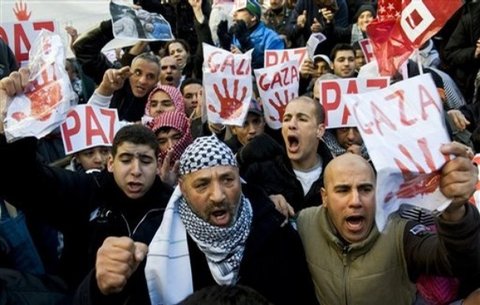
The massive demonstrations in European capitals and major cities in support of the people of Gaza highlighted once again the core problem: the vast majority of the Left, including communists, agrees in supporting the people of Gaza against Israeli aggression, but refuses to support its political expressions such as Hamas in Palestine and Hezbollah in Lebanon.

The Left not only refuses to support them, but also denounces them and fights against them. Support for the people of Gaza exists only at a humanitarian level but not at the political level.

Concerning Hamas and Hezbollah; the Left is mainly concerned with the support these groups have amongst the Arab masses, but are hardly interested in the fact that Israel’s clear and aggressive intention is to destroy these resistance movements. From a political point of view we can say without exaggeration that the Left’s wish (more or less openly admitted) follows the same line as the Israeli government’s: to liquidate popular support for Hamas and Hezbollah.

This question arises not only for the Middle East but also in the European capitals because, today, the bulk of the demonstrators in Brussels, London and Paris are made up of people of North African origin, as well as South Asian Muslims in the case of London.

The reactions of the Left to these events are quite symptomatic. I will cite a few but there are dozens of examples. The headline of the French website ‘Res Publica’ following the mass demonstration in Paris on the 3rd of January read: “We refuse to be trapped by the Islamists of Hamas, Islamic Jihad and Hezbollah!” The article continued: “Some activists of the left and far left (who only turned out in small numbers) were literally drowned in a crowd whose views are at odds with the spirit of the French Republican movement and of the 21st Century Left. Over 90% of the demonstrators championed a fundamentalist and communitarian worldview based on the clash of civilizations which is anti-secular and anti-Republican. They advocated a cultural relativism whose harmful tendencies are well known, particularly in England.

Res Publica is neither Marxist or communist, but one would be hard pressed to find even the most remotely positive words about Hamas on Marxist websites. One does find formulations such as “Whatever we think about Hamas, one thing is indisputable: the Palestinian people democratically elected Hamas to lead Gaza in elections held under international supervision.” Looking further at “what we can think of Hamas” one finds on the websites of both the French Communist Party and the Belgian Labour Party an article entitled “How Israel put Hamas in the saddle.” We learn little more than the assertion that Hamas has been supported by Israel, the United States and the European Union. I note that this article was put online on January 2nd after a week of intensive Israeli bombardment and the day before the ground offensive whose declared aim was the destruction of Hamas.

I will return to the quotation of Res Publica, because it summarizes quite well the general attitude of the Left not only in relation to the Palestinian resistance, but also in regard to the Arab and Muslim presence in Europe. The most interesting thing in this article is the comment in parentheses: ‘the Left and far Left (who only turned out in small numbers)’. One might expect following such a confession some self-critical analysis regarding the lack of mobilisation in the midst of the slaughter of the Palestinian people. But no, all charges directed against the demonstrators (90% of the whole protests) are accused of conducting a “war of civilizations.”

At all the demonstrations I participated in Brussels, I asked some demonstrators to translate the slogans that were chanted in Arabic, and they did so with pleasure every time. I heard a lot of support for the Palestinian resistance and denunciation of Arab governments (in particular the Egyptian President Mubarak), Israel’s crimes, and the deafening silence of the international community or the complicity of the European Union. In my opinion, these were all political slogans quite appropriate to the situation. But surely some people only hear Allah-u-akbar and form their opinion on this basis. The very fact that slogans are shouted in Arabic is sometimes enough to irritate the Left. For example, the organizing committee of the meeting of 11 January was concerned about which languages would be used. But could we not have simply distributed the translations of these slogans? This might be the first step towards mutual understanding. When we demonstrated in 1973 against the pro-American military takeover by Pinochet in Chile, no one would have dared to tell the Latin American demonstrators “Please, chant in French!” In order to lead this fight, we all learnt slogans in Spanish and no one was offended.

The problem is really in the parentheses: why do the Left and far Left mobilise such small numbers? And to be clear, are the Left and far Left still able to mobilize on these issues? The problem was already obvious when Israel invaded Lebanon in the summer of 2006. I would like to quote here an anti-Zionist Israeli who took refuge in London, jazz musician Gilad Atzmon, who already said, six months before the invasion: “For quite a long time, it has been very clear that the ideology of the Left is desperately struggling to find its way in the midst of the emerging battle between the West and the Middle East. The parameters of the so-called “clash of civilizations” are so clearly established that any “rational” and “atheist” leftist activist is clearly condemned to stand closer to Donald Rumsfeld than to a Muslim.”

One would find it difficult to state the problem more clearly.

I would like to briefly address two issues which literally paralyze the Left in its support to the Palestinian, Lebanese, and more generally to the Arab and Muslim resistance: religion and terrorism.

The Left and Religion

Perplexed by the religious feelings of people with an immigrant background, the Left, Marxist or not, continuously quotes the famous statement of Marx on religion: “religion is the opium of the people”. With this they think everything that needs to be said has been said. It might be more useful cite the fuller quote of Marx and perhaps give it more context. I do this not to hide behind an authority, but in the hope of provoking some thought amongst those who hold this over-simplified view, “Religion is the general theory of this world, (…), its logic in popular form, its spiritual point d’honneur, its enthusiasm, its moral sanction, its solemn complement, and its universal basis of consolation and justification. (…) The struggle against religion is, therefore, indirectly the struggle against that world whose spiritual aroma is religion. Religious suffering is, at one and the same time, the expression of real suffering and a protest against real suffering. Religion is the sigh of the oppressed creature, the heart of a heartless world, and the soul of soulless conditions. It is the opium of the people.”

(Translation of Prof. W. Banning, Life, Learning and Meaning, 1960, The Spectrum (p.62-63)

I have always been and remain an atheist, but the rise of religious feelings is hardly surprising. In today’s world most politicians, including those on the Left, do little more then display their weakness on this issue: they do nothing against the military power of the US, they do nothing or almost nothing against financial speculation and the logic of profit that plunges billions of people on this Earth into poverty, hunger and death. All this is due we are told to “the invisible hand” or “divine intervention”: where is the difference between this and religion? The only difference is that the theory of the “invisible hand” denies people the right to struggle for social and economical justice against this “divine intervention” that helps to maintain the status quo. Like it or not, we cannot look down on billions of people who may harbour religious feelings while wanting to ally with them.

The Left does exactly the same thing as what it accuses the Islamists of: it analyses the situation only in religious terms. It refuses to disclose the religious expressions as a “protest against misery”, as a protest against Imperialism, colonialism, and neo-colonialism. It cuts itself off from a huge part of the masses. Gilad Atzmon expresses it best when he states: “Rather than imposing our beliefs upon others, we better learn to understand what others believe in”. If we continue to refuse to learn, we will continue to lament the religious feelings of the masses instead of struggling with them for peace, independence and social and economic justice.

But there is more. The fate of Islam is very different from that of Christianity. I have never known the Left to hesitate when showing solidarity with the Latin American bishops, followers of liberation theology and the struggle against Yankee Imperialism in the 70s, or the Irish Catholic resistance to British Imperialism. Nor have I known the left to criticize Martin Luther King for his references to the Gospel, which was a powerful lever for the mobilisation of the Black American masses that did not have political, economic or social rights in the U.S in the sixties. This discriminatory treatment by the Left, this systematic mistrust of Muslims who are all without any distinction suspected of wanting to impose sharia law on us, can only be explained by colonialism that has profoundly marked our consciousness. We will not forget that the Communists, such as the Communist Party of Belgium (KPB), praised the benefits of colonization that were enthusiastically spread by Christian missionaries. For example, in the 1948 program of the KPB, when the party had just emerged from a period of heroic resistance against the Nazi occupation, it stated the following about the Belgian Congo: “a) Establishment of a single economic unit Belgium-Congo; b) Development of trade with the colony and realization of its national resources; c) Nationalization of resources and trusts in Congo; d) Development of a white colonists class and black farmers and artisan class; e) Gradual granting of democratic rights and freedoms to the black population.”

It was this kind of political education of workers by the Party which meant that there was hardly any protests from these Belgian workers influenced by the KPB when Patrice Lumumba, Pierre Mulele and many other African anti-imperialist leaders were assassinated. After all “our” Christian civilization is civilized, is it not? And democratic rights and freedoms can only “gradually” be assigned to the masses in the Third World, since they are too barbaric to make good use of them.

On the basis of exactly the same political colonialist reasoning, the Left is rather regretful in having supported democratic elections in Palestine. Perhaps they should have adopted a more gradualist approach towards the Palestinians since the majority of Palestinians have now voted for Hamas. Worse, the Left bemoans the fact that “the PLO was forced to organize parliamentary elections in 2006 at a time when everything showed that Hamas would win the elections”. This information is available on the sites of the French KP and Belgian PVDA.

If we would agree to stop staring blindly and with prejudice at the religious beliefs of people, we would perhaps “learn to understand” why the Arab and Muslim masses, who today demonstrate for Palestine, are screaming ‘Down with Mubarak’, an Arab and Muslim leader, and why they jubilantly shout the name of Chavez, a Christian-Latin American leader. Doesn’t this make it obvious that the Arab and Muslim masses frame their references not primarily through religion but by the relation of leaders to US and Zionist Imperialism?

And if the Left would formulate the issue in these terms, would they not partly regain the support of the people that formerly gave the Left its strength?

Another cause of paralysis of the Left in the anti-imperialist struggle is the fear of being associated with terrorism.

On the 11th of January 2009, the president of the German Chamber of Representatives, Walter Momper, the head of the parliamentarian group of ‘Die Grüne’ (the German Greens), Franziska Eichstädt-Bohlig, a leader of ‘Die Linke’, Klaus Lederer, and others held a demonstration in Berlin with 3000 participants to support Israel under the slogan ‘stop the terror of Hamas’. One must keep in mind that Die Linke are considered by many in Europe as the new and credible alternative Left, and an example to follow.

The entire history of colonisation and decolonisation is the history of land that has been stolen by military force and has been reclaimed by force. From Algeria to Vietnam, from Cuba to South-Africa, from Congo to Palestine: no colonial power ever renounced to its domination by means of negotiation or political dialogue alone.

For Gilad Atzmon it is this context that constitutes the real significance of the barrage of rockets by Hamas and the other Palestinian resistance organizations: “This week we all learned more about the ballistic capability of Hamas. Evidently, Hamas was rather restrained with Israel for a long while. It refrained from escalating the conflict to the whole of southern Israel. It occurred to me that the barrages of Qassams that have been landing sporadically on Sderot and Ashkelon were actually nothing but a message from the imprisoned Palestinians. First it was a message regarding stolen land, homes, fields and orchards: ‘Our beloved soil, we didn’t forget, we are still here fighting for you, sooner rather than later, we will come back, we will start again where we had stopped’. But it was also a clear message to the Israelis. ‘You out there, in Sderot, Beer Sheva, Ashkelon, Ashdod, Tel Aviv and Haifa, whether you realise it or not, you are actually living on our stolen land. You better start to pack because your time is running out, you have exhausted our patience. We, the Palestinian people, have nothing to lose anymore”. (Gilad Atzmon – Living on Borrowed Time in a Stolen Land)
What can be understood by an Israeli Jew, the European Left fails to understood, rather they find ’indefensible’ the necessity to take by force what has been stolen by force.

Since 9/11, the use of force in the anti-colonial and the anti-imperialist struggle has been classified under the category of ‘terrorism’; one cannot even discuss it any more. It is worth remembering that Hamas had been proscribed on the list of ‘foreign terrorist organizations’ by the United States in 1995, seven years before 9/11! In January 1995, the United States elaborated the ‘Specially designated terrorist List (STD)’ and put Hamas and all the other radical Palestinian liberation organisations on this list.

The capitulation on this question by a great part of the Western Left started after 9/11, after the launching of the Global War on Terror (GWOT) by the Bush administration. The fear of being classified ‘terrorists’ or apologists of terrorism has spread. This attitude of the Left is not only a political or ideological question, it is also inspired by the practical consequences linked to the GWOT. The European ‘Council Framework Decision of 13 June 2002 on combating terrorism’ and its attached terror list who was a copy-and-paste version of the American terror list that has been incorporated into European legislation, which allow the courts to prosecute those who are suspected of supporting terrorism. During an anti-war rally in London, some activists sold a publication which included Marxist analysis on Hamas were stopped by the police and their magazines were confiscated. In other words, to attempt to inform people on the political program and the action of Hamas and Hezbollah becomes an illegal enterprise. The political atmosphere intimidates people into distancing themselves from these resistance movements and to denounce them without reservations.

In conclusion I have a concrete suggestion to make: we must launch an appeal to remove Hamas from the terror lists. At the same time we must ensure that Hezbollah are not added to the terror list. It is the least we can do if we want to support the Palestinian, Lebanese and Arab resistance. It is the minimal democratic condition for supporting the resistance and it is the essential political condition for the Left to have a chance to be heard by the anti-imperialist masses.

I am fully aware of the fact that my political opinions are a minority in the Left, in particular amongst the European communists. This worries me profoundly, not because of my own fate, I am not more then a militant amongst others, but for the fate of the communist ideal of an end of exploitation of man by man, a struggle which can only happen through the abolition of the imperialist, colonial and neo-colonial system.

Nadine Rosa-Rosso is a Brussels-based independent Marxist. She has edited two books: “Rassembler les résistances” of the French-language journal ‘Contradictions’ and “Du bon usage de la laïcité”, that argues for an open and democratic form of secularism. She can be contacted at nadinerr@gmail.com

http://www.countercurrents.org/rosso110209.htm

European Union, Canada and the United States, numerous organizations – including many national liberation movements and organizations – are listed as “designated terrorist organizations.” This status is used in an attempt to criminalize popular resistance and national liberation movements, equate those movements with “terrorism,” frighten and silence communities’ support of their national movements, and potentially penalize supporters of the Palestinian cause, as well as other national liberation movements.

The Popular Front for the Liberation of Palestine is, alongside a number of other Palestinian political organizations, listed and designated as a “terrorist organization.” This designation, while doing nothing to change the fundamental character of our movement, is an attempt to isolate the resistance, strike fear in the hearts of our people, and enact U.S. foreign policy of massive support for Israel through the false use of a “terrorist” designation.

This designation is illegitimate, and an attempt to use the legal system to criminalize and demonize the Palestinian cause. It is an attempt to silence our people in exile through the use of fear and intimidation. Furthermore, it goes hand in hand with the funding, arming and support of Israel by the United States; the so-called “terrorist” designations are merely another weapon placed in the hands of the occupiers of Palestine.

Furthermore, this designation is a dangerous threat to freedom of speech and association, threatening all – especially immigrants and refugees – with unjust persecution merely for working to bring justice for Palestine.

These unjust designations can and must be undone. But a de-listing cannot and will not happen without loud voices speaking clearly to the use and abuse of “terrorist” designations to criminalize a people. Our movement is a just movement for national liberation, a cause supported by vast reams of international law and fundamental human rights principles, and our resistance is a just resistance against a brutal occupier on our land. This designation harms popular movements for freedom and justice in Palestine, and it is a mechanism of unconditional support for the occupation of our land and the dispossession and oppression of our people.

Please join us today to demand an end to the listing of the PFLP as a so-called “terrorist organization.” We are collecting statements, petitions and letters in support of a call to end this designation. Contact us and select “Support the campaign to remove ‘terrorist’ designation” and send us your letter of support today!

http://www.pflp.ps/english/?q=campaign-remove-terrorist-designations

WRITTEN BY Francis Clark-Lowes 

‘How dare you place myself and other Jewish people in the same melting pot.’ This exclamation was one of the negative reactions to my article, ‘Gaza: The Tip of an Iceberg’ which appeared at Palestine Think Tank last month. The person who wrote it chose her words well, for it does indeed require courage to discuss such matters. In my article I had written: ‘until a majority [of Jews] turn against the supremacist culture which supports Israel’s actions I will continue to hold Jews collectively responsible for what is happening in the Middle East.’


But even those who are more sympathetic to my point of view question the wisdom of holding a whole people to account for the actions of some of them. This idea did not, however, simply arise out of some atavistic hatred of Jews. I had in mind two other societies which are often collectively held responsible for atrocities, the Germans and the British.


Like many young people in the seventies, I lived for a few months on a kibbutz in Israel. Some of my fellow volunteers were native German-speakers, all of them born since the war. Although many of the kibbutzniks shared their mother tongue, they would speak to my German colleagues in English to show their disapproval of the German culture which they associated with the Nazis. My colleagues would react by saying: ‘But I was born after the war. What has that to do with me?’ I sympathised with them, and I still think that the way they were treated was at times stupid. After all, they did not choose to be born German. But I also think there is a sense in which it is wrong to say that the Nazi period has nothing to do with post-war Germans. And the compensation paid from the taxes of post-war Germans to Jews and other dispossessed peoples indicates that I am not alone in thinking this way.


Nor do I think it is acceptable for British people (including Jews, by the way) to shrug off the slave trade because it happened a long time ago, and because we played no personal part in that dreadful history. Coming nearer to the present, when I lived in the Middle East I was constantly being reminded of our part in the plight of the Palestinians. I remember one such conversation with a family who put me up for the night in Khan Younis, in the Gaza Strip, in 1977.


Why did these Palestinians feel the need to infringe their own rules of hospitality to draw my attention to Britain’s past misdeeds? I think the answer is something like this. If I failed to own up to these misdeeds by my compatriots then they would be bound to see me as part of the problem against which they were struggling. They assumed, reasonably I believe, that I was proud to be British and that this pride might very well preclude me from being objective. In other words, they wanted to know whether I was an ally or an enemy. I am not for a moment suggesting that if I had denied all wrongdoing by Britain they would have dispatched me on the spot. No, they would have continued to be the model of courtesy. But they would not have told me anything more about their feelings towards Israel and the Jews.


I always admitted British culpability, that is I acknowledged my collective responsibility, as a Briton, for what my country did vis-à-vis Palestine. This admission has two sides to it. On the one hand it makes me aware that identifying as a Briton (which I do much more than I would sometimes like to think) has a cost – a feeling of shame about aspects of my country’s history. The other side of that coin is that it implies the need for atonement – making good. Without acknowledgement there can be no atonement, and in the case of the Palestinians, without atonement by the West in general, Israel will continue to have a free hand to oppress the Palestinians. British atonement is not enough, but it would be a good beginning.


Now Britain, as a state and as a society, shows very little inclination to atone for its terrible mistreatment of the Palestinians. On the contrary, our leadership takes every opportunity to assure the Israelis of our support, despite the self-evident atrocities of their country. A sense that we need to atone for our previous mistreatment of Jews no doubt plays its part in this. More importantly, I think, is the belief which has been inculcated in us that we Gentiles are tainted with a visceral antisemitism and must prove our credentials by loving Jews. This is, of course, a quite irrational idea, and the sooner we see it for the manipulation that it is the better. We could then get on with recognising more pressing issues.


If enough Britons were to acknowledge their collective responsibility for what we, as a state, did to the Palestinians, the situation would start to change. As a society we would come to reject the Zionist doctrine, our politicians would no longer fall over themselves to support Israel, and the BBC would stop reporting from Israel as if that state were a noble enterprise. That is why Palestinians ask me to agree that we British are collectively responsible for Balfour.


It is for precisely the same reason that I call upon all those who identify themselves as Jews to recognize their own collective complicity in the oppression of the Palestinians. It is not sufficient (though it is good) to say: ‘Not in my name!’ There is a need to acknowledge that their very Jewish identity, which they either cannot dissociate from, or choose not to, comes with a high price tag.


Now if Britons are disinclined to acknowledge their collective responsibility, it is not a patch on Jewish reluctance in this respect. For Jews have, since the Second World War, developed a self-image which almost precludes the possibility of collective wrong-doing. I believe that it is Western non-Jewish acquiescence in this view which makes it extremely difficult for our politicians to say or do anything which reflects adversely on the Jewish state. How have we allowed ourselves to be maneuvered into this disastrous position?


A key element in this is the ‘Holocaust’ narrative. Have you heard this Jewish joke? A Gentile asks: ‘How many Holocaust Centres can you fit in one country.’ A Jew answers: ‘I don’t know. But we’ll try it and see.’(i) Without our noticing it, we have allowed the story of Nazi atrocities to be hi-jacked by Jews. Again leaving aside the question as to what precisely those atrocities were – I am confident we will have a quite different picture in twenty years time – a key element in the standard narrative is the idea that the Nazi persecution of the Jews occurred in a contextual vacuum. In other words, Jews were in no way responsible for what happened to them (and the Nazis were simply unimaginably evil). They were entirely ‘innocent’, and indeed had always been entirely ‘innocent’ in their previous history of persecution.


This was not the view of Jewish historians until the rise of Zionism. Bernard Lazare, for example, was quite clear that Jews were as much responsible for their own persecution as Christians. In his view, expressed in his book Antisemitism: Its History and Causes,(ii) Christian rejection of Jews worked hand-in-hand with Jewish exclusiveness to produce the evils about which he writes. It seems to me that it was only after Herzl published The Jewish State a year later, in 1895, that the idea of an inbuilt predisposition of Gentiles to ‘antisemitism’ began to gain currency. The conclusion drawn from this idea was not only that there need be no explanation for hatred of Jews, but that there is none. After the Second World War this became the predominant view.


I have written the word ‘innocent’ above in inverted commas because I do not want to be understood to be endorsing either the reasons that Jews were hated at certain times in history, or indeed the forms that that hatred took. What I am opposing is the idea that this hatred was uncaused. This seems a wholly implausible idea. But its entrenchment in Jewish thinking is so complete that any suggestion, as in my essay, that Jews are currently collectively responsible for what is happening in Gaza, is met with a howl of rage. And that expected howl deters most non-Jews from saying anything about Jewish culpability.


Somewhere at the root of all this is a debate about the relationship between the individual and society. The modern Western ethos tends to emphasise the primacy of the individual. But post-modernism has taught us that the individual can only properly be understood in his or her cultural context. It is a severe blow to our individual pride to acknowledge that our thoughts and feeling are to a very large extent moulded by the society (or more accurately ‘cultures’ in the plural) in which we live.


People who cry: ‘Don’t hold me collectively responsible for the misdeeds of my country’ – or some other group – are, I believe, in a state of denial about the extent to which they are their country – or society, or family, or even corporation. Why, otherwise, do they say ‘my country’. Such people benefit from the sense of security and belonging their membership of the group gives them. This is the feeling I have whenever I step out of the terminal building at Heathrow. That benefit, to repeat myself, comes with a cost, and it is one which most of us cannot avoid, for most of us cannot ‘unidentify’.


Let us use the generic term ‘group’ to describe any gathering of human beings which has a sense of its own identity for this will enable me to answer a fundamental objection to my argument. I write as if there were no categorical difference between ‘the Jews’ and, for example, ‘the British state’. The latter is a clearly delineated and incorporated organisation, ‘the Jews’ are nothing of the kind. It is arguable that they have no universally recognised authority and that Jews are in no way incorporated. It would follow from this line of thinking that it is wrong to make any generalisation about Jews. Worse, that such generalisations arise from racial prejudice, or are, to use the misleading term, ‘antisemitic’.(iii)


My approach to this subject arises from my reading of sociology, history and especially psychology. It seems to me that the human instinct to combine together in groups is a fundamental phenomenon of human nature. The role model for all groups is the family. Thus humans seek to recreate in all their groupings their first experience of a group; or at least their instinctive understanding of what a group should be like. Whatever we may believe about equality, groups always tend to endorse an authority structure. In other words they always have ‘parents’ and ‘children’. The development of group culture occurs as a complex interaction between (1) elements imposed by the elite from above, (2) history and (3) elements introduced by the ordinary membership. A further characteristic of groups is that they tend to view outsiders as unreliable, at best, and enemies at worst, while one’s own group is reliable and friendly and deserves our loyalty – in other words it is psychologically the bosom of the family.


Whether a group is incorporated or not, whether it has a clear authority structure or not, its existence is confirmed once someone can say: ‘I am a ….’ with the meaning that s/he is a member. And once a group exists it has power (that is its purpose) and becomes a player, however large or small, on the world stage. Thus the fact that people can say: ‘I am a Jew’ confirms that a group called ‘the Jews’ exists. It follows that it is quite legitimate to ask questions about ‘the Jews’ and to attempt to arrive at generalised conclusions about that group.


My generalized – but tentative – conclusion about ‘the Jews’ is that they are a group who identify much more strongly around the idea of Zionism than they do around their religion – which a majority do not practise. Indeed, this is what Herzl had intended. In this sense a majority of Jews are clearly complicit in the crimes of Gaza. But there is, of course, a small minority of Jews who reject Zionism. Should I then conclude that the anti-Zionist Jews are not complicit in the crimes of Gaza? Should I revise my ‘Jews collectively’ to ‘all Zionist Jews’ when speaking of complicity?


I have already tried to explain why I think this is a mistake when talking about my own collective complicity in slavery and the Balfour Declaration. I will not repeat the argument. But I do want to comment on the degree of anger aroused when I suggest this idea which is, after all, not seriously dissimilar from the widely accepted religious idea of original sin. If I started to doubt my own ideas on this subject, the reaction to what I say would stop me in my tracks. For there is no smoke without fire.


On the subject of slavery, by the way, it is interesting that while I am quite prepared to admit my collective complicity in slavery (from which, after all, my country benefited materially), Jews in America have reacted hysterically to the revelation of Jewish involvement in the organisation of the slave trade. Tony Martin, who is black, has described the onslaught against him when he started to teach on this subject.(iv) In other words, this determination to avoid all culpability is a phenomenon which does not limit itself to the Israel-Palestine conflict but which spills over into a much wider Jewish context. Under no circumstances may Jews be represented as sinful. Put like that, it seems absurd, and yet so I believe it has become.


And so, when I say that Jews are collectively responsible for Gaza, I am crossing a red line. ‘How dare you place myself and other Jews in the same melting pot?’ I am asked. My answer is: ‘Because you put yourself in the same melting pot by reacting the way you do. You mock the idea of boycotting Israel on the grounds that many of its products are useful. So were the rockets which the Nazis developed and the Americans took over, so that argument takes us to a strange place! But since you oppose even this soft non-violent option for putting pressure on Israel, we can surely conclude that you are indeed in the same melting pot as most Jews in supporting the Jewish state.’ The lady doth protest too much, methinks.


Francis Clark-Lowes is a freelance writer and adult educator. He has been campaigning for Palestine for many years and was for two years Chair of the British Palestine Solidarity Campaign (PSC). He also revived, and was for some years the Chair of, the Brighton branch of PSC. His doctoral research was on the early psychoanalyst, Wihelm Stekel. Before that he did a master’s dissertation on the influence of Goethe on Freud. In his thirties and forties he lived for a period of ten years in the Middle East. He is 64 and has two adult children.


Footnotes:


(i)Actually, I invented that joke. Now how do you feel about it? It is interesting to me that we view jokes about Jews quite differently according to whether they are Jewish or not.

(ii)Published as L’Antisémitisme, son histoire et ses causes in 1894.

(iii)That subject needs another essay, but briefly I believe the unspoken concept of ‘semitism’ is a king-pin of Zionist thinking, and should therefore be avoided like the plague.
(iv)Martin, Tony, The Jewish Onslaught: Dispatches from the Wellesley Battlefront, Dover, Mass, The Majority Press, 1993.

This article, which I only found yesterday, thanks to my friend Susanne, is slightly dated by a few weeks, but it is an absolutely astonishing document revealing the behind-the-scenes goings on prior to the current cease-fire in Gaza. Italian journalists of Arabmonitor, the first portal of the Arab World in Italy, have interviewed several of the key players who reveal steps Egypt has taken to block Turkey’s efforts at obtaining a ceasefire, their pressure on Hamas to “declare defeat”, the training of special troops of Dahlan in Egypt for a re-entry into Gaza, and the elation that Abu Mazen felt at the news of the assassinatin of Saed Siyam . Shocking reading….

THE EGYPTIAN NEGOTIATOR SHOUTED AT THE REPRESENTATIVES OF HAMAS: NOBODY IN THE ARAB WORLD CAN AFFORD TO SAY NO TO EGYPT
Damascus, January – The high-level representative of Hamas we had the opportunity to talk to chose to remain anonymous, considering the delicacy of the statements he had to make. With but a few hours into the assassination of Saed Siyam in the Gaza Strip and with equally short time left before the opening of the Arab-Islamic summit hosted by the Emir of Qatar, our interlocutor had been granted only two hours of sleep the previous night and his red-veined, deeply sunken eyeballs tell it all. He reveals to us that it’s not Egypt who is actually negotiating the terms of a cease-fire for Gaza, but Turkey: at least, as far as the demands from the Islamic resistance are concerned.
That is how we get to know that what the delegates of Hamas obtained from Egypt was not a draft for a cease-fire proposal, but a dictate: a lull in fighting for an initial two-weeks period, in order to allow for humanitarian aid to be distributed in the Gaza Strip and during which the terms for a durable long-term cease-fire would be negotiated. Cairo would actually opt for a twenty-years truce, but surely for nothing less than a fifteen-years duration of it, demanding at the same time the resistance to sign up on an unconditional defeat, to renounce armed struggle and refrain from military training for its members, as well as from producing and importing weapons.

During the short-term lull, the two-weeks halt of fire, there would be no opening of border crossings and even humanitarian aid allowed to pass into the Gaza Strip would do so at the discretion of Egypt and Israel.

“We thanked them, but explained that it was unacceptable. General Suleiman (head of the Egyptian intelligence) was furious and shouted: Nobody in the Arab world can afford to say no to Egypt”.

To describe the kind of game Cairo had been playing from early on in the run-up towards the Israeli aggression (starting 27 December), our interlocutor told us that on 26 December the Egyptians asked Hamas to “raise the white flag”, to declare defeat “and then we (the Egyptians) will intervene with the Israelis to guarantee your personal safety”. In any case, during this talk, which took place in the presence of some of Suleiman’s aides, the Egyptian interlocutors assured the Palestinians they had received guarantees from Israel that no military attack against Gaza was on the time-table. “In these three weeks of war there were days in which for periods of up to 48 hours they denied any passage through the Rafah crossing, even to gas canisters urgently needed by the surgical wards of Gaza hospitals.

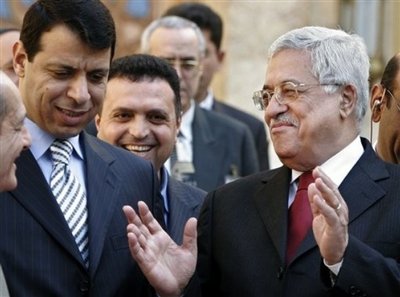
That’s not all: since about ten days 400 of Mohammad Dahlan’s men (the former strongman of Fatah, the USA and Israel in the Gaza Strip) are guests hosted at an Egyptian military centre in al-Arish (provincial capital of Sinai), where they are being trained by Egyptians”. The plan is for these 400 to return to the Gaza Strip, if not on the back of Israeli tanks, then with the support from Egypt.

In recent days the waters of the Nile began to look very troubled, because Egypt did not appreciate at all the efforts of the Turkish delegation to mediate the terms of a cease-fire. General Suleiman initially even prevented the Turks from meeting the representatives of Hamas, demanding that he himself act as messenger between the two delegations. At a certain point, Ahmed Davotouglu, the senior advisor of Turkish Prime Minister Erdogan, ran out of patience and the Turkish delegation from Ankara obtained permission to access the Palestinians.

“The Turks went ahead with a quite pragmatic approach. They held out to Suleiman that the Egyptian proposal was, realistically speaking, unacceptable for us and came forward with ideas that would contain guarantees for us as well as for the Israelis. For instance, they proposed to establish a presence of international monitors directly at the crossings, in joint venture with Palestinian forces from the Authority in Gaza, who at the Rafah crossing ­ but only at the Rafah crossing ­ could also consist of a a mixed forces, that is, those of the Palestinian National Authority in addition to our own. According to the Turkish proposal, the international presence would be different from the one set up by the European Union at the Rafah crossing years ago, which practically implemented orders given by Israel through remote control by monitors. According to the new proposal, the forces at the border crossings would act as an independent authority. And again it were the Turks who proposed a time-table of possibly one year for the duration of the cease-fire. We consider Turkey a partner with whom to negotiate, because it has shown much realism”.

Among the key conditions proposed by the Palestinian Islamic resistance movement for a cease-fire there is the demand for a complete and definitive halt of the Israeli military operations in the Gaza Strip, the immediate withdrawal of the invasion troops, who “could withdraw within two hours”, but whose evacuation should be accomplished latest within a couple of days, an end of the siege imposed on the area and the opening of all crossings, foremost of the Rafah crossing with Egypt.

We asked our talks partner to give us his evaluation of Abu Mazen’s performance during the present crisis. “Listen, shortly after the outbreak of the Israeli aggression he was called up on telephone by the Secretary General of the Islamic Jihad Ramadan Shallah (who lives in Syria, in exile), asking him to make a gesture and to call Ismail Haniye in Gaza, to find out what was going on. Abu Mazen rejected the plea. We know from absolutely trustworthy sources that yesterday, when news reached them at the Moqata (Abu Mazen’s seat at Ramallah) that Saed Siyam had been killed, the political leaders present, among them Abu Mazen, congratulated themselves and handed out sweets. What could I ever say, at this point?”.

Abu Mazen’s term as President of the Palestinian National Authority has expired on 9 January. “Yes, but given the current circumstances, we don’t want to create additional problems and prefer to suspend the issue until after the end of the war against Gaza, following which, last not least, we must address the task of reconstruction in Gaza”.

Our interlocutor told us that last year, ahead of the Arab League summit in Damascus, Egypt had tried by every means to persuade Palestinian Authority President to boycott the meeting, but Abu Mazen responded: “If I don’t go there, my seat will be occupied by Khaled Meshaal (head of the Political Office of Hamas)”, which was the reason why he went to Damascus (at the recent Arab-Islamic emergency meeting in Doha, from which he remained absent, the seat for the leader representing the Palestinians was indeed occupied by Meshaal).

The Europeans also, who in public always took care to present themselves as “virtuous” in avoiding any contact with Hamas, during the past weeks held more than once talks with the Palestinian Islamic Resistance. “Some of them approached us to express their negative feelings over the fact that we, according to them, refused to abide by the existing cease-fire. When we pointed out to them, that is was in fact Israel who violated the cease-fire by refusing to lift the siege on the Gaza Strip, these countries slipped away.

However, three European countries kept the lines open and we are still in contact with them. They offered their help to find a way out of the crisis. I can’t tell you the names of two of them, only that they are European Union members, one of them a leading power, and the other one driven by an ambitious policy. The third one to offer us their help is Norway”.

Nevertheless, on the American front some interesting developments are coming up. Daniel Kurtzer, former US Ambassador to Israel, who is quite close to Barack Obama’s team, has met twice “as a private citizen” with Hamas leaders. His aim was to “pick up ideas”. The two talks took place in spring 2008 and then again last November, following Obama’s electoral victory. And then, how could we fail to recall that former US President Jimmy Carter had asked for a personal encounter with Khaled Meshal, and with other figures from the Hamas leadership, in April last year as well as in November.

source:

WRITTEN BY IQBAL TAMIMI
Since the first minute the Zionists arrived in Palestine during the first half of the 1900s their policy was clear, it was to empty the land of its indigenous people and house immigrant Jews in their place. Almost 6 million Palestinians are now scattered all over the world as refugees since then, and hundreds of thousands were massacred and housed under the soil for resisting to abandon their home land.

The Telegraph published an article 5 Feb 2009 by Damien McElroy titled Britain offers to accept Palestinians who fled Iraq (30 widows with children!)

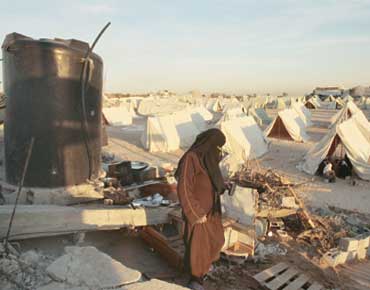
The article is about efforts to resettle Palestinians who have been forced into squalid desert refugee camps on the Iraqi border in the hardest conditions including facing hazards of fires and floods that have claimed many lives such as the story of Ahmed Mohammad who lost his pregnant wife when a fire engulfed his tent last month. “The fire took seconds to burn and I could only rescue my son.” said Ahmad. There are more than 800,000 Palestinian refugees still living in Syria and 224,000 are registered with the UN as refugees.

http://www.telegraph.co.uk/news/worldnews/middleeast/palestinianauthority/4527498/Britain-offers-to-accept-Palestinians-who-fled-Iraq.html

many Palestinians were never granted citizenship in the countries they fled to, they and their offspring are scattered now all over the world from Europe to Chile. Governments like that of the UK have a moral obligation towards those Palestinian refugees for two reasons: the first is due to the British government’s role and policies since the Balfour Declaration which was a direct contributor to the Palestinians’ misery, and the second is its role in the Iraqi war that ended up with forcing the refugee Palestinians of Iraq to become refugees again. But still a solution like accepting 30 widows is not going to be the perfect solution. These Palestinian widows from the Tanf refugee camp in the desert must be grateful for this kind gesture, but this action solves the problem of 30 widows only, thus discriminating against male refugees who are as much victims as women. Men like 81-year-old Mahmoud Abdul who fled Haifa in 1948 from Palestine to Baghdad, then Amman, Damascus and now again he is with many other Palestinian refugees are in the no-man’s land holding tight to one dream only, they want to be citizens where they can set up homes and feel no one can take that home away from them. Saving the lives of 30 widows is a drop in the ocean regarding solving the problem of 6 million refugees. And we should not brag about accepting to rescue 30 widows after causing 6 million people become exiled and refugees.

Solving the problem of 30 widows or ‘spearheading’ this attempt as the Telegraph has called it, is not good enough, year after year Israel has been forcing more Palestinians to become refugees by enforcing different methods of pressure and expulsion. Even though Palestinians are grateful for such generous gestures they would rather be home in their own properties, taking care of their lands and feeling dignified instead of feeling like a heavy guest.

The new effort to resettle Palestinian refugees outside Palestine is another attempt to patch another hole Israel punctured while being sure that other countries should find a way to mend. Since 1948 Israel has been expelling Palestinians from their country, thus entering the circle of displacement over and over again. The only suggestion Israel keeps coming with is why don’t other Arab countries accommodate them? This is the most ridiculous statement made to escape the blame and dumb problems created by its policies of expanding occupation on other people’s steps. Israel’s continuous suggestions that the Palestinians should be absorbed by other Arab speaking countries is the most ridiculous statement ever, sharing a language does not in any way give a valid reason to accept such responsibility, it would be like a great mixture of people invading Australia because their God told them Australia will always be theirs regardless of where they came from or when they embraced that religion, and then demanding the UK to take the Australian refugees in because they speak English.

The Telegraph was fishing in muddy waters when it said in its report “After turning a blind eye for years, Syria feels it has done enough. There has to be a resettlement solution that allows these people to resettle in a third country.” Why should Syria or any other Arab country solve a problem created by Israel with the blessing of USA and UK? Syria itself is suffering the Israeli aggression and occupation of its Golan Heights and the stealing of its water resources by Israel.

Israel is still refusing to declare its borders, and was and still is expanding illegally on Palestinian land, Israel is still turning a blind eye to the international community and a long list of UN resolutions demanding its withdrawal from the occupied Palestinian territories and to stop building more settlements on Palestinian land, Israel is still stealing the resources and lands and properties in the Occupied Territories and still gets away with it. The media shows every day Israel being defended by the USA and UK governments, and shows the friendly visits of top politicians visiting Israel on the Palestinian occupied land, yet emphasising Israel’s RIGHTS to live in peace, what a load of ridiculous heap of pathetic policies, they are visiting an occupied territory and yet demanding safety of the occupier not the victims. But one knows well that such visits are not returned back because most Israeli politicians are wanted for war crimes, and the people in the USA and UK have a different stand from that of their government and sympathise with the oppressed Palestinians. Should any Israeli official gamble with his life and visit the UK I am sure he will be executed by being stoned by hales of shoes by the citizens who showed great support and sympathy to the misery of Gaza people.

Should the UK not do something regarding Israel’s continuous policy of forcing Palestinians to exile, one day it will find itself facing the moral obligation of not only taking the 13,000 Palestinians who fled to Syria with faked Iraqi identities but much more than this figure. The UK and other European countries have to bear in mind that if Israel was not stopped by international collective effort, those countries will be forced to clean Israel’s mess, and pass this inheritance to the coming generations.

WRITTEN BY Paul Craig Roberts

According to US government propaganda, terrorist cells are spread throughout America, making it necessary for the government to spy on all to Americans and violate most other constitutional protections. Among President Bush’s last words as he left office was the warning that America would soon be struck again by Muslim terrorists.

If America were infected with terrorists, we would not need the government to tell us. We would know it from events. As there are no events, the US government substitutes warnings in order to keep alive the fear that causes the public to accept pointless wars, the infringement of civil liberty, national ID cards, and inconveniences and harassments when they fly.

The most obvious indication that there are no terrorist cells is that not a single neocon has been assassinated.

I do not approve of assassinations, and am ashamed of my country’s government for engaging in political assassination. The US and Israel have set a very bad example for al Qaeda to follow.

The US deals with al Qaeda and Taliban by assassinating their leaders, and Israel deals with Hamas by assassinating its leaders. It is reasonable to assume that al Qaeda would deal with the instigators and leaders of America’s wars in the Middle East in the same way.

Today every al Qaeda member is aware of the complicity of neoconservatives in the death and devastation inflicted on Muslims in Iraq, Afghanistan, Lebanon and Gaza. Moreover, neocons are highly visible and are soft targets compared to Hamas and Hezbollah leaders. Neocons have been identified in the media for years, and as everyone knows, multiple listings of their names are available online.

Neocons do not have Secret Service protection. Dreadful to contemplate, but it would be child’s play for al Qaeda to assassinate any and every neocon. Yet, neocons move around freely, a good indication that the US does not have a terrorist problem.

If, as neocons constantly allege, terrorists can smuggle nuclear weapons or dirty bombs into the US with which to wreak havoc upon our cities, terrorists can acquire weapons with which to assassinate any neocon or former government official.

Yet, the neocons, who are the Americans most hated by Muslims, remain unscathed.
The “war on terror” is a hoax that fronts for American control of oil pipelines, the profits of the military-security complex, the assault on civil liberty by fomenters of a police state, and Israel’s territorial expansion.

There were no al Qaeda in Iraq until the Americans brought them there by invading and overthrowing Saddam Hussein, who kept al Qaeda out of Iraq.

The Taliban is not a terrorist organization, but a movement attempting to unify Afghanistan under Muslim law. The only Americans threatened by the Taliban are the Americans Bush sent to Afghanistan to kill Taliban and to impose a puppet state on the Afghan people.
   
    *  Hamas is the democratically elected government of Palestine, or what little remains of Palestine after Israel’s illegal annexations. Hamas is a terrorist organization in the same sense that the Israeli government and the US government are terrorist organizations. In an effort to bring Hamas under Israeli hegemony, Israel employs terror bombing and assassinations against Palestinians. Hamas replies to the Israeli terror with homemade and ineffectual rockets.
   
    *  Hezbollah represents the Shi’ites of southern Lebanon, another area in the Middle East that Israel seeks for its territorial expansion.
   
     * The US brands Hamas and Hezbollah “terrorist organizations” for no other reason than the US is on Israel’s side of the conflict. There is no objective basis for the US Department of State’s”finding” that Hamas and Hezbollah are terrorist organizations. It is merely a propagandistic declaration.
    
    *  Americans and Israelis do not call their bombings of civilians terror. What Americans and Israelis call terror is the response of oppressed people who are stateless because their countries are ruled by puppets loyal to the oppressors. These people, dispossessed of their own countries, have no State Departments, Defense Departments, seats in the United Nations, or voices in the mainstream media. They can submit to foreign hegemony or resist by the limited means available to them.
   
    *  The fact that Israel and the United States carry on endless  propaganda to prevent this fundamental truth from being realized indicates that it is Israel and the US that are in the wrong and the Palestinians, Lebanese, Iraqis, and Afghans who are being wronged.
   
    *  The retired American generals who serve as war propagandists for Fox “News” are forever claiming that Iran arms the Iraqi and  Afghan insurgents and Hamas. But where are the arms? To deal with American tanks, insurgents have to construct homemade explosive devices out of artillery shells. After six years of conflict the insurgents still have no weapon against the American helicopter gunships. Contrast this *”arming”* with the weaponry the US supplied to the Afghans three decades ago when they were fighting to drive out the Soviets.
   
    *  The films of Israel’s murderous assault on Gaza show large numbers of Gazans fleeing from Israeli bombs or digging out the dead and maimed, and none of these people are armed. A person would think that by now every Palestinian would be armed, every man, woman, and child. Yet, all the films of the Israeli attack show an  unarmed population. Hamas has to construct homemade rockets that are little more than a sign of defiance. If Hamas were armed by Iran, Israel’s assault on Gaza would have cost Israel its helicopter gunships, its tanks, and hundreds of lives of its soldiers.
   
     * Hamas is a small organization armed with small caliber rifles incapable of penetrating body armor. Hamas is unable to stop small bands of Israeli settlers from descending on West Bank Palestinian villages, driving out the Palestinians, and appropriating their land.
   
     * The great mystery is: why after 60 years of oppression are the Palestinians still an unarmed people? Clearly, the Muslim countries are complicit with Israel and the US in keeping the Palestinians unarmed.
   
    *  The unsupported assertion that Iran supplies sophisticated arms to the Palestinians is like the unsupported assertion that Saddam Hussein had weapons of mass destruction. These assertions are propagandistic justifications for killing Arab civilians and destroying civilian infrastructure in order to secure US and Israeli hegemony in the Middle East.
      
Paul Craig Roberts was Assistant Secretary of the Treasury during US President Reagan’s first term.  He was Associate Editor of the Wall Street Journal.  He has held numerous academic appointments, including the William E. Simon Chair, Center for Strategic and International Studies, Georgetown University, and Senior Research Fellow, Hoover Institution, Stanford University. He was awarded the Legion of Honor by French President Francois Mitterrand. He is the author of Supply-Side Revolution: An Insider’s Account of Policymaking in Washington http://www.amazon.com/gp/product/067485621X/103-9747828-0329461;
 Alienation and the Soviet Economy
and Meltdown: Inside the Soviet Economy
and is the co-author with Lawrence M. Stratton of The Tyranny of GoodIntentions: How Prosecutors and Bureaucrats Are Trampling theConstitution in the Name of Justice

Once upon an alleged democracy, the Egyptian government decided a couple of days ago to try the journalist Majdi Hussein, the secretary-general of the Egyptian Labour party in a military court – even though he is a civilian – because he broke the law when he tried to “illegally enter the Gaza Strip”.


One wonders what is legal and what is not when it comes to Gaza.  It seems the law in Egypt is extremely elastic and can accommodate all manipulations and tailoring of the law to fit different sizes of growing plots. The good old Egyptian system is abiding by the law to the letter, and that’s why it wants to try a journalist in a military court for entering Gaza ‘illegally’ while the good old authority was providing the Israeli military ‘legally’ with tons of foods through the Gaza crossings while blocking any food sent to the starved to death children of Gaza who were burned to the bone by white phosphorus by that same Israeli army Egypt was feeding.


Last month the opposition Egyptian newspaper Alosbooa ‘The Week’ revealed in one of its reports a controversial story that was not refuted by the authorities about the Egyptian company ‘International Union of Food Industries’ which was providing the Israeli army with large quantities of homegrown Egyptian vegetables during the aggression on Gaza, since the very first day of the aggression. 


The report revealed that the Egyptian trucks were loaded with tons of frozen local grown vegetables from the company stores in the city of Sadat to the Israeli company “Food Channel”, through Al Awja crossing between Egypt and Israel. One of the drivers said that he has made these deliveries many times to Israel but he was hiding this fact from his relatives and neighbours in Albadry neighbourhood at Assalam city, and that he used to tell them that he was delivering goods to other Arab countries, or the delivery is heading towards far ports like Savaja because he was embarrassed to tell them the truth. Other drivers said they no more feel embarrassed or ashamed of doing so because their government itself has normalized relations with Israel years ago. The workers in the company said that the food was repackaged with Hebrew writing, showing the expiry date and the contents, and that the food has been prepared according to Jewish religious rules.  Thus indicating that it complied with the traditional religious Jewish parameters, and that’s why the company imposed a cordon around the place, keeping stored bags, boxes, posters and empty cartons away from the sight of intruders, not allowing any of the workers or the staff to approach the packaging area, and searching every worker at the end of his shift before leaving.


Contrary to what was expected, trade exchange between Egypt and Israel because of Israeli policies towards the Palestinians has increased notably to 4 billion dollars in addition to exports of oil and gas.


Regarding the journalist Majdi Husse, this was not his first encounter with the Egyptian authorities. He was Chief Editor of an Egyptian Islamic bi-weekly when he was imprisoned for 4 months along with the journalist Muhammad Hilal in 1998 with charges of defaming former Minister of the Interior in Egypt, Lt. Gen. Hussein al-Alfi.

Hussein said he was prevented twice by the Egyptian authorities from entering the Gaza Strip through the Rafah crossing point, forcing him to take an alternative route to get into the Palestinian territories.

The Egyptian prosecutor in Al-Arish city said the decision to put Hussein on military trial (even though he is a civilian) came after three days of investigations with him, and that he was arrested upon his arrival to the Egyptian side of the border with Gaza. The trial of Hussein is expected to be held on Thursday.

The Labour party in Egypt considered subjecting one of its top officials to a military trial as a grave violation of human rights, since he is a civilian, and commented that Majdi’s decision to get into Gaza Strip was driven by his “nationalist, Islamic, and popular considerations, and that Majdi’s determination to enter the Strip reflects the general feeling in the Egyptian street to lift the siege on Gaza and to open the Rafah crossing point before the Palestinian people.”

Majidi is not the only Arab journalist Egyptian authorities prevented from entering Gaza, the Al-Jazeera team was denied entry into Gaza too. The Egyptian authorities denied two of Al-Jazeera’s top journalists Ahmed Mansour and Ghassan Bin Jiddo entry into the Gaza Strip without explaining the reasons. Especially since Egypt had granted entry into the Gaza Strip to foreign and European journalists.

In a telephone call with his satellite channel, Mansour confirmed that the Egyptian authorities told them that they (he and bin Jiddo) were denied entry, at a time it granted many journalists of different nationalities the right to enter the Strip.

“We presented our identification documents to the Egyptian authorities and requested permission to enter the Gaza Strip as other journalists did, but we were denied entry,” added Mansour.

Mansour also said that the Egyptian officials stopped answering their telephone calls, but he stressed that the Al-Jazeera team will remain at the borders till a rational reason by the Egyptian authorities is given to justify such action.

Hence, according to the law-abiding Egyptian authorities, it is illegal to open the crossing to allow food and aid to the starved Gaza children, but it is legal to feed the Zionist army who were barbecuing Gaza children. It is legal to allow foreign journalists to cross to the Gaza haven, but it is against the law to allow Arab journalists to cross the borders to investigate or offer emotional support. It seems it is legal to stand on the borders and watch a full nation being killed and not only to stand idly doing nothing, but also to punish those who intend to help.

Translated into English by Manuel Talens and revised by Mary Rizzo


During the current Israeli aggression to Gaza both the Spanish Left and Right have built linguistic fences to position themselves around the problem. The case of the Spanish institutional Left is without any doubt paradigmatic: on one side there a party now in office – the Spanish Socialist Workers Party, PSOE – whose Minister of Foreign Affairs pretends to be a personal friend of Palestinians [1], whose Prime Minister Zapatero condemned the Israeli attacks during a PSOE meeting and whose militants (some of them) demonstrated in solidarity with Palestine. But on the other side, the government issued from this same party is among the ten main exporters of weapons to Israel, its secret services cooperates with their Israeli counterparts, it maintains preferential agreements with Tel Aviv, it supports the creation of the Sepharad-Israel House in Spain and it insists that what the party does is irrelevant to both the government’s performance and its State policies, which of course are to maintain very good diplomatic relations with “the great Israeli democracy” (so defined by the current UN President, Nicolas Sarkozy).


If this schizophrenic performance characterizes the party in office, the case of other Spanish organizations – labour unions and other left-wing groups with institutional vocation – is no less disturbing. While they have condemned Israel for its attacks, they also have emphasized their condemnation of Hamas as responsible for what happened to the Palestinians – although without mimicking Simon’s Peres accusations, – essentially sustaining the same justificatory arguments held by the Israeli government. They all have looked for a common denominator, a common language of consent – the same one that the Minister of Foreign Affairs Moratinos requests of the Palestinians when he says that “we don’t want unity but consent” – which would allow them to simultaneously show solidarity with Palestinians and be politically correct.


This consent has been built upon two taboos: never to use the word genocide and never question the Israeli democracy.


The objective result of building consent upon the negation of genocide and accepting the farce of Israeli democracy is a continuous complicity and the blockade of any fair option for the Palestinian people.


The imposition of consent betrays a far-reaching political objective in Spain. Either consciously or unconsciously it has intercepted the explosions of rage and pain by both Arab and Spaniards in the country, which have been systematically excluded, reprehended and silenced by the organized groups that led the manifestations of solidarity with the Palestinian people [2]. The Arabs of Spain went massively to all demonstrations in the country but were forced to accept the conditions imposed by these groups which organized the events, wrote the manifestos and chose “what actions were authorized and what not.” The fear that the immigrant Arab population – fully identified with the Palestinian cause – could explode and that this explosion could be considered as shared by the government has forced both the government and the Socialist party to a strategy to channel and control what the Left could carry out. [3]


The PSOE has managed to be part of all groups that organized actions and its interest in it was clear: to “normalize” them, to “control” them and to avoid any “radicalism,” as it risked to get out of hand considering what had happened in past demonstrations during the Iraq war. Clearly the PSOE wanted to avoid being forced to call the Israeli ambassador for consultations, to officially condemn the Israeli government or to interrupt the preferential relations with it.


As for other groups – unions, parties, some ONGs – a “minimum of consent” was essential to sustain the image of a not-radicalized-Left (so profitable from the institutional stand) while at the same time preserving the image of solidarity and the prestige of the slogan “another world is possible.” 


The Israeli genocide of Palestinians


The task of both PSOE militants and all other groups whose priorities are institutional was clear from the start: to provide all kinds of media, legal and economic support to demonstrations of solidarity with Gaza while intercepting all initiatives susceptible to friction with the Israeli government. That’s why the use of the word genocide was rejected in banners, manifestos, etc. under the threat of breaking the coalition of forces.


But why has it been so important to banish the word genocide from the vocabulary on any denunciation of Israel and of any act of solidarity with the Palestinian population? Why was the consented word massacre? Instead of looking into laws or international legislations, let’s see the definition of the word genocide in the Spanish Royal Academy Dictionary (DRAE): “extermination or systematic elimination of a social group for reasons of race, religion or politics.”


Historian Ilan Pappe carried out an exhaustive research on Jewish sources – unclassified documents from Israeli security services, Zionist files, Department of State reports, Ben Gurion’s files, military statements – and he reached the irrefutable conclusion that from the very moment of the foundation of the State of Israel the Jews planned the ethnic cleansing of Palestine. [4] In a recent piece he refers to different researchers who “call attention on the distinction between massacres that are part of a genocide, i.e., that are planned, and the unplanned massacres that directly happen out of hate and vengeance in the general context of an ethnic cleansing.” [5] All the indications and certainties of Israel’s “new historians” point to the fact that in the case of Israel’s acts against Palestinians they were massacres that happened in the context of the ethnic cleansing designed by the Israeli State, but at the same time, the original planning, systematization and political objectives made most of these massacres an integral part of the genocide against Palestinians. So if the ethnic cleansing – the genocide of Palestinians – is implicit to the foundational act of the Israeli nation, then the very existence of this State is delegitimized.


According to the DRAE the word massacre implies “slaughter of generally defenceless people produced by an armed attack or a similar cause.” If we substitute the word genocide for massacre we end up with a unplanned, not even intentional act against two, three or a hundred people but not against a people as a whole; a massacre is the result of “an armed attack or similar cause”, that is to say that it can be either the result of a war or that its causal relationship is directly related to an armed conflict so that the objective cannot be neither political – intended to eliminate people for racial, ethnic or political questions – nor its objective is to exterminate the civil population but rather it can be a unwanted consequence, uncontrolled hate by soldiers, a disproportion justified by technical questions… Finally, the people killed are – according to the DRAE – “generally defenceless” but maybe not. All of this means that a single word can be paramount to characterize and politically position people whether they use it or not. Words are neither neuter nor objective. In this case they characterize a conflict and place their users in one position or another.


From the point of view of the political costs, most of the organizations present in demonstrations did not risk anything before the mobilized masses as these did not perceive the difference between the words genocide and massacre; so organizers opted for the most acceptable term in order to safeguard all of their institutional contacts.


Beyond juridical considerations and the well-known pragmatism of law professionals, the definition of the attacks on Gaza as a massacre has contributed to halt any further analysis, considering it just as a regrettable but punctual fact similar to the destruction of Jenin in 2002. Calling it a “disproportionate attack” permits the filing of the case as a new example of the wrongdoings of certain leaders who maybe one day could be prosecuted for war crimes for their “errors” and their “disproportions.” Seen from a distance, the Spaniards’ image will be that of supportive human beings moved by the deaths of innocent people who after the “massacre” will return to mend their daily business after having done all that they could. By refusing to recognize the logic of manipulating words and scrutinizing the essence of the conflict and by adapting its speech to official requirements, the good-hearted and harmless Spanish “Left” has sided again – even without realizing it – with the wrong camp. 


Boycotting Israel


Neither Spanish institutions nor certain groups either favoured or compensated by their “efforts for peace” like to speak of boycotting Israel. A boycott implies to “deprive a person or an entity of all social or commercial exchanges in order to harm it and to force it to give in.” If all solidarity groups with Palestine ask – either politely or less so – that is it necessary to request Israel to abide by the United Nations resolutions, why do they give up an instrument as effective as the boycott as happened in South Africa?


In the case of Israel, requesting it to abide by the resolutions is like sending a letter to Santa Claus, even more considering the zero possibility of the UN either to force sanctions to Israel by the Security Council or to force it to abide by its resolutions. On top of that let’s not forget that the origin of the problem was the UN.


To deprive Israel of commercial exchanges could strangle its economy; its economy is not self-sufficient and its exchanges with Middle East countries would not allow Israel to commercially survive. On the other hand, its economy is strongly militarized, it depends on the US war industry and on the plundering of Palestinian resources. Israel would have a real problem if a boycott impacted on its commercial exchanges. In Spain there are groups which don’t refuse this kind of boycott because it can be carried out on an individual basis, it depends on the will of consumers and it permits justification of the resources spent on the necessary campaigns to increase sensitivity; a boycott would not jeopardize their institutional relations either. Other Spanish groups, it is true, defend this type of boycott with total sincerity.


The true problem arises when we think about an institutional boycott. From a political point of view a boycott of institutional relations with Israel has unacceptable implications to the Spanish State because the target of such a boycott is the democratic legitimacy of Israel. The aim of such a boycott would not have anything to do with the modification of a particular policy, or with the recognition of Palestinians, or with certain concession to the other part in conflict but with the very essence of the “Israeli democracy” in which there are discriminatory laws that mimic the South African apartheid system and create second class Arab Israeli citizens, i.e., the Law of Nationality that establishes differences in acquiring citizenship for Jews and non-Jews; the Law of Citizenship which forbids Israeli citizens to marry a resident of the occupied Palestinian territories [6]; the Law of Return which establishes that any Jew of the world can obtain citizenship and many privileges if he/she moves to Israel; as well, there are more than 11.000 Palestinian political prisoners in Israel to whom they apply military justice and the practice of torture is accepted by Israel based upon the British Command laws, etc.


The boycott entertains the possibility that both citizens and institutions could carry out actions that they depend entirely on them, not on the will of Israel nor of their own governments. This would suppose the breaking, even partial, of Israeli impunity. The impotence and the discouragement that generates an International Community unable to force Israel to abide by the UN resolutions and the message of a powerful Israel against whom nothing can be done would crumble with actions controlled by citizens and institutions (universities, sport organizations, foundations, unions, parties).


The blockade of the words genocide and boycott by the Spanish institutionalized “Left” neutralizes and deactivates the struggle against Israeli Zionism and reduces almost all the country’s political spectrum to the role of mere spectators who watch it with “indignation” and then scratch their pockets obeying Moratinos’ order to concentrate themselves on the humanitarian aid, so politically profitable. Meanwhile Palestinians will continue being bad victims because they will prefer, even at the cost of being murdered either slowly or quickly, to continue resisting and fighting for their territory. 


Notes


[1] Today Moratinos is one of the Israeli government’s main champions in Spain up to the point of having apologized to  Minister Tizpi Livni. He says he will try to reform the Spanish legislation so that it won’t permit again the prosecution of military Israelis on the charges of war crimes, as it has just happened at the Spanish National Audience on January 29th, 2009.


[2] The Arabs showed up massively at the first meeting before the Ministry of Foreign Affairs in Madrid (January 3rd, 2009), responding to the call of mosques. They overflowed the organizers, generating a spontaneous demonstration that walked toward the Israeli embassy and blocked important Madrid avenues. From that moment on it was clear to the PSOE that the danger of overflow had to be avoided.


[3] In fact, this channelling and control strategy was implemented by the PSOE just after the March 11 Madrid’s Atocha bombing in 2004: it created a federal group of “socialist Arabs” inside the secretary of social “Movements and relations with NGOs”. At the Ministry of Justice it also created the Pluralism and Coexistence Foundation to offer courses on both Islam and democratic principles, sponsor seminars on the integration of Muslims and follow-up the congresses of the Islamic communities in Spain, etc.

[4] Ilan Pappe, The Ethnic Cleansing of Palestine, Oneworld, 2006.

[5] Ibidem, “Demons of the Nakba”, Al-Ahram, May 17, 2002.


[6] If this happens the Jew loses all his/her rights as an Israeli citizen.


Source in Spanish: Los límites de la “izquierda” en su defensa del pueblo palestino


Ángeles Diez is professor of Political Sciences at the Madrid Complutense University. She has a PhD on Contemporary Latin America. She has done research work on collective action, social movements and NGOs.


The Spanish writer and translator Manuel Talens is a member of Tlaxcala, the Translators’ Network for Linguistic Diversity.

A couple of days ago I wrote an article called Humiliating the USA an Israeli Hobby. As the title suggests, it was about the bizarre, inverted power relations between the mighty USA and the tiny State of Israel.

The article hinged on a recent boast by Prime Minister Olmert that he ordered the US President to abstain on Resolution 1860 in the UN Security Council.

I presume that report was accurate. The source was AFP. Major news agencies such as AFP are typically considered ‘reliable’ sources. Even so, we can never assume that any source is 100% reliable. Journalists can make mistakes. Their sources can be mistaken, or lie deliberately.

In the article, I made a brief reference to an older instance of the same type of bragging by an Israeli PM. Back in late 2001, Ariel Sharon was quoted as saying: “don’t worry about American pressure, we the Jewish people control America” in a conversation with then cabinet member Shimon Peres.

I reported this outrageous Sharon quotation story for two reasons: (1) I believed it was true, and (2) it was relevant to the story as a whole.

But is it really true? Two days ago, I thought so. Now I’m not so sure.

The main reason I’d believed the quotation to be accurate is because it was repeated on a number of websites that in other instances I’ve found to be useful and credible sources of information. In my article, I gave a link to Media Monitors. I could have chosen Mid-East Realities or the Washington Reports on Middle East Affairs. The latter, in particular, has a lot of invaluable material, especially of a historical nature.

I recall reading years ago that the veracity of this quotation is contested – and probably checked out CAMERA’s rebuttal at that time. But I hadn’t found the denial particularly persuasive. CAMERA (the Committee for Accuracy in Middle East Reporting in America) is, after all, 100% biased towards Israel. Its own reputation for integrity is very poor.

But now, pushed to look deeper into the origins of this story (prompted by the editor of the Beyond the Fringe website who has a refreshing appetite for accuracy), I’ve learnt more about the original report on which the other reports were based. The story seems to have come from only one source: the Islamic Association For Palestine (IAP). It’s a source that’s clearly biased to the Palestinian cause. That’s not to say it was lying about the story – or in error. But I can’t be sure.

CAMERA claims the Hebrew language radio channel Kol Yisrael – which IAP claimed ran the report of Sharon’s remarks on air – denies that it ever happened. IAP itself is no longer operating; at least, it’s website is down. Not surprising really. In 2006, the pro-Zionist website FrontPageMag.com gloated:

Terrorism expert Steven Emerson characterized IAP as Hamas’ “primary voice in the United States.” The former chief of the FBI’s counter-terrorism department, Oliver Revell, called IAP “a front organization for Hamas that engages in propaganda for Islamic militants.”

In December 2004, a federal judge in Chicago ruled that IAP (along with the Holy Land Foundation for Relief and Development, or HLF), was liable for a $156 million lawsuit for having aided and abetted Hamas in the West Bank killing of a 17-year-old American citizen named David Boim. IAP thereafter had its assets frozen by the U.S. government and was shut down on grounds that it was funding terrorism.

Hmmm. That’s one way to knock out ideological enemies, I guess. Of course, if Palestinian minors were ever valued on a similar basis, the US national debt would double overnight.

All in all, I now feel it’s not possible to use the Sharon quotation with confidence that’s it’s accurate. There are too many unknowns. At least, that’s my current view. I reserve the right to change it again if new information becomes available.

This is not an unusual case. It’s quite typical of the difficulties of working through conflicting narratives of the conflict over Palestine, trying to make sense out of apparent confusion.

I find the following distinctions are useful:

1. Information (accurate and truthful)

2. Misinformation (inaccurate, although promulgated with truthful intent)

3. Disinformation (inaccurate and promulgated with dishonest intent)

It’s common to encounter all three of these in discussions about Palestine and Zionism. Working out which is which is too time consuming for most people, even if they had sufficient interest.

Of course, ‘most people’ believe (or hope) that they don’t need to do their own analysis. They trust the mass media to do it for them. That’s a big problem. The western mass media’s longstanding Zionist bias is shocking.

Another recent case of pro-Palestinian misinformation – or possibly disinformation – was a video that flashed around the web in early January. I saw it first on another website and reposted in A Surgical Strike: The Palestinian View on January 2nd.

Almost immediately, a local Zionist posted a comment complaining that I was using fake material. This is what he wrote:

“What no acknowledgment Syd that this video has now been removed from all other credible sites on the web, including pro-palestinian, because it is a fraud which shows the explosion of Hamas rockets at an Hamas rally in 2005” Update: THIS VIDEO IS MISLEADINGI was deceived by the video I grabbed and uploaded from here. The video was not taken on January 1st 2009. It was not taken in a civilian market, and it was not the result of an IDF air strike.

This video is from September 23rd 2005, and was taken in the Jabalya refugee camp in the northern Gaza Strip. A Hamas pick-up truck carrying Qassam rockets detonated by mistake during a Hamas rally, leaving at least 15 killed and dozens more injured.

In recent days there has been some debate about the video in question by wiser heads than mine. The consensus seems to be that the footage was indeed not from the current conflict in Gaza. Score One to the Zionists.

However, I was only concerned in my post to present an indication of the utter horror on the ground from a Palestinian perspective – to contrast it with an Israeli-style high-tech, sanitized and unemotional perspective on killing fellow human beings. It was fairly easy to find another, valid current video from the conflict as a replacement. That’s what I did. I didn’t post the annoying Zionist comment at the time. This is my blog and I am not here to do favours to Zionist apologists. They don’t get a bad run for their anti-human views in the mass media. I intend to help to redress the imbalance.

Nevertheless, honesty matters. It matters a lot. In the end, honesty is crucial to those who want a healed world based on truth and reconciliation. Hence this article.

It’s worth noting that, at the time this video was first posted, Israel was blocking all mass media’s access to Gaza. Reports of the horror inside the crowded strip of land were necessarily scant and below professional standards. That’s what un-embedded journalism from a real war zone is like.

As for Ariel Sharon and his notorious brag, who knows whether he said it or not? Even if it’s possible to get an accurate transcript of the initial radio report (I doubt that), the story itself could have been based on a false or exaggerated report.

The comments allegedly made by Ariel Sharon were allegedly directed at Shimon Peres. Perhaps they’re the only ones who know for sure what was said?

Sharon is not talking these days. President ‘Sir’ Peres can talk (and some!), but has a track record of lying on crucial issues that’s at least half a century long. The ‘facts’ of that particular matter may never be clear.

There’s something else to bear in mind. Even if Sharon’s ‘We control America’ quotation is disinformation (that is, a deliberate lie), we can’t necessarily conclude Palestinians are authors of the deceit. It’s a possibility of course, but it’s also possible that Zionists seed these false quotations, rather like the Martin Luther King fake quotation that I reported on previously.

Why would they do that? Why might some of the Zionist strategists think it’s a good idea to have quotations circulating widely on the web that make Sharon sound even more obnoxious than he actually was?

I can think of a few reasons. First, they will assume that most people will never see the quotes, which would be generally avoided by the mass media (even if accurate). Those who do see the quotations fall into a few camps. There’ll be those who think it’s fine that Israel does control America. Others will be shocked – but scared to say anything about it. In their case, the quotation may help freeze them up with just a little more fear.

Then there are folk like me, who are very pissed off indeed with the Zionists and what they’ve been up to. We’re so angry, in fact, that we blog about these subjects regularly. Quotes like Sharon’s ‘We control America’ are tempting to use if they seem credible.

IF these quotations turn out to be false, it gives the Zionists a ‘gotcha’ moment.

On a bulletin board or forum, a discussion about the horrors of Israeli strikes on Gaza can easily degenerate into a squabble over the accuracy of a single quotation. The very concern that many people have (and rightly so!) for accuracy and truth, can be used to distract us from the really significant facts of the moment.

A Truth & Reconciliation Commission was established in post-Apartheid South Africa to help its people face up to a sordid past and establish a truthful basis for peaceful co-existence.

The equivalent in post-Apartheid Palestine will face a challenge of considerably greater complexity.

http://sydwalker.info/blog/2009/01/18/smoke-mirrors-and-the-fog-of-endless-war/

thanks to Niki for highlighting this! http://nikiraapana.blogspot.com/search?updated-max=2009-01-23T12%3A43%3A00-08%3A00&max-results=7

Two Surgeons from the UK, Dr Ghassan Abu Sittah and Dr Swee Ang, managed to get into Gaza during the Israeli invasion. Here they describe their experiences, share their views, and conclude that the people of Gaza are extremely vulnerable and defenseless in the event of another attack.

The wounds of Gaza are deep and multi-layered. Are we talking about the Khan Younis massacre of 5,000  in 1956 or the execution  of 35,000 prisoners of war by Israel in 1967? Yet more wounds of the First Intifada, when civil disobedience by an occupied people against the occupiers resulted in massive wounded and hundreds dead?  We also cannot discount the 5,420 wounded in southern Gaza alone since 2000. Hence what we are referring to below are only that of the invasion as of 27 December 2008,
Over the period of 27 December 2008 to the ceasefire of 18 Jan 2009, it was estimated that a million and a half tons of explosives were dropped on Gaza Strip. Gaza is 25 miles by 5 miles and home to 1.5 million people. This makes it the most crowded area in the whole world. Prior to this Gaza has been completely blockaded and starved for 50 days.  In fact since the Palestinian election Gaza has been under total or partial blockade for several years.

On the first day of the invasion, 250 persons were killed.  Every single police station in Gaza was bombed killing large numbers of police officers. Having wiped out the police force attention was turned to non government targets.  Gaza was bombed from the air by F16 and Apache helicopters,  shelled from the sea by Israeli gunboats and from the land by tank artillery. Many schools were reduced to rubble,  including the American School of Gaza, 40 mosques, hospitals, UN buildings, and of course 21,000 homes, 4,000 of which were demolished completely. It is estimated that 100,000 people are now homeless.

Israeli weapons
The weapons used apart from conventional bombs and high explosives also include unconventional weapons of which at least 4 categories could be identified.

Phosphorus Shells and bombs
The bombs dropped were described by eye witnesses as exploding at high altitude scattering a large canopy of phosphorus bomblets which cover a large area.

During the land invasion, eyewitnesses describe the tanks shelling into homes first with a conventional shell. Once the walls are destroyed, a second shell – a phosphorus shell is then shot into the homes.  Used in this manner the phosphorus explodes and burns the families and the homes. Many charred bodies were found among burning phosphorus particles.
One area of concern is the phosphorus  seems to be in a special stabilizing agent. This  results in the phosphorus being more stable and not completely burning out.  Residues still cover the fields, playground and compounds. They ignite when picked up by curious kids, or produce fumes when farmers return to water their fields. One returning farming family on watering their field met with clouds of fumes producing epistaxis.  Thus the phosphorus residues probably treated with a stabilizer also act as anti-personnel  weapons against children and make the return to normal life difficult without certain hazards.

Surgeons from hospitals are also reporting cases where after primary laparotomy for relatively small wounds with minimal contamination find on second look laparotomy  increasing areas of tissue necrosis at about 3 days.  Patients then become gravely ill and by about 10 days those patients needing a third relook encounter massive liver necrosis. This may or may not be accompanied by generalized bleeding , kidney failure and heart failure and death. Although acidosis, liver necrosis and sudden cardiac arrest due to hypocalcemia are known to be a complication of white phosphorus it is not possible to attribute these complications as being due to phosphorus alone.

There is real urgency to analyze and identify the real nature of this modified phosphorus as to its long term effect on the people of Gaza. There is also urgency in collecting and disposing of the phosphorus residues littering the entire Gaza Strip. As they give off toxic fumes when coming into contact with water, once the rain falls the whole area would be polluted with acid phosphorus fumes. Children should be warned not to handle and play with these phosphorus residues.

Heavy Bombs
The use of DIME (dense inert material explosives) were evident, though it is unsure whether depleted uranium were used in the south.  In the civilian areas, surviving patients were found to have limbs truncated by DIME, since the stumps apart from being characteristically cut off in guillotine fashion also fail to bleed. Bomb casing and shrapnel are  extremely heavy.

Fuel Air Explosives
Bunker busters and implosion bombs have been used . There are buildings especially the 8 storey  Science and Technology Building of the Islamic University of Gaza which had been reduced to a pile of rubble no higher than 5-6 feet.

Silent Bombs
People in Gaza described a silent bomb which is extremely destructive.  The bomb arrives as a silent projectile at most with a whistling sound and creates a large area where all objects and living things are vaporized with minimal trace.  We are unable to fit this into conventional weapons but the possibility of new particle weapons being tested should be suspected.

Executions
Survivors describe Israeli tanks arriving in front of homes asking residents to come out. Children, old people and women would come forward and as they were lined up they were just fired on and killed. Families have lost tens of their members through such executions. The deliberate targeting of unarmed children and women is well documented by human right groups in the Gaza Strip over the past month.

Targeting of ambulances
Thirteen ambulances had been fired upon killing drivers and first aid personnel in the process of rescue and evacuation of the wounded.

Cluster bombs
The first patients wounded by cluster were brought into Abu Yusef Najjar Hospital.  Since more than 50% of the tunnels have been destroyed, Gaza has lost part of her lifeline. These tunnels contrary to popular belief are not for weapons, though small light weapons could have been smuggled through them.  However they are the main stay of food and fuel for Gaza. 

Palestinians are beginning to tunnel again. However it became clear that cluster bombs were dropped on to the Rafah border and the first was accidentally set of by tunneling.  Five burns patients were brought in after setting off a booby trap kind of device.

Death toll
As of 25 January 2009, the death toll was estimated at 1,350 with the numbers increasing daily. This is due to the severely wounded continuing to die in hospitals. 60% of those killed were children.

Severe injuries
The severely injured numbered 5,450, with 40% being children. These are mainly large burns and polytrauma patients.  Single limb fractures and walking wounded are not included in these figures.

Through our conversations with doctors and nurses the word holocaust and catastrophe were repeatedly used. The medical staff all bear the psychological trauma of the past month living though the situation and dealing with mass casualties which swamped their casualties and operating rooms. Many patients died in the Accident and Emergency Department while awaiting treatment. In a district hospital, the orthopaedic surgeon carried out 13 external fixations in less than a day.

It is estimated that of the severely injured, 1,600 will suffer permanently disabilities. These include amputations, spinal cord injuries, head injuries, large burns with crippling contractures.

Special factors
The death and injury toll is especially high in this recent assault due to several factors:

No escape:  As Gaza is sealed by Israeli troops, no one can escape the bombardment and the land invasion. There is simply no escape. Even within the Gaza Strip itself, movement from north to south is impossible as Israeli tanks had cut the northern half of Gaza from the south. Compare this with the situation in Lebanon 1982 and 2006, when it was possible for people to escape from an area of heavy bombardment to an area of relative calm – there was no such is option for Gaza.

Gaza is very densely populated.  It is eerie to see that the bombs used by Israel have been precision bombs. They have a hundred percent hit rate on buildings which are crowded with people. Examples are the central market, police stations. Schools, the UN compounds used as a safety shelter from bombardment, mosques (40 of them destroyed), and the homes of families who thought they were safe as there were no combatants in them and high rise flats where a single implosion bomb would destroy multiple families.  This pattern of consistent targeting of civilians makes one suspect that the military targets are but collateral damage, while civilians are the primary targets.

The quantity and quality of the ammunition being used as described above.
Gaza’s lack of defense against the modern weapons of Israel. She has no tanks, no planes, no anti-aircraft missiles against the invading army.  We experienced that first hand in a minor clash of Israeli tank shells versus Palestinian AK47 return fire.  The forces were simply unmatched.

Absence of well constructed bomb shelters for civilians. Unfortunately these will also be no match for bunker busters possessed by the Israeli Army.

Conclusion
Taking the above points into consideration, the next assault on Gaza would be just as disastrous. The people of Gaza are extremely vulnerable and defenseless in the event of another attack. If the International Community is serious about preventing such a large scale of deaths and injuries in the future, it will have to develop a some sort of defense force for Gaza. Otherwise, many more vulnerable  civilans will continue to die.

Dr Ghassan Abu Sittah and Dr Swee Ang
(Franklin, thanks for sending!!)

The rebuilding of Gaza has become the latest siege weapon. The Israeli occupation, the US that had backed its offensive, and the EU which did nothing to stop it are conspiring to turn the reconstruction process into a means to produce a suitable “peace partner” while the Arab summit in Kuwait hopes to use it to bring about Palestinian reconciliation. Meanwhile, the Palestinian Authority (PA) government is urging all parties and others to look to it as the sole channel for administering the construction process on the grounds that it is the government formed by the Palestine Liberation Organisation that is recognised as the sole legitimate representative of the Palestinian people. Soon we will see that freezing reconstruction will become the tool of all those parties for extracting from the resistance what they have been unable to gain from three weeks of warfare and the long blockade that preceded it.

Israel, the occupying power, is determined to keep a tight grip on the reconstruction process, which is why it sustained its closure of the border crossing following its “unilateral” ceasefire. Indeed, this is why it declared the ceasefire unilaterally: it did not want to be bound by any agreement — the Egyptian initiative or any other framework — that would oblige it to lift the embargo, if only partially, in order to facilitate reconstruction. Tel Aviv has also been seeking to obtain “guarantees” from international agencies such as UNWRA. On 19 January Reuters reported that Western diplomats revealed that Israel had asked the UN and other agencies to submit itemised lists of the goods, equipment and staff that they intend to send into Gaza, whether for urgent relief or for the more long-term reconstruction process. According to these sources, Israel plans to keep close tabs on these processes by insisting that the various agencies obtain its approval in advance for every project. One of the conditions for that approval will be that the project will not benefit Hamas or its government in Gaza. Prime Minister Ehud Olmert has appointed Social Affairs Minister Isaac Herzog as coordinator of the Gaza reconstruction drive.

The US not only fully supports Israel on this; it is open about using the reconstruction process to help the PA reassert its authority and influence in Gaza. The EU is equally frank in its approval. EU External Relations Commissioner Ferrero-Waldner made clear that the EU would not contribute to reconstruction unless Gaza produced a viable peace partner and that it would not make aid available to a government led by Hamas. A high-level European diplomat was reported by Reuters as saying that this was “a recipe for failure”. “Let’s be realistic. If the PA is going to be responsible, its leadership and institutions have to exist on the ground. Right now none of that does,” he said.

It is patently clear that to Tel Aviv, Washington and Brussels the assertion of PA rule over Gaza is the strongest argument for holding off reconstruction as a Damocles sword over Gaza, and for the occupying power this condition is its strongest “guarantee” for sustaining its grip on that sword. The fear now is that Israel and the international powers that have helped it to perpetuate its occupation since 1967 will use a Palestinian façade buttressed by official Arab support to stage a repeat in Gaza of the Iraq experience in the wake of the 1991 war when reconstruction and development were perpetually deferred in order to further weaken the country preparatory to toppling the regime through the invasion that took place in 2003. It may or may not be a coincidence that the Israeli invasion of Gaza ended almost on the same date that the war against Iraq started 18 years ago. Nor does it bode well for the aftermath of a “regime change” scenario in Gaza that Iraq’s infrastructure today, six days after the Saddam regime was toppled, is worse than it was beforehand.

The attempt to engineer such a scenario can be seen in PA President Mahmoud Abbas’s appeal to the Arab summit last week to channel the reconstruction process through the PA and its institutions, an appeal echoed by World Bank President Robert Zoellick who met with Abbas on the fringes of the summit in Kuwait. UN Secretary-General Ban Ki-Moon and other Western leaders had proposed creating a temporary international committee to oversee the funding and organisation of the reconstruction effort. However, Abbas and his supporters rejected such a mechanism on the grounds that “it presumes that the separation between Gaza and the West Bank will continue,” as acting PA Prime Minister Salam Fayyad put it, adding that international donors who are eager to reconstruct Gaza “will risk deepening the Palestinian division by ignoring the role of the PA”.

The PA’s stance, if followed, would condemn Arab pledges made in Kuwait — as well as any pledges made in a possible international conference on the reconstruction of Gaza called for by Egypt, the PA and the EU president — to remain pending until such time as a “viable peace partner” secures a steady seat in Gaza.

Although the participants at the Kuwaiti summit stressed the need for the reconstruction of Gaza in principle, they failed to reach an agreement over the mechanism. Differences between leaders obstructed a proposal to create a reconstruction fund and the most participants managed to agree upon was to make reconstruction contingent upon Palestinian reconciliation, a task they designated to Arab foreign ministers without setting a date or place for a ministerial meeting for this purpose, leaving us with the question as to when and how Arab ministers are to succeed where their heads of state failed.

Of course this procrastination through delegating makes the pledge to reconstruct Gaza barely worth the paper it was written on and will probably consign it to the same oblivion fated for so many other Arab summit resolutions. One of those forgotten resolutions was that adopted by the emergency Arab summit in Cairo in October 2000 calling for the creation of an Al-Aqsa and Jerusalem Fund for the purpose of reconstructing Palestinian infrastructure, especially in the sectors of healthcare, education, agriculture and housing. Apparently Arab leaders in Kuwait did not wish to recall that that resolution did not restrict the distribution of funds through the channel of the PA but also provided for other channels such as UNWRA, the Egyptian and Qatari Red Crescents, the Jordanian Royal Philanthropic Organisation, the UN Arab Gulf Programme and other such regional and international humanitarian agencies. Perhaps, too, they did not want to remind anyone that when that earlier resolution was passed there was no “Hamas problem” behind which are hiding those who do not really want to reconstruct the occupied territories, whether in Gaza or in the West Bank.

The underlying reason why the Al-Aqsa and Jerusalem Fund was not adopted by the Kuwaiti summit as a mechanism for the reconstruction of Gaza is that the urgent humanitarian mission has been politicised whereas it should remain above the political fray between Palestinians, Arabs, foreign powers and everyone else whose voices are loud enough to drown out the appeals of those in need. There is nothing to debate about humanitarian relief. The Israeli offensive destroyed all the civil infrastructure of the government in Gaza on the grounds that it served as bases for Hamas whereas in fact it was PA infrastructure paid for by taxpayers in donor countries. Whole residential quarters were flattened, totally destroying 4,000 homes and severely damaging around 16,000 more. There are now some 100,000 civilians in urgent need of shelter, temporarily accommodated in some 12 refuges opened by UNWRA in schools that were also targeted by Israeli guns and therefore need to be repaired as well. In addition, agricultural land ruined by bombardment has to be reclaimed, potable water needs to be supplied to half a million Palestinians, electricity has to be restored to about the same number of people, and about 80 per cent of the inhabitants of Gaza are in urgent need of food relief (these are all UN estimates). Any political argument for postponing such urgent aid is morally outrageous.

The Israeli list of “prohibited materials” even before its offensive includes such items as iron, steel and cement, which are now absolutely vital to reconstruction. UN Commissioner for Humanitarian Affairs John Holmes pointed out this self-evident truth in a statement last Tuesday saying that if Israel refuses to allow in construction materials reconstruction cannot begin.

It is equally obvious that to adopt the PA as the sole channel for reconstruction financing is to effectively allow the occupying power, which destroyed Gaza, to supervise reconstruction. It is hardly possible to expect the PA, which is at Israel’s every beck and call, to independently and effectively manage the reconstruction process by remote control from Ramallah, let alone release funding for projects without Israel’s prior approval. Remember that President Abbas, himself, pleaded the difficulty of obtaining an Israeli exit permit on short notice as the reason he did not appear at the Doha summit on Gaza, according to Qatari Prime Minister and Minister for Foreign Affairs Sheikh Hamed Ben Jasem Al Thani. Also, only two months ago, Abbas’s government in Ramallah could not disburse salaries to some 70,000 PA government employees who are believed paid to stay home because of the internal Palestinian rift. If, as acting Prime Minister Fayyad repeats on every occasion, the PA is unable to deliver the budgetary allocation to Gaza, which is about half of its total budget, how can that government be relied upon to deliver the funds that have been pledged — or will be pledged — for reconstruction?

Kuwait, for one, acted correctly when instead of waiting for the Arab summit to reach an agreement it donated $34 million directly to UNRWA. Similarly, Norway donated 20 million kroner to organisations capable of reaching civilians directly in Gaza, such as the International Red Cross. Such noble examples confirm the existence of practical, serious channels for meeting urgent humanitarian needs. These should not be made pawn to the demand for the arrival of a Palestinian “peace partner” to Gaza, contrary to the insistence of PA Foreign Minister Riyad Al-Maliki in Kuwait that everything had to be coordinated with the PA “in all fields” before beginning the relief and reconstruction process. If that demand is met, nothing could be more guaranteed to subject the reconstruction process to the whims of the occupying power and turn it into another way to besiege Gaza in order to bring it to its knees.

* The writer is a veteran Arab journalist based in Bir Zeit on the West Bank of the Israeli-occupied Palestinian territories. This article was translated from Arabic and published by Al-Ahram Weekly, Issue No. 932, 29 January – 4 February 2009.

Source: http://en.timeturk.com/nicola-nasser-gaza-new-siege-mechanism–377-yazisi.html TimeTurk


The latest of Al Arabiya TV series of betrayals to the ethics of journalism and another move of manipulations of the media came today with a report it has published on its news website.


Al Arabiya claims that Palestinian Mothers are requesting NOT to broadcast images of children killed in Gaza because it causes fear and panic amongst the children in Gaza.


What A heap of Bull media Sh-t.


Before going to disintegrate Al Arabiya’s method of handling the coverage of Current Affairs, I would like to mention that the Foreign Ministry of Israel hailed on its website by Israel’s Foreign Minister Tzipi Livni a number of Arab journalists and recommend reading their articles regularly, and have their list of names available on the official website of the Ministry as a reference because she considers them as Israel’s ambassadors in the Arab world, for they follow exactly the Israeli line and defend its point of view to the letter. She recommended not only publishing their present articles during the last war, but all their old ones – especially the ones they wrote against Hamas, and guess what? Abdul Rahman al-Rashed, General Manager, Al Arabiya Channel and the former editor-in-chief of Asharq Al- Awsat who happens to hold a US post-graduate degree in mass communications from USA, is on this so-called Honour list.


Regarding Al Arabiya’s report claiming that the women of Gaza complained that what their children see on TV screens of bodies or parts of bodies of Gaza children became a worrying concern and that it should be stopped.


I would like to borrow an old saying of my Palestinian culture book of sarcastic quotes that can be applied in this case, we were told since we were young, ‘if you want to find if a certain claim is a lie, just look how big it is’ and sure enough this lie is extra large, for everybody around the world knows that Gaza still does not have electricity to connect TV sets to, and almost the majority of the homes in Gaza have no living room or TV sets left to watch TV, let alone the fact that most of the families are left with no mothers to complain, and the mothers who were lucky to escape death are preoccupied by other concerns like finding some clean water to drink, or finding a way to visit a half burned child at hospitals, and what piece of furniture to burn next to boil some roots to eat after 19 months of siege and after Israel forces have blown up all the UN buildings that used to have some stored food. All the pictures we received are still excellent evidence that all the dishes that used to capture the signals from TV stations are on the ground half buried under the rubble with the dead bodies. What kind of false media message is Al Arabiya trying to send the world?


This is clearly a desperate attempt to dilute the pain and misery of the people of Gaza for they have committed the sin of choosing Hamas as their political representative which is considered as an anti-USA.


The mothers and children of Gaza are claimed to complain of airing their need and despair and the injustice fallen upon them, but it seems that no Palestinian mother is complaining about the collaboration of the Arab states against them and siding with the Israel and USA.


Since when Al Arabiya has worried about the emotions of women in Gaza or been concerned that the children can’t sleep? How else would the people around the world would know the scale of cruelty and destruction caused by the Israeli state, and how ugly the war was? Is Al Arabiya advising us to create an entertainment program backed with animation and soft music when we scream about such a huge scale of massacres? 60 years of occupation and massacres had no effect on the international conscience because of the media manipulations Al Arabiya and other media adopting Western agenda means of reporting, by considering the dead are no longer important, and only worrying about the preferences of the fragile sensitive emotions of the living. I bet Al Arabiya would prefer a little entertainment instead to wash away the blood of hundreds of children killed without any crime committed but being born Palestinians. Al Arabiya has been reporting about the handmade rockets that fell on Sderot killing nobody but injuring a worktop of a kitchen, but not once it has mentioned that Sderot was the original home for those who were desperately firing homemade rockets more like fireworks because they were desperate after 19 months of siege and being forced to live packed like sardines and pickled in their own sweat together in the most populated area in the world.


Al Arabiya claimed that Palestinian women (generalising as usual) do not want any pictures of the massacred, let’s see who they have claimed they were representing the Palestinian mothers in Gaza and how did they came up with such report, and who were there references….?


They mention two persons, this was not the Gaza mothers point of view, but one person (a male) not a mother as claimed by the article, and one journalist.


So… how can Al Arabiya lie and claim something the mothers of Gaza never said? The manipulations of the media seem to underestimate the intelligence of the viewer and insult Palestinian women who are still mourning their lost ones in the shadows of their wrecked homes, holding tight to bits and pieces of their lost ones, sniffing the scent of their children’s bodies mixed with the smell of white phosphorus.

 the article in question: http://www.alarabiya.net/articles/2009/02/02/65521.html

WRITTEN BY Michelle J. Kinnucan

An Israeli apartheid dance troupe started its North America tour in Houston on Wednesday, January 28, 2009. Between then and March 1, 2009 it will go to fourteen more American and Canadian cities. That troupe, the Batsheva Dance Company, is currently scheduled to perform in Purchase, NY on January 30-31 and then it’s on to (in order): Princeton, NJ; Philadelphia, PA; Pittsburgh, PA; Chicago, IL; Columbus, OH; Ottawa, ON; Ann Arbor, MI; Minneapolis, MN; Vancouver, BC; Santa Barbara, CA; San Diego, CA; Los Angeles, CA; and New York, NY.

As I wrote in The Electronic Intifada last November, the Batsheva Dance Company has been a recipient of Israeli public financing since the 1990s. According to a report in The Independent of London, the dance company has no Arab performers and is “proud to be considered Israel’s leading ambassador.” As I also wrote, “Ohad Naharin, the dance company’s current Director, served in the Israeli army. In a 2005 interview with a Canadian newspaper, Naharin stated that ‘I continue to do my work, while 20 km from me people are participating in war crimes … the ability to detach oneself from the situation — that is what allows one to go on.’ Needless to say, the victims of Israeli ‘war crimes’ cannot avail themselves of the luxury of detachment.” It is particularly egregious that the Batsheva Dance Company is scheduled to perform in Vancouver, British Columbia as part of the 2009 Cultural Olympiad in the run up to the 2010 Olympic Games. Since when is polishing the image of a violent, racist state part of the Olympic spirit?

As Omar Barghouti, a Jerusalem-based freelance choreographer, cultural analyst, and founding member of the Palestinian Campaign for the Academic and Cultural Boycott of Israel (www.PACBI.org) said last month in The Dance Insider: No Israeli dance company “has ever taken a position calling for an end to the occupation, not to mention recognizing UN-sanctioned rights of the refugees or ending racial discrimination against the state’s ‘non-Jewish’ citizens … none of [the dance companies] has ever challenged reserve service in the occupation army, despite the fact that punishment for doing so is minimal in Israel (unlike Germany in the ’30s, say). … Those same dancers are part-time occupation soldiers, manning roadblocks, protecting colonies, evacuating homes and demolishing them, killing children and letting pregnant women die at checkpoints by preventing ambulances [from passing through], letting young bleeding youth bleed to death without medical aid, etcetera. What a bunch of liberal dancers! And what do their institutions do? Nothing.”

I urge American and Canadian Palestinian solidarity activists to use letters, petitions, leaflets, demonstrations, signs, and other nonviolent means to encourage cultural organizations and their patrons to boycott the Batsheva Dance Company and to raise awareness of Israel’s crimes and the BDS campaign to liberate the Palestinian people. Local campaigns are already well underway in Ann Arbor, Pittsburgh, Chicago, and other cities, plus the newly formed U.S. Campaign for the Academic & Cultural Boycott of Israel is spreading the word, too. As Desmond Tutu used to say during the struggle against South African apartheid–which also employed BDS, including cultural boycotts–it’s time join the winning side, the side of justice. Today, that side is the side of the Palestinian people.

For more details on the dance company’s performance schedule please go here or check the web site of their North American booking agent, H-Art Management, at www.h-artmanagement.com/calendar.html.

Michelle J. Kinnucan is a member of Middle East Task Force of Ann Arbor. Click here to contact her. Her writing has previously appeared in CommonDreams.org, Critical Moment, Palestine Chronicle, Arab American News, and elsewhere. Her 2004 investigative report on the Global Intelligence Working Group was featured in Censored 2005: The Top 25 Censored Stories (Seven Stories Pr., 2004) and she contributed a chapter to Finding the Force of the Star Wars Franchise (Peter Lang, 2006).

Moderator: I’m David Ignatius, a columnist for the Washington Post and I’m going to moderate this afternoon’s discussion of Gaza. Our discussion of Gaza follows a war there that has reminded all of us of the burden of history in the Middle East and also has reminded all of us of the fragility of the peace process. Tonight I hope we’ll put a little more substance to that process by discussing where we go now, how we put the pieces back together. We have a most distinguished panel to discuss these issues with us tonight. Let me first briefly introduce them. To my immediate right (sic) is the Prime Minister of Turkey, Recep Tayyip Erdoğan. To his left is the President of Israel, Shimon Peres. To his left is the Secretary General of the United Nations, Ban Ki-moon and to his left is the Secretary General of the Arab League, Amr Moussa. I’m going to ask Secretary General Ban Ki-moon from the United Nations who has been particularly focused on the humanitarian aspects of the Gaza crisis to lead off tonight with his remarks for the next five minutes. Secretary General.

Recep Tayyip Erdoğan: (Simultaneous translation from original Turkish) First of all, before replying to the question as to what needs to be done, I think it’s also important that we analyse the current situation because we need to do a proper analysis of the current situation in order to determine what steps need to be taken.

I’m not going to start from 40 years ago in making the situation analysis, I am just going as far back as June 2008. If we look at back then, June 2008, there was a ceasefire which was stated [agreed to] and there was no problem to the ceasefire that was to last for 6 months, but when the ceasefire ended, 6 months later there were no rocket attacks at that point, in the meantime the Israeli side was to lift the embargo, the situation had to change in Palestine, however, the Palestinian Territories are like an open air prison because it is completely isolated from the rest of the world, so it is very much isolated, sealed, so if you try to bring in a case of tomatoes from any crossing into the Palestinian territories you must get the permission of the Israeli side because it is not possible otherwise so [Looking at this,] I look at this from a humanitarian point of view and I will also say a few words as Prime Minister, I visited Israel some time ago and then I went to Palestine and as the Prime Minister I waited for half hour with my wife in the car [for about half an hour] to be able to cross into the Palestinian territories from Ramallah.

But never has a diplomat coming from Israel had to wait for that long at our borders. I think we have to look at these aspects of the situation there on the ground. I also ask Mr. Olmert if there were any deaths as a result of these rockets attacks and he told me that there were no deaths, but that the attacks were a fact, so these rockets are being used but, they don’t kill anyone, so I’m told that it’s about the rockets themselves, they are of not very good quality, but in the meantime, there were more that 24 Palestinians who were killed during the ceasefire since last June, and the power was cut off, there was no food, the electricity didn’t exist in hospitals, so there were quite a number of difficult issues and we had already started as Turkey to send humanitarian aid to Palestine, so there was already a humanitarian issue then. And let me say, I have always been a leader who expressly stated that anti-Semitism is a crime against humanity, Islamophobia too, is a crime against humanity.

For me the person being Christian, Jewish or Muslim is not important if the person is under stress, to me, the common denominator is that they are all human beings and so my approach is a humanitarian one, and that has been what I have taken as the basis of my efforts, for example we tried to send humanitarian aid the Turkish Red Crescent, tried to provide aid, but it took quite a while, two weeks sometimes, to have the trucks cross the crossings. I don’t know if President Peres is aware of this but it has taken us quite a lot of time, our diplomats have had to work very hard to make sure that the aid will flow into the Palestinian Territories. Even more interesting, is that the Israeli Prime Minister was in Turkey, Mr. Olmert was in Turkey four days before the war in Gaza started. as you have mentioned, we as Turkey have taken up an intermediation role between Israel and Syria for indirect talks and there were already four rounds of talks, which have taken place, indirect talks, and the fifth round was actually carried out with Prime Minister Olmert and myself present and our special envoys present in Ankara and we sat together for five to six hours and we were discussing the issues between Syria and Israel. I was on phone conversation with President Assad and my envoy was talking to the Foreign Minister Moallem and our goal then, to see if we could move to the next phase which was direct talks between Israel and Syria, so that was what we were trying to do and our goal in trying to do all this has been to achieve peace in the region and we have been trying to bring together officials from two countries which to date have not come together. We were making quite good progress, so much so that we were having problems with a few words only, in the language that we were talking. It was decided that a few days should lapse until a final decision could be reached and in the meantime, I was talking to Mr. Olmert with my Foreign Minister with me and our special envoy and Prime Minister Olmert had his advisers as well and I said that we could work to release the captured Israeli soldier who was held by Hamas but I said, and I also made the request, I said that the reforming change Party won the election in Palestine. We are talking about democracy, we would like to see democracy take root, so if we would like to see democracy take root then we must respect, first of all, the people who have received the votes of the people of the country they are running in, so we may not like them, but we have to respect the process. And I said to Prime Minister Olmert that they held the Ministers and Members of Parliament of Palestine. I suggested also, that there could perhaps be a gesture made, similar to the gesture made to President Abbas before, they could be released perhaps. But Prime Minister Olmert said that this would make things very difficult for President Abbas. But then I said, perhaps it would be possible to release some of the women and children and that could perhaps that be done as a gesture. President Olmert told me that he would talk to his colleagues and respond back the next day, but we got no response and in about 4 days after that, by December 27 we saw the war in Gaza. What happened was more than 1,200 people were killed including women and children. More than 5,000 were wounded and this was a disproportionate use of force, so if you look at all this from a humanitarian point of view and think of the military power of Israel including weapons of mass destruction and whether or not there is anything that is similar in Gaza, whether the Palestinians have any of that kind of military power, they don’t have that kind of power. The UN Security Council met and the resolution was announced but Israel did not recognize this resolution of the United Nations Security Council as Secretary General Ban Ki Moon mentioned, the UN centre was also hit during the course of this war. Schools, mosques were also hit, but mankind or humanity as a whole did not really act as quickly as it should have to try to help people there. In the case of Georgia people acted rather quickly, I include ourselves in that effort because we too worked very hard to help Georgians as well in a difficult time. So, what I am trying to say is that we should not be judging anyone by their race or religion if they are in distress. Our goal, everyone’s goal, is to try to help people in difficulty. I visited Syria, Jordan, Saudi Arabia, Egypt and I talked to many leaders, European leaders on the phone, unfortunately this whole thing lasted 3 weeks it was covered from the very beginning, television channels, BBC for example predicted that it would take about 3 weeks, indeed the whole process or the whole war took 3 weeks and this has lead to the destruction of the infrastructure. And the figures that the UN Secretary General mentioned are not sufficient to solve the problem, we need much more, not even 1 billion or 2 billion dollars would help in trying to restore the structures there because these people there do not have any means to rehabilitate their infrastructure and they now have to be burdened.

There is a lot of talk about Hamas, but Hamas are not the only people in Gaza, there are also civilians. Hamas is also a different face of the change and transformation party. The problem here is that their democratic rights have not been recognized, respected. Where we are now, the unilateral ceasefire was announced by Israel and then Hamas the next day announced a unilateral ceasefire as well. One is talking about a year-long ceasefire process, the other one proposes a year and a half. Another issue is of course to end the isolation of the Palestinian People. Will it be possible for Israel to do that, in other words, will the crossings be open for people to come in because how will those people survive where they are, under the conditions that they are in? If we respect the Universal Declaration of Human Rights and the Conventions that are internationally accepted, those crossings, first of all, must be opened so people can experience their rights, the rights of life. There is also the issue of arms being smuggled into the area. If one end of the tunnel is in Egypt then Egypt must stop this illicit arms flow. But if we consider Palestine as a State, and I think that there is also a question there, perhaps some question marks in peoples minds, this issue of the division within Palestine, and how to breach the differences between Fatah and Hamas. If we are trying to bridge that gap then we have to consider all the parties. And I said this to Mr. Olmert too, because if it’s only Fatah who is present on the Palestinian side, that is not going to be sufficient to project the results to all of the Palestinian people, Hamas has to be taken into consideration as well because they are a part of that society, they have won an election, so they too must be included in this equation. If it’s the UN who is going to take the lead, that’s the way it should be, I hope that the UN puts it weight behind these efforts and/or the United States under the Obama administration can take an important role. I hope, I expect, President Obama to be the voice of the silent masses and to put his weight, his administration’s weight, behind a solution. He must do this not within the agreements that have been previously made by the previous administration, including the last one that was made between the then Secretary of State Condoleezza Rice and Mrs. Livni. There’s got to be a new opening and Hamas must be considered in this process. If Turkey is asked to play some sort of a role, we too would be willing to be involved, but we must be careful and we must think of the whole process when we try to define the parties involved and we must definitely achieve peace in the Middle East because that is important and necessary for global peace. If the Middle East peace process does not yield a positive result, that means that we will not have peace in the world as a whole. So I think that in the National Unity government to be established in Palestine this party of Reform and Change must be there, and that is how the National Unity government has to be established then elections have to take place and once the new government is in place, whether we or not, like them will be and should be the government of the Palestinian people because we have to respect the will of the Palestinian people.


Moderator: Thank you Prime Minister Erdoğan for a very comprehensive and I must say quite newsy response. Let me turn out to Secretary General Amr Moussa the same question: how do we put this peace process back together after Gaza and perhaps you could address the two things that Secretary General Ban focused on.

First, how to achieve unity among Palestinians? And second, what this new American administration can most usefully do as George Mitchell begins making his way around the region? 

Amr Mussa: Well thank you very much. Let me begin by thanking the Secretary General of the United Nations for the forceful position he has taken and for the actions he is calling for in order to save the situation in Gaza, to save Gaza after the carnage that has been committed against its people. Also I wish to commend the role played by Turkey, a very positive, courageous and clear role that Turkey, a member of the Middle East family of nations, wants to help establish peace and to help deal with the major mistakes that have been committed against the Palestinians and to ask for, work for a fair, a just peace in order for peace to be durable. Now, David, you asked me to talk about the future and how we would address it. This cannot make me sweep things under the carpet, things that belong to the near future and also to perhaps distant future. The situation in Gaza was not a reaction, the assault against the Gazans was not just a reaction for some rockets being launched against Southern Israel. And here I would open some brackets to say that we are against anything that would affect children, women, civilians be they Palestinians or Israelis. And then I continue to say that this situation in Gaza and in Palestine is a situation of foreign military occupation. So people […] and siege, a blockade. Gaza is living within a blockade, a very severe one. The West Bank is under military occupation with barriers, with colonies, that’s settlements, so the Palestinians are trying to express themselves to find a future for themselves. You cannot ask people in Gaza living in starvation and hunger because of the blockade, the very sinister blockade, and then ask them to be calm, and ask them “why do you throw stones against your occupiers?”. It is against the nature of people, against the nature of people, you strangle them, you starve them and then ask them to be quiet? And then, as has been discussed now, the question of smuggling, of course smuggling is illegal, illicit trade, illicit movement of things, commodities and so on, including perhaps arms. You strangle them, not a single window of opportunity, and then talk to them about illicit trade? If you want to prevent this, you have to open the crossing points, you have to give them food, you have to give them water, to give them medicine. It is a miserable life that the Palestinians have lived and until now are living in Gaza because of the blockade that Israel has imposed on them for three years now. Number two. Another fact: the Palestinians believed the call for democracy. There were some policies, international policies, at certain times, calling on the Middle East: “apply democracy, democracy is the solution for everything!” – and it happens that I agree with that. The Palestinians believed the advice, had elections, Hamas won, and half an hour, twenty-five minutes after the announcement of the results of the election, Hamas was served notice that aid would be suspended and then came the blockade, a severe blockade, and hence Hamas was put on the defensive. But very much as Prime Minister Erdoğan has said, the people in Gaza are not only Hamas, it as such is only an organization among other organizations, but the people, 1.5 million people of women, of children, of all people, they were attacked and they paid the price for this game that is going on between Israel and Hamas and the game that has been caused, that is being caused until now by the military occupation.

Why Hamas was listened to in the Occupied Territories, within the Palestinian ranks, in the Middle East, within the Arab world? Why? Because it has a logic. They said all right, president Abu Mazen, go and negotiate, and if there is something useful coming out of your negotiations we will certainly support you. And in fact they are on record as having said we are ready to accept the Palestinian State within the borders of 1967 but we are not going to sign any paper until we see what is the result of that. So, President Abu Mazen didn’t bring anything. Did not bring anything. Out of one full year of negotiations with the current Israeli government. That’s what he said. He is on record as having said that and in fact he said it, on this stage, last year. I believe it was the Prime Minister Salam Fayyad. So this is the situation. It is not a question of Israel reacting to some rockets, it is much deeper than that, it is an action of occupation, an action of blockade, then a reaction of resistance, then the reaction of destruction carried out by Israel. Okay. That has happened. Are we going to stop here and the end of the world will occur? No. Perhaps all of us now are called upon to save the situation. As the Secretary General has just said, there are three or four thing that have to be done: a ceasefire, a strong ceasefire, sustainable ceasefire, opening of the crossings, stopping the illicit traffic, and the conciliation between the Palestinians. That we have to do, and I want you to know that I do not absolve ourselves on the Arab side from also committing mistakes, but no mistakes, no mistake we have committed can compete with the major mistake that has been committed by Israel in destroying Gaza and killing all those people in only twenty days. Again, we tried to involve the United Nations rather than to involve shooting and more bloodshed. Unfortunately in the last several years up until this January and it was before January 28th, the philosophy was “no, keep the Security Council away, give Israel a chance to reach, to do what they were set to do”. We have witnessed that back in 2006 in Lebanon, and we witness that back in January in New York, but this is a long story I don’t think the time will allow us to do so, to explain it in full. Now, what should we do? We have a new administration in the United States. What President Obama has said is reassuring. Change. He addressed the Arab world through one of our major channels called Al Arabiya, from Dubai, addressed us, and told us. We listened, we heard, we understood. He sent his special envoy, Senator Mitchell, who is a very reasonable man, we discussed with him, we are going to discuss again with him, and I believe there are those prospects of the United States returning back to the role of honest broker, which we missed for the last several years. This is a key point for the future, that the United States gets back to the role of honest broker that listens to the sides and says “yes you are right on this but you are wrong on that”, and to the other side too, the same. This we have not seen in the last several years. Ok. Now, this is the first positive point, we hope that we are right in our assessment and in our hopes. The second is the Arab initiative. We are ready. Formally, officially, at the highest level, all of us are committed to establish peace with Israel. To recognize Israel, to normalize with Israel, and to carry on all our commitments in accordance with Security Council resolutions, the Madrid Conference decisions and whatever agreements we have signed, that have been signed between any Arab country and Israel. We are ready for that. But the point is that we have not received any answer from Israel for the last seven years. President Peres is a very eloquent man, he says that we accept, but this is just a good expression of words, there is no authorized decision taken by the government of Israel to respond to the most authorized message sent by an Arab summit held back in 2002. So our position is fully authorized, we haven’t gotten any answer, any answer whatsoever except some addresses here, we read it in some newspapers or translation from. So we call on Israel now: what is your position on this initiative? Formal position. Formal position. Not just a statement here. Formal position. As our position also was formal. If there is an acceptance, authorized acceptance, by Israel then we are on the right track. Therefore the second point is for us to receive a formal reply about the acceptance of the Arab initiative which calls on us Arabs to turn the page, turn the page of the conflict, recognize Israel, normalize with Israel and have Israel as part of the family of nations in the Middle East which until now Israel is not. But if Israel also withdraws, allows the Palestinian State to be established, withdraws from the other Territories, we see no obstacle for us and for the Israelis to live together and get our act together. When are we going to receive this message? A question mark. The third point… 

Moderator: Secretary General, we have a chance to get a response from the President of Israel and maybe this is the good time to do that since we’re running short of time… 

Amr Mussa: I know that the president is going to take all his time. So give me two more minutes, please. 

Moderator: I don’t want to bargain. [We have to have a ceasefire] We’ll be all ears to listen to President Peres. …let’s do a wrap up. 

Amr Mussa: Now. The year 2009 we lived the year 2008 with a lot of promises. And it ended up in a bloodshed. For us, to move from one administration to the other from the year 2000 to the year 2008, then 2009, then 2010, then 2011, this is a gimmick that we are not going to accept. That is why: now we are in 2009, if there’s real intention, a real work done by an honest broker, the political will will be expressed by Israel in favor of peace and progress will be done, will be made, then we are on the right track. If this year ends – we reach the day 31st of December as we did in 2008, without any result, then we’ll have to reconsider. There are a lot of other alternatives. But I believe in what Turkey is saying, Prime Minister Erdoğan has said. We cannot reach and Israel cannot reach any of its goals through military means. We need to have a political settlement, but a fair one and in the year 2009. Tank you very much.


Moderator: Thank you, Secretary General Moussa and now President Peres of Israel. No one has worked longer or harder on this thing we call the peace process than you have, and tell us how you think we can put it back together.

 [A woman pats down Peres’ hair. Laughter.]

Hairfalls [?]

Shimon Peres: Well, thank you Mr. Chairman, I heard the distinguished speakers talking about Israel and I couldn’t recognize the picture of the country that they know. I want to tell the beginning. It’s very difficult when a democratic country has to confront an illegal terroristic group. Whatever we do is being photographed; whatever they do, nobody sees. For example, when you throw a rocket on a settlement in Israel, it’s not being photographed. You cannot see the mother trying to defend her child the whole night, and their sleepless night. Did you ever see on television a sleepless night?

I must respect for you Mr. Prime Minister, but I must put things as they really are. Let me start with democracy. First of all, who was elected by the Palestinians, but Mr. Abbas, who is called Abu Mazen. Sixty-two percent of the Palestinians voted for him to be the President of the Palestinian people, and we negotiate with him. Hamas participated in the elections but have a very unique idea about democracy. They think a democracy is a story of one day in four years you go through the election. After the elections you can start to shoot and kill and threaten. Finish. Democracy is not a matter of elections. It is a civilization and I want to conflict to your words by quoting from the Hamas; I won’t be going to interrupt the stories? But Hamas concerns us; Hamas published a charter; let me just read two lines, three lines from it, from the Hamas Charter. “The day of judgment will not come about until the Muslims kill the Jews, when the Jews will hide behind stones and trees, there is no solution for peace initiative, proposals, international conferences are all a waste of time.” This is an official charter. I don’t know about which Hamas you are talking?

Now about the proportions. In the last eight years, well I mean, I hate to say it, but since you mentioned it, let me give the other picture, too. Israel lost hundred, thousand hundred sixty-seven lives from terrorists, eight thousand five hundred were wounded. It wasn’t done in twenty days, it was done in several years. We restrained all the time. And then since the last four years when Hamas took over Gaza, 5500 rockets, and 4000 mortars, shells were fired upon civilian life in Israel at random: they didn’t care if it was a kindergarten, if it’s a [ ]we didn’t answer. For that reason, the ceasefire idea, Mr. Prime Minister, was very strange in our views. We never started fire. And we told the Palestinians time and again, “Don’t fire, and there won’t be fire; we are not doing we never started!” And who broke…and oh by the way, we didn’t have a formal agreement about the ceasefire, they announced, and the Palestinians said, “It’s over.” They broke it. And when the Prime Minister was at your place four days before the operations started, the government of Israel didn’t yet to decide to take actions against it.

Now let me… I want you to listen because you watch all of your television, I can understand your feelings.

“Israel left Gaza completely, no occupation. We took out all of our soldiers from Gaza, all of our civilians. People are talking about settlements, we took out from Gaza all the settlements and all the settlers, fifteen thousand of them. Nobody forced us, it was our own choice. We had to mobilize forty-five thousand policemen to bring them back home, at the cost of 2.5 billion dollars.

I want to understand why did they fight rockets against us? What for? There was not any siege against Gaza. All the passages were open. Not only that, we participated in investing money in Gaza, to develop a, an agriculture. We at Peres Center, we ourselves put in twenty thousand dollars, twenty million dollars, sorry, to build green houses, to develop strawberries, the export of strawberries, excellent strawberries, flowers.

Jimmy Wolfensohn who was representative of the Quartet, took from his own pocket 5 million dollars to participate in it. They destroyed it. Why? They bombed all the passages. Why? Why did they fire at us, what did they want?” We didn’t occupy, there was never a day of starvation in Gaza! By the way, Israel is the supplier of water daily to Gaza, Israel is the supplier of fuel to Gaza, the only thing we didn’t permit to bring in was rockets from Iran! And they build tunnels to do it! And you know, we also have women and children, and they want to sleep at night. Do you know what it means, every day, almost hundred rockets falling at random, a million people have had to be under shelter. They came to the government and said “What happened to you? We want have security, why do you permit to happen it? ” And I want anyone telling me, clearly, what were the reasons for the attack? What were the purposes of the attack? Peace? We make peace with Egypt, not by arms, by agreement and negotiation, and we met all of the requests of Egypt. We made peace with Jordan the same, we gave back all the land and all the water. We opened with the Palestinians, and we told them, that we are for a Palestinian state, I started in Oslo, against the majority maybe, of our people that didn’t agree And all the time, you know Mr. Prime Minister, while you have had to wait, because many busses that came from the West Bank to Jerusalem were full of dynamite. I was then Prime Minister, I saw it with my own eyes, the blood and the bodies. You know, I don’t have to watch television, and when I came in there were thousands of people shouting at me “Traitor, killer, look at what you did to us!” You must, there are many details you have to know. Israel is sixty-years old, do you know any other country, that in sixty-years has had to go through seven wars, two Intifadas, an ongoing boycott? What, why? And in spite of it, we made peace with Egypt. I have the highest respect for President Mubarak. By the way, President Mubarak accused Hamas, not us. And President Mubarak knows the situation not less as you Mr. Prime Minister. And President Abbas knows the situation not less than you do, and he accused Hamas not us. And then mothers and children came to the government and asked what will happen? A million people every night have had to hide themselves in shelters, mothers with sleepless nights, what do you really mean? By the way, I have never saw anyone demonstrating against those missiles! That was ok Nobody said a word. And we didn’t answer, a day in and a day out, a year in a year out, there’s a limit to it. And by the way, I have much respect for the Secretary General, he used to be and I hope we’re still a friend, I appreciate very much the Arab initiative, but there is a problem in it, I don’t want to hide it. The problem is not the Arab world, the problem is the Iranian ambition to govern the Middle East. They supplied the rockets to Hezbollah, they supplied the rockets to Hamas, they are controversially the Arab making, and you know we didn’t have a choice. The leader of Hezbollah, Nasrallah says: “Would I know that Israel will react so strongly, we wouldn’t have started”. Thank you very much. And then come the Mashaal, the leader of Hamas and said: “Israel reacted too strongly.” What did you expect us to do, I don’t understand? What would any country do? What would you do if it you would happen in Istanbul every night ten rockets, a hundred rockets? And we never gave up, all my life as you said, Mr. Chairman, I appreciate it, I am fighting for peace, what we did is not…the thing that we wanted to do… It’s not our choice, our choice is peace. What we did is because the lack of a choice, we were threatened with a choice. Would you vote for such a convention, to kill the Jews? OK, those are words, but to kill the Jews and send rockets to kill them. What you want us to do? We started to negotiate with Mr. Arafat, with much respect, it wasn’t simple. The PLO was in the beginning a terroristic organization. Mr. Arafat agreed to stop terror and go on to negotiations. By the way, what ever was achieved peacefully, positively, was achieved not by rockets, not by force, not by power, but by negotiations. It takes time, it takes time. It’s a very complicated country. It’s a small country with three religions, with a lot of history. With different ethnicities, it’s not simple. We made peace, once, twice, now we are negotiating with the Palestinians. There was a crisis among the Palestinians, we don’t intend to be the one that decide that the Palestinians be united or not. As long as Hamas did not rebel against the Fatah, it was not our business, we didn’t say a word. You know what? I am talking about Israel, look what the people, of the Palestinian people, the Secretary General of Fatah is saying about Hamas, three days ago.His name is Yasser Abd Rabbo, a Palestinian, a secretary general of the PLO, of the executive committee, and I quote him, I quote him three days ago: “Hamas has turned Gaza, Gaza schools and mosques, all universities into centers of detention, interrogation and torture and torture. Dozens have been shot in their legs, beaten savagely, and had their bones broken, broken. Hamas plundered trucks bringing …and distributes it only to…the food.. only to the supporters of their movement.” They didn’t give the food to the people of Fatah. They killed hundred leaders of Fatah in full daylight. They throw them from the roofs. What do you really mean? Is that the matter of definitions? Israel does not want to shoot anybody, for us all children are as important as one can think of. I created the Peres Center, all the money we have collected went to the cure of children. Palestinian children. They didn’t have insurance, they didn’t have hospitals, in five years we have brought to Israel 5500 Palestinian children and their mothers to be cured. By the way, there is no hospital today in Israel that does not have Arab doctors, so the children can communicate with the doctors in the Israeli hospitals. That is our choice, to touch a child. But if you put a child, if you put bombs in the kindergarten, and if you hide yourselves behind innocent families, and before we shell, we, before we try to shell anybody, we try and telephone the people, we say, please leave the place. We don’t want to hurt you. We made during those twenty days, 250,000 telephone calls before we shoot. What could we do, what was our choice? And what would any government do?I am very much sorry Mr. Secretary General about the United Nations’ building, according to our records, not by your knowledge, they started to shoot from there, and by the way, Europe, you bombed Kosovo, and you hit the Chinese embassy, did you want to? And hundreds of civilian people were killed in the bombing to, That’s Ok. So please, I want to speak clearly, Israel does not need a ceasefire, because we never started a bullet and we shall never do it.

And we shall never do it, and the minute they stop shooting there will be a ceasefire, we don’t need anything else. Every moment, every day we are not interested in fire; we are not interested in hurting or killing anybody. Now about the peace process. First of all I want to say that it was a great move on the side of the Secretary General of the Arab League to introduce the Arab Initiative. I think that was a very positive move in a bitter history of misunderstanding and confrontations. The problems we will facing well the following: a) we started to negotiate directly with the Palestinians. President Mubarak told me, “Look, finish you negotiations with the Palestinians we shall consider as the first move to an overall peace.” We are negotiating and I think we made headway in extremely complicated issue. They call on this issue of Jerusalem. Jerusalem is not a piece of land. Jerusalem is fire. There are three different religions and there are different streams in every religion, and people are fighting about every window, every door. It’s easy to say “make an agreement,” we are trying to find the way. We told the Palestinians that we are ready really to accept [unintelligible], which means ready to return most almost all of the land of the West Bank to them. Gaza we left completely. What is there to fight? So the ceasefire is as far as this is concerned is not a problem for us. We never started, we should never start fire and when they fired against us we replied, but after a great restrain and thousands of people were killed too. They weren’t killed in a concentrated manner. So what? It doesn’t matter. I think that what we have to do, and by the way I’m for the restoration of Gaza, we have nothing there wasn’t a day that we didn’t supply water and oil. I personally read every week a report about the humanitarian situation in Gaza. If something is missing the government and myself we’re intervening to make sure there will be fuel and food. The tragedy of Gaza is not Israel, it’s Hamas, who decreed a dictatorship, a very ugly one and they build the problem of the crossing, now is not because we want to control the supply of food or building material or medical. They build a tunnels to bring in those missiles and they build an underground system of tunnels, well by the way the leaders hide themselves there and they forgot the people. I think, yes, we would like to see Gaza flourishing- Gaza is a small place with an intelligent people. When I started to talk with Mr. Arafat we took as an example Singapore. Gaza together with the West Bank are nine times larger than Singapore and Singapore there are more people than in Gaza and the West Bank. Today the problem is not land but really education and Gaza is not our enemy, and the people in Gaza are not our enemies, and we want to live with them in peace. We don’t have hatred and we don’t have plans for that reason we left Gaza and we are for restoring the life in Gaza but without dictators and without shooting not only us but the people of Fatah… 

Moderator: We might end there… Just one minute 

Shimon Peres: And then want to renew negotiations with the authorized Palestinian authority. We made headway. We want to start right away, we want to do it with the Quartet, we want to do it straight away, we don’t want to waste time. Our aim is peace not war and when we win a war we don’t consider it as a victory. For us victory is peace not war. We have power we should never use power unless we don’t have another choice and when we have a choice we want peace and I think that Hezbollah has learnt the lesson they stop shooting, nobody stop them to shoot but our reaction. I hope that Hamas will also have lesson they will stop shooting and start talking everything that we can achieve is by talking not by shooting and that was and that is and that will remain the position of Israel.

Thank you sir.
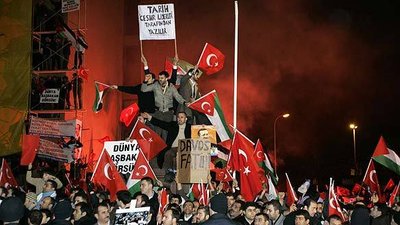
Moderator: This has been a powerful and passionate debate. It’s a debate that tonight can go on for hours but we have already gone well past our closing time. I mean…

Erdogan: One minute.


Moderator: Mr. Prime Minister…. with apologies to Mr. Prime Minister Erdogan…


Erdogan: One minute, one minute, one minute…

Moderator: Well, I…


Erdogan:  One minute! It can’t be! One minute! One minute!


Moderator: Ok, but I’m gonna hold you to the one minute please.


Erdogan: Dear Mr. Peres, you are older than I am. And you have a very strong voice.  I feel that you feel guilty and that’s why your voice was so loud. My voice is not going to be so loud because you know what I’m going to tell you. You know very well how to kill. I know very well how you killed and murdered children on the beaches [of Gaza]. There are two people, two former Prime Ministers of your country, who said something very significant to me. One of them said: “When I entered Palestine in a tank I was happy.” When the tanks entered Palestine they were happy. That’s how some of your Prime Ministers felt. Here you’re talking about figures.  I can give you names, perhaps some of you feel curious. I condemn the ones who applaud cruelty. Because applauding these people who have murdered children is a crime against humanity. We can’t overlook that reality. Look, here I have taken many notes [about Peres intervention] but now I don’t have the possibility to answer them all. I only will tell you two more things about this issue. The first one…


Moderator: Prime Minister, we can’t start the debate again.


Erdogan: Excuse me. The first one, the first one…


Moderator: I’m sorry…


Erdogan: Don’t interrupt me.


Moderator: We really do need to get people to dinner.


Erdogan: The Torah’s 6th Commandament says: Thou Shalt Not Kill. But they have killed Palestinians. The second thing, look, is very interesting. Gilad Atzmon: “Israel’s barbarity is way beyond cruelty.” He’s Jewish.  Then, there is international relations professor from Oxford University Avi Shlaim, who served in the Israeli army. He has said the following in the English newspaper The Guardian: “Israel is a rogue state”.


Moderator: Prime Minister, Prime Minister. I wanna ask to our host. Thanks.


Erdogan: I also want to thank him as for me it’s finished. For me, for me Davos is finished. I will not come back again to Davos, you should know, here is finished. You don’t let me speak. He’s been talking for 25 minutes, and I only could talk 12 minutes. It can’t be. [He gets up and goes away, the Secretary of the Arab League shakes his hand]. 


By Akiva Eldar 

A new study of Jewish Israelis shows that most accept the ‘official version’ of the history of the conflict with the Palestinians. Is it any wonder, then, that the same public also buys the establishment explanation of the operation in Gaza?

A pioneering research study dealing with Israeli Jews’ memory of the conflict with the Arabs, from its inception to the present, came into the world together with the war in Gaza. The sweeping support for Operation Cast Lead confirmed the main diagnosis that arises from the study, conducted by Daniel Bar-Tal, one of the world’s leading political psychologists, and Rafi Nets-Zehngut, a doctoral student: Israeli Jews’ consciousness is characterized by a sense of victimization, a siege mentality, blind patriotism, belligerence, self-righteousness, dehumanization of the Palestinians and insensitivity to their suffering. The fighting in Gaza dashed the little hope Bar-Tal had left – that this public would exchange the drums of war for the cooing of doves. 

“Most of the nation retains a simplistic collective memory of the conflict, a black-and-white memory that portrays us in a very positive light and the Arabs in a very negative one,” says the professor from Tel Aviv University. This memory, along with the ethos of the conflict and collective emotions such as fear, hatred and anger, turns into a psycho-social infrastructure of the kind experienced by nations that have been involved in a long-term violent conflict. This infrastructure gives rise to the culture of conflict in which we and the Palestinians are deeply immersed, fanning the flames and preventing progress toward peace. Bar-Tal claims that in such a situation, it is hard even to imagine a possibility that the two nations will be capable of overcoming the psychological obstacles without outside help. 

Scholars the world over distinguish between two types of collective memory: popular collective memory – that is, representations of the past that have been adopted by the general public; and official collective memory, or representations of the past that have been adopted by the country’s official institutions in the form of publications, books or textbooks. 

The idea for researching the popular collective memory of Israeli Jews was raised by Nets-Zehngut, a Tel Aviv lawyer who decided to return to the academic world. At present he is completing his doctoral thesis in the International Center for Cooperation and Conflict Resolution at Columbia University’s Teachers College. The study, by him and Bar-Tal, entitled “The Israeli-Jewish Collective Memory of the Israeli-Arab/Palestinian Conflict,” examines how official collective memory in the State of Israel regarding the creation of the 1948 refugee problem has changed over time. 

Bar-Tal became enthusiastic about the idea and, with funding from the International Peace Research Association Foundation, he conducted a survey in the summer of 2008 among a representative sample of 500 Jewish Israeli adults. The study demonstrated that widespread support for the official memory testifies to a lower level of critical thinking, as well as belief in traditional values, high identification with Jewish identity, a tendency to delegitimize the Arabs, and support for taking aggressive steps against the Palestinians. 

In a telephone interview from New York, Nets-Zehngut says it is very clear that those with a “Zionist memory” see Israel and the Jews as the victims in the conflict, and do not tend to support agreements or compromises with the enemy in order to achieve peace. This finding, he explains, demonstrates the importance of changing the collective memory of conflicts, making it less biased and more objective – on condition, of course, that there is a factual basis for such a change. 

Bar-Tal, who has won international awards for his scientific work, immigrated to Israel from Poland as a child in the 1950s.

“I grew up in a society that for the most part did not accept the reality that the authorities tried to portray, and fought for a different future,” he says. “I have melancholy thoughts about nations where there is an almost total identity between the agents of a conflict, on the one hand, who nurture the siege mentality and the existential fear, and various parts of society, on the other. Nations that respond so easily to battle cries and hesitate to enlist in favor of peace do not leave room for building a better future.”

Bar-Tal emphasizes that the Israeli awareness of reality was also forged in the context of Palestinian violence against Israeli citizens, but relies primarily on prolonged indoctrination that is based on ignorance and even nurtures it. In his opinion, an analysis of the present situation indicates that with the exception of a small minority, which is capable of looking at the past with an open mind, the general public is not interested in knowing what Israel did in Gaza for many years; how the disengagement was carried out and why, or what its outcome was for the Palestinians; why Hamas came to power in democratic elections; how many people were killed in Gaza from the disengagement until the start of the recent war; and whether it was possible to extend the recent cease-fire or even who violated it first. 

“Although there are accessible sources, where it is possible to find the answers to those questions, the public practices self-censorship and accepts the establishment version, out of an unwillingness to open up to alternative information – they don’t want to be confused with the facts. We are a nation that lives in the past, suffused with anxiety and suffering from chronic closed-mindedness,” charges Bar-Tal. 

That describes the state of mind in 2000, when most of the pubic accepted the simplistic version of then-prime minister Ehud Barak regarding the failure of the Camp David summit and the outbreak of the second intifada, and reached what seemed like the obvious conclusion that “there is no partner” with whom to negotiate. 

Bar-Tal: “After the bitter experience of the Second Lebanon War, during which the memory of the war was taken out of their hands and allowed to be formed freely, the country’s leaders learned their lesson, and decided that they wouldn’t let that happen again. They were not satisfied with attempts to inculcate Palestinian awareness and tried to influence Jewish awareness in Israel as well. For that purpose, heavy censorship and monitoring of information were imposed” during the Gaza campaign.

The professor believes that politicians would not have been successful in formulating the collective memory of such a large public without the willing enlistment of the media. Almost all the media focused only on the sense of victimization of the residents of the so-called “Gaza envelope” and the south. They did not provide the broader context of the military operation and almost completely ignored – before and during the fighting – the situation of the residents of besieged Gaza. The human stories from Sderot and the dehumanization of Hamas and the Palestinians provided the motivation for striking at Gaza with full force.

Nets-Zehngut and Bar-Tal find a close connection between the collective memory and the memory of “past persecutions of Jews” (“the whole world is against us,” and the Holocaust). The more significant the memory of persecution, the stronger the tendency to adopt Zionist narratives. From this we can understand the finding that adults, the religious public and those with more right-wing political views tend to adopt the Zionist version of the conflict, while young people, the secular public and those with left-wing views tend more to adopt critical narratives.

The atmosphere in the street and in the media during the weeks of the Gaza war seems to have confirmed the central finding of the study: “The ethos of the conflict is deeply implanted in Jewish society in Israel. It is a strongly rooted ideology that justifies the goals of the Jews, adopts their version, presents them in a very positive light and rejects the legitimacy of the Arabs, and primarily of the Palestinians,” notes Bar-Tal.

For example, when asked the question, “What were the reasons for the failure of the negotiations between [Ehud] Barak and [Yasser] Arafat in summer 2000?” 55.6 percent of the respondents selected the following answer: “Barak offered Arafat a very generous peace agreement, but Arafat declined mainly because he did not want peace.” Another 25.4 percent believed that both parties were responsible for the failure, and about 3 percent replied that Arafat did want peace, but Barak was not forthcoming enough in meeting the needs of the Palestinians. (Sixteen percent replied that they didn’t know the answer.)

Over 45 percent of Israeli Jews have imprinted on their memories the version that the second intifada broke out only, or principally, because Arafat planned the conflict in advance. Only 15 percent of them believe the viewpoint presented by three heads of the Shin Bet security services: that the intifada was mainly the eruption of a popular protest. Over half those polled hold the Palestinians responsible for the failure of the Oslo process, 6 percent hold Israel responsible, and 28.4 percent said both sides were equally responsible.

Among the same Jewish public, 40 percent are unaware that at the end of the 19th century, the Arabs were an absolute majority among the inhabitants of the Land of Israel. Over half of respondents replied that in the United Nations partition plan, which was rejected by the Arabs, the Arabs received an equal or larger part of the territory of the Land of Israel, relative to their numbers; 26.6 percent did not know that the plan offered the 1.3 million Arabs a smaller part of the territory (44 percent) than was offered to 600,000 Jews (55 percent).

Bar-Tal claims that this distortion of memory is no coincidence. He says that the details of the plan do not appear in any textbook, and this is a deliberate omission. “Knowledge of how the land was divided could arouse questions regarding the reason why the Arabs rejected the plan and make it possible to question the simplistic version: We accepted the partition plan, they didn’t.”

However, his study shows that a larger percentage of the Jewish population in Israel believes that in 1948, the refugees were expelled (47.2 percent of respondents), than those who still retain the old Zionist version (40.8 percent), according to which the refugees left on their own initiative. On this point, not only do almost all the history books provide up-to-date information, but some local school textbooks do as well. Even on the television program “Tekuma” (“Rebirth,” a 1998 documentary series about Israel’s first 50 years), the expulsion of the Arabs was mentioned. 

Nets-Zehngut also finds a degree of self-criticism in the answers relating to the question of overall responsibility for the conflict. Of those surveyed, 46 percent think that the responsibility is more or less evenly divided between Jews and Arabs, 4.3 percent think that the Jews are mainly to blame, and 43 percent think that the Arabs and the Palestinians are mainly to blame for the outbreak and continuation of the conflict. It turns out, therefore, that when the country’s education system and media are willing to deal with distorted narratives, even a collective memory that has been etched into people’s minds for years can be changed.

Bar-Tal says he takes no comfort in the knowledge that Palestinian collective memory suffers from similar ills, and that it is also in need of a profound change – a change that would help future generations on both sides to regard one another in a more balanced, and mainly a more humane manner. This process took many decades for the French and the Germans, and for the Protestants and the Catholics in Northern Ireland. When will it finally begin here, too?

http://www.haaretz.com/hasen/objects/pages/PrintArticleEn.jhtml?itemNo=1060061

By Carlos Latuff

By Carlos Latuff

There are only two powers in the world…the sword of the oppressor and the spirit of the oppressed. In the long run, the sword is always defeated by the spirit.”
– Napoleon Bonaparte

It is the duty of Israeli leaders to explain to public opinion, clearly and courageously, a certain number of facts that are forgotten with time. The first of these is that there is no Zionism, colonization or Jewish State without the eviction of the Arabs and the expropriation of their lands.”
–Yoram Bar Porath, Yediot Aahronot, of 14 July 1972.

May the Holy Name visit retribution on the Arabs’ heads, and cause their seed to be lost, and annihilate them, and cause them to be vanquished and cause them to be cast from the world. It is forbidden to be merciful to them, you must give them missiles, with relish – annihilate them. Evil ones, damnable ones.”
— Ultra-Orthodox Shas Party spiritual leader Rabbi Ovadia Yosef, in a sermon discussing Passover and God’s wrath at Israel’s enemies, 8 April 2001. Some months ago he distinguished himself by describing Arabs as “snakes” whom “God regrets having created“.
(more…)

Rule #1: In the Middle East, it is always the Palestinians that attack first, and it’s always Israel who defends itself. The name of this is “retaliation”.


Rule #2: The Palestinians are not allowed to kill Israelis. The name of this is “terrorism”.


Rule #3: Israel has the right to kill Palestinian civilians; the name of this is “self-defense” or “collateral damage”.


Rule #4: When Israel kills too many Palestinian civilians, the Western world calls for restraint. This is called the “reaction of the international community”.


Rule #5: Palestinians do not have the right to capture Israeli military, not even 1 or 2.


Rule #6: Israel has the right to capture as many Palestinians as they want (around 10,000 to date being held without trial). There is no limit; there is no need for proof of guilt or a trial. All that is needed is the magic word: “terrorism”.


Rule #7: When you say “Hamas”, always be sure to add “supported by Hezbollah, Syria and Iran”.


Rule #8: When you say “Israel”, never say “supported by the USA, the UK, European countries and even some Arab regimes”, for people (God forbid) might believe this is not an equal conflict.


Rule #9: When it comes to Israel, don’t mention the words “occupied territories”, “UN resolutions”, “Geneva Conventions”. This could distress the audience of Fox, CNN, etc.


Rule # 10: The Palestinians are always “cowards” who hide behind a civilian population that “they don’t care about”. If they (militants) sleep in houses with their families, the name of this is: “cowardice”. Israel has the right to annihilate the towns where they sleep using bombs and missiles. The name of this is “high precision surgical action”.


Rule #11: Israelis speak better English than Arabs. This is why we let them speak out as much as possible, so that they can explain rules 1 through 9. The name of this is “neutral journalism”.


Rule #12: If you don’t agree with these rules or if you favor the Palestinian side over the Israeli side, you must be a very dangerous anti-Semite. You may even have to make a public apology if you express your honest opinion.


THIS NAME OF THIS IS: DEMOCRACY!!

(Isn’t democracy wonderful?)


Now that you have read the rules (a Spanish language version of them says the author was God, and I’ve translated an Italian version you can read tomorrow on www.tlaxcala.es), see what the Ministry of Foreign Affairs Lies and Deception has issued in today’s briefing. It’s their denouncement of War Crimes and Death of civilians, of thievery and use of weaponry. Obviously, they project all evil onto their enemies, and here is a classic example of the Hasbara of Israel’s “Good War in a Nutshell”. If you read it, you will see that they are accusing Hamas of all and sundry, War Crimes, even! See how well they apply these rules, going beyond the beyond! They tout about words such as “Truth”, the use of exaggeration and hyperbole alone is staggering, “Eight years of constant rocket barrages”, “I don’t think there’s ever been a time in the history of warfare when any army has made more efforts to reduce civilian casualties and deaths of innocent people than the IDF is doing today in Gaza.”,  and the whopper, “…I was struck by how cosmetically unchanged Gaza appeared to be.”


Count how many times they use each rule and share your results with the rest of us! Find a few rules that were hidden… in essence, for lovers of science fiction or fairy tales, this genre will be right up your alley.

Behind the Headlines: The truth about Hamas crimes in Gaza

The evidence of Hamas’ war crimes, its exaggeration of civilian casualties and damage to property, its abuse of humanitarian aid and its intimidation of Gaza’s residents are finally coming to light.

Despite Hamas’ best efforts to hide the truth about events in the Gaza Strip, the evidence of Hamas’ war crimes, its exaggeration of civilian casualties and damage to property, its abuse of humanitarian aid and its intimidation of Gaza’s residents are finally coming to light.

Israel knows better than most countries the horrors of war. Eight years of constant rocket barrages targeting Israeli civilians, eight years of trying tactic after tactic to stop these war crimes left Israel with little choice but to invoke its legitimate right of self-defense.

When Israel did strike back against Hamas terror in Gaza, it took unprecedented and innovative steps to try to encourage civilians to avoid Hamas positions, even placing tens of thousands of phone calls warning residents in hazardous areas. As British Colonel (ret.) Richard Kemp commented on the BBC, “I don’t think there’s ever been a time in the history of warfare when any army has made more efforts to reduce civilian casualties and deaths of innocent people than the IDF is doing today in Gaza.”

To Israel’s great sorrow, innocent civilians in Gaza have been harmed. However, the figures of civilian casualties have been greatly exaggerated. Most of these figures come from Hamas sources, amplifying the number of civilians killed by including as “children” teenage Hamas fighters and as “women,” female terrorists. According to an Israeli investigation, of the 1,100-1,200 reported casualties, 250 were civilians. The rest are believed to be terrorists or have yet to be identified, but given that most of them are young men in their 20s, it is not unreasonable to assume that they are also members of Hamas or other terrorist organizations.

Hamas is responsible, both morally and under international law, for many of the dead and injured civilians. This terrorist organization deliberately used the local population as human shields, a war crime. Civilian structures were used as launching pads for rockets, a tactic that is extremely hazardous to residents. Civilians were prevented, at gunpoint, from fleeing the sites of battles and even children have been grabbed to be used as living bulletproof vests. Even ambulances were not safe from hijacking attempts by terrorists, who would lure the ambulances into the heart of battle to transport Hamas terrorists to safety.

Property damage, while sizeable, has also been exaggerated. As Tim Butcher, a journalist intimately familiar with the Gaza Strip reported (Telegraph, Jan 20): “There had been no carpet bombing of large areas, no firebombing of complete suburbs. Targets had been selected and then hit, often several times, but almost always with precision munitions. Buildings nearby had been damaged and there had been some clear mistakes… But, in most the cases, I saw the primary target had borne the brunt… For the most part, I was struck by how cosmetically unchanged Gaza appeared to be.”

Hamas’ rocket attacks, which continued throughout the operation, constituted a double war crime. Not only were they aimed at about 15% of Israel’s civilian population, they were cynically carried out from locations immediately adjacent to homes, schools, hospitals, relief agency warehouses, mosques, public buildings – as well as from the office building that housed foreign media studios. These reprehensible acts were documented not only in Israeli aerial films, but by the international media.

As Rod Nordland (Newsweek, Jan 20) described one event, “Suddenly there was a terrific whoosh, louder even than a bomb explosion. It was another of Hamas’s homemade Qassam rockets being launched into Israel – and the mobile launchpad was smack in the middle of the four [apartment] buildings, where every apartment was full…”

Lorenzo Cremonesi (Corriere della Sera, Jan 21) relates the testimony of “Um Abdallah”:  “Practically all of the tallest buildings in Gaza that were hit by Israeli bombs … had rocket launching pads on their roofs, or were observation decks for the Hamas. They had also put them near the big UN warehouse, which went up in flames.”

Many of Gaza’s residents are now returning home. Some have found weapons left behind by Hamas terrorists who turned their homes into forward positions against the IDF, or worse, bodies of terrorists killed during the fighting. Many blame Hamas for the loss of life and property damage caused by Hamas’ practice of hiding among the civilian population. However, critical as they are of the Hamas regime in private, few, if any, residents of Gaza will accuse Hamas publically, a move that is tantamount to suicide.

An official Fatah spokesman in Ramallah (Jerusalem Post, Jan 19) reported that 100 of his men in Gaza have been killed or wounded, some brutally tortured, by Hamas. A Fatah leader in Gaza City claimed that members of his faction were being held in school buildings and hospitals that Hamas had turned into make-shift interrogation centers, and as many as 80 were either shot in the legs or had their hands broken for allegedly defying Hamas’ orders (see also video of Fatah testimonials about Hamas).

Ulrike Putz (Der Spiegel, Jan 23) managed to interview Palestinians who were not too intimidated by Hamas to speak (as long as their full names were not used): “Hail found out after the cease-fire that the militants had used his house as a base for their operations. The door to his house stood open and there were electric cables lying in the hallway. When Hail followed them they led to his neighbor’s house which it seems Hamas had mined. As Hail, in his mid-30s, sat on his porch and thought about what to do a man came by: He was from Hamas and had left something in Hail’s home. He let him in and the man then emerged with a bullet proof vest, a rocket launcher and an ammunitions belt. An hour later a fighter with Islamic Jihad called to the door, then disappeared onto the roof and reappeared with a box of ammunition.” 

Israel has a strong interest in the rehabilitation of the Gaza Strip and will work together with the international community and moderate Arab regimes to improve the lives of Gaza’s residents. However, caution most be exercised to ensure that the aid does not end up in Hamas’ pockets.

This is not unwarranted wariness – Hamas has a long history of stealing humanitarian aid for its own use, even while the operation was ongoing. As Yaacov Katz reported (Jerusalem Post, Jan 12), “Hamas raided some 100 aid trucks that Israel had allowed into Gaza, stole their contents and sold them to the highest bidders.”     Earlier (Jerusalem Post, Jan 6) Mr. Katz related that “Hamas has set up an independent hospital in the Gaza Strip to treat its operatives wounded in fighting with the IDF – and, according to Israeli estimates, it is pilfering a significant portion of the medicine allowed into the Strip…”  

These reports are not only coming in from Israeli sources. Jordan’s News Agency (Petra, Jan 20) reported on the hijacking of humanitarian aid on its way to UNWRA warehouses in Gaza for distribution to the civilian population: “A number of armed men have seized on Tuesday a Jordanian aid convoy after entering the Gaza Strip… The armed men opened fire at drivers after crossing Karem Abu Salem [Kerem Shalom] crossing point and forced them to head to their own warehouses.”

Hamas’ hijacking of humanitarian aid is not only ethically repulsive, it is extraordinary given that Hamas is attempting to claim that the motive for its  rocket attacks is to force the opening of the crossings. This assertion is, of course, preposterous given that the rocket fire started eight years ago, when there was free trade with Gaza and continued after Israel completely withdrew from the Gaza Strip. Moreover, Hamas’ constant and deadly rocket, mortar, truck-bomb and shooting attacks on the crossings are one of the prime reasons for their closing.

The complexities of fighting terrorist organizations are becoming more familiar to democratic states, including NATO forces in Afghanistan. A British soldier who served there analyzed the IDF’s activities in light of his experience and noted (The Spectator, Jan 24) that “I believe that I and other soldiers understand the stress, friction and confusion that combat brings in a way that media commentators and UN bureaucrats never can.”

However, one principle is clear to any unbiased analyst – as long as Israel, and not Hamas, is blamed for civilian casualties and property damage, Hamas will continue to use civilians as human shields and violate every basic rule of international humanitarian law.

As Nir Boms, vice president of the Center for Freedom in the Middle East, and Shayan Arya an Iranian activist, wrote (Jerusalem Post, Jan 28), “War, even when justified, brings much injustice with it. But there is also an important lesson to be learned, and a hope that this time it will not be completely missed by the rioting Arab street… The Palestinian discourse often fails to address the question of responsibility and accountability for Palestinian choices, decisions and leadership.” The Palestinians in Gaza must accept and take responsibility for the consequences of the Hamas leaders they chose.

Fortunately, the truth is starting to come to light. Even a senior European Union official – Louis Michel, European Commissioner for Development and Humanitarian Aid – denounced Hamas, not only stating (AFP, Jan 26) during his visit to Gaza: “I intentionally say this here – Hamas is a terrorist movement and it has to be denounced as such,” but also concluding that: “At this time we have to also recall the overwhelming responsibility of Hamas” for the conflict in Gaza.

Soon after we had seen a unilateral ceasefire from Israel followed by the withdrawal of the Israeli Defense Forces (IDF) after a 22-day assault on the Gaza Strip, we hear the usual two sides of the story, from both Israel and Hamas, each one claiming that Victory was on its Side and all goals were achieved. Either by “Eliminating Hamas Infrastructures and putting an end to the weapon smuggling through underground tunnels” or by “Showing that Hamas Militants stood still facing the state-of-the-Art destructive ‘American-made’ technology by the hands of the Zionists” and how it was able with it’s humble capabilities to push IDF back with bare hands renewing the memory of Israel Defeat in the minds of those who witnessed the Lebanon War in 2006.

Whether Hamas or Israel won, it would matter no more. After all, thousands of Civilians have paid the price in this war, fed their innocent blood to the barrels of the Israeli machine guns and the Zionist bloodthirsty grenades and missiles.

While War Crimes were committed in Gaza, Countries were silently watching it on the media screens and when they decided to act positively towards this horrible situation, they decided to watch some more. Each country (whether, Arab or non-Arab) carrying its hidden agenda, shutting every spokesmen’s mouth from speaking out the truth supporting the weak Gazans.

It was not a surprise for us to see former President Bush behaving gloatingly, invoking the mendacious mantra that “Israel has the right to defend itself.” No wonder his era was the bloodiest since Roman times. Neither are we expecting Obama to change the unjust statements that come from the White House. Unfortunately, as Khaled Amayreh said, “the American political environment is too morally barren, Zionist soaked to produce truly moral politicians who would be willing, let alone able, to call the spade a spade, especially when the Zio-Nazi state is concerned.”
Neither was it a surprise to see Egypt has, to some extent, used this conflict, certainly seen it, as a means of weakening Hamas and bringing Mahmud Abbas [the Palestinian President, also known as Abu Mazen] back to a ruling position in Gaza. Since he always played the “good boy” role regarding so-called peace talks with the Zionist state. Not to mention on 06/20/07, Hamas gunmen stormed the Fatah security compounds in Gaza discovering something far more valuable than some American-made weapons and grenades — CIA files which purportedly contain “information about the collaboration between Fatah and the Israeli and American security organizations; CIA methods on how to prevent attacks, chase and follow after cells of Hamas and their Committees; plans about Fatah assassinations of members of Hamas and other organizations; and American studies on the security situation in Gaza.” So eventually Israel had created a pretty good doll to play with to eliminate all the pockets of resistance.

On the controversy, Israel with this attack failed to weaken the ties of loyalty between the Palestinian citizens and Hamas; One of its unfulfilled primary goals was to weaken Hamas’ reputation in Gaza, starting with an absolute Siege preventing any basic supplies from entering to the civilians. Then after the siege was met with complete failure and Gazans bravely stood strong and showed the Zionists they are ready to take more for the sake of free Palestine, the military attack started adding more cuts to the unhealed wounds and more Death to the terminally ill.

We saw many Palestinian demonstrations in the West Bank and even inside Jerusalem supporting the Palestinian Resistance. With no doubt Gazans are more loyal to Hamas than before.

And this only shows that Israel kept on ignoring THE FACT, that there is a big difference between trying to eliminate a group of rebellious militiamen that could be thrown in the cages of surrender by military force and a movement based on a Religious Ideology which had been planted in Palestinian soil for decades, its roots reach deep inside the hearts of Palestinians. Every time trials are made to remove it, it even grows more strong, blossoming it’s Fruits sweeter than ever. And what Israel also learned is the more it presses on the so-called Moderate Arabic leaders, the more the Gap between them and their streets increase. This street rage in the Arabic world will swallow them before their own leaders like “Youssry Fouda” has mentioned in his recent article.

After this Crisis we have witnessed two major outcomes.

(1) If there is a bright spot of hope for Palestinians in the horrific aggressiveness of the last few weeks, it is that Israel’s deployment of disproportionate and blind, indiscriminate violence in Gaza has revealed the abnormality, brutality and pro-Terrorist nature of the occupation for millions of people, especially in the western world, who previously had been unable to perceive it due to the pro-Zionist Media washing the blood from the faces of the Israeli spokesmen before appearing on the news channels.

(2) It was a reckoning day for the Arab and Western Leaders, Arab and International states where all masks were removed and true faces were revealed regarding their devotion/deception, truthfulness/treason, hatred/hope towards a free Palestine for Palestinians.


US Media Misreport Latest Gaza Violence

By Carlos Latuff

By Carlos Latuff

Please phone and ask for correction!

[A FLYER about this can be downloaded at: www.IfAmericansKnew.org/download/gazacfv.pdf ]

American media are reporting violence that took place along the Gaza-Israel border on January 27th as, in the words of CNN, “the first incidents of violence since last week’s Mideast cease-fire,” telling the public that Palestinians broke the ceasefire. [1]

The reality, however, is that Israel had already violated the cease-fire at least 7 times, the Israeli military killing 2 Palestinian civilians and injuring at least 5, at least one of them a child:

* Israeli forces killed a Palestinian farmer in Khuza’a east of Khan Yunis on Jan 18
* Israeli forces killed a Palestinian farmer east of Jabalia on Jan 19
* Israeli naval gunboats shelled the Gaza coast line, causing damage to civilian structures on Jan 21
* Israeli troops shot and injured a child east of Gaza City on Jan 22
* Israeli gunboat fire injured 4-7 Palestinian fishermen on Jan 22
* Israeli shelling set a Palestinian house on fire on Jan 22
* Israeli tanks fired on the border town of Al Faraheen, causing damage to homes and farms on Jan 24

This list does not include two Palestinian children who were killed on January 20th by unexploded ordnance left from Israel’s 22-day assault on Gaza.[2] (Additional details about the above cease-fire breaches and citations can be found in the timeline below.)

Media Contacts

Most of the media seem to have reported this wrong. You may check your local newspaper and contact it if it reported the story incorrectly.
(more…)

WRITTEN BY Sarah Gillepsie


‘What impartiality requires is not that everyone receive equal treatment, but rather that everyone be treated as an equal.’ Ronald Dworkin Taking Rights Seriously. Harvard University Press. 1977, p. 227).


BBC director general Mark Thomson can not screen footage of Palestinian suffering in Gaza without compromising his cooperation’s impartiality. At the heart of his obfuscation lays a belief that Palestinian pain is not an objective reality. It is, at best, a subjective possibility, one loaded with the potential to burst into a subversive, destabilizing force.  


For activists and supporters who are frequently asked why they devote more energy to Palestine than Darfur or the Congo (the implication being of course that they are anti-Semites) Mark Thomson provides the most succinct answer. For Thomson has no problem whatsoever screening Disaster Emergency Committee films on behalf of Darfur and the Congo. The suffering endured by people in these regions is endorsed by the BBC as a universally acknowledged fact. Screening footage of the humanitarian disaster in Palestine though, sabotages Sky and the BBC’s obligation to be ‘balanced.’ If this was indeed a war, and not genocidal attack, then the BBC could counter their depictions of carnage in Gaza with images of the horrors endured in Sderot. But this is of course impossible. The visual impact of a damaged kitchen doesn’t quite cut it next to the apocalyptic hell hole that is Gaza.


Problematically, for a Zionist broadcaster who wants to appear ‘fair’, the humanitarian appeal does not come across as ‘balanced’ because the conflict is not ‘balanced’. Again, the Palestinians are collectively punished for this annoying glitch in egalitarian reporting. Rather than responsibly portray a reality that inevitably induces a condemnation of Israel, these corporations re-brand Palestinian reality as’ journalistic bias.’


Thus, the BBC’s refusal to air this film suggests that Palestinian suffering is itself a form of propaganda. Through the lens of the BBC, the screams of kids riddled with phosphorus become anti Israeli screams. The piles of burning concrete become anti-Semitic piles of burning concrete. The howls of grief are Islamist and undemocratic. The lives of children snubbed out in an instant by Israeli bombs may have grown into adults who failed to recognize Israel’s right to exist; that is if Israel had not had the foresight to violate their right to grow up.


Perhaps the most menacing aspect of this tragic debacle is Mark Thomson himself. A quick bit of research online ploughs up a surfeit of information proving the man is far from ‘impartial’. His Jewish wife, the scholar Jane Blumfeild, hails from an American family that attends Yeshivas. Evidence suggests that she recently signed a petition campaigning against the anti-Israeli content of the Washington Post. In 2005 she traveled together with her husband to Jerusalem to engage in talks with Ariel Sharon in an attempt to build bridges between the BBC and Israel. According to the Independent , this was an unprecedented gesture by any serving BBC director general. ‘He has a far greater regard for the Israeli cause than some of his predecessors’ a BBC source said. All in all, it is infuriatingly impossible to imagine the reverse; a BBC director general married to a woman from a Wahabi background who petitions news organizations to write pro-Palestinian copy and visits Khaled Meshaal in an attempt to help him out with his PR.


The implausible tone of this scenario betrays the catastrophic reality behind Sky and the BBC’s position. It is very clear that, as much as these media institutions champion their Voltaire-esque spiel about covering both sides of every story, at the end of the day their ‘objectivity’ is merely Israeli objectivity.


Gerard Kaufman MP elaborates Probably the (BBC’s) attitude has been: ‘Oh this is just too much trouble and it’s too much trouble because of the pressure of the Israelis. This very active and not very pleasant Israeli diplomatic representation in Britain’.


With over a million people dependent on aid to survive, the decisions of both corporations, continues the legacy of pathological barbarism carried out by the Jewish state. The Jerusalem Post and some other editorials go slightly further and refer to the DEC film as an ‘advert’ as if just trying to save lives were a sales tactic. Thankfully ordinary human beings are finally able to see through their transparent rhetoric and are doing to their TV licenses what Israel did to Gaza, burning them into obliteration.