 By Ursula http://urs1798.wordpress.com/2009/01/14/israels-kriegtourismus/
click to enlarge
By Ursula http://urs1798.wordpress.com/2009/01/14/israels-kriegtourismus/
click to enlarge
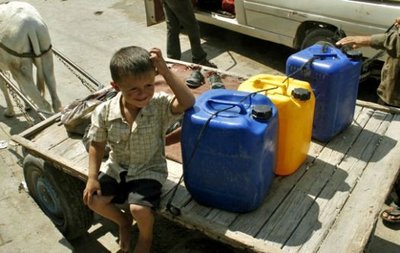 More than 28,000 participants including head of states, ministers, parliamentary members, children and youths from different parts of the globe flocked to Istanbul to take part in the 5th World Water Forum. As the title of the forum “Bridging Divides for Water” promised, the hope was to tackle current water crisis through open discussion and transparent dialogue, the exchange of ideas and experiences. The forum was presumably designed to come up with new ideas and critical views, to ultimately reach a common understanding and consensus on water-related issues. However, from the sessions that I attended, I concluded that the forum outcomes fell far short of being a success. As the forum drew to a close, I could not avoid thinking repeatedly of the pressing question: Was the forum about “Bridging or Maintaining Divides”? In sessions that I attended, there was not much space to promote discussion and dialogue, let alone to challenge mainstream discourses. Hegemonic discourses of business and world politicians’ elites prevailed and went unchallenged. To better illustrate my impressions, I shall draw on a few sessions, which I attended.
In a session titled “Overcoming obstacles to serving the urban poor”, one expected the discussion to explore genuine mechanisms and approaches on how to realize universal access to water services, including the poor segments of societies. However the session’s speakers overlooked recent experiences where privatization profoundly failed such as, Argentina, Bolivia, Brazil, Kenya, Mexico, Tanzania, and attempted to convey messages and convince the audience on how successful the privatization programs in Manila and Morocco have been to increase coverage and universal access of water supply. Experience shows that polices of privatization have been challenged by significant opposition and public protests, hostility and violence and aggregated power inequalities and socio-economic worsening. What’s more, the session speakers, in contrast to conventional knowledge on the driving forces of multinational companies, wanted us to believe that water companies are socially responsible for the poor and concerned about the Millennium Development Goals as an end but not as a means to profitable business. If this session was genuinely designed to bridge divides, as the title promises, then a wider range of participants should be invited to foster dialogue ad discussion and to conclude on constraints, openings and key factors to improve water supply services. People from case studies, such as Bolivia, where privatization of water services spawned public protest and drastic social and political consequences, would give a counter perspective. It was no surprise to learn that the stakeholders of this session are drawn from the private sector and development agencies.
 More evidence for my perception came from the sessions and the side event related to the Tranboundary water issues on the Jordan River. A video presentation by one of the donors’ agencies attempted to convey a misleading and absurd message of existing cooperation and coming peace. The film wanted us to turn a blind eye to Israeli’s war crimes on Gaza that deliberately targeted civilians, homes, mosques, schools, universities and children and to have our ears deaf to the pleas of 1.5 million people besieged in Gaza. The aim of the video film, in my view, was intentionally to reduce the Palestinians cause and the Israeli occupation to sound like a normal conflict that is in way to be resolved and to normalize the sense of urgency that the international community may pick up to take action.
The Norwegian moderator, in both of the sessions: ‘Water management During and After Disasters / conflicts” and the “The UN – Water Day” did not allow for an open discussion, and constrained participants from asking questions or contributing by relevant statements. Instead he took the lead himself to address questions and sometimes he influenced the answers. While the head of Palestinian water authority was urging the participants, especially the Israeli audience, to depoliticize water issues from the political conflict, he couldn’t himself depoliticized his answers when addressing questions on how power asymmetry of the water-conflicted parties impact a real cooperation and water conflict resolutions. A few times, when one of the speakers succeeded to convey a short and clear quick message about the water crisis situation, the Norwegian moderator jumped in to normalize the message and reduce the significance of the water crisis. If this session was designed to bridge divides, the title should describe the reality as it is: ‘Water management under occupation and siege”.
Despite of the remarkable presence of Palestinian water professionals, Palestinian speakers found themselves constrained and not able to say much about the water situation crisis and the Israeli mass destruction of water infrastructure, the thievery of water and the denial of their water rights from both surface and the ground water sources. The constrains can either because their messages has to be in harmony with what the Palestinian Authority (PA) want them to say or that they must follow instructions of the session’s chair persons or possibly because they are self-constrained. For them, it is a simple fact that if they were to convey a clear message about the crime polices on water, they would not be permitted by the Israelis, later on, to leave their occupied territories and attend the next water meeting event. Such decisions on the control of people’s movement are claimed to be for security reasons, and are not questioned or challenged. Also noteworthy are the two Palestinian children from Gaza who were supposed to participate in the children forum but were not allowed to leave Gaza. No justifications for their actions were given by the Israelis.
 (photo at the left, a picture from one of the many pool installation companies in Israel) In a side event, a presentation dedicated to a future water scenario, was presented by a British consultant, on how to augment the water supply for Palestinians in the Jordan River Basin in 50 years. What this pragmatic proposal suggested is that riparian countries have to give up their water rights from the Jordan River and to adapt the available water quantity they have, if any. Ironically, the water consumption per capita in Israel, severe scarce country, is 320 liter per day, a figure which is far more than the water per capita consumption in a water rich country like Sweden (220 liters). The future scenario, as the consultant advocates, is based on two components. The first is to construct a desalination unit for the Gaza, with possibilities, on the Egyptian land. But what does this scenario imply? Does it imply that Gaza will be a separated geographic entity from the West Bank? That is not clear. If this unit is constructed inside, the consultant stated, there is a risk that it be destroyed by the Israelis. This is a naive speculation because if Israel wishes to destroy the unit, they can do as they have done in similar aggressive acts without any respect to the sovereignty of states or international law norms and without questioning.
Moreover, the proposal, ambiguously assumes that with the elapsing time, Palestinians will be able to develop their water infrastructure while living on a gradual and small augmentation of water supply. By time, he said, both the Israelis and Palestinians are expected to reach a positive-sum situation by developing new water sources. This assumption again is either naive or misleading. On which basis the proposal assumes that Israel will allow the Palestinians’ a free hand to develop their own infrastructure without delaying, undermining or destroying the developing water infrastructure? What kind of signals on the ground, away from “lip service” rhetoric, has Israel given so far to base such proposals on? More than 170 water projects, which were agreed upon between Palestinians and Israelis, have not been implemented due to imposed bureaucratic constraints by Israel. Furthermore, on which territory should the water infrastructure be built? Is this territory based on the references of United Nations resolutions? Has Israel identified its borders so far? Shouldn’t we have first and foremost identify the Palestinian lands before proposing a future scenario on water? Land and water are inseparable issues to be resolved.
Palestinians also have to be cautious about the time issue. The time dimension has been always important for the realization of the Zionist project and the never-ending expansion of Israel’s state on the historical land of Palestine. Experience shows that the Israel governments base its strategies on creating new realties on the ground that are being realized by time. Time has been also a significant factor to discursively legitimatize the Israeli polices before the international community for more than 60 years. What was accepted by the international community including the Arabs before 1947, was different from that which was accepted in 1948, before and after 1967, now and so forth. Palestinians water professionals should be aware of the proposal implications on land, water, geographic integrity of the Palestinian territories. They also should engage as many water experts as possible, not only inside the occupied territories, but also in the exile to scrutinize proposals and challenges, to avoid losses or legitimized the illegitimatized and to safeguard water rights and shares in reference to the international norms. Palestinians should not accept less than that.
The Forum has been expected to build a platform for future settlement of divides on water. In reality, there have not been constructive discussions between parties who really need to bridge the divides.
Lina Suleiman, PhD candidate
Division of Urban and Regional Studies
Department of Urban Planning and Environment
School of Architecture and the Built Environment
KTH, Royal Institute of Technology
100 44 Stockholm

It was an ordinary morning December 2008. Children were playing and having fun. They were digging between the rocks to get some space for their childhood.
This is the story of Ahmad, a little boy without sin who was killed on that morning. Ahmad was known among his friends as lively, bustling boy.
Ahmad and his family live in Al Zahra district in the middle of the Gaza Strip, exactly next to the building of the Civil Defense. On the morning of December 27th, Ahmad took his breakfast, put on his boots and went out to go playing in his nearby garden.
“We are an extended family living in a house that comprises four floors. My family and I live in the second and my father in the first floor,” says Ahmad’s father. When he noticed that Ahmad and his sister Mariam were going to play in the garden of the house, the father tried to stop him as the family was waiting for Mohamed, the older brother to take an early lunch. But his attempt was in vain.
“It was like an earthquake hitting our house and everything was shaking,” said the father. Doors and windows were broken, too. The Father tried to find out what had happened outside and searched for the source of the terrible noise he had heard. A cloud of smoke was covering the sun. “There was nothing else to do than to assure myself about the family as another explosion shook the nearby building. I tried to make sure that everyone was inside the house, and then I convinced myself to feel safe.” Suddenly Mariam cried out: “Daddy, daddy, Ahmad, Ahmad…” The little girl Mariam broke out in tears, terribly afraid about her brother. “Her shouts froze my body,” said the father.
Ahmad was found under the rubble of stones at the entrance of the house. The father immediately took Ahmad and rushed to search a car to bring him to the Hospital Shuhad’a Al Aqsaa. “While I was holding him, I realized that Ahmad was dead,” said the father. Ahmad’s head was partially smashed; part of his brain on the ground and his back was filled with shrapnel. “I stood on the doorsteps, trying to understand the situation outside, searching for a car to drive my son to the hospital. I am a doctor myself, but now I could not help him any more,” the father said. “When I left my home, I discovered that the Headquarters of the Civil Defense had been destroyed completely.”
“The sight at the hospital was tremendously dreadful when I arrived. It was full of dozens of killed and wounded young men on the floors.” Ahmad was sent to the emergency department and although he still had some signs of life, after a while he passed away. At this moment, silence came over the father; there were no more words in him. Blood was everywhere and particularly the sight of young children who always are the symbol of innocence.
“I wondered what Ahmad and the other children might have done to be killed by this Israeli aggression. They always dreamed of safety and to live like any other child in the world,” said the father.
While the father was sitting on a chair and thinking about the situation, his mind was busy at the same time with thoughts about his family living near the targeted building of the Civil Defense. Only when he arrived home later, he saw the massive destruction at the building of the Civil Defense. As he reached the house he was devastated to find out that most of his family members had been wounded in the attack. So the father decided to go back to the hospital to get news about his family. He found out that also Mohamed, the oldest brother, who was coming home at the time of the attack, had been wounded in his head as well.
The story of Ahmad in short sentences: by his father –
Ahmad was a lovely little five-year old boy. His smiles will never be forgotten. He was the youngest brother and he was so clever. Anyone who saw Ahmad immediately liked him. He was a very active boy. His favorite pastimes were playing football, using the computer and take care of the birds. He left an empty space in our house – he was the most loved boy in our family. His sister Mariam will never forget Ahmad as she was with him in the last moments before he was killed. She said that she will stay waiting for her bother… Wait… and wait … and wait… – Waiting for the world to answer!!!
What was the sin that those young kids committed to merit the way they died? What they needed was to grow up safely and in happiness.
“We are not seeking to fight, to attack, to have weapons and all those means of death,” were words always repeated by Ahmad before he was killed.


Marya before the bombing happened!

Innocent Ahmad days before he was killed!

Ahmad, an innocent killed by Israeli Army
Pictures taken my PT,http://www.paltelegraph.com/.
http://www.peaceforgaza.blogspot.com/
 Ayman Quader
  The Beit Ayn settlement outpost near Hebron
WRITTEN BY Khalid Amayreh in al-Khalil
8 April, 2009
Religious Jewish terrorists on Thursday attacked a small Arab village north of al Khalil (Hebron), shooting randomly on civilians and vandalizing homes and businesses.
Eyewitnesses said as many as a hundred settler terrorists descended on the small village of Safa, 10 kilometers north west of al-Khalil, with the purpose of carrying out a pogrom against local inhabitants.
The terrorists were escorted by several Israeli army soldiers who reportedly made no effort to stop the terrorists who were shouting “death to the Arabs.”
The Palestinians, fearing for their lives, hurled stones at the rampaging settlers to prevent them from setting fire to Palestinian property, prompting Israeli soldiers to open fire at the Palestinians.
At least 28 people were reportedly wounded with live ammunition, including a boy who was shot in the chest.
Medical sources said Thaer Nasser Adi, 17, was in serious but stable condition at the Ahli hospital in al–Khalil.
The mayor of the nearby town of Beit Ummar, Nasri Sabarna, described the settler rampage as “an unprovoked criminal act against innocent and peaceable people.”
Sabarna said the settlers wanted to terrorize the Palestinian villagers in order to take over their land and property.
He accused the right-wing Israeli government of giving Jewish terrorists a green light to attack Palestinians and vandalize their property.
“The present government is a government of settlers, by the settlers, for the settlers. I believe there is a full coordination between the settlers and the army.”
Muhammed, a local villager, called the settlers “savages and Nazis.”
“These people go to their religious Talmudic schools in the morning, and in the afternoon they come here to attack us, terrorize our women and children and sabotage our property. What kind of religion are they following?”
Muhammed called on the international community to provide protection against “these barbarians who want to kill us and expel us from our land.”
He lashed out at the Israeli army for its “connivance and collusion” with the settlers, saying that the army and the settlers were “two sides of the same coin.”
Al-Khalil Governor Hussein al Araj, who arrived at the village soon after the disturbances, accused the Israeli army of failing to protect Palestinians from the settlers.
“I believe the settlers wouldn’t dare attack the village without at least a tacit approval from the Israeli army.”
Al-Araj held the Israeli army fully responsible for this “pogrom,” saying that Palestinians in the occupied territories needed international protection.
He added that settler attacks and terror would continue as long as “these criminal squatters remain here.”
The small settlement outpost, known as Beit Ayn, is home to extremist settlers who are indoctrinated in Jewish supremacy.
A few years ago, some of the settlers from Beit Ayn were caught implanting a large explosive charge at a Palestinian school near Jerusalem.
The explosion would have killed and injured dozens of Palestinian children.
Last week, a settler was killed, ostensibly in retaliation for the murder of Palestinians by settler terrorists.
Normally, the Israeli justice system deals extremely lightly with settlers who murder Palestinians.
During the al-Qsa intifada, the Israeli army and paramilitary Jewish terrorists killed thousands of Palestinians, the vast majority of whom innocent civilians, to suppress Palestinian aspirations for freedom from decades of the Nazi-like Israeli military occupation.
According to an Israeli human rights organization, only a handful of cases of murder were investigated.
 Gaza is full of stories of brave women, under the Israeli caused rubble there are many stories of women with hopes and great expectations, pioneers in every field.
Being a Palestinian journalist in exile, there was no other way to interview my people and interact with my colleagues in Palestine but through the internet. I have started a feature by interviewing the Palestinian journalist Nelly Ismail Yassin Almasry through the net because Israel’s enforced laws made it difficult for us to meet in person. Our discussions took longer than expected because electricity blackouts happened many times in Gaza where she lives and the internet connection died with it, but I was determined to write about the other side of Gaza, the side that keeps rising from under the ashes like a bird with a thousand wings because its people refuse to surrender to defeat. Nelly is the daughter of Ismail Almasry, the Football Coach of the National Football Team in Gaza and a colleague working as a sport journalist and a member of the first women’s soccer team in Gaza.
The first Palestinian all women’s football team was established in 2003. Even though they had very limited resources, the women kept practicing and playing against other Arab women’s leagues whenever they were allowed to leave Gaza. The Gaza women’s soccer team suffered many difficulties and faced many obstacles because of the limited resources, the absence of properly built stadiums, the absence of security and the continuous closures of checkpoints by the Israeli occupation forces thus hindering them from practicing or travelling to play against other teams, even though the team wanted badly to represent Palestine on an international, level they were deprived of this dream as they were of many other dreams.
The sport movement started to come back to life in 1994, supported by the Palestinian National Authority. Some attention has been directed to develop sport facilities like maintaining sport stadiums. One of such efforts was building a stadium in the city of Jericho, which has encouraged some athletes to set up a female football team for the first time in Palestinian history, but the idea did not receive adequate attention or support because it was novel. Unfortunately that lack of interest eventually lead to freezing the idea for a while.
But again the Arab and International Federation of Football requested activating the Arab women’s football teams in their countries, and encouraged it by allocating 10% of its financial support to the union to support the Palestinian women’s football teams.
The Palestinian union adopted the idea of forming a female soccer team, and assigned this task to Mrs Haniya Albish. This decision was formally adopted by the International Football Federation who sent Mrs Haniya Albish in 2003 to attend a symposium on women’s football in the framework of the World Cup for women in America, thus starting the nucleus of the team at Bethlehem under supervision of Mrs Samar Ala’araj who was in charge of coordinating sports activities at Bethlehem University.
At the same time, Mr Hussein Shakhtour was forming another team in the Directorate of Youth and Sports, the two teams were merged into one sponsored team, supervised and trained by Bethlehem University according to their best of abilities considering the general situation in Palestine.
Then Mrs Haneyeh Albish, a member of the Palestinian union team of soccer, head of women’s football union, along with Mr. Adnan Abu Zayed attended the symposium of women’s football in “West Asia” organized by the International Federation of Football “FIFA” in March 2006 to develop the game in Palestine.
The following participation was in the West Asia Championship for Women’s Football in Jordan held from 23 of September to the 1st of October 2005, during which the Palestinian team played against Jordan, Syria, Iran and Bahrain.
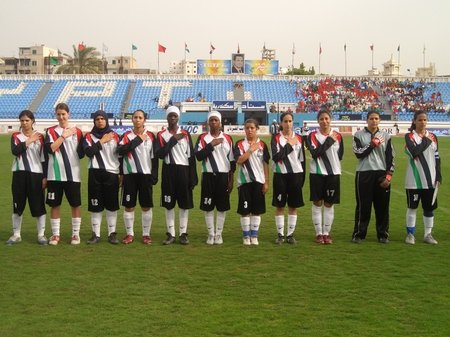 Then the Gaza team participated in the Arab Championship for women’s soccer in Alexandria, Egypt from 14-28 April 2006, playing against Syria, Tunisia and Egypt. Unfortunately all forms of sports in Gaza now are totally paralyzed.
Nelly grew up in a family of sportsmen who understood her passion for sport, her father was the coach of a team, and her brothers were football players who understood that football is just one of her choices.
Before getting involved in sport journalism Nelly played volleyball at AlAhli Palestinian club in Gaza. In 1996 and while she was still a university student, she joined the first football team for women in Gaza. Some families looked with suspicion at women playing football, but Nelly had no problem with that since she was brought up in a family involved with this sport, she was encouraged by her parents, besides the fact that three of her sisters joined the team as well. Her father was always keen to follow his daughter’s progress and used to go to the club to watch them training. They practiced 3 times every week for 18 months.
Nelly’s beginning with sports media goes back to the end of 2001 when she was a trainee at the Voice of Freedom Radio in Gaza, she progressed in her job to become a broadcaster of sports programs, during the same period she joined another media establishment as a supervisor of its website, but her post did not last long for economic reasons leading to the closure of the website.
Nelly confessed, ‘I have started to write sports reports in 2002 but I started playing football earlier, during 1996. Football is considered by many in Gaza as an unusual field for women, but strangely enough, most of the members of the Gaza women’s soccer team came from conservative Palestinian families, the majority of the members lived in the refugee camps, but still they have proved that they are able to commit themselves to this sport in a way that changed the society’s perception of women football players, and accept the idea to a point that the players started to receive support from the International Federation and the Arab federation, besides the FIFA and other unions.
Nelly is not involved in kicking the ball only, but she is a keen football fan as well, she talked to me about watching most matches played around the world and her support for some Arab leagues like the Saudi Arabian team Alhilal Club. She told me that and among her favourite players is Yasser Kahtani the best Arab player during the Asia championships 2007; she is also a fan of Nawwaf Altimyat, and Mohammad Shalhoob.
Many people were enraged that one Israeli player was denied a visa to Dubai to the tennis tournament held lately, claiming sport should be independent of politics, but it seems not many understood how important it is to boycott Israel’s sport to make a point, Israel bombed the Palestinian playing courts, banned Palestinian players from travel or participation, imprisoned and detained Palestinian players, attacked many of them, and these facts can be brought up and made known should Israel be boycotted. Israel’s policies are aimed at killing any hope of Palestinians participating in any sport where they can represent their country on international level.
Nelly finished her comment by saying ‘unfortunately there has been always a negative attitude towards women’s journalistic work in general, let alone working in the sports field where the journalist has to shuttle between clubs and matches. Some Gaza communities were not in favour of women practicing this sport or working in its media field, but we never gave up. All I hope for now is some peace, and to see that our stadiums will be rebuilt again after everything has been destroyed in Gaza by Israel’s attacks…the ball now is in the International court.
 WRITTEN BY Anis Hamadeh
With amazement the world public has noticed in recent weeks that war crimes had apparently been committed in Gaza. (1) Even Israeli soldiers and military staff now report about their own cruelties against the Palestinian population, cruelties that we do not even know from movies. (2) The stylish T-shirts, that promote the shooting of pregnant Palestinian women by indicating that in this way you can kill two human beings with one bullet, appeared strange to people abroad, too. (3) Moreover, the appointment of Avigdor Lieberman as Israeli foreign minister horrifies the public. (4) There would be further reasons to be disgusted, like the ongoing ethnic cleansing in Jerusalem, the plans for expanding the illegal settlements, some killings, the abduction of Gazan fishermen and so on, but these details do not enter the global discourse, because, well, because they never did. The question is: how genuine is the amazement about what happened in Gaza?
Did anything change in Israeli politics? Are those really completely new phenomena, suddenly coming up in the discourse, out of thin air? Or do we only witness the consequences of a continuing strategy that had begun more than sixty years ago? There are good arguments for the latter alternative, especially when you look at the facts. Let us, for example, revisit the year 1948 …
Deir Yassin and the Human Rights
1948 was a special year. It was marked by Plan D, the Israeli plan to ethnically cleanse Palestine. (5) Jewish troops expelled about 700,000 people from the indigenous population of the country and killed many of the men in combat age. Even in 1936, after the Palestinian revolt, the Palestinian elite had been persecuted. This was shortly after the first Palestinian party was founded which was to represent the interests of the native population in the two fronts struggle against the British occupation and the Zionist conquerers. “Punishments” like the demolition of residence houses were firstly used by the British and were adopted later by the Zionists. In 1948, several Jewish terror groups were known, like the Haganah, Irgun, the Stern Gang, Lechi and others. They killed, took the land away from the local people and later contributed several prime ministers who were accepted by the world public without any difficulty – very similar to today.
Don’t think that the pogroms against the population of Palestine during the execution of Plan D were secret. When the future Prime Minister Menachem Begin had the Arab village of Deir Yassin attacked on April 9 and many of its inhabitants killed (certainly including children and women) in order to terrorize and horrify the people, this was covered in the world press. Begin defended his deed with a typical Israeli bonmot: “The massacre of Deir Yassin not only had its justification – without the ‘victory’ of Deir Yassin there had never been a State of Israel.” (6) Four years later, the same Begin attempted to kill the German chancellor Adenauer (7) and in 1978 he received the Nobel Peace Prize.
 When Deir Yassin went through the press, the horror about this deed was huge, very similar to today after Gaza. Everybody was surprised and disgusted, even perpetrators like Haganah and the Jewish Agency. A pattern came into being, the pattern of shooting and crying, i.e. killing with subsequent lament. This has worked: there have never been any consequences for Israel. The killings, the expropriations and the humiliation of the local population until today belong to the salient characteristics of Israeli politics. Nothing has changed.
At the end of 1948, large portions of Palestine were “Palestinian-free”, much more than the designated part of the land that the international community and the UN had granted to the Jews (with the explicit demand that the local people be treated well). We remember that the international community decided to give some land to the victims of the European genocide against the Jews and everybody was happy with the Palestine decision … except, of course, the people who lived in the region, because it was their land according to all international and logical standards. Weapons and myths (8) silenced them.
1948 was also the year of the Universal Declaration of Human Rights. In December, when Israel was established on the blood of the Palestinians, the world celebrated the Human Rights and did not care about Palestinians. The world wanted human rights with exceptions, but this did not work. Now, sixty years later, we begin to understand that.
The Aryan state did not work, let’s try a Jewish state …
During its history, Israel has continued the Deir Yassin policy, and today there is less than 10 or 5 percent of the land left to the Palestinians. On global refugee days people do not talk about Palestinians, although they are the biggest group of refugees in the world with far over 5 million people. This works because Palestinians (and Arabs and Muslims in general) are needed to fill the role of the anti-Semite which is substantial to the Zionist ideology.
It is, as if the world said: the Aryan state did not work, let’s try a Jewish state … Is it really surprising that we witness stunning similarities between the two today? (9) The Israeli population today is exactly confronted with the “final solution” subject now, because Israel cannot make peace on the one hand (this would imply justice for Palestinians, an unthinkable idea in Israel’s decision-making) and needs to end the conflict, on the other. With extremely violent politicians like Netanyahu and Lieberman the “transfer” plan comes closer, an idea to just expel Palestinians en masse like in the old days. Of course, if this happens, it will not mean peace, but more violence and even stronger resistance. So let your imagination fly and think about what a final solution could look like.
It is not known how many Palestinians must die before the world recognizes that they are human beings and not anti-Semites. Right now the killing goes on, the Gaza peak did not evoke a real criticism yet. Israel is encouraged to go on to see how far it can go. Do not think that this was it, do not think that Israel will now see that it cannot go on like this. The Zionists have learned that they can do anything with impunity. On March 22, 2009, a total of 14,000 tons of new US weapons arrived in Ashdod on the German cargo ship “MS Wehr Elbe” (owner: Oskar Wehr KG, Hamburg). (10) With these weapons alone, tens of thousands of people can be killed.
The Jewish state will collapse, like the Aryan state has collapsed, because both have the seed of self-destruction in them. Both are clearly racist, violent and expansionist in nature. This time it hits Arabs and Muslims instead of Jews. For over sixty years the international community has been blind to this fact, although it is so obvious that ordinary people know it and talk about it – not politicians or journalists or others who need the public.
Countries like Germany even have a “reason of state” to secure the persecution of Palestinians, Arabs and Muslims, calling it a “historical responsibility”. There is no other possible reason to introduce a reason of state if it was not for something highly illegal that needs to be hushed up.
We may still save the rest
The repressive tolerance of Western countries like Germany and the USA makes it possible to write all this down, because it usually has no “harmful” effects towards change. A lot of people think that – unlike the Nazi state – the Zionist state cannot be overcome by violence and thus will prevail. This is an error. Racist regimes of this ilk end up in self-destruction if they are not overcome from the outside. What is important now: we can still save lives. We cannot save the about 1,500 dead in Gaza anymore. But we may still save the rest.
At the end of May, the Free Gaza Movement will organize a flotilla of boats, the Hope Fleet, to break the siege of Gaza. You can support them. (11) The International Solidarity Movement (ISM) is present in Palestine to shield Palestinians from the Zionist killers (12). You can support them and save lives. This is a critical phase and every hand is needed, every tongue and every cent. Boycott Zionists now! Take it seriously now! Boycott non-Israeli journalists and politicians who support the killing! Argue with them! Support those Jews who are committed against violence and for peace in Palestine. For the sake of humanity and of yourself: do not take part in this murder.
NOTES:
1. E.g. in the German “Spiegel”, “Israelische Armee: Gaza-Veteranen schockieren mit Aussagen über wahllose Morde.” by Ulrike Putz, Beirut, http://www.spiegel.de/politik/ausland/0,1518,614286,00.html
2. See e.g. ‘Shooting and crying’, von Amos Harel, http://www.haaretz.com/hasen/spages/1072475.html
3. See e.g. http://news.sky.com 20 March 2009, “Israeli Army T-Shirts Mock Gaza Killings”, by Dominic Waghorn (URL too long)
4. Guardian 25 March 2009, “Avigdor Lieberman, Israel’s shame”, by Neve Gordon, http://www.redress.cc/palestine/ngordon20090327
5. Ilan Pappe, “The Ethnic Cleansing of Palestine”, 2006
6. Markus A. Weingardt (2002): Deutsche Israel- und Nahostpolitik. p. 33
7. See e.g. Frankfurter Allgemeine Zeitung, 12 June 2006 “‘Im Auftrag des Gewissens’. Begin war Drahtzieher des Adenauer-Attentats”, www.faz.net/s/RubFC06D389EE76479E9E76425072B196C3/Doc~E35BBCD5A37DA47809AD4F6A865C6332B~ATpl~Ecommon~Scontent.html
8. Myths like “A land without a people for a people without land”, “Arab aggressions/ David vs. Goliath”, “anti-Semitic Arabs/Muslims”, Palestinian Nazi cooperation (it was far less effective than Zionist Nazi cooperation), Arab military superiority (Jordan was the only country with a decent army then, and the Jordanian king was successfully promised a part of the prey, namely the West Bank); also see John Rose (2004), “Myths of Zionism”
9. This comparison is still forbidden in the mainstream, “for the security of Israel”, but it is as obvious as it is founded and necessary. See my essay “The Second Case”, Feb. 5, 2009, http://www.anis-online.de/1/essays/23.htm
10. Amnesty International, Press Release, April 1, 2009, United States Delivers Massive New Weapons Shipment to Israel, Confirmed by Pentagon, Says Amnesty International, http://www.amnestyusa.org/document.php?id=ENGUSA20090402002&lang=e (NB: The German government is co-guilty, cf. (in German): http://www.radio-utopie.de/2009/01/23/Bundesregierung-dementiert-Wissen-ueber-Waffentransport-nach-Israel-Chronologie-der-Wehr-Elbe-Affaere)
11. See press release and updates at www.freegaza.org
12. http://palsolidarity.org
SOURCE: http://www.freegaza.org/en/home/804-shooting-and-crying-nothing-new-since-1948–or-is-it
 On the occasion of the June 2009 European elections, we are launching an urgent appeal to all candidates for the 736 seats in the European parliament.
We ask that they actively pursue the immediate and unconditional removal of Hamas and all other Palestinian liberation organizations from the European list of proscribed terrorist organizations. We further ask that they acknowledge the right of the Palestinian people to self-determination and, by so doing, recognise, Hamas as a legitimate voice for the Palestinian people’s aspirations for national liberation.
http://www.recogniseresistance.net/
http://www.recogniseresistance.net/index.php
Initial Signatories:
ABICHT Ludo Belgique-ABOUDAN F, Dr. Stellvertret Vorsitzender des Deutsch Syrischen e.V. Allemagne-ABOU JAHJAH Dyab, activiste, Belgique-Liban Belgique-ABUALROB Mohammad, coordinator of the Palestinian People society Afrique du Sud-AHIDAR Fouad, parlementaire bruxellois Belgique-ALEGRE Greta, cinéaste, Artistes contre le Mur Belgique – ALI Tariq, writer, film-maker and editor of New Left Review Royaume-Uni-ALLEG Henri France-ALLEG-SALEM Gilberte France-AL-ZOEBI Mohammed, prof. Dr., ex-Minister in Syria Allemagne-AMADOR Irene, anthropologue Espagne-AMARA Jean-Claude, porte-parole de Droits devant !!, France-ANDREEVA Nina, Secretary general of Central Comity A-UCPB Russie-ANWAR Aamer, Human Rights Lawyer, Ecosse Royaume-Uni-AOURAGH Miriyam, co-organizer Dutch antiwar and antiracism campaign, Pays-Bas-ARSALAN Fathallah, porte-parole du mouvement Justice et Spiritualité Maroc-ARTLIEB Marion, Dpl.Ing. computer scientist Autriche-ATZMON Gilad, artiste de jazz et écrivain Royaume-Uni-AYALA SOSA Rosa (Dr.ssa), CIEP Italie-BADER Wilfried, local counsellor Angerberg, Tirol Autriche-BARBEAU-LAVALETTE Anaïs, Réalisatrice Québec Canada-BARGHOUTHY Hani, Writer, editor-in-chief of arabianawareness.com Canada-Baroud Ramzy, Author, Journalist USA-BARRETT Mark, civil liberties campaigner, London Royaume Uni-BARTOLIK Pawel Michal, Journalist of Trybuna Robotnicza (Workers Tribune) Pologne-BEAUGIER Catherine, Poète – Ecrivain Belgique-BELAHRACHE Radouane, Nîmes France-BELAL Aabdelhai, PHD student Chypre-BENGHABRIT Hassan, écrivain/poète France-BENMERAD Djamal, Ecrivain Bruxelles Belgique-BENZAKOUR Mohammed, écrivain et journaliste Pays-Bas-BERLIN Greta, co-fondatrice Free Gaza Movment USA-BIBEAU Robert, expert en éducation au Ministère de l’Éducation du Québec Canada-BLEITRACH Danielle, sociologue et écrivain France-BOAL Augusto, homme de théâtre Brésil-BONALI Giulio Italie-BONAZZI Giuseppe, Professore emerito Fac. Scienze Politiche Università di Torino Italie-BORREMAN Hadassah, publiciste Belgique-BORREMAN Shmiel Mordche, Yechouroun Judaïsme contre Sionisme Belgique-BOUAMAMA Saïd, sociologue France-BOUKMAN Daniel, écrivain Martinique-BOUMEDIENE-THIERY Alima, sénatrice France-BOUSSOUMAH Youssef, Mouvement des Indigènes de la République France-BOUTELDJA Houria, Mouvement des Indigènes de la République France-BOUTELDJA Naima, Journalist, Royaume-Uni-BOUZERDA Abdou, président Arab European League Pays-Bas-BRACKE Maud, lecturer, University of Glasgow Royaume-Uni-BRACKE Sarah, féministe & professor KULeuven Belgique-BRICMONT Jean, physicien Belgique-BROWN Brenda, Chair, Brighton & Hove Palestine Solidarity Campaign Royaume-Uni-BRUGUIER Alain, vice-président de l’AFPS de Nîmes (Gard) France-BUSTANI Hisham, Writer and Secretary of the Socialist Thought Forum Jordanie-CAPORALE Alessandra, social anthropologist, university lecturer, Barcelona Espagne-CATALINOTTO John, managing editor, Workers World Newspaper USA-CAVALLI Franco, Immediate Past President of UICC, Direktor IOSI in Bellinzona, Initiator Medicuba, Nationalrat der SP Schweiz von 1995 – 2007 Suisse-CERRI Giovanni, Professore di Letteratura greca antica Università di Roma Tre Italie-CHAAMBI Abdelaziz, militant associatif France-CHANDAN Sukant, Chair, English branch of the IUPFP Royaume-Uni-CHASSEUR Tony, musicien Martinique-CHIAROTTO Francesca, dottoranda in Studi Politici, Torino Italie-CHICHAH Souhail, chercheur ULB Belgique-CHIESA Giulietto, parlamentare europeo e giornalista Italie-CHRISTISON Bill, writer, Palestinian rights activist USA-CHRISTISON Kathleen, writer, Palestinian rights activist USA-COLLON Michel, écrivain et journaliste Belgique-COLONNA Eric, citoyen engagé, Lyon France-CONFIANT Raphaël, écrivain Martinique-CONSTANTINOU Petros, Campain Genoa 2001 Grèce-COOPER Alan, Senior Lecturer, European College of Business and Management, Royaume-Uni-COSSELLU Mario Gabrielli, Segretario Circolo PRC/SE “Enrico Berlinguer” Bruxelles Belgique-CRETAUX Sophie, ex-chercheur au CNRS, agrégée d’histoire France-CROOKE Alistair, Conflicts Forum Director and Founder Royaume-Uni-DALTON Des, Vize-Präsident von Republican Sinn Féin, Betriebsrat der Gewerkschaft SIPTU Irlande-DAWOOD Fakeer, Dr., Prof. Telecommunication, Montreal, Qc Canada-DE BRABANDER Ludo, Stafmedewerker vzw Vrede Belgique-DE HERT Robbe, cinéaste Belgique-DE LEY Herman, emeritus professor.Universiteit Gent Belgique-DE SANTI Massimo (Prof.), Presidente Comitato Internazionale di Educazione per la Pace Italie-DE WITTE Ludo, auteur Belgique-DE WITTE Paul, Woordvoerder Basisbewehging voor democratie in samenlevving en kerken, Belgique-DEDAJ Viktor, cyberjournaliaste France-DEKKERS Daniel, Ingénieur retraité Belgique-DELMOTTE Paul, professeur IHECS Belgique-DELORCA Frédéric, Sociologue, coordinateur du blog de l’Atlas alternatif, France-DELPHY Christine, Fondatrice et directrice de la revue NQF, France-DEQUEECKER Ida, féministe Belgique-DERMAGNE Jean-Marie, Avocat, Enseignant à l’Université Belgique-DERONNE Thierry, vice-président télévision publique Vive TV République bolivarienne du Venezuela Venezuela-DERRICHE Ouardia, membre de l’Association Belgique-Palestine Belgique-DIAGNE Roland, enseignant en France, militant communiste marxiste-léniniste France-D’ORSI Angelo (Prof.), Cattedra di Storia del Pensiero politico Dipartimento di Studi Politici, Università di -Torino Italie-DOUGLAS Emory, Former Minister of Culture of The Black Panther Party USA-DRURY Ivan, member of Vancouver Socialist Forum, contributing editor of Socialist Voice Canada-DUISENBERG Gretta, Chair Foundation Stop the Occupation Pays-Bas-DUMAS F. LAFONTANT Doumafis, Organizer, African Liberation Day USA-DURAND Benjamin, professeur de cinéma et télévision, Caracas Venezuela-DUTHU Françoise, ancienne députée au Parlement Européen (Les Verts) France-DWORCZAK Hermann, social scientist, trade unionist Autriche-EDDE Dominique, écrivain franco-libanaise France-EL KADI Mohamed, Président de l’Agence Méditerranée pour la Coopération Internationale, Journaliste /Directeur du Journal “La Méditerranée”, Fès Maroc-EL-ABED Chairman Fathi, Danish Palestinian Friendship Association and Candidate to the EU-Parliament (The -Socialist People Party) Danemark-EL-SALAHI Zaki, Masters student, Edinburgh, Scotland Royaume-Uni-ELSÄSSER Jürgen, journalist, Berlin Allemagne-FADIL Nadia, sociologue Belgique-FANON-MENDES-FRANCE Mireille France-FELLER Jonas, Anti-imperialist activist and high school student, Rostock Allemagne-FIGUEIREDO Jorge, Webmaster resistir.info Portugal-FINKELSTEIN Norman G., enseignant, auteur USA-FISCHER Franz, Sekretariat Partei der Arbeit der Schweiz – Sektion Basel, Trade Union UNIA Suisse-FLINKER Jean, enseignant, membre d’Attac-Bruxelles, Belgique-FLOUNDERS Sara, co-director, International Action Center USA-FRABETTI Carlo, écrivain Espagne-GABRIEL Leo, journalist and social anthropologist, member of the council of the World Social Forum Autriche-GARREAU Micheline, militante ISM France-GEYS Herman, Kunstenaar Belgique-GHARBI Anouar, Président de « Droit pout tous » et porte parole de la « Campagne Européenne pour mettre -fin au siège de Gaza » Suisse-GHARBI Anouar, Président de « Droit pout tous » et porte parole de la « Campagne Européenne pour mettre fin au siège de Gaza », Suisse-GIRARD Youssef, étudiant France-GOEMAN Eric, woordvoerder Attac Vlaanderen Belgique-GOOSSENS Pol, journaliste Belgique-GRAZIANI Tiberio, directeur Eurasia. Rivista di studi geopolitici Roma Italie-HABERKORN Amir Belgique-HACK Margherita, Astrofisica Italie-HADDAD Georges, Writer, Bulgaria/Liban-HAIDER Ahmad, Dr. med. Urologe und Androloge Allemagne-HALPIN David, FRCS Standing in solidarity with the Palestinian people Royaume-Uni-HAMAD Nidal, Writer and Joournalist, Palestine/Norway Norvège-HAMIDI Malika, doctorante EHESS à Paris Belgique-HARTMANN Klaus, Offenbach am Main, Bundesvorsitzender des Deutschen Freidenker-Verbandes Allemagne-HASSOUN Karim, Voorzitter AEL Belgique-HAYDEN Josephine, ehem. politische Gefangene in Irland, Sekretärin von Republican Sinn Féin Irlande-HAYEEM A
be, Chair, Architects & Planners for Justice in Palestine Royaume-Uni-HAZAN Eric, éditeur France-HEARD Brenda, Founder Friends of Lebanon London Royaume-Uni-HECHT-GALINSKI Evelyn, Publizistin Allemagne-HELMUT Franz, Oberstleutnant der Deutschen Bundeswehr i. R. Allemagne-HOFBAUER Hannes, publisher and publicist Autriche-HÖRSTEL Christoph, Regierungs-/Unternehmensberater, Buchautor, Vors. Friedenskreis Deutschland e.V. i.G., Nehls, Gertrud, AK Asyl Allemagne-HOUSE James, maitre de conférences à l’Université de Leeds Royaume-Uni-HOUTART François, professeur émérite de l’Université catholique de Louvain Belgique-HUI Matthias, Fachstelle OeME, Ref. Kirchen Bern-Jura-Solothurn, Suisse-HUTNYK John, Professor of Cultural Studies, Academic Director of CCS Goldsmiths University of London -Royaume-Uni-ITANI Zouhair, Prof.Dr.med. Dermatologist, Düsseldorf Allemagne-JENART Nathalie, psychologue, directrice d’un centre PMS, Bruxelles Belgique-JENNAR Raoul Marc, consultant en relations internationales France-KAREL Arnaut, antropoloog, UGent Belgique-KARSLI Jamal, FAKT-Party Allemagne-KASRILS Ronnie, former South African government minister, writer Afrique du Sud-KEHOE Jon, artist, London Royaume-Uni-KHIARI Sadri, Mouvement des indigènes de la république France-KHRESHE Hassan Dr., Vice President Palestinian legislative council Palestine-KOUCHAKJI George A., Palestine Solidarity Basel Suisse-KOWALEWSKI Zbigniew Marcin, researcher and editor Pologne-KREBS Djamila, membre d’Europalestine Allemagne-KRZYŻANIAK Piotr, trade-unionist of All-Polish Trade Union “Workers’ Initiative” (Ogólnopolski Związek —Zawodowy “Inicjatywa Pracownicza”) Pologne-LACROIX-RIZ Annie, professeur d’histoire contemporaine, université Paris 7 France-LAHAYE Laure, Chargée de collections en arabe à la Bibliothèque nationale de France, Conseillère de quartier, -Paris, France-LAMB Franklin P. , PhD, Director Americans Concerned for Middle East Peace, Washington DC – Beirut Acting –Chair, the Sabra-Shatila Memorial Scholarship Program Laptop Initiative, Shatila Palestinian Refugee Camp-LAMP Paul, board member of Stop the Occupation Pays-Bas-LAMRABET Asma, Médecin et Essayiste Maroc-LANGTHALER Wilhelm, Anti-imperialist Camp Autriche-LANOYE Tom, auteur Belgique-LAROSIERE Jean-François, responsable syndical et associatif France-LAWLOR Zoe, Ireland-Palestine Solidarity Campaign Membership Officer Irlande-LEGRAND Michel, Président du Comité pour une Paix Juste au Proche-Orient Luxembourg-LEUENBERGER Peter, Historiker, Vorstandsmitglied Gesellschaft Schweiz- Palästina, Suisse-LEVY Laurent, essayiste France-LOPE (de) Monique, professeur émérite à l’Université de Provence France-LOS René, bestuurder Belgique-LOSURDO Domenico, Direttore Istituto Scienze filosofiche, università di Urbino Italie-LOUCKX Fred, Sociologue, Vrije Universiteit Brussel Belgique-LOUIS Tim, Former Vancouver City Councillor Canada-MAC MANUS Patrick, author Danemark-MAESTRO MARTIN Ángeles, mèdica especialista en salud pública Espagne-MAGUIRE Mairead, prix Nobel de la Paix Irlande-MAHI Yacob, Enseignant, Théologien, Dr. en Histoire et Sciences des Religions, Belgique-MAIRA Antonio, Politólogo, redactor Diario digital inSurGente Espagne-MANAMELA Buti, National Secretary Young Communist League of South Africa-MANDUCA Paola, geneticist Italie-MANISCO Lucio, giornalista ed ex parlamentare europeo Italie-MARTINEZ Miguel, website kelebekler.com Italie-MASSARRAT Mohssen, Professor Dr. Osnabrück Allemagne-MAUERSBERGER Günter, Botschafter a.D., Vize- Vorsitzender des Nahostforum e.V. Allemagne-MELVYN Peter, Jewish voices for a just peace in the Middle East Autriche-MEYER HAJO G., Bestuurslid “Een Ander Joods Geluid” Pays-Bas-MOFFA Claudio, Professor University of Teramo Italie-MOMMAERTS Omer, militant vakbond ACV-CSC Belgique-MORRISON Danny, writer Irlande-MORTIER Erwin, schrijver Belgique-MOUEDDEN Mohsin, éducateur Belgique-MOUSSET Renée, Association Belgique-Palestine, Liège Belgique-MUKUNA Olivier, journaliste Belgique-MYRDAL Jan, écrivain Suède-NOUR DACHAN Mohamed (Dr.), Unione delle Comunità ed organizzazioni Islamiche in Italia Italie-Ó BRÁDAIGH Ruairí, President Sinn Féin Poblachtach since 1969, IRA Chief of Staff 1956-62 Irlande-OBERKOFLER Gerhard, University professor, Vice president of the Association Alfred Klahr, Innsbruck Autriche-OBID Milan, chairman of the Slovene Students Club Vienna Autriche-OLFF-RASTEGAR Perrine, Porte-parole du Collectif Judéo Arabe et Citoyen pour la Paix – Strasbourg France-PAGANI Giovanna (Prof.ssa), Presidente On. Wilpf Italia -Lega Internazionale delle Donne per la Pace e la Libertà Italie-PEIRCE Gareth, solicitor, Londres Royaume-Uni-PELLEGRIN-RESCIA Marie L., Présidente, Séminaire d’anthropologie et psychologie sociale J S, Paris V—Sorbonne France-PEREZ BERROCAL Gloria, programmatrice de télévision Espagne-PETRAS James, Bartle professor emeritus Binghamton University USA-PIERART Pierre, Professeur Honoraire Université Mons Hainaut Belgique-PINO Julio (Dr.), professor of history USA-PIRKER Werner, journalist Autriche-PLOUVIER Liliane, Professeur de droit international Bruxelles Belgique-POLGAR Alexandru, philosophe, éditeur de la revue Idea Roumanie-POSMAN André, eredocent actualiteit Sint Lucasinstituut Gent, lic. Geschiedenis. Dir Concertreeksen DE Rode -Pomp Gent Belgique-RAHWANJI Maha, Member of the Executive Committee, Palestine Solidarity Campaign Royaume-Uni-RAMADAN Tariq, professor, Oxford/Erasmus Universities Royaume-Uni-RAMIREZ Ronnie, cinéaste Belgique-RAVENTÓS BARANGÉ Anna, PhD Senior Lecturer Faculty of Arts and Letters University of Seville Espagne-REVELLI Philippe, journaliste France-RICHA Raymond, Ingénieur France-RICHET Mathis, Musician Royaume-Uni-RIDLEY Yvonne, journaliste Royaume-Uni-RIZZO Mary, co-Editor of Palestine Think Tank and co-founders of Tlaxcala, Dr. Art Historian and Art Restorer Italie-ROELS Frank, MD, emeritus professor Ugent Belgique-ROMANO Vicente, professeur d’université Espagne-ROSA-ROSSO Nadine, enseignante et auteur Belgique-ROSSEEL Eric, gepensioneerd docent psychologie VUB Belgique-RUMEAU Mireille, militante ISM France-SAÏDI Nordine, Mouvement Citoyen Palestine Belgique-SALEM Jean, philosophe, professeur à la Sorbonne, Paris France-SANDBAEK Ulla, Former Member of the European Parliament Danemark-SARAMAGO Jose, écrivain, Portugal-SCHAUER Waltraud, former human shield in Iraq Autriche-SCHLERETH Einar, Journalist Suède-SCHMID Estella, Kurdistan Solidarity Committee & CAMPACC Royaume-Uni-SCHÖGLER Johann, Styrian Peace Platform Autriche-SCHOMBLOND Christiane, chargée de cours honoraire de l’ULB Belgique-SCHYDLO Krystyna, Deutsch-Palästinensische Gesellschaft, Ruhrgebiet Allemagne-SEBOGO BERNARD NKUMAH, Chairperson of Boston Branch, All African People’s Revolutionary Party USA-SEIFERT Arne C. (Dr.), Botschafter a.D., Sprecher der Initiativer “Diplomaten für Frieden mit der Islamischen Welt” Allemagne-SENOUCI Brahim, maître de conférences France-SHEIKH KHALIL Nabil, Association to Support Palestinians in Need Suisse-SIFAKAKIS Yiannis, Stop the war Coalition Grèce-SOETERIK Robert, antropoloog, Middle East Research Associates Pays-Bas-STASZEWSKI Michel, enseignant, Bruxelles Belgique-STERN Catherine, enseignante d’Histoire à la retraite, ancienne chargée de cours à Paris France-STUDEN-KIRCHNER Aleks, author and interpreter Autriche-SWYNGEDOUW Erik, Professor of Geography School of Environment and Development Manchester University Royaume-Uni-TALENS Manuel, écrivain Espagne-TAWFIK AL-MANSOURI Mohamed, Ph.D., Writer and Researcher, Afnan Magazine Canada-TENA Carlos, periodista Espagne-THARANI Marishka, Actress Royaume-Uni-TIBON-CORNILLOT Michel, Universitaire, écrivain France-TILLEY Virginia, political scientist Afrique du Sud-TURINE Jean-Marc, écrivain Belgique-URBANO Miguel, écrivain Portugal-VAN DEN BERGHE Gie, professor Universiteit Gent, ethicus en historicus Belgique-VAN HOORNE Michel, coordinateur du mouvement ‘Links Ecologisch Forum (LEF)’Belgique-VANDEN BAVIERE Paul, journaliste et historien Belgique-VANDEPERRE Elke, coördinator v
zw Motief Belgique-VANHOVE Daniel, Observateur civil, auteur, membre de l’ABP et du MCP Belgique-VARNAVA-SKOURA Gella, professeur en sciences de l’éducation à l’Université d’Athènes Grèce-VATTIMO Gianni, Filosofo ed ex parlamentare europeo Italie-VERCHEVAL Véronique, Photographe Belgique-VERCRUYSSEN Frank, acteur Belgique-VERGAELEN Eva, writer Belgique-VERLICCHI Elsa, Anthropologist, Rome Italie-VERVAET Luk, président section belge IUPFP Belgique-VERWIMP Remi, coördinator Werkplaats voor Theologie en Maatschappiij Belgique-VIRGIN Robin, Pluto Press, England Royaume-Uni-VISCHER Daniel, MP of the Green Party Suisse-VON RAUSSENDORFF Klaus, Referent für internationale Fragen beim Bundesvorstand des Deutschen Freidenker-Verbands Allemagne-WALSH Richard, Pressesprecher von Republican Sinn Féin und Vorsitzender der Republican Prisoners Action Group Irlande-WILHELMSON Lasse, teacher Suède-WINTER Heinz-Dieter (Dr.), Botschafter a.D. Allemagne-YAFOUT Merieme, Responsable de la section féminine du mouvement Justice et Spiritualité Maroc-ZAAF Mohamed, chirurgien et conseiller municipal France-ZAAIMAN Andre, Researcher Afrique du Sud-ZEMOR Olivia, présidente de CAPJPO-EuroPalestine et responsable europalestine.com France-ZOLO Danilo, Docente di Filosofia del Diritto internazionale, università di Firenze Italie
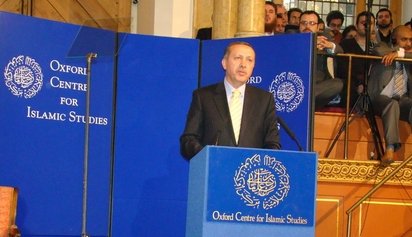 WRITTEN BY IQBAL TAMIMI Yesterday evening the Centre for Islamic Studies in Oxford hosted Turkish Prime Minister Recep Tayyip Erdogan, accompanied by his wife Amina, whom I consider as an icon of a Muslim woman that deserves all the respect and admiration for her continuous support for the Palestinian women and her courage and dedication to human rights. A number of diplomatic personalities and statesmen accompanied the PM to Oxford after the last G20 summit meeting.
Erdogan was welcomed with a very long, warm applause, he spoke to the masses after some delay by the traffic in London which he apologized for, commenting in his usual humorous way that his counterpart Gordon Brown should do something to solve the traffic problem. ‘I used to think that the traffic jams in Turkey were the worst, but I discovered that London’s traffic is even worse,’ he said.
The Turkish Bristolian group who I have accompanied included Sakir Yildirim who drove an eight thousand mile round trip delivering an ambulance loaded with practical aid to Gaza. Business man Talip Topuz waited a long time until he got Prime Minster Erdogan’s autograph and danced happily with it for quite a while. The Bristol PSC group were lucky to secure a place, while almost a thousand people had to return back home, for the crowds were much more than the expectations of the lecture organizers, but still some preferred to wait outside the hall.
Most amazing was the relaxed atmosphere and the very friendly local police and security personnel, amongst whom were a British Muslim policewoman wearing a Hijab as part of her uniform.
Erdogan who had just arrived from the last meeting of the G20 summit held in London, during which he proposed solutions for the global economic crisis were discussed as well as another equally important issue of the mutual understanding and respect between people of different faiths and communities.
“It is important that the Western community understands that Turkey is a country that identifies with the European region and is part of it, but at the same time the majority of our nation are Muslims,” he said.
His call for others to understand the importance of mutual respect of faith choice was clear, ‘I respect Jesus and Moses and the message they came with, and I expect others to have similar understanding and respect for my faith,“ he said.
One of the guests requested a comment from the Prime Minister regarding the incident when he stormed out of a conference held in Davos, which was attended by Israeli President Shimon Peres after Israel’s bombing of Gaza. Erdogan said, “I had to do the same in Georgia as well, because I saw a fierce barbaric attack on women, children, the elderly and the vulnerable who do not have the means to defend themselves, they were killed while no one from the international community intervened to stop this aggression, this I could not tolerate. I saw with my own eyes young Palestinian children being killed in Gaza. The situation is still bad, for Israel is still refusing to open this big prison of Gaza to allow for humanitarian aid and food to reach families in desperate need of help, the people of Gaza are still living in tents and in need of help. I spoke with Quartet envoy Tony Blair on this subject, and told him there is an urgent need to open the borders to allow the necessary building materials enter Gaza for rebuilding the badly damaged infrastructure.”
In response to a question about the expected timing of Turkey’s joining the European Union, Turkish Prime Minister said, “Until now, there is no set time. The UK had struggled for 11 years before joining the EU, and perhaps we should expect to wait as long. There is a routine procedure of examining two files at a time, and I always asked why only two, why not three.”
Erdogan also talked about Turkey’s organic farming plans: “There is a large extended border area between Turkey and Syria full of land mines; we plan to clean up the minefields and cultivate the area organically,” he commented on a question asked about farming in Turkey.
He also spoke about the upcoming visit of U.S. President Obama, expected to take place in Turkey next week and said, “I spoke with Quartet envoy Tony Blair as well, and discussed this issue with USA President Obama and we will discuss it again when he arrives in Turkey that there is an urgent need to find a solution for the Israeli-Palestinian conflict, and such discussions should involve all Palestinian parties involved, including the Hamas.” (photo by Iqbal Tamimi)
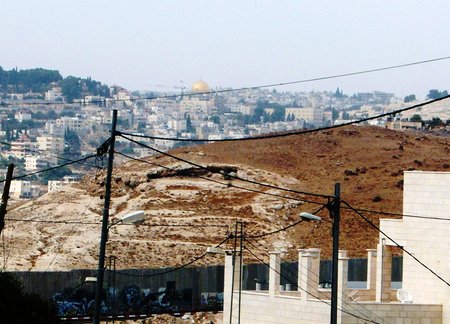 In 1929 Ben-Gurion said: “Jerusalem is not the same thing to the Arabs as it is to the Jews”. While he meant to say that Palestinians were not part of Jerusalem and are not attached to it as the Jews are, I would say, he almost got it right: Jerusalem is not the same thing to the Palestinians as it is to the Zionists. To us, Jerusalem is a home and an integral part of each of us, to the Zionists it is but another construction site, for he who loves a city would not destroy it as the Zionists are doing right now with Jerusalem.
The distance between Sawahreh and Jerusalem is a relatively short one. Using a car, one would need 15 to 20 minutes, checkpoint stops excluded. Riding Sawahreh buses, which were old and rusty, it usually took us some 30 minutes, sometimes a bit more depending on the number of stops the bus made. We used to take the bus five days a week to go to school and come back home. On rainy days, the iron seats would be wet and cold, in summer they would be boiling hot. Nevertheless, my sister and I would race to find an empty seat near the window. We enjoyed the trip to Jerusalem, especially when the bus went up and down the Gethsemane Church road. To the left, facing the walls of the Old City, one would see the golden Dome of the Rock. It would get bigger or smaller as you go up and down the road. I preferred the trip up the road towards Ras Al-Amud. I would watch closely awaiting the point when the Dome would start appearing, seemingly out of nowhere. To one seeing this for the first time, it would be a nice surprise. And as the bus travels up the road, it gets bigger and bigger, till at the top of the road you have somewhat a full view of the Dome of the Rock. When I was at school, I enjoyed watching friends and relatives from Dheisheh and Bethlehem witness this miracle. A number of times, my sister and I were forced to walk all the way from Jerusalem to Sawahreh. On Saturdays there were usually fewer buses moving on the various lines, so a couple of times we had to walk back home after finishing classes. These “forced walks” were seldom, and although on foot it took us much longer to get to Sawahreh, and we would reach home completely tired and with burning feet, we enjoyed the walks. We would pass the walls of the Old City and the ancient tree which looked like something out of a horror movie. It is said that the tree is very old, and it does look it, but somehow it didn’t impress me. It looked more dead than alive, not like the green olive trees or the bloomy almond trees you find in Palestinian fields and on hilltops. From the point where the tree stood, one had a marvelous view of Mount of Olives and the Palestinian neighborhoods in the area.
Josef Weitz, the polish director of the Jewish National Fund’s Land Settlement Department in charge of illegal Zionist colonization in Palestine and the Ethnic Cleansing of Palestinians, wrote in 1940: “among ourselves it must be clear that there is no room for both people in this country. After the Arabs are transferred, the country will be wide open for us, with the Arabs staying the country will remain narrow and restricted …. There is no room for compromise on this point … land purchasing … will not bring about the state … the only way is to transfer the Arabs from here to neighboring countries, all of them, except perhaps Bethlehem, Nazareth, and Old Jerusalem. Not a single village or a single tribe must be left. And the transfer must be done through their absorption in Iraq and Syria and even in Transjordan. For that goal, money will be found – even a lot of money. And only then will the country be able to absorb millions of Jews …. There is no other solution.” In addition to calling for the transfer of Palestinians, Weitz claimed Old Jerusalem is to be “spared” the ethnic cleansing, but facts on the ground tell a completely different story. Since its establishment, the Zionist state has been implementing a systematic policy of Judaizing Jerusalem and ethnically cleansing its original Palestinian residents. Even when spreading propaganda about an empty land waiting for its long lost sons to come back, Zionist leaders admitted among themselves that the land was populated and was prosperous. English Zionist Israel Zangwill, famous for his quote: “Palestine is a country without a people; the Jews are a people without a country”, which later became the infamous Zionist slogan: A land without a people for a people without a land, said in a speech to a Zionist group in the UK in 1905: “Palestine proper has already its inhabitants. The pashalik (province) of Jerusalem is already twice as thickly populated as the United States, having 52 souls to the square mile and not 25% of them Jews”. In 1948 Israel occupied 85% of Jerusalem and forcibly expelled up to 80,000 Palestinians from their homes in West Jerusalem and 40 other surrounding villages. The villages were then destroyed to prevent their inhabitants from returning back to them, and their property was transferred to the Israeli state under the “Absentee Law” of 1950. In 1967 Israel occupied the rest of Jerusalem, and established the first illegal Jewish settlement inside the Old City. More than 700 Palestinian homes and buildings were either destroyed or expropriated. Alone in the Mughrabi Quarter of the Old City, over 6,000 Palestinians were evicted and 125 houses were destroyed in order to create a plaza in front of the Western Wall. Israel doubled the size of the Israeli municipal boundaries of the city by annexing 70 km² of lands belonging to 28 villages in the West Bank. In 1980 Israel annexed East Jerusalem officially, and in subsequent years Palestinian properties in Silwan and the Muslim Quarter of the Old City were turned over to Jewish settler organizations. Despite UN General Assembly Resolution 2253 ordering Israel “to desist forthwith from taking any action which would alter the status of Jerusalem”, the Israeli government confiscated over 60 km² of Palestinian land in East Jerusalem (i.e. 86.5% of its total land area) over the years for Jewish use.
We often used go to the Old City, either for shopping or just to enjoy the beauty of the narrow streets and alleys. Beautiful old facades would meet one all the way, with beautiful architecture that is the trademark of the Old City and a reminder of its Arabic heritage. This Old City is nothing like the Old Town Centres one would see all over Europe, from which illegal Jewish settlers come, and into which they are trying to turn Jerusalem. Two of my childhood friends, who are also sisters, live in the old city. They are originally from Sawahreh who each married a Jerusalemite and moved to Jerusalem. The first time I went to visit them I was shocked at the state of their dwelling. They had a relatively big house in Sawahreh, and although they grew up in a large family, there was enough space inside and around the house for everyone, so one didn’t feel imprisoned. Now, they both had families and each was living in a room with her family, sharing the rest of the house with other family members. There was no place for privacy there and the over-crowdedness was unbearable. One of them lived in a room built on the roof of the family house. We had to climb a ladder to enter the room, which was divided into smaller rooms in an effort to give it the shape of an apartment and provide some privacy. We went for a walk inside the Old City and every now and then my friends would point out some neighbors gathering in the narrow streets in front of their houses or children playing in the streets, and talk about how people here have little space and the children have no gardens or playgrounds. Many houses are in such a miserable state and need renovation but often the municipality doesn’t allow it, using this as yet another method to force people out of their homes. Although Palestinian Jerusalemites have to pay taxes, they receive very little municipal services in return. According to B’Tselem: “since the annexation of Jerusalem, the municipality has built almost no new school, public building, or medical clinic for Palestinians.” …. “Entire Palestinian neighborhoods are not connected to a sewage system and do not have paved roads or sidewalks”. During my last visit to Palestine, and despite their continuous invitations, I was not able to visit my friends in Jerusalem and had to be content with seeing them in Sawahreh. When their brother was preparing to leave to Mecca for the Hajj season, the whole family came to say goodbye, except one of the sisters. Although she had been married to a Jerusalemite resident and living in the Old City for more than 10 years, she only possesses a temporary permit allowing her to reside in the city. This permit has to be renewed again and again, and it happened that her permit had expired and as she was waiting for a renewal, she couldn’t come and say goodbye to her brother. She didn’t want to risk being caught at one of the checkpoints and arrested for not having the needed papers and maybe lose her right to live in the city forever and thus be disconnected from her family. According to Israeli law, Palestinian Jerusalemites, although born in Jerusalem like their ancestors before them, hold the status of “permanent resident”, giving them the same status as foreigners wishing to live in the country, while illegal settlers are given the status of citizens.
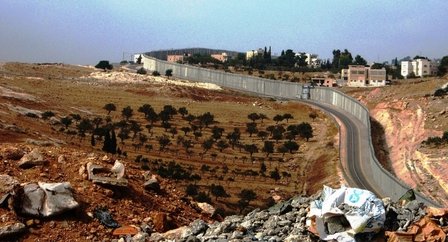 There is also a distinct policy of discrimination in planning and building regulations applying in Jerusalem. Outline plans for Palestinian neighborhoods prepared by the Israeli Jerusalem municipality have a common feature, i.e., about 40% of the area is designated as “open landscape area” where building is not allowed. For Palestinian building purposes, only some 11% of the lands of East Jerusalem are allocated for Palestinian use, and these are already over-crowded building areas, similar to the demarcation plans of the IOF for Zone C in the West Bank. In addition to the rarity of obtaining building licenses, Palestinians are forced to build “illegally” on their lands. While illegal constructions built by settlers are adjusted into building plans to make them retrospectively legal, Palestinians are not given permits to build on their own lands. As illegal settlements expand, Palestinian communities in Jerusalem and around it are prevented from building and expanding, thus limiting their natural expansion and strangling them. According to a report of the Society of Arab Studies published in early 2008: Israel had had demolished 8,500 Palestinian houses in East Jerusalem since 1967, and alone between January 2000 and September 2007 some 786 Palestinian houses had been demolished, leaving thousands homeless. Another 20,000 houses are threatened to be demolished under the pretext of illegal construction. B’Tselem statistics on building starts in Jerusalem for the period 2000 to 2006 show that of the 14,472 registered building starts, 11,114 were in Jewish neighborhoods, while only 3,358 were in Palestinian neighborhoods. In addition, housing density in Jewish settlements in East Jerusalem was 23.8 m²/person in 2002 in comparison to a housing density of 11.9 m²/person in Palestinian neighborhoods.
Over-crowdedness is not a feature restricted to Palestinian houses of the Old City, but applies to most Arab dwellings in Jerusalem. As far as I can remember, all of my classmates whose houses in Jerusalem I visited lived in small apartments either in old houses or in multi-apartment buildings. One friend lived in the second floor of a two-story typical Jerusalemite house, close to where religious Jews lived. Often when visiting her, we would encounter groups of these religious Jews with their typical long black clothes, back hats and long beards. The women wore head scarves, long skirts and wool stockings even in summer. The part of the house she lived in was even too crowded for the small family, but I found it brave of them to continue living there, despite their closeness to these settlers. Other friends lived in other parts of the City, all in small apartments. I always wondered why they lived in such apartments when they were attending private schools that cost much money, when their parents brought them to school in fancy cars and when they always wore beautiful expensive clothes. If they had the money to buy cars and nice clothes, they could afford bigger apartments. I had no idea about the building restrictions and all the taxes Palestinians were subjected to in Jerusalem. I think in their shoes, I would rather choke in an overcrowded room rather than leave Jerusalem of my own free will.
The Israeli Jerusalem Master Plan of 2000, serving till 2020, aims at imposing Jewish character on the city and diminishing the Palestinian population to 12%. According to the plan, the total city area is 142 km² and the boundary of the western part of the city is extended by 40%. 24.4% of East Jerusalem is zoned as “green natural” area where no building is allowed. Currently, Israel is undertaking a massive eviction and demolition process in East Jerusalem neighborhoods. In 2007 the Israelis started the construction of a Jewish settlement inside the Old City’s Muslim Quarter with more than 20 housing units and a domed synagogue. Nearby in the so-called “Holy Basin” area, Palestinians are systematically being thrown out of the area, extending from the Kidron Valley, the Mount of Olives to nearby Palestinian neighborhoods, and replaced by Jews. This March, two more houses were evicted in Sheikh Jarrah, and 88 houses in Al Bustan neighborhood in Silwan are to be evicted and demolished. Thus, over 1,500 Jerusalemites will be made homeless to make place for a national garden. Similar destiny awaits 60% of the houses in the Wad Hilwa neighborhood in Silwan.
 Leaving the Old City, and going up the Gethsemane road, one would reach Ras Al-Amod and Silwan. To separate Jerusalem from the surrounding Palestinian environment, a ring of Jewish settlements has been created in and around the Old City, expanding from the Jewish Quarter to the illegal settlements in Ras Al-Amud and Silwan and the Jewish Cemetery on the Mount of Olives. In Ras Al-Amud Palestinian houses next to the Jewish Cemetery are separated only by a low wall. Here, dead Israelis have more rights and more place than living Palestinians. I remember the Israeli police station opposite the Jewish Cemetery. As I grew up, I watched that police station change into a “prison”. It was a simple building at the beginning, later to be surrounded with barbed wire. Then there was a checkpoint installed opposite it. No wonder these policemen don’t feel safe here, I always thought upon passing the police station, this land doesn’t belong to them and deep inside they know it. This police station was planted in the heart of Palestinian neighborhoods, with only dead Israelis in the nearby cemetery as company. They would stop Palestinian buses and cars and delay people going to work, school and hospital. After 1967, lands belonging to the Al-Ghoul family were confiscated and sold in 1990 to US Jewish millionaire Irving Moskovitz who developed a plan for the construction of an illegal settlement with 132 housing units on 14,7 Dunums of the stolen Palestinian land. The plan was frozen for some time because of its sensitive nature, only to be approved in 1999 by none other than Ehud Barak. As shameless as they are, the illegal Jewish settlers named their illegal settlement Maale Zaytim, or Olive Heights, maybe in celebration of the thousands of olive trees they uprooted from Palestinian fields to build their illegal settlements. This settlement aimed at forming continuity with the Jewish cemetery opposite it and other illegal structures on the Mount of Olives, thus contributing to the ethnic cleansing of Jerusalem. The first illegal settlers moved into the settlement in 2003. In 2005, while the Palestinians were busy “negotiating” peace with Israel, the settlers and the IOF were busy dividing Palestinian land among them. The police station in Silwan was turned over to settler committees and incorporated in Maale Zayton, in exchange for a new one that was built in the E-1 area. According to ARIJ, Palestinians in Ras Al-Amud are only allowed to build on 55-65% of the total land area whereas the settlers are allowed to build on 115% of the total area. Also, the Palestinians are allowed a maximum of two floors per housing unit, while the settlers are allowed a maximum of seven floors per housing unit.
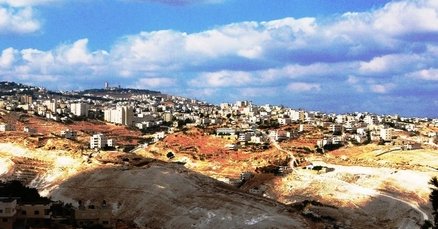 Many Palestinians were twice ethnically cleansed from Jerusalem; first from West Jerusalem and later from East Jerusalem. Many of those who were forced out of West Jerusalem and settled in East Jerusalem are today threatened with eviction on the invented ground that the land doesn’t belong to them. At the same time, illegal Jewish settlers, coming from the United States, Europe or anywhere else in the world have a right to a city in which neither they nor their ancestors own a handful of earth. Today, Palestinians make 34% of the total population of Jerusalem, while 55% of the Jewish population of the city lives in 34 illegal settlements in and around Jerusalem. Of the total population of the Old City, only 9% are Jews. Travelling to Bethlehem through West Jerusalem, one would leave the typical Palestinian Arab landscape of East Jerusalem and enter an artificial one. Travelling this road, I used to think that this must be what Europe looks like. It was nothing like East Jerusalem, Bethlehem, Ramallah or any part of Palestine that I knew. It had nothing of the magic of East Jerusalem that attracts one and leaves everlasting memories. Although we used to travel this road frequently some 20 years ago, the only recollections I have of it are some scattered images of similar tall grey buildings that showed neither beauty nor good taste. Now, after seeing Europe, I know that the Zionists were not even able to imitate European cities. After destroying Palestinian Jerusalem, all they were able to create in its place was a shapeless town planted with building after building, their boring rhythm interrupted by more colorless side-roads and stores. The only houses worth watching were the few Palestinian houses confiscated but left undamaged. They were old, beautiful, built by Palestinian hands and now illegally occupied, and most probably shown to tourists as examples of Jewish architecture or Jewish existence in the city. They were the originals that stood like islands surrounded by seas of artificial architecture. The beauty of these houses lay in the fact that they were so in place, while their surroundings were strangers to the land.
To further its policies of Judaizing Jerusalem, measures and plans have been instrumented to cut East Jerusalem from the rest of the Palestinian Territories and prevent the establishment of a contiguous Palestinian state, including land confiscation, illegal settlement activity, the Apartheid Wall, house demolition and revoking residency rights. After 1967, Israel activated the “Land Ordinance” of the British Mandate to confiscate 85% of the lands within the illegally expanded Jerusalem area. The original area of West Jerusalem tripled and the municipal boundaries of East Jerusalem were expanded from 6.5 km² to 71 km², to include large territories with minimum Palestinians. So, while densely populated Palestinian communities were excluded, the lands of these communities were included within the new illegal boundaries. At the same time, settler organizations were allowed to build settlement cores inside Palestinian communities such as Silwan and Sheikh Jarrah. This January the IOF issued orders to annex 24 Dunums from lands belonging to Husan and Nahhalin villages in Bethlehem in order to expand the illegal Jewish settlement Gush Azion. This comes as part of the “Greater Jerusalem” scheme, which aims at annexing more Palestinian land to Jerusalem and expanding settlements. So far, this plan has annexed 72,000 Dunums of Palestinian land. Further Palestinian land was confiscated for the construction of an illegal tramway that will connect illegal settlements in the West Bank with Jerusalem. This will be a Jewish-only tramway system.
An additional 19.2% of land owned by Palestinians in Jerusalem and 5.3% of Palestinian owned West Bank land were illegally confiscated by Israel for the construction of the Apartheid Wall. This Wall runs along the illegal Jerusalem municipal boundaries set by the Israel, including East Jerusalem and the annexed parts of the West Bank. By September 2007 11,100 Dunums were confiscated for the construction of the Wall and 40,985 Dunums will be disconnected from their owners. Upon completion, the Apartheid Wall around Jerusalem will be 181 km long. This wall affects the daily life of 27 Palestinian Jerusalemite communities. Dozens of Palestinian houses have been demolished because of the Wall and many more have received demolition orders.15,000 Palestinians with Jerusalem IDs living outside the Wall will be denied access to Jerusalem and 1835 families have been forced to move home. According to a report of the Civil Committee of the Rights of Palestinians in Jerusalem published in September 2007: 21.4% of the Palestinian families have been separated from relatives by the Apartheid Wall (15.5% inside and 32.6% outside the wall). 18% of the families live apart from the father and 27% of them apart from the mother. And 25% of the Palestinian-owned shops have been closed down due to the restrictions on Palestinian movement and the high taxes Palestinians living in Jerusalem have to pay.
More than 100,000 Palestinians live in towns and villages around Jerusalem. These areas have always been an integral part of Jerusalem, and depended on the city for their livelihood. Through the construction of the Wall they lost access to their businesses, schools and hospitals. Also, many residents of East Jerusalem own lands in the surrounding villages. Because of the housing shortage and the over-crowdedness in East Jerusalem, they were forced to build houses around Jerusalem, which now lie behind the Wall. Sawahreh is one of the Palestinian communities affected by the Apartheid Wall. Many families have been separated because of Wall, and others have been forced to leave their own houses and share dwelling with other family members in Jerusalem, so as not to lose their Jerusalem IDs. In my neighborhood alone, several houses stand empty, among which are 3 houses belonging to one family. The family from West Sawahreh has lands in East Sawahreh, like many others families here, both parts of Sawahreh having been one body before Israel decided to divide it and divide the community. With the family growing, and the sons getting married and establishing families of their own, the family house in West Sawahreh was getting too crowded. West Sawahreh lies within the Israeli municipal boundaries of Jerusalem, and thus building permits for Palestinians are rarely given. Each brother built a separate house for his family in East Sawahreh, and the remaining piece of land around the houses was planted with trees. Nearby stands the house of another neighbor, the eldest son of an East Sawahreh family who married a relative from West Sawahreh some twenty years ago. All these houses stand empty now. Their owners, who carry Jerusalem IDs, are forced in live in overcrowded rooms in West Sawahreh because the Jerusalem municipality gave them the choice of living on their lands behind the Wall or losing their Jerusalem IDs. The inhabitants of Sawahreh, whether East or West, have always considered themselves part of Jerusalem, and for those among them carrying a Jerusalem ID, the loss of this ID would mean losing their natural right to the city. But this is not all. Inspectors from the Israeli Jerusalem municipality often come announced and check the dwellings of these families, if they actually live there, and interrogate them about their daily life. One friend told me that she came back home one day after an appointment at a health centre to find the municipality employees waiting for her. They insisted on knowing where she was and what she was doing and this was not their only “visit”. Many Israelis have double citizenship, and spend most of the year in the United States or in Europe, where they have homes and businesses, but they are never subjected to questioning by municipality inspectors or get their residency revoked. Between 1967 and 2007 Israel revoked the residency right of 8,269 Palestinians. This “silent transfer” is one way of ethnically cleansing Palestinian Jerusalemites.
One time, travelling along the main road in Ubediyyeh with one of my uncles and a friend of his, he shouted at his friend to stop the car at a certain point. To the left side of the road we could see Jerusalem extending on the hills opposite us. My uncle said that this is the best point to see the Dome of the Rock on a clear day and both discussed what time was the best time and from which point exactly. What drew my attention wasn’t the fact that one could see the Dome of the Rock from here, because I could see the Dome from the roof of my house. It was the excitement I could hear in my uncle’s voice and that of his friend. Men, who had been often imprisoned, tortured and injured, sometimes seriously, by the IOF, filled with excitement at the prospect of seeing the Dome of the Rock “on a clear day”. This uncle had been shot in the chest by the IOF with a live bullet, in the head with a rubber bullet and his kneecap was completely crushed during the first Intifada, to mention a few of his injuries. He has a 70% handicap in his leg and is in pain most of the time, which he often tries to hide so as not to worry his wife and children. Is this what they had been imprisoned, tortured and injured for? No, it wasn’t, because I know that to them independence without the Right to Return and without Jerusalem is no independence, but a farce.
Sources:
 (From the Palestine Telegraph) To be a Palestinian in this world today is a truly unique experience. You are made to and in fact, begin to feel that you are “different” from everyone else the minute that you start to understand and comprehend what your birthright means for you. By the simple fact of being born on and living on that small piece of real estate between the Jordan River and the Mediterranean Sea , your life takes you on a path that others cannot fully comprehend.
Simple arrival in this world is looked at with suspicion and no small amount of concern. You are not just another baby: you are a statistic to be counted and watched by those who worry not about your welfare or your future, but about the fact that another Palestinian has been added to the ‘demographic equation’. Those that watch the demographics with concern would be happier if you were never born at all, and if in you had to come into “their world”, it would better elsewhere. Your arrival adds to their worry that they would lose the majority. A majority based on the “exclusivity” of a “chosen” race and religion, even though you can trace your ancestors to that piece of land for thousands of years, in the eyes of the demographers, you are not welcome there.
From the very first day that you could understand your surroundings, you begin to comprehend the burden of being a Palestinian. While other children in the world learn and play in an atmosphere of relative safety and bliss, you cannot. Your life is regulated by the ever present occupiers: settlers and their soldiers. While other kids retain the innocence that goes with childhood, yours is shattered and traumatized by the sights and sounds of the endless war of attrition surrounding you. Things that would make adults cringe with horror in other parts of the world are a part of your everyday life and in fact, become “routine”. You become as hard as your surroundings. The games of childhood are no longer innocent and lose meaning or interest to you. The games that you play reflect the desperation of your Palestinian reality. While others plan and look forward to a future, you are concerned only with surviving the present.
Your father, once the pillar of your life, the man who made you feel safe and secure, can no longer find work to support your family. He is stripped of his clothes and his honor, right there, in full view of the world: you begin to see that he cannot be the guarantor of your well being. Your heart aches to see him in such light. In your youthful anger, you want him to lash out and defy, resuming his proper place in your eyes. Yet the reality is that he cannot, and you begin to understand that it is not out of fear for his own safety, but from his fear for the well being of yourself and siblings. You begin to understand the great burden that he must shoulder in silence, suffering alone.
Your mother, the symbol of all that is good and pure in this world, is reduced to begging and pleading just to be able to move from one area to the next. You watch in horror and rage as a young Israeli soldier yells profanities and makes derogatory remarks to her. Yet she holds her ground and with the patience that only a Palestinian mother can have, she perseveres. She has been pushed to the forefront of trying to provide for and keep her family going. She undergoes the greatest humiliations at the checkpoints in order to spare your father worse treatment. She steps between you and danger, following her motherly instincts, shielding you from certain harm. You wonder what she thinks about during those sleepless nights, but you will never know, for she bears this burden in total silence.
You go to school, when allowed, and get good grades, yet you know deep down in your heart that no matter how much education you have, the best that you can hope for is a low paying menial job, even at that, a scarcity. You see the young men gather everyday on the same streets, in a ritual of boredom and futility. They either have finished their schooling or just quit out of frustration and hopelessness. Their numbers seem to grow daily, as their prospects for a hopeful future diminish. This, you begin to understand is the byproduct of the many decades of occupation, colonialism, and brazen policies to keep your people down, desperate, and broken. You begin to feel your loneliness in this world, to understand that the rest of the world doesn’t know of your plight or simply doesn’t care. You watch television images of your tormentors, living but a few kilometers away, enjoying the very life that they deny you. Your life, home, land, and history continue to be stolen, destroyed, and expropriated by others in an endless campaign to erase “Palestinian” from the land whose very soil, is mixed with the blood, sweat, and tears of your ancestors, and no amount effort will ever “cleanse” the land of the traces of its rightful owners!
While the world at large, including those that count themselves as your “brothers” in the Arab world, make yet another proclamation, statement, and preach about freedom and justice, they collude with your tormentors to imprison, starve, and oppress you in everyway possible: setting aside the very Conventions, laws, and acts of human decency that they espouse, as if those things are meant to apply to everyone, BUT those that happen to born Palestinian!
Food, a basic human need for survival, is now a “luxury” according to your oppressors, and should you happen to make too much noise about your situation, then the “dogs of war” are unleashed to kill and destroy at will, with no actual regard for your life and those around, be they young or old, as total and barbaric destruction is once again the answer to your cries for freedom, justice, and dignity, for “being Palestinian” in their eyes and the eyes that grant them unconditional support, makes you a “child of a lesser God”, thus negating your basic human rights…
You watch with envy and anger as others enjoy the freedoms forbidden to you. While others travel around the world and claim that indeed the world is a “smaller place”, you scoff at them because you cannot even travel a few kilometers to visit family, loved ones, in your own homeland. Your world grows “smaller” and more claustrophobic each day, filled only with suffocating blockades, check points, closures, and curfews.
Even though sometimes you find yourself living in another part of the world, whether close or far away from the land that is YOUR birthright, in “comfortable” and not so very comfortable surroundings, you continue to yearn for your homeland, and realize that something will always be missing in your life, that you cannot ever be “whole” or “complete” and that as Palestinians, we are different from others in that while others live in a “homeland”, our homeland will forever live in us…
“You are not very different from the canary that you keep in the cage, indeed, he might be better off than you. You take him out and set him free and watch with envy and admiration as he soars high in the sky. Free at last, A free bird in Palestine. You envy that bird and wish that you were one also…”
Mike Odetalla
http://www.hanini.org/Beingpalestinian.html
source:

 Zionist massacres then and now. I have been under fire of late from two diametrically opposite quarters. First, the fanatical, self-worshipping Zionists who think that non-Jewish suffering should never ever be compared with Jewish suffering.
Needless to say, this psychotic attitude stems from deep-seated convictions that a Jew is a special creature whose life is worth more than the rest of humanity. Haven’t we noticed, for example, how Israel has made “Gilad Shalit”, the Israeli soldier imprisoned by Hamas, a household name all over the world, while next to nothing is mentioned about the estimated 10,000 Palestinian political and resistance prisoners languishing in Israeli dungeons and concentration camps?
And, second, some pro-Palestinian activists who believe that I should avoid invoking the holocaust in my writings lest this help legitimize the Zionist narrative and inadvertently justify Israeli crimes against the Palestinian people.
To our pro-Palestinian activists, I, with all due respect, would like to say the following. I sincerely believe that we would be walking in the path of immorality if we denied or belittled other people’s suffering. Indeed, it is imperative that we retain our humanity and moral fabric in the course of this legitimate struggle against the evil state. We must never imitate or emulate their ways and tactics. This would be self-defeating, self-destructive and immensely demoralizing.
Moreover, we must refrain from saying or doing things that would make others portray us as inherent enemies of Jews, because we are not.
We also need to be constantly vigilant and cautious about what we say and how we say it, lest we inadvertently besmirch the legitimacy of our just cause.
Israel is so manifestly criminal and ugly that we don’t need to deny anyone’s suffering to prove this plain fact.
In short, we don’t have to shoot ourselves in the foot. It is wrong and it hurts us a lot.
Obviously, the Zionists’ “arguments” are motivated, as always, by ill-will and a malicious desire to silence critics of Israeli criminality whose phantasmagoric expressions we all witnessed recently in the Gaza Strip.
The subject of contention this time has been an article I published a few days ago, entitled “Shame on us,” in which I strongly criticized efforts by some dubious “peace activists” to bamboozle some innocent Palestinian children from some impoverished localities into playing music before “holocaust survivors.”
This is what happened last week when a dozen young musicians from the Jenin Refugee Camp, in the northern West Bank, were taken surreptitiously to Tel Aviv where they were made to play a serenade before some elderly Zionists, some of whom veterans from the many criminal wars Israel had waged on our people. And as I said in the article, the ethnic cleansing of Palestine was not carried out by UFOs but by the very people our children are now being asked to cheer up.
Understandably, the not-so-innocent event left many Palestinians infuriated by the cheap exploitation of these kids for Israeli hasbara purposes. As one who lost three uncles in one day to Zionist murderers in 1954, I felt deeply wounded and humiliated by that event.
I am actually not against reconciliation between Palestinians and Jews. I don’t and never will view Jews as our inherent enemies. Some Jews are actually among the most effective supporters of our national cause. Those we salute for their honesty and morality.
However, it is obvious that true reconciliation in this part of the world requires that the slate be made thoroughly clean. Usurped rights must be returned to rightful owners, and wrongs must be rectified. This I say to honest and conscientious Jews who are genuinely interested in justice and peace.
But to the Zionists I would like to say that the following: the latest point of contention is not about music or even peace. This is first and foremost about human dignity of which the children of the holocaust and their children and grand children and great grandchildren have been trying to rob us.
And whether you like it or not, for us, at least, you represent the real Wehrmacht, the real SS and real Gestapo. You are the Nazis of our time. This is what we see from our vantage point. This is what much of the world sees. This is what many honest and conscientious Jews see.
You stole our country, you murdered our people, you destroyed our homes, and you expelled and dispersed the bulk of our people to the four corners of the world. And after all of this, you have audacity to dupe our children to sing and play music to you? This is simply beyond, far beyond, Chutzpah.
Some of you habitually babble the word “hatred” whenever a Palestinian asserts his people’s humanity and dignity.
Well, you are really sick to the bone if you think Palestinians must sacrifice their dignity in order to become a hate-free people according to the Zionist lexicon. We will not pay tribute to the killers of our children, we will not show respect to those who murder us.
Besides, who do you think you are anyway to lecture us on hatred? After all, you represent and embody hatred in its ugliest form. The extirpation of a people from its ancestral homeland from time immemorial is a satanic act par excellence. The destruction and obliteration of hundreds of Palestinian towns and villages to fulfill Jewish nationalism is diabolical act of the highest order.
Your recent blitzkrieg in Gaza during which your Nazi-like army ganged up on a helpless, unprotected civilian population, exterminating them with bombs and missiles and incinerating their children with White Phosphorus proved once again that you are no better than the hateful Nazis you curse day and night for what they did to you sixty years ago.
Well, try to get yourselves out of this cocoon of self-denial. The Palestinian people don’t hate music nor do they teach their kids to hate Jews or non-Jews, it is your evil and murderous actions that generate hatred against you not only among Palestinians and Muslims but among many other people around the world.
Just look at your ugly faces in the mirror.
My friends at the Italian-Palestinian youth group “Wael Zuaiter” shared this incredible new creative initiative that was partly organised by the Italian NGO “Vento di Terra” (http://www.ventoditerra.org/). It’s the first Web TV program from the refugee camp of Qalandia and these kids ready to share pieces of their daily experiences with us. Armed with one camera (and they need more, so anyone who can help, please do!) we’ll get a child’s view of things, which is just as important a view as an adult’s if not more important! It just went on line two days ago, a few bugs need to be worked out before it is up and running to full capacity but it looks promising!
http://nuke.kalandiachildren.com/PressKit/tabid/487/Default.aspx
 WRITTEN BY Kourosh Ziabari
Nobody, even the hawks and tyrants themselves, would deny the fact that the majority of the world’s decisions are made by a group of certain leaders who lead certain countries of some certain regions! Our world’s population approaches 7 billion as of 2008, with people living in 203 sovereign states and countries, and there are just something around 30 people who decide the destiny and prospect of this “flock” of 7 billion, and this is exactly what we expect of the 21st century’s democracy; a revolutionized form of a then-sublime concept that the conscious human would enthusiastically long for.
Perhaps the extraordinary and outlandish ethnic cleansing and systematic massacre of civilians, committed habitually by the state of Israel, is something instinctive to the very existence of the 60-year old “country”, and as said by Gilad Atzmon in an interview which I had once conducted with him, you can not expect benevolent, human and lawful treatment of downtrodden people by the Jewish state.
However, what makes me astonishingly baffled and bemused is the approach of European and North American states to the long-standing punishment of Palestinian people by Israel. Once you dare appear and criticize Israel for its illegal actions, a bunch of mainstream personalities set off to mobilize and accuse you of the famous ‘anti-Semitism’, ‘anti-Judaism’ and such libels.
Interestingly, those who expound these accusations are either really uneducated and unaware about the historical facts or pretend to be ignorant and uninformed. Etymologically, Semitism refers to the adherence of Semitic languages or ancient Semitic religions. In the former case, Semitic languages are a group of intertwined languages which comprise Arabic, Aramaic, Tigrinya and Hebrew. Arabic is the most widely spoken among the Semitic languages. So anti-Semitism, in its etymological foundation, should more than likely signify the notion of being opposed to Arabic and Aramaic languages, and this is basically unwarranted and meaningless.
If one considers the latter case, Semitic religions are Christianity, Islam and Judaism; Christianity and Islam rank first in the world by number of adherents, namely 2.1 billion and 1.5 billion respectively. The total number of world Jews, however, does not surpass 14 million, which is comparatively insignificant in comparison with the two other faiths. So anti-Semitism, again does not represent the school of being opposed to Judaism, as a monotheistic religion.
Those who consciously employ this term to demoralize the critics of Israel know well that they can potentially embroil Arabs, Muslims (as all of the Arabs are not necessarily Muslims), African speakers of Semitic languages, Christians and Jews in an erosive conflict with one another.
They want to portray Israel as the symbol of Judaism and intimidate the dissidents of Israel thereby, so that they retract and pull back from criticizing the genocidal policies of Tel Aviv and its allies.
Issues are really complicated in this field; because you cannot argue with and convince the ordinary people to believe that a “country” cannot be the representative of a religion, as Saudi Arabia can not be the representative of Islam. Religion is the intuitive incorporation of moral, ethical, human and decent values in the hearts and minds of people, and no governmental system can claim that it symbolizes the absolute, supreme incarnation of the official religion which it clings to. Maybe, for example, Iran’s name is officially mingled with the name of Islam, and the governmental system is theocratic, even so, that would be irrational to judge on Islam and its reality based on the situation of Iran. Perhaps Iran might be impoverished someday due to the financial meltdown, so would it be then practicable to conclude that Islam is the religion of poverty and shortage?
In the same way, you cannot evaluate religion by considering the majority. The majority of American people (around 75% of the population as of 2002) are Christians, while the governmental system is secular; nonetheless, you cannot assess the authenticity and veracity of Christianity on the grounds of American people’s lifestyle, behavior, contemplation and manner. Even the practicing Christians of the U.S. are quite far away from the fundamental pillars of their religion.
Similarly, Israel is not the manifestation of Judaism. Judaism denounces terrorism, killing of the innocent, occupation and trespassing. Israel introduces itself as a Jewish State, while it’s not really what it maintains; it does not practice what it preaches, and unfortunately is wrongly blending the expansionist, interventionist and reactionary notion of Zionism with Judaism as a religion.
However, these lexical, etymological and methodological differences aside, what is worth the most is that resistance against bulling and oppression is a cultural heritage that Palestinians have used to nurture during times. I believe that the bastion of resistance against aggression which the Palestinian people have long formed, examines the moral and ethical genuineness of our personalities, thinkers, rhetoricians and theoreticians.
I don’t want to give an ultimate declaration; yet I believe that the unconditional support of Israel which is extensively prevalent among the hawkish conservatives and warmonger hardliners with the pretext of defending “Israel’s right to exist” or recognizing its right to “self-defense” merely indicates an advertent blind eye to one of the most striking realities of our era.
Thousands of people are ousted from their lands, being slaughtered usually as an entertaining activity for its perpetrators and live under the harshest threats one can undergo.
We don’t request anything. We just want the ‘international community’, if that’s not a linguistic equivalent for the U.S. and its European friends, to act, and fulfill the content of 22 UNSC resolutions which have been issued so far, to condemn the unusual actions of Israel. Israel is called the “occupying power” by the UNSC, and we want somebody to end this occupation.
I want, as a citizen of the world, to breathe in clean, pure and unsullied air. I want to wake up one morning and hear from the radio that occupation of Palestinians’ lands, massacre of Palestinian people and violation of Palestinians’ rights is eventually ended. May I experience that day?
 Thanks to Miguel for forwarding this incredible map. (Strange Maps) The Bible contains at least two stories equating the aquatic with the amoral. As Red Sea pedestrians, Moses and the Israelites didn’t even get their sandals moist, while the Lord did some expert smiting on the pursuing Egyptians, by way of the gurgling waters closing in on them. And a few thousand years earlier, Noah kept his binary boatload afloat while all the rest of humanity (and the now extinct species of the animal kingdom) met their watery grave.
Even though this map of L’archipel de Palestine orientale (‘The Archipelago of Eastern Palestine’) is set in the same area and uses a similar theme, the cartographer behind it refutes any allegation that it is meant to reflect the same Biblical dry = good, wet = bad analogy. “The map is not about ‘drowning’ or ‘flooding’ the Israeli population, nor dividing territories along ethnic lines, even less a suggestion of how to resolve the conflict,” gasps Julien Bousac, the Frenchman who created this map.
A small excerpt of the map (focusing on the Greater Jerusalem area) was published a bit earlier on this blog, but the map in its entirety (sent in by Mr Bousac but also earlier by Baptiste Hautdidier) merits a separate entry, not only because “without a legend, it […] gives ground to various misinterpretations, due to the high sensitivity of the subject,” as Mr Boussac relates – but also because it just looks so nice. And strange, of course.
“Maybe posting the full map would help to take it for what it is, i.e. an illustration of the West Bank’s ongoing fragmentation based on the (originally temporary) A/B/C zoning which came out of the Oslo process, still valid until now. To make things clear, areas ‘under water’ strictly reflect C zones, plus the East Jerusalem area, i.e. areas that have officially remained under full Israeli control and occupation following the Agreements. These include all Israeli settlements and outposts as well as Palestinian populated areas.”
Mr Boussac took advantage of the resulting archipelago effect “to use typical tourist maps codes (mainly icons) to sharpen the contrast between the fantasies raised by seemingly paradise-like islands and the Palestinian Territories grim reality.” The map does have a strong vacationy vibe to it – but whether that is because of the archipelago-shaped subject matter, or due to the cheerful colour scheme is a matter for debate.
Those colours, incidentally, denote urban areas (orange), nature reserves (shaded), zones of partial autonomy (dark green) and of total autonomy (light green). Totally fanciful are of course the dotted lines symbolising shipping links, the palm trees signifying protected beachland, and the purple symbols representing various aspects of seaside pleasure. The blue icon, labelled Zone sous surveillance (‘Zone under surveillance’) has some bearing on reality, as the locations of the warships match those of permanent Israeli checkpoints.
Some of the paradisiacally named islands include Ile au Miel (Honey Island), Ile aux Oliviers (Isle of the Olive Trees), Ile Sainte (Holy Island) and Ile aux Moutons (Sheep Island), although the naming of Ile sous le Mur (Island beneath the Wall) constitutes a relapse into the grimness of the area’s reality.

 What will happen next? Will Palestinian kids be duped into playing music to Israeli pilots who exterminated Gaza children with White Phosphorus?
By Khalid Amayreh in Occupied East Jerusalem
29 March, 2009
It is really hard to write on this subject without getting angry. We all know the extent to which Israel can be evil and satanic. After all, we Palestinians have been on the receiving end of Israeli savagery for decades.
In fact, being thoroughly tormented and killed by the children, grandchildren and great grandchildren of the holocaust has always been and continues to be “the” Palestinians’ way of life.
However, for some Palestinians to allow themselves to be duped to sing and play music to their oppressors and child-killers is simply beyond the pale of human dignity.
It is at least as insulting and humiliating as some Jews were forced or duped to play music to SS, Gestapo and Wehrmacht soldiers during the Second World War. In both cases, the act was meant to humiliate the victims and rob them of the last visages of human dignity.
And now, Jews in Israel are doing the same thing to Palestinians, Nazism’s vicarious victims.
Last week, a few innocent kids from the Jenin refugee camp were surreptiously taken to Tel Aviv to “cheer up and take part in peace-promoting activities.”
However, once there the kids were unceremoniously driven to a reception where they were made to play music and sing to “holocaust survivors,” some of them are former members of the Hagana and Irgun terrorist gangs who had taken part in the ethnic cleansing of Palestine and expulsion of Palestinians form their homeland.
God knows how much Palestinian blood did these so-called “holocaust survivors” shed in 1948 and subsequent years. Certainly, Deir Yasin, Tantura, Dawaymeh, and the numerous other massacres were not committed by UFOs. They were committed in cold blood by these very people our children are now cheering up.
Shame on us a thousand times!
Some of the kids were instructed to utter words that should never be uttered by the victims of Zionism. One of the participants reportedly dedicated a special song to Gilad Shalit, an Israeli soldier taken prisoner by Palestinian fighters in Gaza nearly three years ago. No mention, not even an allusion, was made of the estimated 10,000 Palestinian political and resistance prisoners languishing in Israeli dungeons and concentration camps.
But the kids apparently felt they had to say anything they were asked to say in order to show gratitude for the Jewish “peace contractor” who got them out of the ghetto, otherwise known as Jenin refugee camp, even for a six-our outing in Tel Aviv.
I am not against showing genuine sympathy with the victims of the holocaust. However, a sympathy that is manipulated to justify, rationalize or even extenuate the crime against humanity that is Israel is worse than a crime if only because it serves to promote and perpetuate oppression.
As human beings, we Palestinians do sympathize with all victims of Nazism, Stalinism and imperialism, the wept, the over-wept, and especially the unwept who constitute the vast majority of victims.
Having said that, however, I strongly believe that no honest person under the sun has the slightest right to demand that we pay the price for what the Nazis did or may have done to European Jews nearly 70 years ago.
We didn’t send Jews to the ovens. The Germans did. We didn’t starve Jews to death as Jews are doing to us today in the Gaza Strip.
We didn’t incinerate Jews in Gas chambers as Jews have recently incinerated Palestinian children with White Phosphorus.
Hence, of all people in this world, Palestinians must never be made to feel guilty for what the Nazis and other Europeans did to Jews. I say so because a feeling of guilt, even a modicum of guilt, on our part, would be construed or misconstrued as a vindication of Zionism, the Nazism of our time.
There are additional reasons that make the latest insensitive manipulation of Palestinian suffering especially ugly and dishonorable.
First, nearly all the young musicians who were taken to Tel Aviv came from the Jenin Refugee camp. For those who have forgotten, this is the very same refugee camp that Israeli tanks pulverized in 2002. According to eyewitnesses, Israeli tanks and bulldozers destroyed homes right on top of innocent civilians, including the physically handicapped, while dozens of innocent civilians were systematically massacred, very much like Jews were at Ghetto Warsaw. The massacre at the camp was so hideous that Israel refused to allow UN officials to access the camp to inspect what happened.
Well, again the Nazi analogy is inescapable. Just imagine surviving Jewish children from Treblinka or Bergen Belsen made to sing to SS soldiers!!
Second, the disgraceful concert in Tel Aviv comes on the heel of Israel’s genocidal assault in Gaza where Israeli warplanes showered the children, women and men of coastal enclave with White Phosphorus and other missiles and bombs of death while Israeli Jews were gleefully celebrating the “victory on Hamas” and Israeli rabbis preoccupied with classifying gentiles into “children of light” and “children of darkness.”
In Gaza, the Zionist Jews exposed their shame to all the people of the world by acting like primitive barbarians and murderous savages.
Hence, the utter shamefulness of sending Palestinian children to Tel Aviv to help Israel’s hasbara efforts whitewash Israel’s pornographic barbarianism in Gaza.
Finally, it is obvious that the PA bears much of the blame for this disgraceful event. The PA should never allow so called “cultural exchanges” and “cultural normalization” with the murderers of our children, the very state whose leaders and military commanders view us as “scum, vermin and animals” that ought to be exterminated.
Unfortunately, the PA itself encourages some demoralized Palestinians to endear themselves to Israel, even in the cheapest of manners.
The often cordial meetings and exchanging of kisses between Mahmoud Abbas and Ehud Olmert, the butcher of Gaza, leave one and only impression, not only on the children of the refugee camp in Jenin, but also on TV viewers around the world.
Perhaps the Israel artillery and war planes were showering Gaza with candy, not White Phosphorus!!!
This is probably the main message the organizers of the Jenin-Tel Aviv tour wanted to communicate to these miserable kids who are obviously having a hard time recognizing their fathers’ killers.
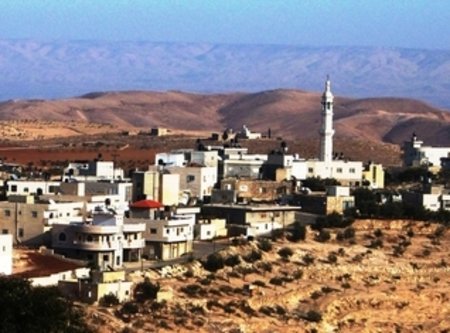 Commemorating 60+ Years of the Systematic Murder of Palestinian Land. The first part of a three part series for Land Day
As I stood on the roof and watched Jerusalem stretch in front of me, with the sun reflecting on the golden Dome, I felt angry and felt how unfair the world is. I was born in Jerusalem, went to school there and practically grew up there knowing almost every corner, every street and every alley in it. I have more memories in Jerusalem than any other place in the world, all cherished ones. But now, I am not allowed into the city anymore because I am Palestinian. As I stood there, with tears in my eyes, I envied every Palestinian with an American or European passport, because they can come and visit Jerusalem. I envied every foreigner who can visit the city whenever they choose. I even envied the birds singing on the cypresses before me, because they could fly over Jerusalem and fill their eyes with its beauty and their lungs with its air. In my childhood, Jerusalem was the only major Palestinian city I knew well and loved. In the eyes and mind of a child, to me Ramallah was a cold city, Bethlehem was the “village” nearby, Nablus and Hebron were the places “to visit my uncles in Israeli prisons” and Jericho was too hot. Only Jerusalem was perfect: with its bustling Old City, the old bus station, Salah Al-Deen Street, Al Musrarah, the walk to the Notre Dame, the walk down Wadi Al-Joz and up to Al-Tur and the walk up to Ras El Amoud. I walked on the roof and saw the mountains on the Jordanian side, clearly visible during mild weather. Late afternoons, coming back home from school, one would witness a breathtaking sight going down the steep street in Sawahreh: a marvellous mixture of simple houses, some with old traditional domed roofs, barley fields or olive groves spreading against a curtain of mountains. Between the mountains and the last of the houses a strip of blue was visible. We always thought it to be the Dead Sea. Well, I personally still like to think of it as the Dead Sea. It was a combination of colours that rarely showed itself, but when it did, it was truly breathtaking.
To the south I could see Mount Herod in the distance. I have watched this artificial mountain since my childhood and always wondered at its shape. It always looked far away to be reached, but at the same time so close, an integral part of the view surrounding my home. I used to think about the impossibility of climbing that mountain, because it had steep sides, one would keep slipping and would never reach the top. I did “climb” that mountain years later, during the work on a TV documentary on Bethlehem. During the 2002 IOF invasion of the West Bank, my parents told me that Israeli fighter jets used to pass over Sawahreh on their way to Bethlehem. After a few minutes, the sound of explosions would rock the sky, as the IOF bombarded Bethlehem and the surrounding towns, villages and refugee camps. Since hearing this, every time I see Mount Herod I can’t help thinking of Israeli jets on their way to destroying yet another part of Palestine and kill innocent unarmed civilians. In Sawahreh, Israeli jets roaring in the sky were always a common thing. Some of Sawahreh’s vast lands had been confiscated for so-called “security reasons” and were used as a training area for the IOF. We would often hear sounds of explosions and the house would shake, or hear Israeli jets coming and going. One time, my sister, my brother and I thought that they were preparing for war, and since we had no army of our own, had no jets or tanks or bombs to protect ourselves, we held a meeting to decide on the best way to protect the family. The only solution we could think of was to build an underground shelter. I don’t know where we got the idea of a shelter from, since Palestinians have no shelters, but most probably from one of those WWII films the Israeli TV kept showing. We did start digging, using our hands and small pointy stones, but realized after a while what a lengthy and hard process that was, and instead decided that in case a war does break out we would use the water well as a shelter, i.e., after removing all the water.
 One would think what a beautiful view, Jerusalem on one side, Bethlehem on the other with mountains and an imaginary sea in the background. Unfortunately, this scenery is interrupted by the Jewish illegal settlements Maale Adumim and Kidar, spreading themselves on Palestinian hills. Many Palestinian villages and town are surrounded by illegal Jewish settlements. Some are surrounded by settlements from one, two or three sides. Others are surrounded by illegal settlements and the Apartheid Wall. Sawahreh is surrounded by the illegal settlements of Maale Adumim from the northeast and Kidar from the east and by the Apartheid Wall from the west. Kidar settlement is the closest to us. Before the first intifada, Kidar settlers used to come and walk through our main street, among Palestinian houses. So sure they were of themselves, acting as if the land belonged to them. I remember once we were playing in the land, when a group of settlers walked up the street. We stopped playing and just watched them. I didn’t understand settlers and settlements much at the time, but I remember knowing that these people had no right to walk on our streets. We used to spend our holidays in Dheisheh refugee camp, where the IOF would shoot to kill little children, and then we would come back to Sawahreh, where settlers were walking our street. Those close to Kidar used to sell home-made white cheese and yoghurt to the settlers, who thought us too quiet and peaceful, so they called us “Kiryat Shalom” or the village of peace. It was something I always felt ashamed of, knowing that the settlers thought us too peaceful to bother with, while their army and their fellow fanatic settlers were attacking Dheisheh and killing people there. If the illegal settlers of Kidar were so very interested in peace with us, why did they steal our lands to expand their settlement, knowing that our livelihood depended on these lands? You can’t have peace with your occupier, because the only peace they will offer you is a masquerade, not a real and just peace. In Palestine, power cuts are a regular thing, and whenever we had no electricity and had to study using candle light, which often hurt our eyes, I used to look through the window and watch Sawahreh, Abu Dees and Ezariyyeh drown in complete darkness, while Kidar and Maale Adumim would be lighted like a Christmas tree. Even as a child this made me think of how unfair the situation was and that these settlers and these settlements don’t belong here.
I remember as a child how “far away” Maale Adumim seemed. But as I grew up, so did the illegal settlement. The danger of this expansion never really registered in my mind until one night I dreamt that I opened the window of my bedroom to find myself looking into the courtyard of a Jewish house. The settlement had eaten the land all the way from where it stood till our house, and our house and the land surrounding it was next. I woke up sweating and my heart beating fast. So real was the threat, I realized at the time, that I knew it was not a mere nightmare. The next day I went at the back of the house to the spot where one could get a direct view of Maale Adumim and tried to calculate how much time we had before my nightmare became reality. I thought we still had time to act, but I was mistaken. Since the 1990’s the settlements have been expanding and are eating more Palestinian land at an unprecedented pace. In this area there are several illegal Jewish settlements such as Maale Adumim, Alon, Almon, Kidar, Kefar Adumim and Mishor Adumim, with a combined population of some 40,000 settlers. The largest, Maale Adumim was established in 1975 on confiscated Palestinian land and lies 14 km to the east of Jerusalem. It has a population of 35,000 illegal Jewish settlers and a jurisdictional area of 50 km². Road networks have been also established to connect Maale Adumim and neighboring settlements with Jerusalem and with the Jordan Valley. Palestinian land would be confiscated, declared a “closed military zone” and later used for illegal settlement expansions.
 On the day of my arrival to Palestine for a short visit, I watched in shock as I passed Maale Adumim at how huge it has become. Within the space of two years, since my last visit, it had doubled in size, to say the least. Standing there on the mountain top, with a wall surrounding parts of it, it reminded me of a fortress from the middle ages. Although I am a fan of fortresses, this one brought only anger and disgust. The lands opposite it, which I distinctly remember were planted with olive trees, had become bare land, the trees uprooted and the land destroyed to make way for more illegal settler houses and roads. At the entrance to Maale Adumim stood a single olive tree, as huge as life and older than any illegal settler on this land. It was clear that this tree had been uprooted from some Palestinian field, maybe even from our confiscated land, and replanted here. Macabre, I thought and could only shake my head at the sad view of that lonely olive tree. Olive trees are like Palestinians, they grow in groups, surrounded by family and friends. That tree stood there alone, a reminder to every Palestinian that this is what the so-called peace process had done to us, and that if this process is allowed to go on, every single Palestinian will end up like that tree, alone and uprooted.
The plan to expand Maale Adumim, known as the “E-1” Plan, which was initiated by Rabin in 1994 and approved in 1999, led to the confiscation of yet more Palestinian land. This Plan is an important part of the “Greater Jerusalem” scheme, which includes Maale Adumim, Beitar, H´Givat Ze’ev, Gush Etzion, the Ariel bloc, the Hashmonain bloc and the Jordan Rift, and aims at annexing large areas of the West Bank to Jerusalem. This plan expands the jurisdictional boundaries of Maale Adumim and its satellite settlements to the Israeli Jerusalem municipal boundaries, linking Jerusalem with surrounding settlement blocs and linking the Maale Adumim bloc with with other settlement blocs such as Pisgat Ze’ev, Pisgat Omer, Neve Ya’acov and the French Hill. Also, a wall is being built around Maale Adumim and its satellite settlements, which will completely encircle East Jerusalem and 61 km² of Palestinian land. The “E-1” Plan aims to completely cut off Jerusalem from the rest of the Palestinian Territories, disconnecting the geographic contiguity of Palestinian Territories by dividing the West Bank into two parts, thus ensuring that no viable Palestinian state would ever come to existence. Last year, roads were paved and a bridge, main junctions, public squares, police stations, checkpoints and side walls were built in the “E-1” area. This area will cover some 13,000 dunums confiscated from Palestinian villages around Jerusalem and is to house an additional 15,000 illegal settlers. Two Israeli-only roads will connect settler roads southeast of Bethlehem with roads to the northeast, including connecting Maale Adumim and other Jerusalem settlements with the Ramot Ashkol settlement. For the construction of these roads, tens of houses in Sawahreh, Abu Dees and Al Tour are to be demolished. To prevent Palestinians from entering Jerusalem or using Road Nr. 1 that passes through the E-1 and Road Nr. 60 that passes through East Jerusalem, an “alternative” road is being constructed for Palestinian use and is to connect the Southern West Bank with its Northern part. For the construction of this road, the IOF issued a military order in 2007 confiscating 1,128 dunums of Palestinian land from villages between Jerusalem and Maale Adumim, i.e. Sawahreh, Abu Dees, Nebi Musa and Al Khan Al Ahmar.
Blocking the southern entrance of Sawahreh is the “Container” checkpoint, which is now being expanded to become a permanent border-like crossing. Passing the checkpoint, one would not imagine what beautiful landscape lies behind the Israeli stone blocks and control tower. Locally, we call it “Barriyeh”, the wilderness or the prairies. Green meadows decorated with red poppies wherever one looks. My favourite spot there is a low area, surrounded by hills and naturally-formed stone structures. Here, running was not possible because of the tall vegetation that covered the place. We would imagine ourselves swimming and race each other or play hide and seek. Then, when we would feel hungry, we would have something to eat under the olive trees. Relics of family history decorate caves in that area and cherished memories of childhood lie behind the checkpoint, making them off-limit to us. The last time I went there was just before leaving for Germany and I had not set foot again. Our lands there, including the olive fields, which were a source of income for my family, were confiscated in 2003. Today, only those few who originally had their houses behind the checkpoint are allowed in, but no one knows how long before their houses will be demolished for some reason or other so as to close the area completely.
 The “Container” checkpoint is a passage between the north and the south of the West Bank. It is one of more than 630 Israeli checkpoints and road barriers all over the West Bank, aiming to restrict Palestinian movement on Palestinian land. Travelling to the south, one would have to take the “Wadi Al-Nar” road. Wadi Al-Nar, the Valley of Fire, is most probably called so because of its steepness and the danger of driving there. It was a dirt road connecting Sawahreh with Ubediyyeh, rarely used except maybe by villagers travelling on donkeys. With the signing of the so-called peace process, Jerusalem was closed to most Palestinians and this road was used instead as a link left between the south and the north. If one is stuck behind a truck on that road, the meaning of “Valley of Fire” becomes clear, for when driving up the road, one has the continuous feeling that the truck will turn over any minute and everything behind that truck would be squeezed underneath it. As children we would follow the shepherds with their herds whenever we could. We would eat figs, search for snake nests in caves and play at the old ottoman stone circles. Every time we were there on the hills, we would go exploring a bit further. It was mostly steep hills, where we learned to slide slowly down a hill, using our left foot as a break. Here, there were no illegal settlements and no IOF soldiers, or at least they were not visible. When it was time to go home, instead of taking the direct way, we would go all around the hills, passing the “sacred river” to the old Sawahreh houses and further back home. The “sacred river” as we called it, was a small “river” running through the Wadi Al-Nar. Greenery was along both sides of this river, giving it a genuine river look, like those we used to see in cartoons. The vegetables growing around the riverbanks were double the size of the ordinary vegetables we would buy from the supermarket. Later, and to our great disappoint, we found out that the reason for the extraordinary growth of these vegetables was the waste water. This “sacred river” was actually the flow of waste water from Maale Adumim and other settlements in the area. Not only was their waste water contaminating our lands, their solid waste was being dumped and burned on our lands as well. Several studies have shown that illegal Settlements comprise a major environmental threat. Waste water and industrial waste from settlements is dumped on Palestinian lands, contaminating the soil and the water supply. Palestinian plans to treat waste water are usually rejected by Israel, and in one incident Israel insisted that a treatment facility for Tulkarem be built on the other side of the Green line, for no other reason than to use the treated water for its own interest.
 During my last visit to Palestine, I wanted to see these hills again and enjoy the beauty of a Palestine that was free of illegal settlements and IOF checkpoints. It was late afternoon and as I looked around me I saw Mount Herod in the distance, with Palestinian villages decorating the hills all the way from there to Jerusalem. And opposite them, Palestinian hills extended all the way to meet the Jordanian mountains in the horizon. There was no Apartheid Wall, no IOF checkpoints and no settlements. Although I knew they were there, breaking the natural bond between Jerusalem and the rest of the West Bank, they were not visible from where I stood. I saw the old stone houses with the traditional domed roof, a herd of sheep with a shepherd who was playing the flute, the sunset adding a magical touch to the whole landscape, and there, at that moment I felt what it would feel to live in a truly free Palestine. I started taking photos and wondering how long before the Israelis would wipe out this landscape and all traces of Palestinian existence here. I went home, thinking that the Palestine I grew up in is not the Palestine of today. The Palestine of today is the rest of the so-called peace process with its illegal settlements, the Apartheid Wall, the IOF checkpoints and “Herrenstraßen” that are eating Palestine from inside, like a cancer, destroying the land piece by piece. I remembered that lonely olive tree in front of Maale Adumim and hoped that those still disillusioned by the “peace process” would wake up and act before it was too late.
Sources:
Racial discrimination against the indigenous Palestinian people who became citizens of the State of Israel was formalized and institutionalized through the creation by law of a “Jewish nationality”, which is distinct from Israeli citizenship. No “Israeli” nationality exists in Israel, and the Supreme Court has persistently refused to recognize one as it would end the system of Jewish supremacy in Israel. The 1950 Law of Return entitles all Jews — and only Jews — to the rights of nationals, namely the right to enter “Eretz Yisrael” (Israel and the OPT) and immediately enjoy full legal and political rights. “Jewish nationality” under the Law of Return is extraterritorial in contravention of international public law norms pertaining to nationality. It includes Jewish citizens of other countries, irrespective of whether they wish to be part of the collective of “Jewish nationals,” and excludes “non-Jews” (i.e., Palestinians) from nationality rights in Israel.
Omar Barghouti
 Without a shadow of a doubt, Marcy Newman is one of the best bloggers on Palestine. It’s hard to top her sensitivity, observant eye, humour, culture and humanity. I wanted to write again about One Voice, but she did a much better job than I ever could, so please read this incredibly informative article about this “grassroots movement” (sic) that is really just the cover for Zionist exclusion of Palestinians from their homeland and continued denial of their rights. http://bodyontheline.wordpress.com/ Marcy is da girl!
here is a group i would love to silence. it is called “one voice.” i say: how about no voice! apparently it is old, but someone tweeted it today so i just learned about it. this group is quite skilled in masking who they really are about (this is the first clue that it is a hardcore zionist organization dedicated to preserving the racist, zionist, colonist, terrorist state). to start with the term “one voice” is a sort of euphemism, i think, for some sort of unified solution and masks their goal of continuing the zionist colonization of palestinian land. you can get some idea of who they are from their faq page:
How is OneVoice different from other ‘peace’ groups?
We are dedicated to conflict resolution. Israelis and Palestinians at a grassroots level want to find a resolution to this conflict and agree in broad terms on the parameters for that resolution. They do not necessarily like or love each other, but they recognize that to guarantee their own freedom, security, and viability, they have to assure the same for the other side. We are committed to mobilizing people behind this belief to effect real change. We are a grassroots, non-partisan, joint Israeli-Palestinian organization – not imposing ideas from above, but helping people on the ground to find and frame their own answers.
Why do you believe in a two-state solution?
OneVoice does not have its own views on how a peace agreement should look – we are simply codifying the views of the masses, and building off of the groundwork laid by past agreements and proposals, which are accepted by the majority of Israelis & Palestinians as the basis for negotiating a two-state solution. The vast majority of Israelis and Palestinians, according to all major polls, agree that a two-state solution is the only way to end this conflict.
Is it really a parallel movement? Are both sides really represented?
This is the most commonly asked question by people on both sides. Each side perceives that the other lacks a contingent of moderates willing to lead their people to compromise. Exactly the same amount of money goes into programming in Israel as it does in Palestine.
What many people are unable to see, which we uniquely can, is that whether on the left or on the right, Israeli or Palestinian, the overwhelming majority on each side would choose co-existence and mutual respect over co-extermination and mutual ruination. In spite of any apprehension or skepticism they share, they ultimately express a commitment and desire to participate with us.
Is this an attempt to impose a Western solution on a uniquely Middle Eastern problem?
The OneVoice solution is coming from the Middle East; it is not being imposed on anyone. Hundreds of Palestinians and Israelis were involved in its inception and now more than 600,000 are members. OneVoice is shaped according to what people who live in the region believe will work. In this regard, we provide a neutral gateway towards consensus that is not linked to any existing entrenched power. OneVoice is a non-biased, grassroots platform that derives its legitimacy from popular participation.
first of all, the notion that this is some sort of grassroots movement that palestinians support is 100% hooey. sure, maybe they have a few collaborators on board (read: those who support american-zionist colonialism here), but that does not mean that the majority of palestinians support this initiative. i can tell you point blank: they do not. there is no clear position on the most important issues, like the right of return, for instance, and they treat palestinians here as if these are only people who live in the west bank–not in 1948 palestine, not in refugee camps in lebanon, jordan, syria, not in the diaspora. of course they cannot because if they were to do so they would have to deal with the right of return. and they do not.
but what is most telling, i think, is the page that lists the board members. the “honorary board” lists palestinians who normalize and who are completely discredited and disrespected among palestinians like saeb erakat. he is as bad as his cohorts on this list like zionnazis martin indyk and dennis ross. it also lists jim zogby who, like ziad asali who sits on the trustees advisory council, do a great job promoting the zionist agenda in the u.s. the rest of the names, one can safely assume, are there to do the zionists’ bidding to ensure that palestinian refugees never have the right of return and that their bantustan situation will continue to increase. make no mistake about it: if indyk and ross are on board we can expect a disastrous outcome for palestinians. period.
then you look at their “parners” page you will notice that they have all sorts of organizations that masquerade as “neutral,” but are really fronts for zionist propaganda–organizations like middle east web as well as arab american organizations that are complicit with the zionist agenda in the u.s. like american task force on palestine. and, perhaps, the real clue is in the organizations that promote normalization (read: force palestinians to be as submissive as possible in their own oppression so zionists can steal more land and murder more palestinians); these groups include: the geneva initiative and ipcri.
how these groups got on the website is another question–whether they support its work or not, for instance. apparently, when the organization began they just put various groups on the website without asking for permission first. they did this with the middle east children’s alliance (meca), and as soon as people at meca found out and requested that they remove their name and logo. apparently, they did not understand that meant meca was not interested in their so-called “peace” initiative and someone at this “one voice” group asked them to send out some email to meca’s list. when they said no, meca got this email, which i quote with permission:
Dear XXXX,
Thank you for your elaborated answer. I find it hard to understand why would you choose not to support an organization that calls for a non violent solution based on 2 states and rapid negotiations, but I guess it is your choice.
PS. Children not living under occupation are also bedwetting and have nightmares, whether it is because of missiles flying over their heads and on their houses for the last 7 years or because of suicide bombers and terrorism. Life and the reality in the Middle east is not as one sided as you portray. The apartheid analogy is nothing more then a propaganda tool, that has nothing to do with reality, and is used to take advantage of peace-seeking people, with historical guilt, by demonizing Israel and the Israelis. What you see in the media is only the bloody stories that sell. They are not always true, and more importantly they are far from being all the story or even a big part of it.
Yours,
Sefi Kedmi
typical zionist answer: the think that the bias is against the them. yet another way of deflecting attention from the reality of their daily thieving and murderous colonial project. ben white had an excellent critique of this pseudo-”peace” initiative in the guardian two years ago, which is worth reading:
We’ve had Live 8 and Live Earth, and this week, albeit on a smaller scale, we almost had One Million Voices. Organised by the OneVoice group, the declared aim was to bring together Palestinians and Israelis in simultaneous events in Tel Aviv, Jericho, London, Washington and Ottawa to voice support for the “moderates” and call for a negotiated two-state solution.
The plans fell through, amid bitter claim and counter-claim, as artists lined up for the Jericho event cancelled, and the Tel Aviv concert followed suit. This followed grassroots pressure by Palestinians who objected to what they see as yet another attempt to promote a false peace that fails to address the structural injustices driving the conflict.
Indeed, despite the peace rhetoric – and the claim that they represent a unique popular call – OneVoice’s approach suffers from the same flaws that have bedevilled official “peace” efforts from Oslo to the Quartet. Such errors were amply demonstrated in Seth Freedman’s column, which implied that the main obstacle to peace is the “extremism” that exists on both sides.
This interpretation of the situation in Palestine/Israel is only possible through a heavy airbrushing of history and a fundamental misreading of the present. Strikingly, the Tel Aviv concert was scheduled to take place in Hayarkon Park – the same location where, almost 60 years ago, the Palestinian village of Jarisha was wiped off the map by Jewish armed forces.
Its residents shared the same fate as almost 800,000 other Palestinians, expelled from what became Israel and prevented to this day from returning home, their land confiscated. Yet official OneVoice material gives the impression that the conflict only began 40 years ago, when Israel occupied the rest of Palestine (the West Bank, Gaza Strip and East Jerusalem).
Condemning the “extremist minority” of both sides sounds laudable. Of course, “both sides” use violence, and of course, there is hatred and religious extremism among both Palestinians and Israelis. The crucial point, however, is that Israel has all the power. Israel is occupying and colonising Palestinian land, not the other way round. Palestinian cities are besieged by a modern, hi-tech Israeli army and subjected to closure, raids and bombardment – not the other way round.
Zionist colonisation is not the preserve of a fanatical fringe in Israel – it is fundamental to the state’s identity and practice. As Martin Luther King said: “Freedom is never voluntarily given by the oppressor; it must be demanded by the oppressed.” Since Israel continues to show no intention of relinquishing its role as colonial overlord, it’s no good to condemn “both sides”, as if there is equality between occupier and occupied.
Unsurprisingly, those with intimate firsthand experience of this apartheid are under no illusions about the usefulness of toothless “peace processes”. Earlier this week, the UN human rights envoy for the Occupied Palestinian Territories, John Dugard, condemned the Quartet for failing to safeguard Palestinian rights. The BBC’s Tim Franks noted that many diplomats and officials based in the region “would agree with Mr Dugard’s political analysis” yet refrain from agreeing publicly.
The language of moderation is all the rage, from OneVoice to Condoleezza Rice, from the aborted peace concerts to the forthcoming November peace conference. It’s a seductive dichotomy; on the one side are those who light the flame of peace, who strive for a “mass awakening” to the “forces of light and friendship and love”. On the other side are the extremists who threaten, smear and mislead; they are wickedly intransigent – they stifle, snuff out hope and burn flags.
But what is a “moderate”? In recent times, “moderate” has been applied to some rather unlikely characters in the Middle East. For the US, UK and Israeli governments, these include states like Saudi Arabia, Egypt and Jordan. None of these permit much genuine freedom of expression; all of them oppress opposition movements. In fact, Saudi Arabia is one of the world’s most repressive regimes.
It seems “moderation” has nothing to do with whether you refrain from the torture of political activists or the flogging of “deviants”, and everything to do with your obedience to US policies and Israeli interests. That is what unites the Saudi royals, the Egyptian president and the Jordanian king.
Meanwhile, groups like ISM, and Another Voice are condemned by Freedman and OneVoice as “extremists” out to “eradicate the other side”, and accused of making unnamed and unspecified threats. Yet these groups are committed to the defence of human rights and international law, and are made up of tireless Israelis, Palestinians and internationals. Their categorisation as “extremists” then, is actually a reflection of their refusal to accept sugar-coated apartheid or well-meaning platitudes that serve the status quo.
It may be an uncomfortable truth, but peace for both peoples comes no closer if the fundamental power disparity between Israel and the stateless, occupied and dispossessed Palestinians is obscured. Confronting the vested interests that perpetuate Palestine’s conquest may not win you awards from Jordanian monarchs or praise from the US state department; but it ultimately brings you a lot closer to peace.
as for kedmi thinking that apartheid does not apply, i think we would do well to look at omar barghouti’s recent article on the subject, which i quote from, in part, below:
Israel’s repressive and racist policies in the 1967-occupied Palestinian territory have been recognized as constituting apartheid by a host of opinion leaders such as Archbishop Desmond Tutu, former US president, Jimmy Carter, and former UN Special Rapporteur for human rights, Prof. John Dugard, among others. In the same vein, former Israeli Attorney General, Michael Ben-Yair, wrote in a 2002 article in Ha’aretz describing Israel’s regime in the OPT, “We enthusiastically chose to become a colonial society, ignoring international treaties, expropriating lands, transferring settlers from Israel to the occupied territories, engaging in theft and finding justification for all these activities. … In effect, we established an apartheid regime in the occupied territories….” [36]
However, the applicability of the crime of apartheid as defined in UN conventions to Israel itself has, for the most part, been either inadvertently glossed over or intentionally ignored as an explosive subject that has every potential to invite the vengeful wrath of powerful pro-Israel lobbies. Regardless, one cannot but examine the facts and analyze Israel’s system of governance accordingly.
The strongest argument given by — sometimes well-meaning — experts who dismiss the apartheid label for Israel is that the analogy between Israel and South Africa is not exact and, in many respects, Israel’s oppression is even more severe, demanding a different designation altogether. The problem with this argument is that it assumes, quite incorrectly, that apartheid is a South African trademark and, therefore, that every regime accused of practicing apartheid must be shown to be identical to South Africa’s apartheid regime of yesteryear. Apartheid, however, although brought to world attention and given its name by the racist regime in South Africa, has been recognized by the UN for decades as a generalized crime with a universal definition.
The Convention on the Suppression and Punishment of the Crime of Apartheid of 1976 defines apartheid [37] as “similar policies and practices of racial segregation and discrimination as practised in southern Africa” which have “the purpose of establishing and maintaining domination by one racial group of persons over any other racial group of persons and systematically oppressing them, in particular by means such as segregation, expropriation of land, and denial of the right to leave and return to their country, the right to a nationality and the right to freedom of movement and residence” (Article II). The similarity to South Africa is cited not as a condition but in recognition of its status as a historic precedent.
As a recent in-depth strategic position paper [38] published by the Palestinian BDS National Committee states, Israel’s origins, laws and policies against the Palestinian people fit to a large extent the definition of apartheid. The conceptual origins of Israel’s unique form of apartheid are found in Zionism, a racist European ideology that was adopted by the dominant stream of the Zionist movement (World Zionist Organization, Jewish Agency, Jewish National Fund, among others) in order to justify and recruit political support for its colonial project of establishing an exclusive Jewish state in historic Palestine. Political Zionists dismissed the indigenous population of Palestine as non-existent in the famous Zionist slogan of “a land without a people;” making this a self-fulfilling prophecy, Zionist forces forcibly displaced 750,000-900,000 Palestinians from their homeland and destroyed hundreds of the depopulated Palestinian villages in an operation termed “cleaning the landscape” that lasted until 1960. [39]
Israel’s regime over the Palestinian people amounts to apartheid precisely because it displays many of the main features of the crime as defined by international law:
1. Racial discrimination against the indigenous Palestinian people who became citizens of the State of Israel was formalized and institutionalized through the creation by law of a “Jewish nationality”, which is distinct from Israeli citizenship. No “Israeli” nationality exists in Israel, and the Supreme Court has persistently refused to recognize one as it would end the system of Jewish supremacy in Israel. The 1950 Law of Return entitles all Jews — and only Jews — to the rights of nationals, namely the right to enter “Eretz Yisrael” (Israel and the OPT) and immediately enjoy full legal and political rights. “Jewish nationality” under the Law of Return is extraterritorial in contravention of international public law norms pertaining to nationality. It includes Jewish citizens of other countries, irrespective of whether they wish to be part of the collective of “Jewish nationals,” and excludes “non-Jews” (i.e., Palestinians) from nationality rights in Israel.
2. The 1952 Citizenship Law [40] has created a discriminatory two-tier legal system whereby Jews hold nationality and citizenship, while the remaining indigenous Palestinian citizens hold only citizenship. [41] Under Israeli law the status of Jewish nationality is accompanied with first-class rights and benefits which are not granted to Palestinian citizens.
3. The Israeli Status Law of 1952 authorizes the World Zionist Organization/Jewish Agency and its subsidiaries, including the Jewish National Fund, to control most of the land in Israel, for the exclusive benefit of Jews. In 1998, the Committee on Economic, Social and Cultural Rights, CESCR, expressed [42] grave concern about this law and stated that large-scale and systematic confiscation of Palestinian land and property by the State and the transfer of that property to these agencies constitute an institutionalized form of discrimination, because these agencies by definition would deny the use of these properties to non-Jewish citizens of the State.
4. Return of Palestinian refugees and Internally-Displaced Persons (IDPs), as required by international law, has been prevented by means of force and legislation on racist grounds. Simply because they are not Jews, Palestinian refugees were excluded from entitlement to citizenship in the State of Israel under the 1952 Citizenship Law. They were “denationalized” and turned into stateless refugees in violation of the law of state succession. Their land and other property were confiscated by the State. The approximately 150,000 Palestinians who remained in Israel after the 1948 Nakba were placed under a military regime (1948 – 1966) similar to the regime currently in place in the OPT.
For decades, racial discrimination against Palestinian citizens of Israel in every vital aspect of life has been the norm. From land ownership to education to health to jobs to housing, the indigenous Palestinians have been denied equality by the State’s laws and policies. For instance, they are not allowed, to buy or rent land in about 93% of the state lands of Israel. [43] To this date, polls consistently show overwhelming majorities of Israeli Jews standing in opposition to full equality with the indigenous Palestinians in the state. [44] So the fact those Palestinians can vote, unlike their black African counterpart under South African apartheid, becomes almost a formality, a tokenism of sorts, clearly designed to project a deceptive image of democracy and fend off well-justified accusations of apartheid. [45]
Even in cancer research [46], Israeli apartheid is strongly present. In June 2001, the Health Ministry published a map of the geographical distribution of malignant diseases in Israel during the years 1984-1999. The report did not include a single Palestinian community in Israel, with the exception of Rahat, ostensibly due to “budgetary problems.” This research is particularly important because, in Israel, only when a correlation is shown between the presence of polluting sites and the incidence of malignant disease is it possible to prevent installation of new hazards, or demand tighter environmental standards. By intentionally omitting Palestinian towns in its extensive cancer mapping, the Health Ministry has indirectly given a green light to polluters to relocate to Palestinian towns inside Israel — not to mention in the OPT. The results of such health apartheid are ominous. In the past three decades the rate of malignant diseases in the Palestinian population in Israel has risen 3 to 4 times higher than among the Jewish population. A spokesperson for the Israeli Center against Racism commented, “The report has produced two different groups. One, an overprivileged group, whose lives are dear to the state and to the Health Ministry; a second, whose lives are of no importance to the state.”
This discrimination must be seen in the wider context of Israel’s perception of Palestinians by leading Israeli politicians, intellectuals, academics and mass media outlets as a “demographic threat” that needs to be dealt with resolutely; thus the rise of openly fascist parties in the recent parliamentary elections. Echoing a popular view in Israel, a ranking academic, Major General (reserve) Shlomo Gazit from the Jaffee Center for Strategic Studies, preaches: “Democracy has to be subordinated to demography.”[47] And now, the fanatic right Israeli leader, Avigdor Lieberman, and his supporters are saying democracy has to be subordinated to loyalty to Jewish supremacy.
The complicity of Western governments in all this horrific violation of international law and basic human rights has led many analysts to view the role of the West as profoundly flawed, both morally and legally. The comprehensive impunity enjoyed by Israel has allowed it to project itself and to act as an uncontrollable “mad dog” — an image advocated by Moshe Dayan decades ago and endorsed most recently by Israeli military historian, Martin Van Creveld [48] — in an attempt to make the Palestinians submit to its colonial will, to accept slavery as fate.
This criminal impunity and categorical denial of rights, more than anything else, were the main motivation behind the Palestinian BDS campaign.
Since 9 July 2005, Boycott, Divestment and Sanctions have been advocated by virtually the entire Palestinian civil society everywhere as an effective form of solidarity that has a real potential to bring about an end to Western complicity with Israel and, therefore, to Israel’s occupation, colonization and apartheid. During and ever since Israel’s criminal war on Gaza, Palestinian civil society has stood more united than ever in urging people of conscience all over the world to hold Israel accountable for its crimes by treating it as South Africa was under apartheid rule. In response, unions, academic groups, faith-based organizations, political parties, social movements and others have adopted creative, context-sensitive and sustainable BDS campaigns, from South Africa to Norway, from Australia to Canada, from Britain to Venezuela, and even from the podium of the President of the UN General Assembly. [49]
Israel’s state terrorism in Gaza, enabled by virtually unlimited support from the US and Western governments in general, was a key catalyst in spreading and deepening BDS around the world, prompting advocates of Palestinian rights to feel that our South Africa moment has finally arrived. Israel is now widely perceived, at a grassroots level, as an international pariah that commits war crimes with impunity and that needs to be held accountable to international law and basic principles of human rights.
for readers who are too racist to take the word of a palestinian, how about a jewish south african man who lived through apartheid in south africa and who has witnessed it in palestine as well? ronnie kasrils also published a piece this week comparing the two regimes:
It is by no means difficult to recognize from afar, as Verwoerd had been able to do, that Israel is indeed an apartheid state. Verwoerd’s successor, Balthazar John Vorster visited Israel after the 1973 October War, when Egypt in a rare victory regained the Suez Canal and Sinai from Israel. After that Israel and South Africa were virtually twinned as military allies for Pretoria helped supply Israel militarily in the immediacy of its 1973 setback and Israel came to support apartheid South Africa at the height of sanctions with weaponry and technology – from naval ships and the conversion of supersonic fighter planes to assistance in building six nuclear bombs and the creation of an arms industry.
For the liberation movements of southern Africa, Israel and apartheid South Africa represented a racist, colonial axis. It was noted that people like Vorster had been Nazi sympathizers, interned during World War II – yet feted as heroes in Israel and incidentally never again referred to by South African Zionists as an anti-Semite!. This did not surprise those that came to understand the true racist nature and character of Zionist Israel.
Time and space does not allow further elaboration, but it is instructive to add that in its conduct and methods of repression, Israel came to resemble more and more apartheid South Africa at its zenith – even surpassing its brutality, house demolitions, removal of communities, targeted assassinations, massacres, imprisonment and torture of its opponents, collective punishment and the aggression against neighboring states.
Certainly we South Africans can identify the pathological cause, fuelling the hate, of Israel’s political-military elite and public in general. Neither is this difficult for anyone acquainted with colonial history to understand the way in which deliberately cultivated race hate inculcates a justification for the most atrocious and inhumane actions against even defenseless civilians – women, children, the elderly amongst them. In fact was this not the pathological racist ideology that fuelled Hitler’s war lust and implementation of the Holocaust?
I will state clearly, without exaggeration, that any South African, whether involved in the freedom struggle, or motivated by basic human decency, who visits the Occupied Palestinian Territories are shocked to the core at the situation they encounter and agree with Archbishop Tutu’s comment that what the Palestinians are experiencing is far worse than what happened in South Africa, where the Sharpeville massacre of 69 civilians in 1960 became international symbol of apartheid cruelty.
for those of you who want to know what palestinians want and what serves their interests you can check out these websites:
and
global boycott, divestment, and sanctions movement
PS: i meant to post this last night but it slipped my mind. the reason this old organization is on my mind now is because it is in the news:
The Board of Directors already includes actors Danny DeVito and Jason Alexander, as well as international dignitaries and political figures like Dennis Ross.
McCartney met with OneVoice Israel Chairwoman Irit Admoni Perlman during his visit to the region in September and was later asked to join the board, according to the statement.
“They told me that the vast majority of people in both societies are moderates and simply want a better life for their families and themselves,” a statement from the organization quoted McCartney as saying, “This gave me great hope that, one day, people like them will help to bring about a peaceful resolution to the troubles in the area. I am, therefore, happy to lend my support in this way to the cause of peace.”
notice that not only did mccartney ignore the boycott and come to the israeli terrorist state, but he also ONLY met with an israeli terrorist, not any palestinians. but his group represents both sides–as if there can be two sides when you have the colonizer and the colonized.
 We Write What We Like